here is a picture of my new set of pipes made by gordon Galloway. Gordon has just finished them and will be showing them off at the pipers festival next week. I have to wait until after 17 |november to get my hands on them!!
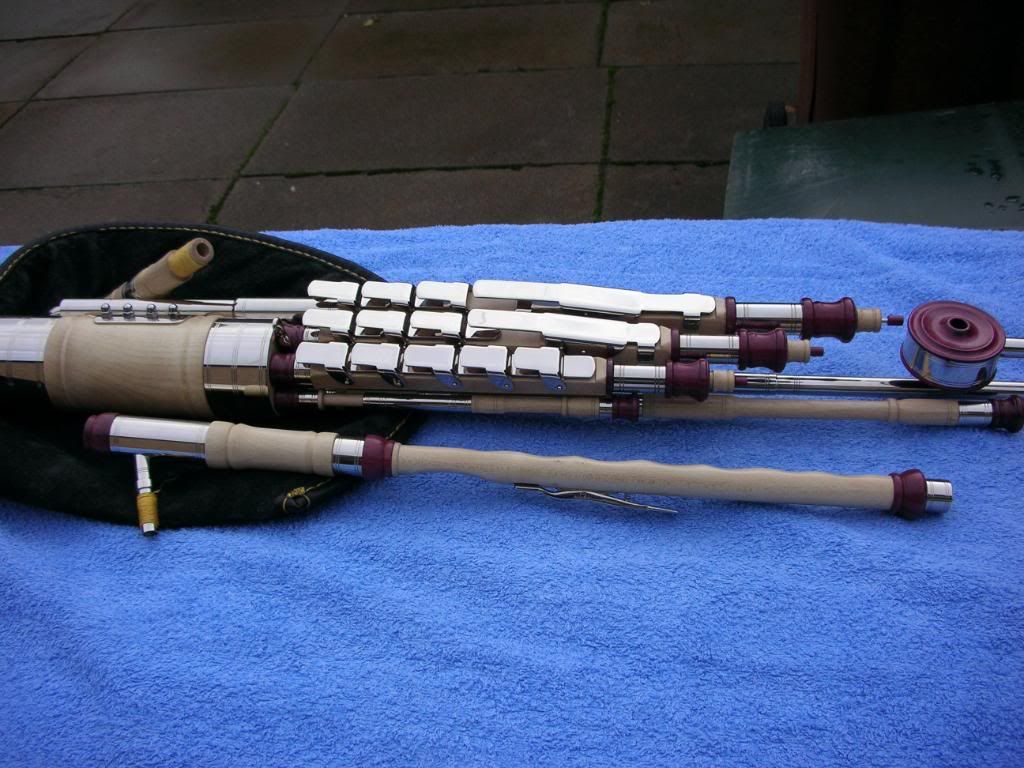
here is a picture of my new set of pipes made by gordon Galloway. Gordon has just finished them and will be showing them off at the pipers festival next week. I have to wait until after 17 |november to get my hands on them!!
Hi ferris54
Nice looking set - hope they sound as nice as Danny’s set (or even better).
David
Those pipes look sweet,and know they will sound so nice!!
Very pretty and I love the key work
they look like they will sound
gee, there’s more scallop on that chanter than last nights dinner!
looks cool…
… O’Briain influenced keywork…?
…check the travel on the C nat. key…!
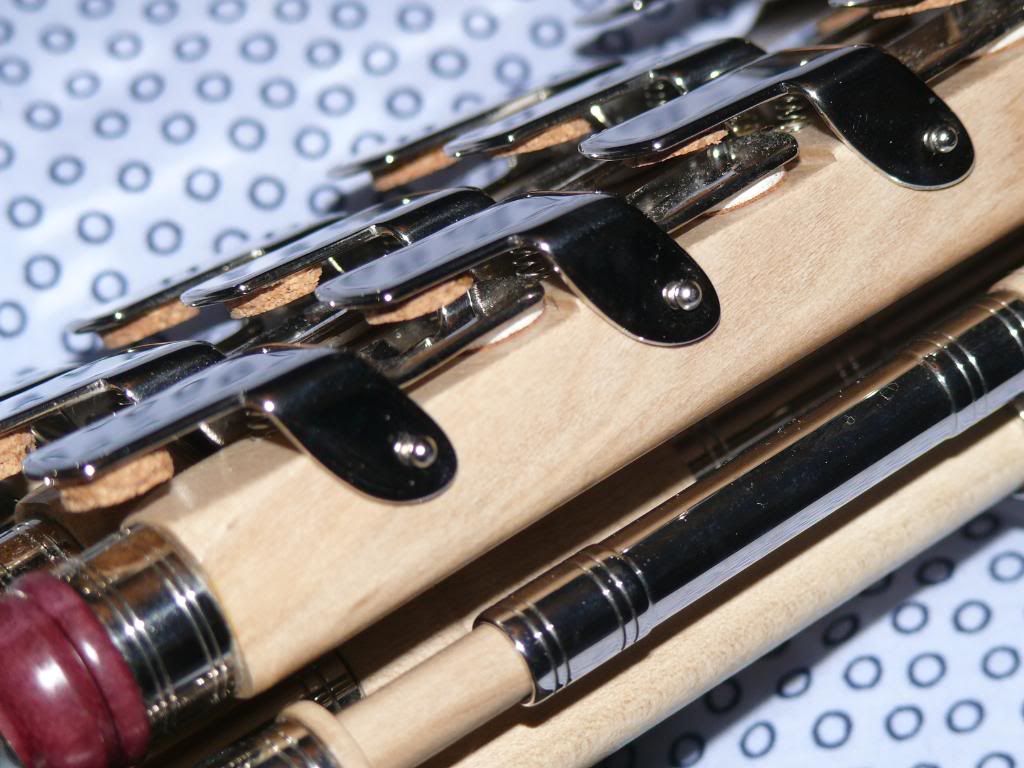
I’d like to see some details of the reg keys - how did he connect them to the wood - looks like pins?
Despite the the color and a few little changes I´d say it´s completely influenced by Cillian O Briain . The chanter scalloped holes is the same as my O Briain chanter , and also like Micky Dunne who makes O´Briain style pipes, as do many other makers eg … Andy Faden , Jim Wenham . In that case I would say the sound great and play well.
BG
it´s completely influenced by Cillian O Briain
And Brennan
John
The pipes arrived today and they are better in the flesh than the photos. Everything was perfectly in tune and ive been playing on them for a couple of hours. I love the reg keys as you can slide up and down the keys smoothly.
Im not a good enough player to post a clip of how they sound but Gordon recorded some clips in Ennis a couple of weeks ago with blackie oconnoll playing them
http://www.gallowaypipes.com/images/mp3player.htm
From what I understand, Galloway and O’Brien have standardised and outsourced their keywork to a 3rd party. If quality standards are maintained, I think it should lead to quicker pipe production.
Here are some close up pictures
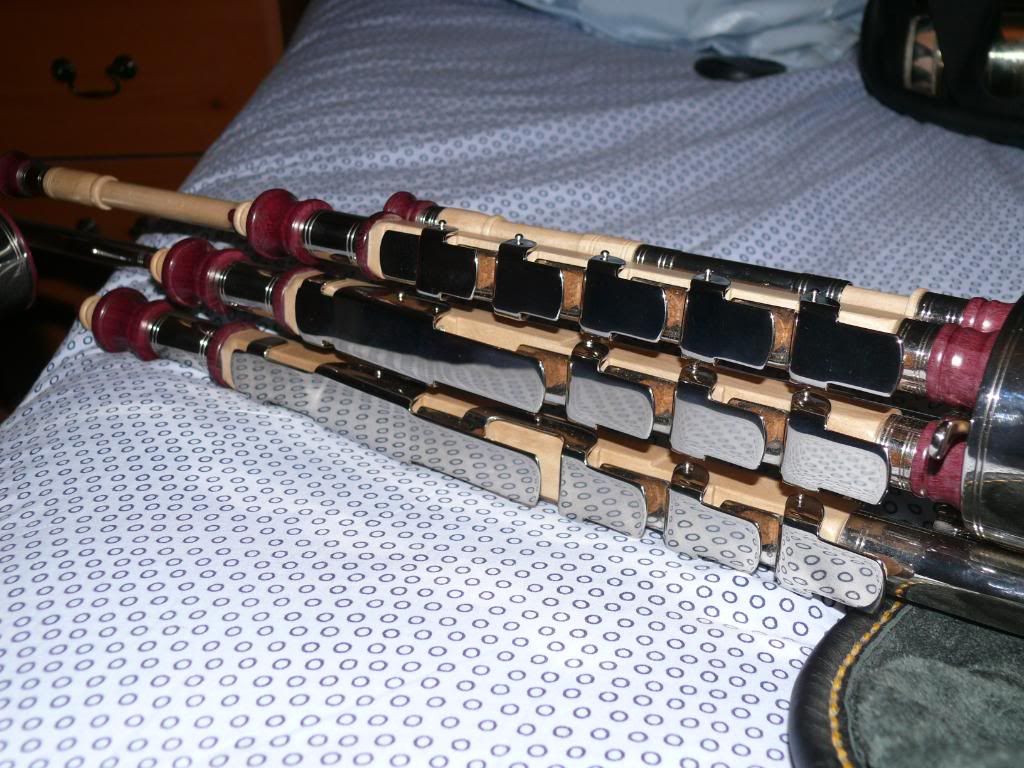
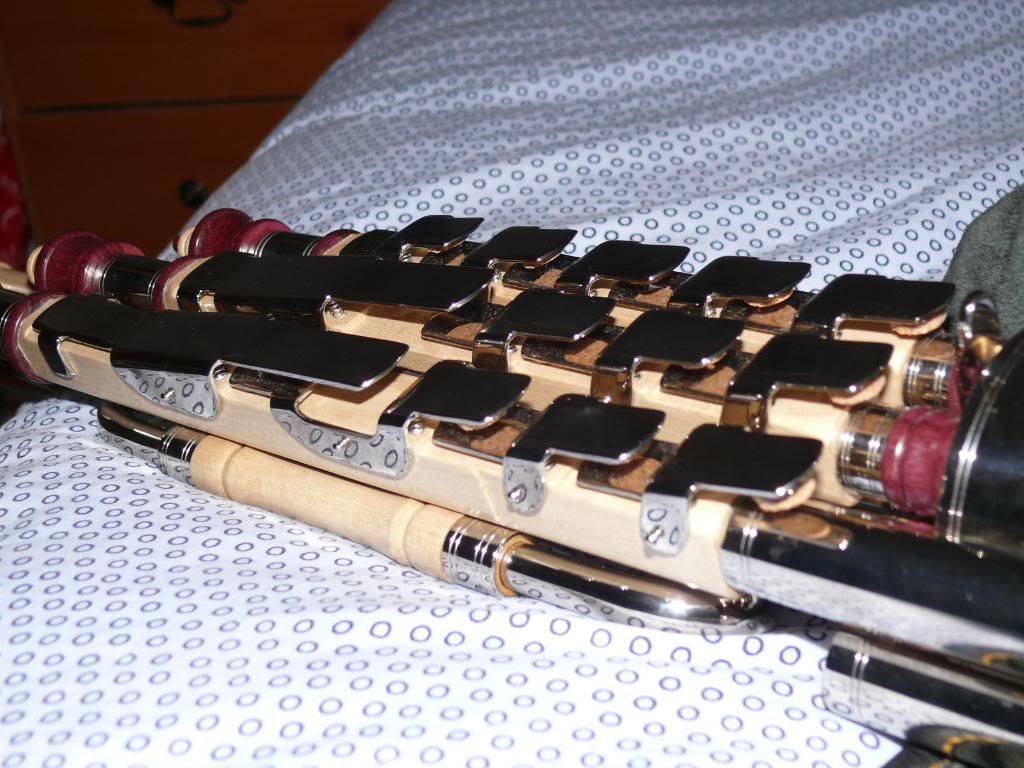
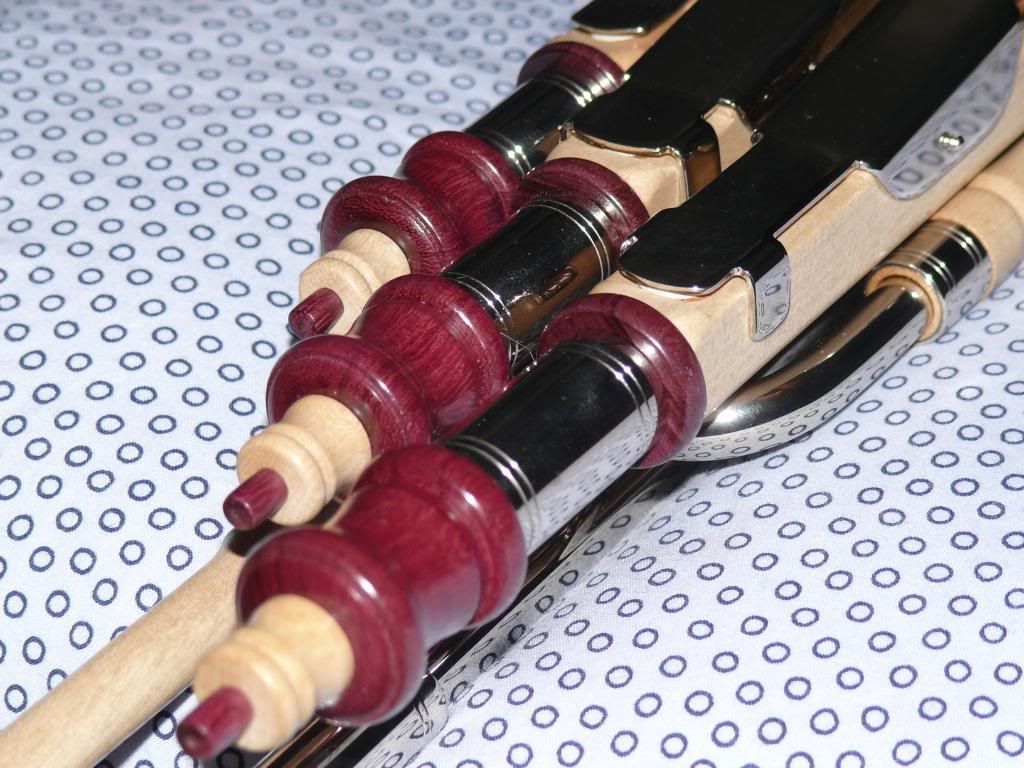
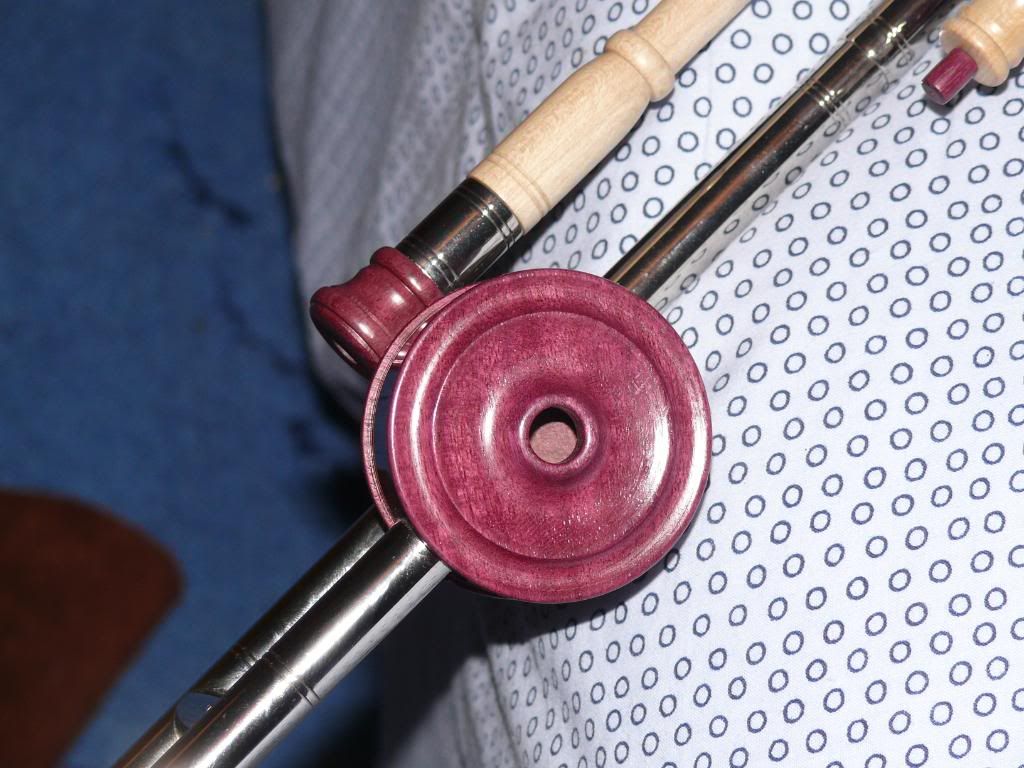
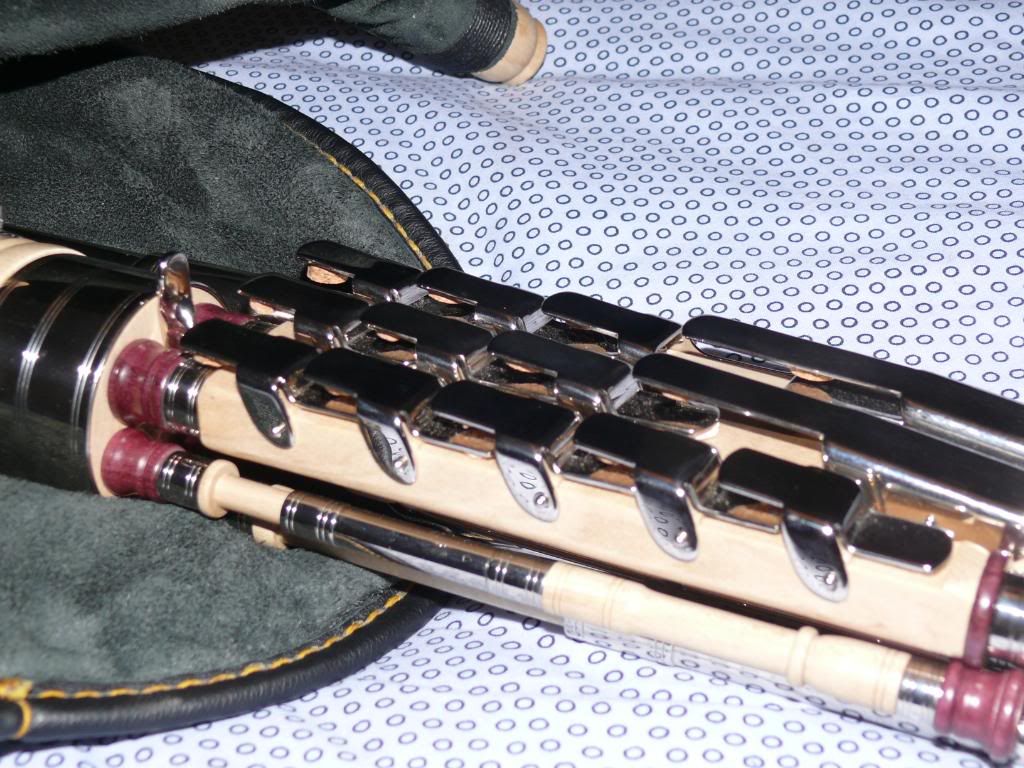
Pretty!
awesome work,look at the end of the pins etc
Happiness: is shiny new reg keys.
Wow. those are beautiful. and if that MP3 is your pipes then you are really blessed. that set is beautiful, and makes me want to order one. almost makes me think about throwing mine out, but then I remember that mine are Quinn pipes and only don’t sound like that, because I don’t have that kind of skill yet. but wow. nice tone.
Good choice. I’m gonna put this maker on my short list.
Exquisite! I could only dream …
They are beautifully made. What wood are they?
Bob
The wood is Holly, and the mounts are bloodwood
copied this from the net, but don`tknow which variety my mounts are:
Bloodwood is the common name for several unrelated groups of trees.
Pterocarpus erinaceus, a deciduous South African tree with large yellow-orange flowers. It yields a thick red juice which is often used in the production of black dyes. Its wood is generally from a light pink to a deep blood-red, and is incredibly dense. This wood is often used by woodworkers for its natural ability to take a polish, and its unmistakable red coloring.
Haematoxylum campechianum L., a tree from Mexico
Brosimum paraense is a tree found in Brazil. Its dense heartwood (specific gravity of 1.15 when dry) is commonly called bloodwood due to its striking red color. The sapwood is easily distinguished by its yellowish-white color. The wood has a fine texture and takes a high polish. The wood is very hard and has a tendency to blunt tools. The wood is used in decorative woodworking and woodturning under the names Satine and Satine Bloodwood. The Nature Conservancy considers this tree secure within its native range.
In Australia the name refers to either of two distinct groups of eucalypt: the genus Corymbia (formerly Eucalyptus subg. Corymbia) and Eucalyptus subg. Blakella. These two groups share in common their tessellated bark, but are easily distinguished by thickness of the wall of mature fruits; hence Corymbia is sometimes referred to as Woody-fruited Bloodwood, and E. subg. Blakella as Paper-fruited Bloodwood.[1] The name bloodwood for these trees stems from the dark red to brown kino that accumulates on wounds on the trunks.