I am from northern germany, 40 years old, professional opera singer and also play bagpipes (german, swedish, french), guitar, recorder, flute …
Now I found an old flute on eBay and got it for a bit more than € 100,-. Here it is:
I fixed the missing winding
and ordered new pads. Two are missing, one is loose, the rest ist … well … old It ordered “modern” flute paddings. The originals are from leather but I only knew the fish skin ones from my modern flute. I could have ordered clarinet paddings …
But the sound of the few notes that already come out (the padding of the Bb is missing, so there are only Bb, C, C# to play) sounds really nice.
There is no maker name, neither on the flute nor on the box so I’ve got no idea where it comes from and how old it is. From other pictures I saw it should be end of 19th or beginning of 20th century.
I only found the two wooden parts next to the blowing hole (what do you call it in English???) on a picture on http://www.oldflutes.com:
Maybe someone can give me a hint about the flute. I will show pictures - and later videos maybe - when I replace the paddings. I want to use the flute for folk - but maybe I try to play the music of it’s time, when I know, what it should be.
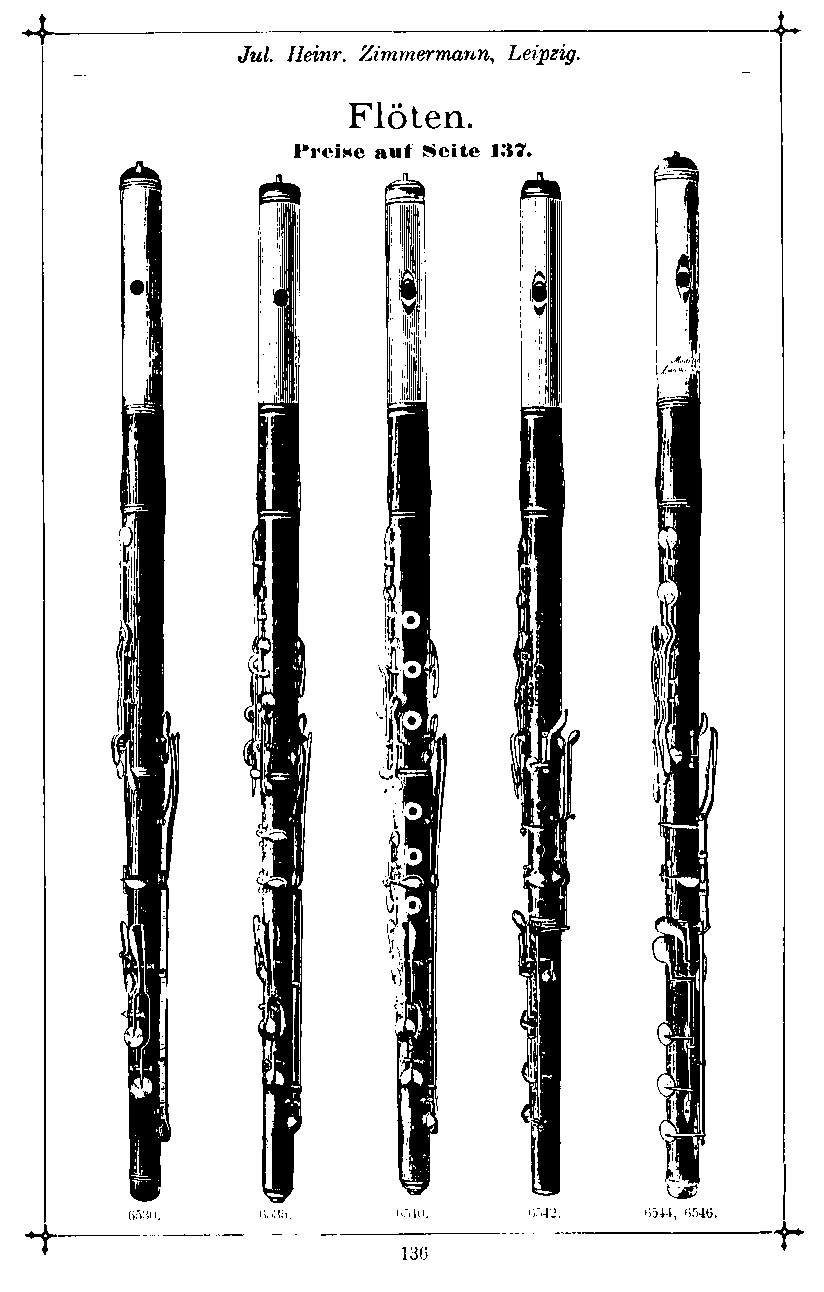
I believe I just have found a fellow Schwedler-flute player or at least Meyer-flute player. I base this on Rick Wilson’s page about such flutes. Those show flutes that are very, very similar to yours. The Schwedler-Mundloch embouchure certainly suggest so.
May I ask what is the round-shaped opening in the upper-right corner of the case? What was stored in it?
If I may be forgiven for giving unsolicited advice: I would take it to a repairer (someone who does clarinets perhaps?) to see whether the head isn’t about to crack. From what I read, wood shrinks as it ages while the metal tuning slide does not, thus you might get your flute ruined by the head cracking. A repairer might be able to do adjustments to counter this. Also, you will want to brake the flute in slowly and in short sessions so it will absorb moisture gradually.
Looks like a German nach-Meyer flute to me. The wooden bits around the embouchure help divert the air stream better…at least theoretically. I’ve not seen very many flutes with that, though, and a normal embouchure hole without them is what you find on most simple system flutes (old and modern).
No need to take it to a repair person because of the shrinking wood around the head. Yes, wooden flutes do crack, but unless it is cracked, slowly re-hydrating the wood, which is likely dry from non-use, by playing short periods once or twice a day as well as giving it a good oiling and/or putting it in a tupper-ware container with a small (really, think matchbook sized) slightly damp sponge.
You just don’t want to play it too much for too long if it’s been sitting a long time for the first week or so.
H.F.Meyer was in Hannover - wich is about 20 minutes from where I live
The keys are nearly the same. I got new paddings and only have to find shellac wich is more difficult to get here then I thought. I have to order it or go to Hannover … I repaired other instruments already so I think I can manage it. And if the cork get’s really bad (it’s not in that bad condition actually) I rather go for a (historical incorrect) winding wicht I know from my bagpipes.
I don’t want to ruin the flute but most of all I want to make it play rather than make a conservation …
Real Meyers tend to have the key posts mounted on small plates your flute’s are directly into the wood.
See Rick Wilsons page on real rather than “Nach” Meyers.
I have used sealing wax in place of shellac and many modern clarinet folk use hot glue in case you’re still having difficulty obtaining shellac.


 It ordered “modern” flute paddings. The originals are from leather but I only knew the fish skin ones from my modern flute. I could have ordered clarinet paddings …