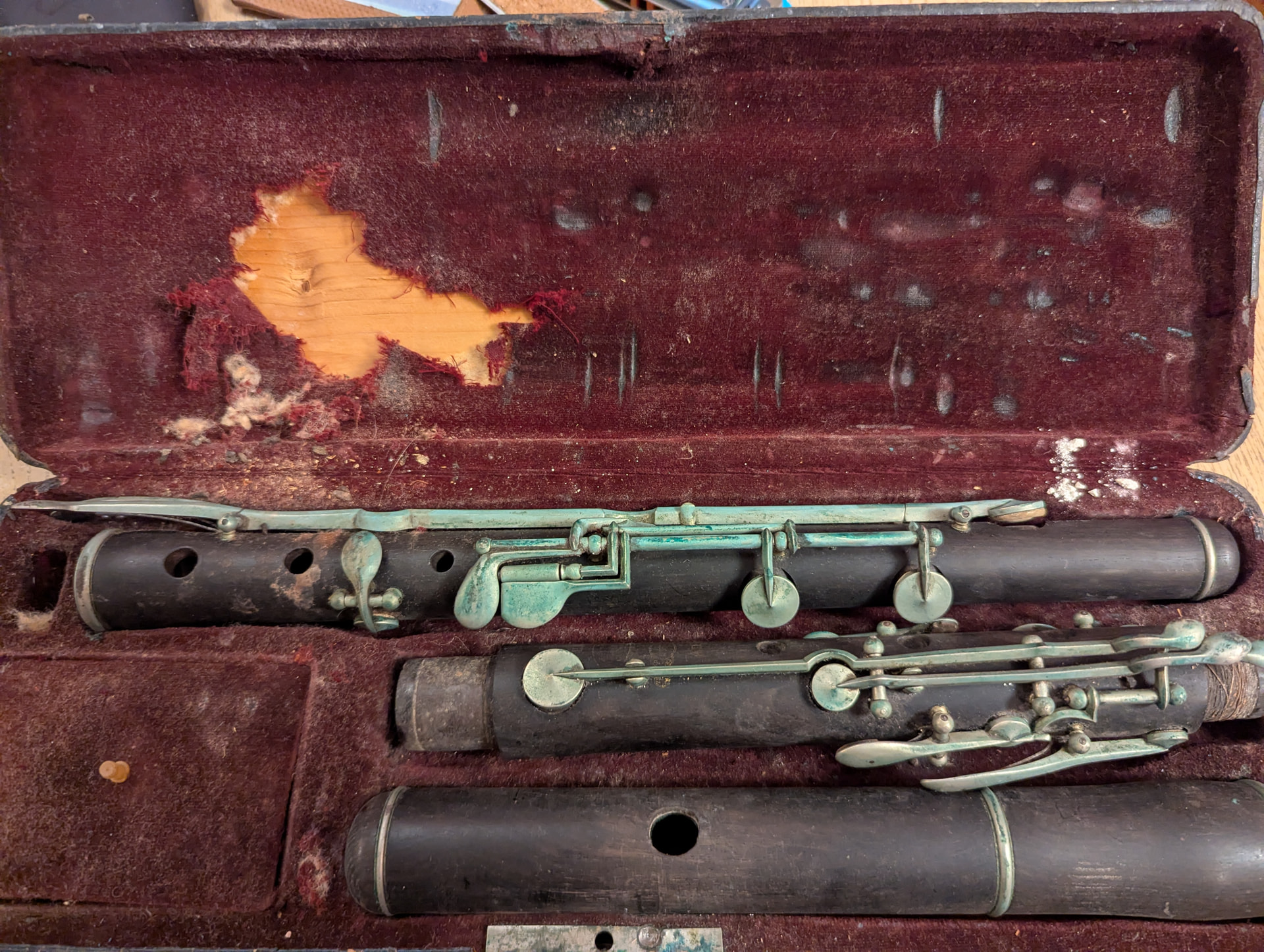
About this flute

I got a flute for not a lot of money on eBay because it looks like it’s been stored in a moldy basement for the last several decades. It’s also cracked, needs new pads, and is generally in bad shape.

It looks like it came from HE McMillin in Cleveland, who basically resold instruments made in Europe (which I understand was relatively common at the time. Since the name doesn’t include “& son” I think it’s from before 1914, and it has the brand name “Criterion”. The little I’ve found about his instruments say that they used the “American Criterion” brand, so I’m not sure when the “American" was added, or if it was just omitted from this particular piece.

It’s not bohem system, so if anyone knows what this style is called so I can look up the fingering if I ever get it in playing shape, I’d appreciate it very much.

(Edit: looking again, looks like Meyer style)

Anyway, I’m posting it here in case it’s interesting, and in case anyone knows anything more about this style of flute or more about the importer/manufacturer. Also so that a year from now when it’s complete, I’ll have a record of the “before” that I can refer to.

I’m new so I can only attach one photo. I’ll try to add more later.
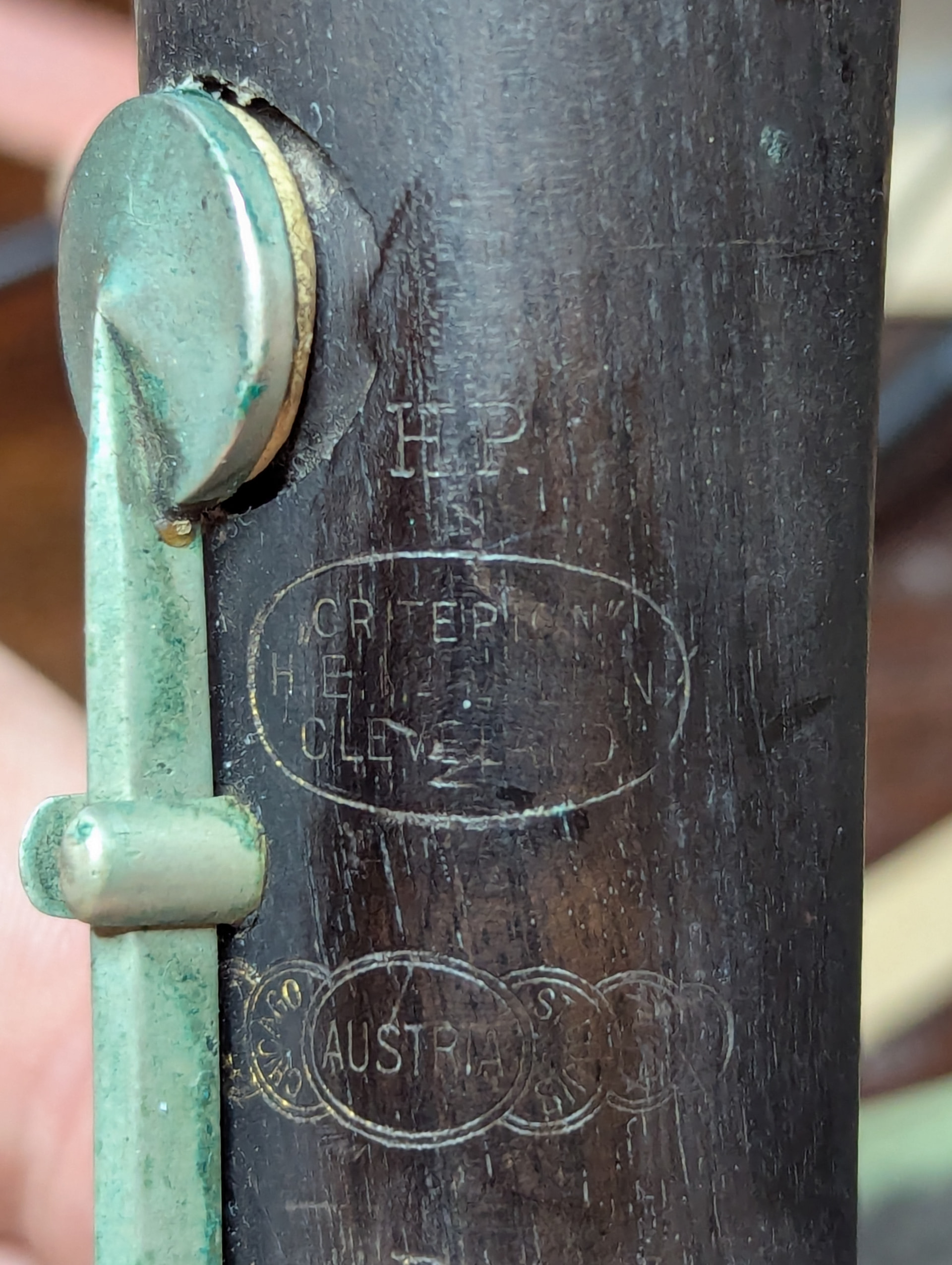
The Mark/logo. Fun thing here is that they stamped it under where the key lever is which is kind of sloppy, but that does mean that the gold leaf they originally stamped it with is still there on part of it.

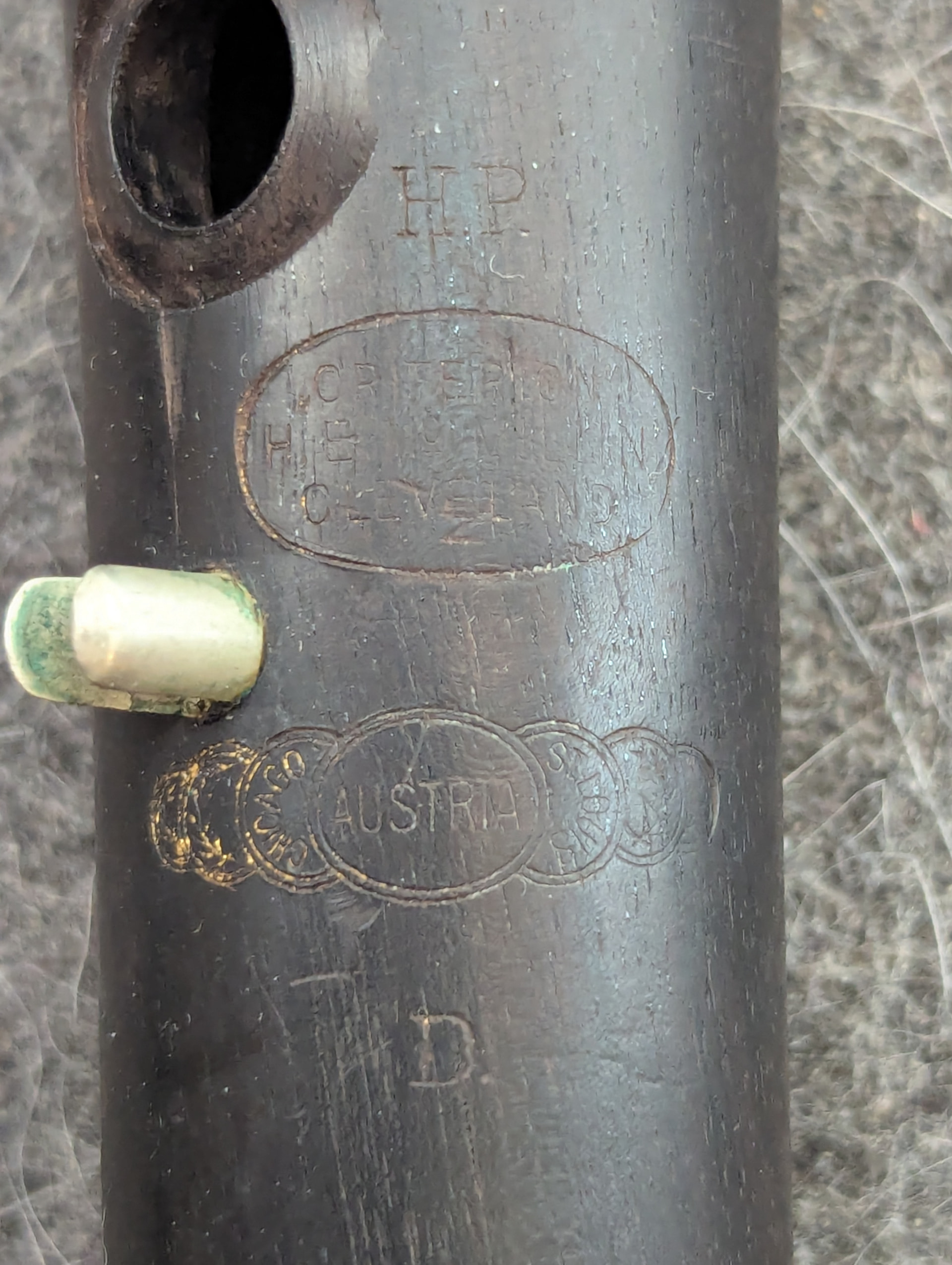
The rest of the stamp:

I do like the addition of the little thing under the maker stamp saying “Austria, Chicago, St. Louis” because the tiny bit of stuff I was able to find out about McMillin didn’t indicate that he had any connection to those cities at all in any way. It is possible (from what I understand) that it was made in Austria, but past that it just looks like puffery.

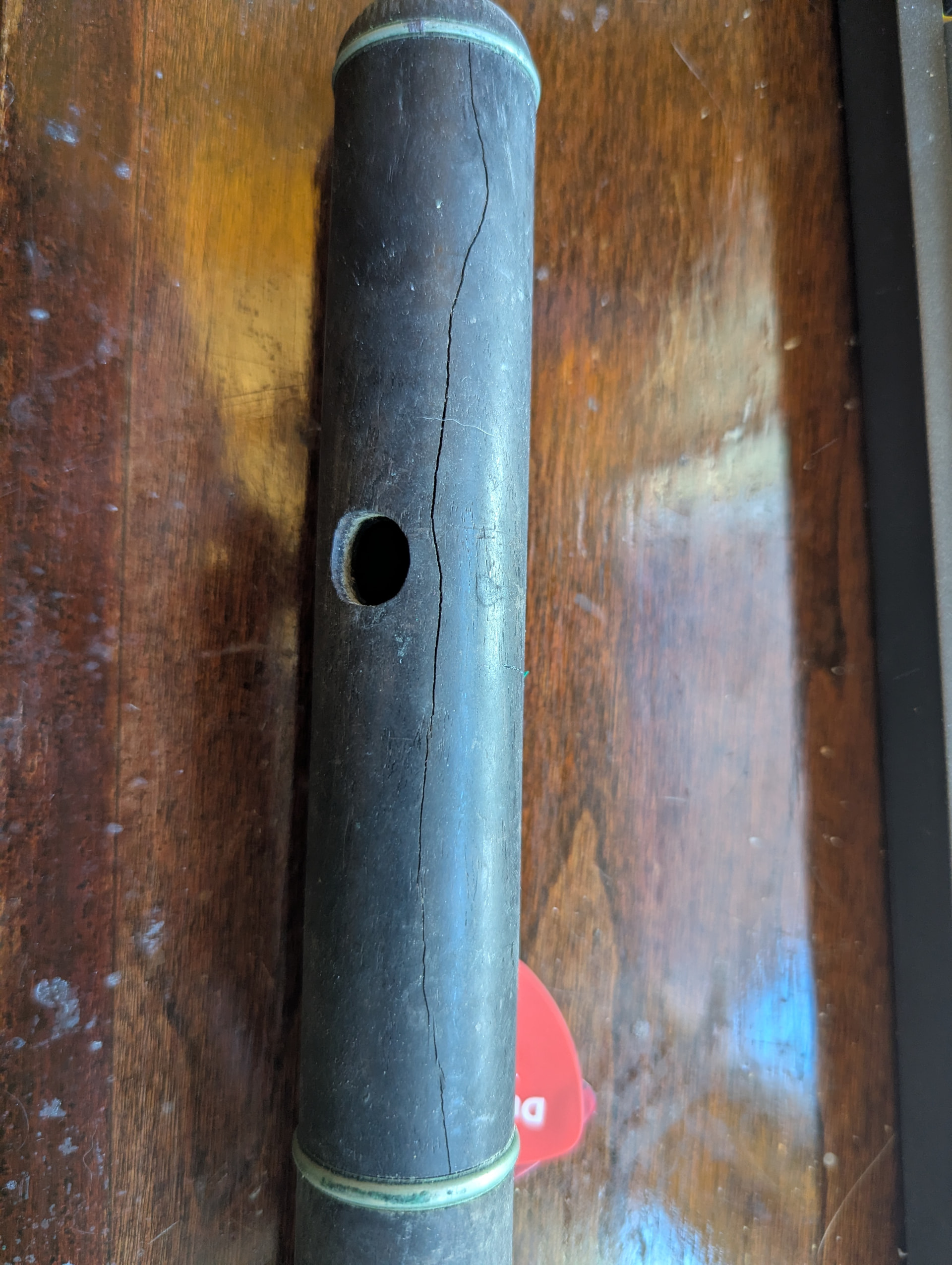
One last post for now: the crack in the headstock from the wood shrinking around the brass tube inside, which is one of the three actual “repairs” that are needed:

(The others being a missing key post that I have no idea how to source, and one of the key levers having a crack in it which I will be sending to a qualified instrument repair person/silversmith to fix)

I’d say it is basically a nach Meyer type of flute – more or less modeled after the Meyer system flutes of H.F. Meyer. This one looks quite a bit like one that I used to have that was made by Kohlert, who mass produced this kind of flute in Austria. The markings on it are similar in style too, as is the key work.

The “HP” marking means High Pitch, but in this particular case that is a good thing, because it is in contrast to Diapason Normal pitch (A=435) which was a standard in most parts of Europe. Your HP one should play pretty well at A=440 hz. Had it been a British flute, HP would have also stood for High Pitch, but would have been indicating a different high pitch, above A=450 hz!

Its not valuable, but could end up being a reasonable player. Clean it up thoroughly, and been careful about the mold. If you can’t completely eradicate it, its not worth risking your health over.

This is a typical German/Austrian style flute from the 19th or early 20th centuries. “Austria, Chicago, St. Louis” are sites of Exhibitions where the flute supposedly won awards - most likely pure marketing.

HP means high pitch. I used to buy flutes like this on eBay, a friend would fix them up, and HP - or LP, it’s converse - doesn’t necessarily mean it won’t play at modern pitch. But you have to test it to find a out.

Can the head joint be pulled out? Often they are frozen, and need heating up to get the tuning slide out. That’s a job for an expert. The crack can be taped over for now. Any leaking or missing key pads can be temporarily covered over with blutack - poster putty. Or tape might work.

These aren’t terrific flutes, generally. I have some decent ones from Koehlert, Cloos, and the like. My best Cloos is a fantastic flute - but it’s pitched in C#.

oldflutes.com has much info on this style of instrument.