So as to not derail the thread in which this appeared:
Anyone played one of these things?
Anyone know of a similar hybrid in a high D like a standard whistle?
Is this within the realm of a Celtic instrument and/or session-appropriate?
So as to not derail the thread in which this appeared:
Anyone played one of these things?
Anyone know of a similar hybrid in a high D like a standard whistle?
Is this within the realm of a Celtic instrument and/or session-appropriate?
I don’t know why this was moved here, because those 'open flutes" made by that guy in Brittany are expressly for playing Irish traditional music, not a “world” instrument per se.
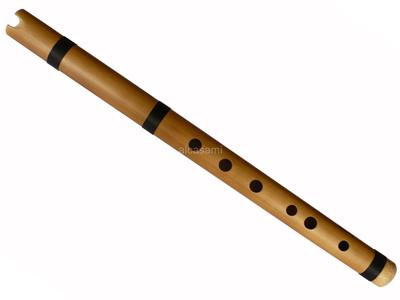
Yes he’s taking the top of a Quenacho (or Kenakena) which is a big Quena (or Kena) in Low D, as played in Peru and Bolivia, and sticking on the body of an Irish Low D whistle, more or less.
I play Kena, and I have a very nice Kenakena in Low D. When hand cramping forced me to quit playing transverse flute I immediately thought of doing just what that Breton guy did, because it gives you the tone and performance of a transverse flute, but vertically.
I carefully copied the the notch of my Kenakena on a piece of PVC pipe, then cut fingerholes just like those on an Irish Low D whistle. The thing played great, but the 2nd octave was out of tune. I don’t know enough about wind instrument design to know why.
I played an “open whistle” when it was on tour, here’s the thread
https://forums.chiffandfipple.com/t/cp-open-whistle-tour/80306/1
Richard, theorizing here but on a transverse flute there is space to the side of the the embouchure hole that is used to control the relationships between the octaves. If you blow from the end, the octave relationship would have to be controlled by embouchure and blowing. unless I’m way off base…
I ended up ordering a D. I’ll let you all know how it goes.
All I know is that with Quenas and Quenachos I can play them and they’re in tune, but with my home-made Quenacho/Low Whistle ting the octaves were way off.
I very carefully copied the notch of my Quenacho, and got a very similar tone. I can only guess that the ID of the tubing was too wide or too narrow. Quenas and Quenachos, at least the ones I have, have a conical bore like an Irish flute, big at the top end, narrowing towards the bell end.
That explains it. The conical bore makes all the difference to the tuning of the octaves.
Hmmm, I wonder if we could do something with a Fajardo-style wedge…
Speculating wildly here, but is there any kind of PVC-like material which could be shaped by heating, and getting a conical bore that way?
Yes put in a Fajardo Wedge

but put it in the bottom of the thing rather than the top.
Could make a long one that simulates the conical bore of my cane Quenas, and recorders and Irish flutes.
That would have to be an awfully long wedge to be effective. A real challenge to construct. The advantage of putting a wedge at the top is that it doesn’t need to be nearly as long to make a difference.
Do you still have your attempt at a PVC open whistle? If you’re willing to take some detailed measurements from it, I could let you know what might be possible.
I appreciate it, I have to find that thing.
It was annoying because I got the cut of the notch just right, got a great tone. (“Just right” being a good duplicate of the notch on my Low D Quenacho.)
BTW the top hole, Hole 1, on Quenas is very large.
I tend to dislike Irish whistles and flutes made like that. There’s a “classic” position and size of Hole 1 as seen on 19th century wooden orchestral flutes and the vast majority of whistles, which results in the typical small/medium/small hole sizes for the index/middle/ring fingers of the upper hand.
This usually results in an open C# that’s a tad flat (to ET anyhow) and a lovely in-tune crossfingered C natural oxx ooo.
Some makers want to get that open C# fully up to pitch and make Hole 1 huge. That of course spoils crossfingered C natural and can also spoil Hole 1’s third role as a vent for Middle D. (Boehm speaks to the multiple duties of that hole which caused him to make it smaller and higher than he considered ideal.)
These last two considerations don’t enter into the Quenacho which has a thumb hole for Middle D, and chromatic notes which are half-holed.
From the photos of the Open Whistle is seems that Hole 1 is Quena-like and far too large for playing Irish flute and whistle in the normal way.
Here’s the typical hole layout on Quenachos
Here’s a Goldie Low D with normal holes, and Davy Spillane’s Low D with unusually big holes

Note that the lower-hand hole configuration is similar, giving the same scale and notes on both Quenacho and Low D whistle. However the Quenacho has that huge Hole 1, in fact all three upperhand holes tend to be large as you can see.
Well, mine should be shipped ca. January 25th and then we should know.
Hole 1 looks big in the Open Whistle photos, and his fingering chart gives oxx xxo for C natural, which indicates a Hole 1 larger than is normal in Irish woodwinds.
I look forward to hearing about your findings.
I’ve written him about this issue, sadly my French is practically nonexistent. I do have, happily, a family member who works as a French translator, and I hope this will help me communicate my desire to have an Irish-style Hole 1.
This could explain it. The taper in a flute is designed to help control the octave tuning. That was one of the great advancements of the baroque era flute as I understand it.
I am horrible at playing any of these, but this is my opinion.
The holes are dependent on the key and range and the instrument. Narrow bore forces you up the scale, but then you have to deal with odd sized holes that are hard to half finger. Narrow bore has a weaker octave and you need to let loose, upper octave is loud and you need to be sweet.
I have found that the fife and flute allows me to expand the force and pitch of those limits. Notch flutes are great for expanding range power and flexibility. I mostly like the traverse flutes.
Made an end blown willow flute from PVC. Fun, hard, doesn’t make music yet just run the scales.
Enjoyable but different. Just like every instrument.
My new project is based on my recent discovery of the Nuvo flute with curved headjoint, the white flutes on the right side
https://www.youtube.com/watch?v=IDNT2Os3x4A
I measured the ID of a length of Schedule 40 white PVC pipe I have, and it’s 19mm which is the standard bore for the Boehm flute AFAIK.
I ordered one of those white plastic curved Nuvo headjoints for $35. My plan is to stick the Nuvo Boehm headjoint on a 19mm ID PVC body with fingerholes placed like a Low D Whistle and see what happens. What I hope happens is a thing that plays sort of like a flute but is played vertically like a whistle.
Contact me before you start drilling any holes … I may be able to help you reduce the number of failed experiments. Because of differences in sound-generation mechanism, and the headspace between cork and embouchure hole on the headjoint, you can’t put the holes exactly where they’d go for a low whistle.
Very interesting! Thanks!
I would have thought that whatever is used to generate a tone, the division of the tube to create the scale would be similar.
What I was planning to do was, before I drilled any holes, stick the headjoint on the body of a Low D with the same ID as the PVC pipe and see what sort of scale resulted. But if you have a known formula that would be great.
Not a formula … a computer program. It builds a detailed model of the acoustics of the whole instrument. It works best when calibrated to a real mouthpiece, and the experiment with the low D body that you describe is the best way to calibrate it. This page describes the tuning information I’d be asking you for; I’d prefer actual frequencies (in Hertz), but I can work with descriptions like “45 cents flat of low E” if necessary.
I’d also be asking for measurements of the body and the headjoint: bore sizes, how far down the holes are and how big they are, that sort of thing. With the curves in the headjoint, I’d have to settle for an approximation of how far up the embouchure hole is from the bottom.
A lot of numbers, but with those numbers the program can give us a good idea what the flute body would have to look like to play in tune.
Well yesterday I made a quick-and-dirty Irish Low D Quenacho out of Schedule 40 3/4" PVC pipe, which has an ID of 19mm, similar to a Boehm C flute. I think it took a half hour total.
I cut a notch on one end of a long length of the pipe. I sawed off the bottom of the tube to where I thought I’d get a D, based on a Low D whistle (hit it on the first try, whew). Then I laid the Low D Whistle aside my creation, marked the hole positions, and drilled. Surprisingly the thing plays in tune fairly well; some of the holes need to be carved out due to being a bit flat, but happily none are too sharp.
This time the octaves are good, don’t know why.
The notch is pretty small. I’ll try enlarging it bit by bit until it gets worse, then start over I suppose.
Happily that stuff is super-easy to cut, file, carve, and drill.
My low D came in last week ad I’ve been having a lot of fun with it! There’s quite a learning curve on the kena style mouthpiece, and I think it’s probably way more like a flute than a whistle. I’m enjoying the range of tones I can get depending on my embouchure, but I’m not a fan of how easy it is to bump the instrument and lose the embouchure altogether. This will doubtless improve with practice.
I played the lower and upper D with a tuner app and both were +/- 5 cents of true, which is better than I’ve been able to get with any of my whistles.
I find it works best for me at least if I use piper’s grip with both hands, and I’m glad I ordered the Becker low D first so I could learn the grip on a lighter whistle.
I am not a good enough player to be able to say one way or another how responsive it is to various ornaments.
Overall, I thoroughly endorse this thing! I never know what to call it though, since “Open Whistle” means nothing to most people. “Irish Kena?” “Hybrid Whistle?” Eh.