Low whistle history - older than I thought!

I was randomly browsing various museum and library archives for pictures of old instruments, and I came across some photos that seem to challenge the narrative I’d heard that Bernard Overton “invented the low whistle.”

Take a look at this photo:
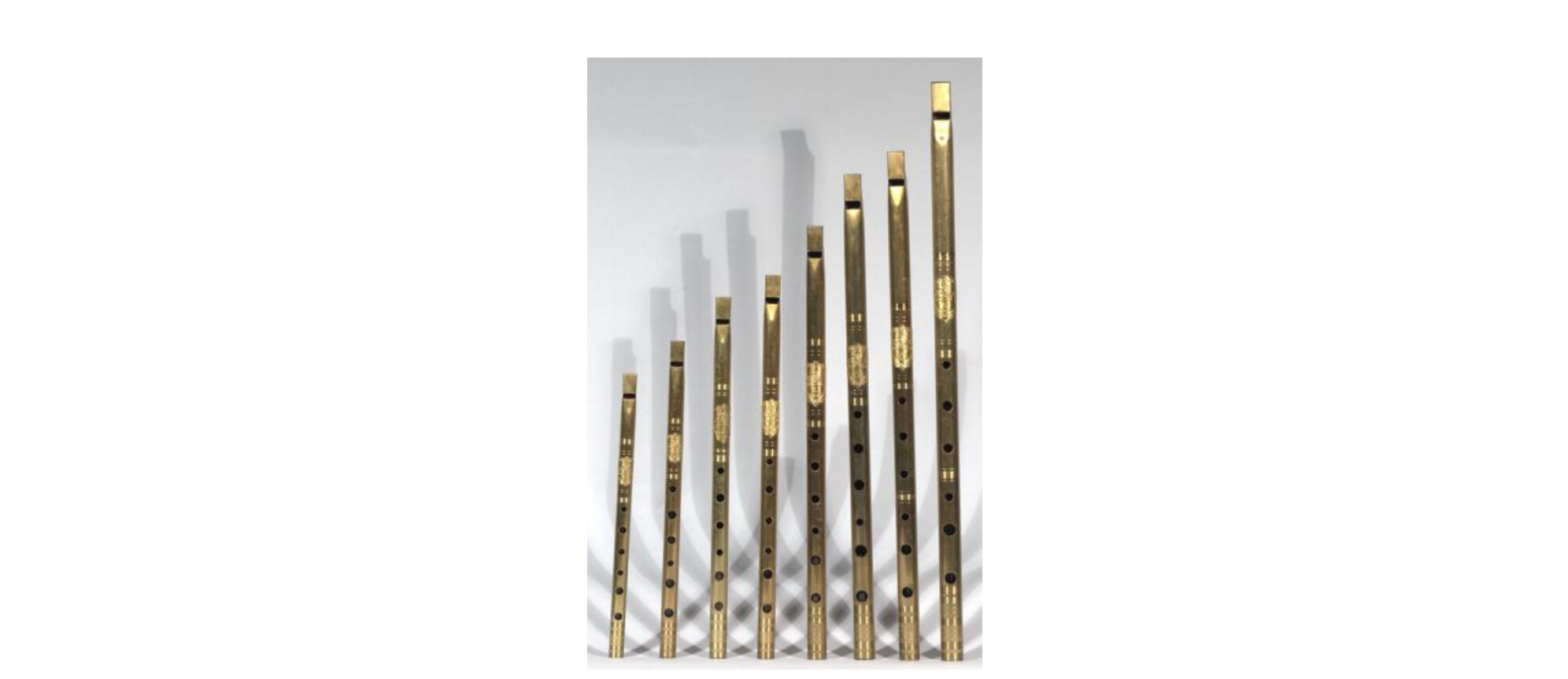
Image 2 of Vertical Whistle Flute, DCM 0641 | Library of Congress

This looks to me like a complete set of whistles, from high D to low D (though, to be fair, they all might be higher pitched than that - any insights on this?). And according to the Library of Congress, this whistle set dates back to the mid-1920s at the very latest. So it’s certainly much older than any of Bernard Overton’s whistles.

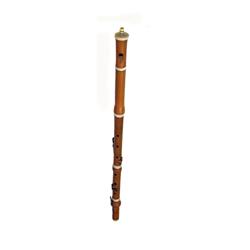
Were there low D whistles even older than this? It seems like there arguably were. At least, there were low D wooden flageolets with whistle-style mouthpieces, like this one:

iiif-public_music_musdcmflute-0820_0820f1u-full-pct_6.25-0-default

Flute Flageolet, DCM 0820 | Library of Congress

I also found (but for some reason can’t find at the moment) a picture of a traverso-style low D whistle from I believe the 1700s. Basically a one-key traverso flute with a whistle head on it. This is arguably an even older “low D whistle.”

This raises an interesting question in my mind: What is the actual history of the “low whistle”? When was the first thing we could indisputably call a “low whistle” actually created? And were these early low whistles from, say, the 1920s commonly used for Irish music? Were they common or niche?

The history of the low whistle, it seems to me, is an underdiscussed topic.
If you look at the cataloguing details in the link sizes are given for the whistles in the photo.

The smallest is a high g. The whole set does not go lower than A or G. Which is not unprecedented, even Generation made low Gs for a while.

FWIW, I have a near full set of the same make myself from high g down to Bb, plus a fully keyed D.

Ah, good catch! Thanks for pointing this out.

When you say “same make,” do you mean the same make as the first picture I posted? Or Generation?

I’d love to see a picture of your fully-keyed D! It was a high D, I’m assuming?

I meant the London made ‘in tune’, as described in the LoC catalogue entry. Which in itself us interesting as the woman/harp image is a heraldic design strongly associated with Ireland.

But I have a set of all metal Gens as well from Bb up, across different periods.

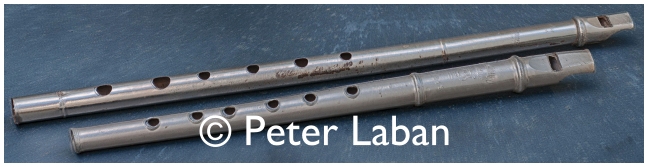
You may want to search for Ch.Mathieu, Paris. They made all sorts, walking stick whistles and odd things. I have some recollection they made some low ones, possibly down to D. Often conical ones although I have a cylindrical Bb as well.

I have posted these old pics a few times but there you go:

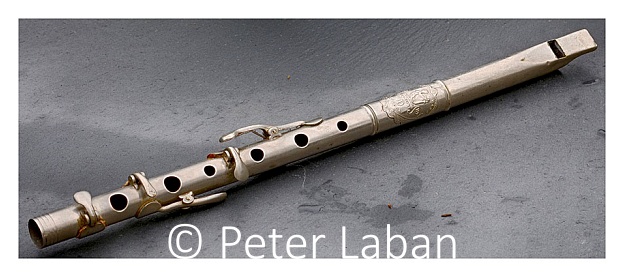
These are two Mathieu, Paris ones, one conical the other cylindrical:

2 Likes

That one has a very interesting “whistle” mouthpiece that seems to be designed to be played transversely, hence allowing the same “grip” as a low D flute. I guess the idea was to cater for those who might struggle with a flute embouchure??

I’d be curious to find out how such an instrument plays/sounds, and to what extent a pair of alternate head sections, one flute, one whistle, can be used on the same conical low D body. Maybe that is another experiment to add to my list of prototypes to try making?

Very interesting!

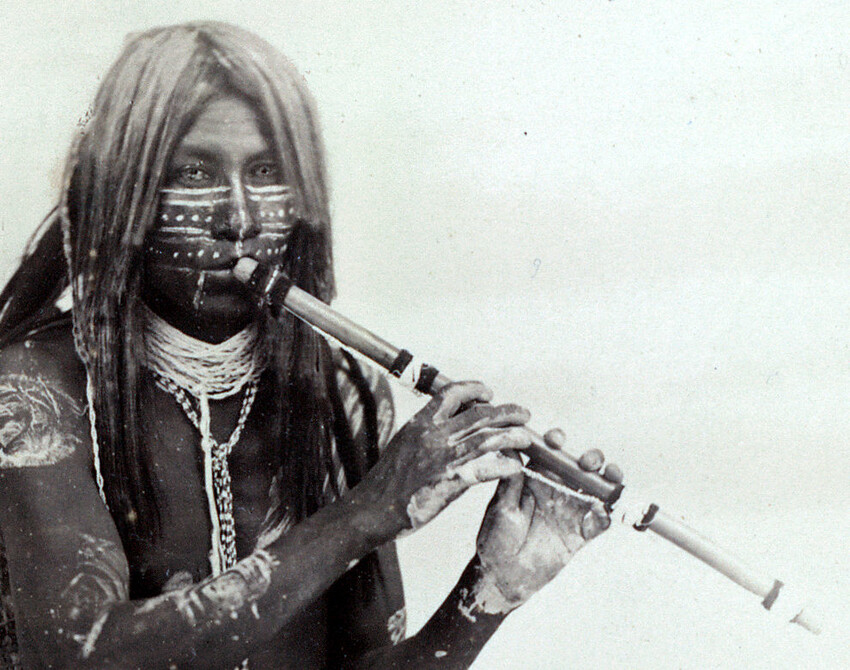
And I just found another that isn’t designed to be played transverse:

(Although, come to think of it, it isn’t quite clear that this is a “low D.” I was just assuming it was based on its resemblance to a flute.)

EDIT: I also found the aforementioned one-key, traverso-style low D whistle. It apparently dates from 1650: