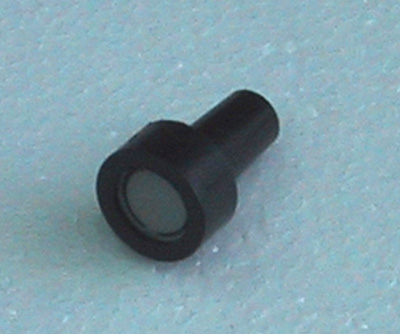
I don’t remember if this has been discussed, I did a search and came up goose-egg. Does anyone use the “Little Mac” one-way valves in their uilleann pipes? I am getting the bag-farts as I pump the bellows. Where would you install it? Blowpipe?
I know they’re made for highland pipes, but I wonder if they can be adapted. Lemme know, and if this has been covered before, go easy. I can’t take the abuse.
I’m pretty sure it has been discussed, but I don’t know where, though it wasn’t all that long ago - a few months, maybe.
Anyway, being a former loudpiper, I have to ask why you’d want a “Little Mac” valve. The valve that is designed for the UP isn’t all that much different, at least not functionally.
It’s a little bit of leather, tied onto the end of the blow pipe inside the bag. There’s also a 2nd one on the bellows.
Which one is giving you problems?
Usually the cure for the grunts 'n groans is to remove the offending blowpipe (or bellows valve, as the case may be) and ensure that the hinge is on the top, thereby allowing gravity to do its thing. If, upon inspection, the leather flapper is dried and mis-shapen, that too can be easily remedied.
yeah, this has been discussed at length before. I don’t recall all the pro/con arguments but the consensus seemed that Little Mac for uilleann pipes was a bad idea.
Two issues come to mind - one, for blowpipe valves, the “pressure profile” if you will is very different for bellows pipes vs mouthblown - in bellows pipes, the valve is mostly being asked to operate with very low pressure differences between bag and bellows.
The second issue is that installing a Little Mac in an existing uilleann pipe blowpipe can be dangerous to the blowpipe; the Little Mac has a tapered plastic piece that is a press/wedge fit; these wedging forces could split your blowpipe.
I have been using a little mac valve in my blowpipe for over a year and find it to be excellent.
It provides a perfect seal and there are no pressure issues whatsoever. the actual valve is a small nylon flap which reacts to the smallest pressures.
With a piece of waxed thread wrapped around the part inserted into the blowpipe it will fit snugly with, in my opinion, no chance of causing the blowpipe to split.
Based on my experience I can only heartily recommend it.
The timber in most blowpipes is quite thin at this critical point, so even with waxed thread you are taking a chance IMO. Timber is very weak in tension, whereas it’s quite strong in compression. One wants to avoid any kind of wedging fit in timber…
(This is of course an issue for the outer part of a blowpipe stock too - and a good reason not to tighten it too much!)
Bill
[small]corrected to say “strong in compression”[/small]
i use a little mac in the bag valve as it fitted quite well without having to alter anything.the wood is thick so it does not cause any problems and i did not use too much pressure when i fitted it.the hole in the bellows valve is too small so i just left the leather flapper as is.
There need be no more wedging in of the little mac valve within the blowpipe than there is of the insertion of reeds in the drones, regulators and chanter.
Understood[*], but many folks fail to realize this and push the Mac in tight. A drone reed treated in this way (i.e. pushed in that tightly) will probably fail before the timber does - and chanter reed tenons are pretty thick-walled… whereas many blowpipes are much thinner at this point than reed tenons. I have heard more than one story of damage caused in this way (pushing the Mac in too tight, or wedging it in without thread wrapping).
If you have a blowpipe stock of the sort shown in Tony’s photo above, it’s very tempting to wedge it in tightly to compensate for the fact that the opening in the blowpipe is oval due to being cut at an angle, which I think increases the risk. While recutting the blowpipe at 90 degrees solves this part of the problem, it can make it difficult to revert back to a traditional leather flap.
[*] actually I am not sure I even agree with this statement, since the bottom of a reed and the reed seat should both have matching tapers, which distribute the seal between reed and reed seat over an area, whereas the action of the Mac is a tapered plug inserted into a cylindrical hole, which involves inherently more of a splitting action at the ring-shaped point of contact. The local stresses in the latter case (cone into cylinder) are greater than in the former case (cone into cone).
This is the valve I use. I think it may be like the one described in the link in the previous post. The metal post keeps the flap tight against the valve and prevents any flatulence.
I’m a newbie wanker, but I know with Piob Mhor most players don’t like the little macs because they restrict airflow. I’ve seen guys spend money on wider bore blow sticks all for not because they’ll stick in a lil’ mac and cause a choke point. Not sure if that’s a real issue with Uillean pipes, but from what little experience I have pumping as opposed to blowing; I think I’d like as much omfph as possible. Just my two cents, hope it helps.