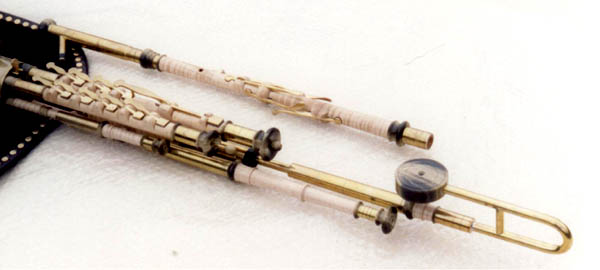
My pipes, aside from the chanter, are unfinished (no varnish) maple wood. I’d like to finish them with a light stain and some varnish. Are there any particular cautions I should be aware of to do this without compromising the pipes?
PJ, …Yes, but what would the answer be as if I were the maker of the pipes? If you were watching someone get ready to do finish a set of pipes, what about the finishing process would make you gasp! “OMG, don’t do that.”
I’ve read that Maple is less expensive that the more common hard woods and that it generates a more mellow tone.
Maple can be very difficult to stain as the grain/pores can lead to blotches even if a stain conditioner is used.
The chanter appears to have a light varnish and no stain that I can see. This leaves it a light yellow color. Pretty attractive. The pipes could do with an umber wash (to highligh the grooves and crevices). Fairly attractive looking and you can see the pipes in photos, which isn’t always the case with black pipes.
Normally wooden instruments shouldn’t be varnished. After turning the wood, I finish the parts with sand paper from 180 to 400, then a hand full of wood chips, then very fine steel wool. After that, Danish Oil is applied (to pipes) or linseed or almond oil (for mouthblown instruments). All that is done while the lathe is spinning at considerably high speeds. The oiling process is repeated until the wood doesn’t take any more oil. You can also make an oil bath, but oil is expensive and some oils gum up when exposed to air, so that might be not the optimal way to do it (depends on oil, it works nicely with linseed).
I would advise against a non-pipemaker finishing or refinishing a set of pipes.
The best care for pipe finish depends on what is already on the pipes. I would be very surprised to find truly “unfinished” maple on a professionally-made set of pipes. The existing finish might be a Danish oil, for instance. Or it could be wax, etc…
If the maker is alive you really should seek guidance as to whether anything can or should be applied. Wax, shellac, or Danish oil finishes are all things that could potentially be touched up by the user, but you need to know which of the three, if any, you are dealing with.
I do not recommend staining an already-finished instrument. Chances are the results will end up being spotty and unattractive. “Varnish” is a bad idea - any finish should be very, very thin, especially on a chanter. Bear in mind that you can also really impact resale value in a negative way.
I did a test where I set a droplet of water on the back of one of the pipes. The water beaded like you would expect (pipe smooth surface & water surface tension). I figured if the wood contained oil, even a small amount, it should resist the water. Instead, after a minute, once I wicked the water away with a tissue, the droplet left a circle mark where the water had been absorbed into the surface of the wood. This suggests to me that either there is no oil, or the ‘seal’ of the oil has diminished over time, or the finish (if there is any) is water based (which seems unlikely).
I would not agree with your conclusions. Thin oil-based finishes are not totally impermeable to moisture, and the usual effect of moisture, if the oil finish is not a thick “oil varnish”, would be to produce temporary cloudiness. This is also what happens when you put water on wax, which is often applied over oil (or just about any other finish, for that matter).
Your test might also suggest that a shellac-based sealer was used. Such a finish could in fact have been used in conjunction with oil as well. DO ASK the maker if you can.
regards,
Bill
[edited to add: If this is the Daily set and you can’t reach Jim, I think using Briwax or a similar paste wax polish will clean things up and is unlikely to do any harm to the existing finish, whatever it might be. Thin shellac can also sometimes be applied over oil-based finished with no ill effect, so this might be another thing to try on an inobtrusive spot if you can’t get direct advice from the maker.]