Why are there so few female pipers ?

I find that statement contrary to my personal experience with regard to sound preferences, namely, ever since high school I’ve noticed that females generally prefer a higher bass-to-treble ratio setting on their car sound systems and males tend to prefer a higher treble-to-bass ratio. Maybe this is due to the following interrelationship:

(1) sexual dimorphism: males tend to have a lower pitched voice because they tend to be bigger (and have a larger supralaryngeal vocal tract producing a lower fundamental frequency in their speech) and, inversely, women tend to have a higher pitched voice because they are smaller (and have a smaller supralaryngeal vocal tract producing a higher fundamental frequency in their speech); and

(2) (heterosexual) men and women are attracted to the opposite sex and find many features of the opposite sex attractive (e.g., women associate lower frequencies with men and men associate higher frequencies with women).

So by your reckoning, viz woman liking bass tones, any woman pipers should play Bb sets, which clearly they can’t do due thier small hands.

Clearly the reason woman
don’t play
the pipes is because of thier breasts, the physical effort involved and the lack of technical ability in maintaining pipes…

No, I was simply refuting the claim that woman don’t like bass (tones).

I never said anything about genetics.

No one knows what parts of the brain make some people like some sounds and not others. There could be physiological or neurological reasons to explain some aspect of preference. There might not be. Certainly at least some of musical instrument preference is cultural.

The point is simply this: for whatever reason (physiological, neurological, and/or cultural), women, on average, seem to not enjoy bagpipes as much as men. It’s the only answer to the question that addresses all the points that have been raised.

Here’s a counterpoint to ponder. If you attend any lower-tier professional orchestra in the USA, the violin section is dominated by women. Go figure. I say “any” but I haven’t been to all of them. Maybe there is one somewhere that’s mostly men, but most of them are mostly women. On the other hand, the brass is usually mostly men.

BTW, I did a wee experiment last night. I skipped through about an hour’s worth of traditional music on my iTunes (all 34GB of it), just playing a few bars from the beginning of each track and made my boyfriend (poor guy) try to guess the gender of the musicians. He was able to get the vast majority of them correct on gender and a significant number correct on naming the musician (I’m not giving made up stats. In the best tradition of utterly halfas*sed research, I didn’t bother counting and calculating the percentages of correct answers). He said the playing style was only indicative of who it might be, which made him more likely to correctly guess the player’s gender and also that there were a lot of other variables he made use of – i.e. Something might obviously be Cape Breton fiddle, the recording is quite rough and scratchy, which means it’s unlikely to be Natalie McMaster. Not too many other female Cape Breton fiddlers have made that many recordings, especially older recordings, so the musician is probably male.

I don’t think that’s at all relevant to the OP’s initial question.

Since your BF was seemingly familiar with the music in question, it wasn’t really a fair test. If you played those same tunes for my wife, she would be very successful too (I’ve done it), even though she’s not familiar with the music. She probably couldn’t correctly identify Irish vs. Scottish vs. Cape Breton. Her skill is also strictly limited to violin/fiddle players.

I agree that your BF’s ability to identify a wide variety of musicians by having become familiar with their playing styles, and having a good understanding of the history and so forth has little, if anything, to do with the initial question. But my wife’s ability is quite different. She isn’t familiar with more than a very few Scottish/Irish/Cape Breton fiddlers. And she doesn’t listen to classical music regularly. So you could play bits of 20 violinists playing Bach’s works for solo violin, and she’d tell you which recordings were made by men, and which by women, even though she had never heard recordings of any of the violinists in question. I think this is related to the original question, because it indicates that there is something about gender that can be heard in (at least some) music, by some people. If it’s something that can be heard by the trained ear, then it’s something some people will have a preference for (one way or the other).

That is exactly what the original question was really about to my mind: “what is it about bagpipes that make them more popular with men than women?”
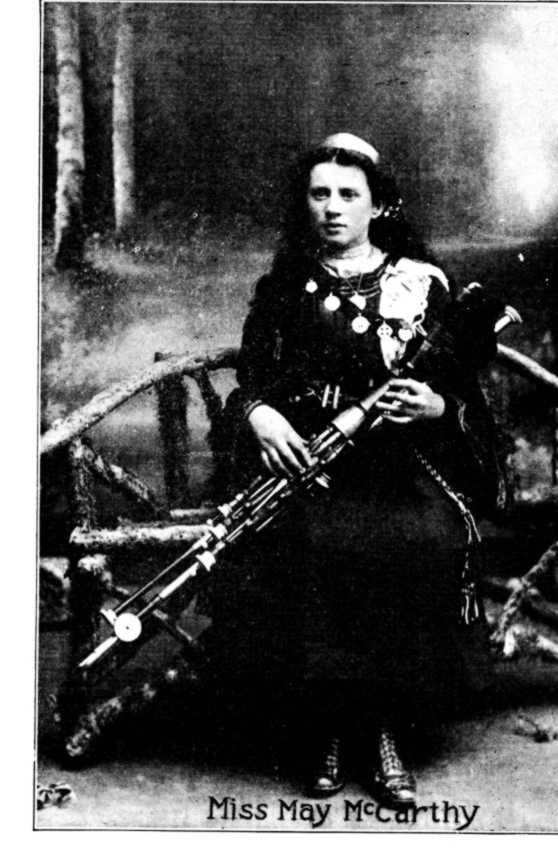
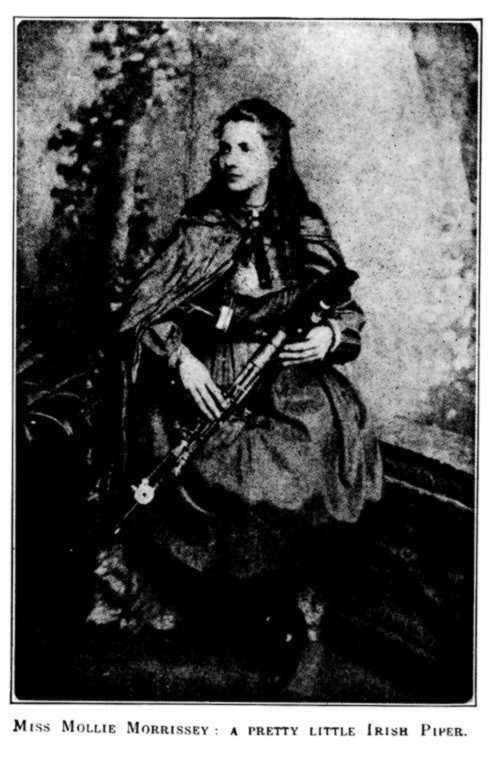
Sexual dimorphism in humans is really, really subtle. It may not seem like it to us sometimes, but that’s because we’re not objective. There’s just no way the dimorphism argument explains a 20:1 ratio, or even a 5:1 ratio (which seems closer to the real number, nowadays). Most of the truly scientific studies of sexual dimorphism in the areas of cognitive science are talking about very small deviations from the mean response - statistically significant, yes, but the “bell curves” mostly overlap, if you know what I mean.

On the other hand, cultural issues are very complex and it’s entirely believable that ratios of 40:1 and even higher can be maintained in certain endeavors even when you can’t point to an overt form of discrimination at work.

Let me put a concrete, related example to you. Where I live there is a traditional music group for students from about 1st year to 6th year (i.e. ‘junior high’ to ‘high school’). Membership is overwhelmingly female, on all instruments. I think it’s 20:1 or more… does that mean that “men” are relatively unequipped for traditional music, or uninterested? I think not, but these are the sorts of ill-founded speculations that some folks on this list seem to be entertaining about women and piping.

There have been women playing the uilleann pipes since before the term ‘uilleann’ was used for them. Photo captions suggest that it was perceived as a bit of a novelty then, as some think it is now, but given the apparent male domination of instrumental irish traditional music of the day, it is noteworthy that the ratio was not much higher than 20:1… in Francis O’Neill’s chapter on “pipers of distinction” of the early 20th century, 2 of the 35 listed were women, or just under 18:1.

Bill

p.s. - now if you want to talk genetics, get a look at the fingers on Mollie Morrisey!

Nice post, Bill, thanks. And yeah, Mollie’s fingers are incredible. I’ve always wondered what happened to her after her tour of England.

If you add in Anna Barry and Margaret Murphy, both of whom won piping prizes, the early 20th c ratio goes even lower. There were several female players in the Cork Pipers Club run by Sean Wayland. A letter in the NPU archives lists the union pipers in Munster in 1911; out of the 31 pipers listed, 6 are female (plus one more is listed as playing the warpipes).

Side note – Sean closes his letter as follows: “I fear the union bagpipes will never be popular while the prices of learners sets are so prohibitive. Few can afford to buy, and reeds to the tune of 2 for sixpence.”

Nice post, Bill. Cheers. :slight_smile:

“A pretty little Irish piper.” Lovely stuff.

I still don’t believe for an instant that women play music differently than men because they are women and that there is some physiological component to the assertion that women allegedly don’t like the bagpipes. Given that they struggle to isolate a physiological component for things like schizophrenia – and there’s a lot of money going into researching that – it’s a bit of a stretch to argue such a thing exists for something as ambiguous and culturally construed as musical taste. I imagine if you were to do a study of the types of music people listen to, looking for statistically significant differences between men and women, you’d probably find that the standard deviation within your independent variable (gender) is pretty wide but not find much difference in the dependent variable (music preferences). But then the beauty of such studies is that you can manipulate your results by asking the “right” (or “wrong” depending on your point of view) questions.

Indeed. And often, the questioner doesn’t even realize his or her questions might be biased in the first place!

Thanks for this thread and all the thinking. It’s been great fun. :party:

Now for an even bigger one: "Pipers (regardless of gender): Smarter than other instrumentalists, or … ? " (and I KNOW I’m biased :smiley:) :laughing: :tomato:

If you could prove it you could win a Nobel Prize.

As I’ve said, no one knows what causes different people to like different types of sounds – but it’s clearly something in the brain – just no one knows where or how. Since the mechanism is not known, it’s impossible to know if there might be differences between men and women.

Whatever the underlying cause, it seems pretty clear that the reason highland piping is male-dominated is self de-selection by women. Women are capable, and women have been involved at almost every level since the beginning of recorded piping history. Interestingly, in pipe bands, tenor drumming seems to be at least half women, so you really can’t argue that there’s any ingrained cultural anti-women thing going on in bands. Willie Ross, perhaps the most influential (Highland) piper of the 20th century, learned pipes from his mother.

My take on it would be that women play differently from men ,not because they are women but because they are individuals .Most accomplished musicians will try and put some of their personality into their playing and if that musician is a women maybe some of her femininity is instilled in the music , with that, some listeners are very empathetic(a talent in its self) to the music and can pick up on that femininity .

Just to clarify I in no way think that women musician are inferior to men and in certain aspects are better, this thread could just as well have been titled “ why aren’t there more female pipers”and we would all benefit if there was.

Ferrit has raised a very interesting point, and one that I can’t understand.
How can a drooling brain dead Neanderthal learn to use a computer?

RORY
ps What relevance are Mollie Morriseys fingers?
Apart from the fact that she has them, none.

I would go a long way to hear any one of the female pipers mentioned in this thread.
Why are there so many mediocre male pipers?

By definition, half of all pipers must be below average. Since most pipers are men it is easy to prove that most mediocre pipers must be male.

QED

What we really need are some female pipemakers. I dont think there has ever been any female pipemakers.

RORY

This is an interesting thread, and while some of the responses have been “humorous”, it is actually a subject I’ve pondered for a while. As a woman who absolutely loves the sound of bagpipes, I’d been interested in playing them for years. I play fiddle already, but was really drawn to the sound of the pipes(especially uilleann pipes) . I did notice however that there was a preponderence of men playing and had never even seen a woman play them, let alone knowing any who did personally(I guess there are none where I live). So I approached this very tentatively, not being sure if there was some real reason why women in general were not playing them. I was really fortunate in that the pipemaker I approached about learning is very interested in encouraging women to play and he has been incredibly supportive in encouraging me to do so. I started playing last fall and other than the fact that I know I’ll likely never be able to play a Bb set due to the size of my hands, I can see no reason at all why women can’t play them as well or better than any man can.

It is interesting to note however that cultural mores play a huge role in who play what, and there have been times when playing the fiddle, harp or accordian were seen as “male” pursuits for the most part while we don’t tend it see it that way anymore.

I think that besides the lack of female role models; when girls don’t see women doing an activity they may think that this is something that only guys do, there is also the factor of the tendency when mostly guys do something, to even if unconsciously, become a sort of “boys club” which can feel very hard to penetrate for women.

I just discovered this thread as I’ve been away at school studying violin construction. I can tell you that this is also an area where there are some women but not many, there is no reason why women can’t handle tools well, and that attitudes make a huge difference. A class I took a few weeks ago was taught by a self-proclaimed “male chauvenist pig” and he makes it his mission to make the class as awlful as possible for any woman who braves it. Thankfully my current class is not being taught by such a caveman and I’m learning an incredible amount. I think however that it helps to realize how much our attitudes and assumptions about what women(or men for that matter) can or should do make a huge difference, and being supportive and welcoming can make all the difference.

And yes, female pipemakers Rory- that would be good too; although I know that there are two who make some parts of the pipes. I’d perhaps have gone this route instead of violin construction/restoration but again would need someone to study with…

Anita

Actually, they lowered the bar for that in recent years. I think that such a feat would now merit the deluxe platinum edition with the hubcap diamond star halo around situated around Alfred’s head (done up right in pink Swarovski crystals), or, multi-Nobel prizes (one for each category in one fell swoop).

My Rogge B set was for the most part made by a female
and IT is pretty darned good, I think :slight_smile:

Good on you Anita for jumping in, role models or no. There are some good ones out there. Speaking of which, has no one mentioned Marion McCarthy in this thread yet?

As for Bflat, well if you decide you want to play Bflat, shop around: the tonehole spacing varies enormously between models.

One of my favorite books on violinmaking was written by Juliet Barker, who is obviously very well regarded.

And yes, female pipemakers Rory- that would be good too; although I know that there are two who make some parts of the pipes. I’d perhaps have gone this route instead of violin construction/restoration but again would need someone to study with…

Anita

It’s apparent Rory hasn’t been to the Rogge workshop! :smiley: We might be thinking of some of the same people - there are certainly more than two women making significant parts of pipes at the moment. I’m sure Haike, for one, is well able to make a complete set, although for the moment the current arrangement seems to suit her better. (cf Boyd’s comment - Hi Boyd!)

You sound like someone who should be starting to make her own reeds now… :wink:

cheers,

Bill

There’s also the husband and wife pipemaking team of Benson and Cornelius in western New York: Stephanie Cornelius is the female half of the team.

Anita, I don’t know where you live, but try to make it to a tionol if you can. Just being around other uilleann pipers, male or female, is encouraging generally when you’re just starting out. (Misery loves company, after all.) If you are anywhere within shouting distance of the Northeast Tionol, come on by! It’s a great time! (And there will be a few of us female pipers there: I guarantee it. :smiley: )

I can play most B and Bb chanters I’ve encountered and I do not have big hands. Like Bill says, tone hole space varies. Never assume anything.

Does not having female role models stop people from doing stuff? Am I just weird because that sort of thing doesn’t bother me one way or another?

Hi KAD- I am hoping to make it perhaps this year- I’m in the Northeast and that will be easy to get to- and am looking foward to meeting you and the other female players there(and the guys too of course).

Silver Spear- I think that perhaps needing or not needing role-models is a very individual thing- but definitely needed is acceptance and encouragment as no one learns any of this stuff in a vacuum, and one does need teachers to learn from. At the same time, if young girls only see guys playing pipes they may come to associate it with being a “guy thing”, but if they see women doing it, they will assume it is an option for them as well. And yes, I know that there always have to be “firsts” be it a female astronaut, President or Supreme Court Justice, and some women are determined or visionary enough to be the first, but not all are nor should they have to be I think.

re: Bb chanters- yes- I would concur that there are perhaps ways to make one that are smaller- the one I have gotten my hands on would not be playable by me, but again, lots of other women have larger hands than I do as we don’t come in one size either :slight_smile: I need to master my D set however which is way more of a priority for me at present so Bb is not a concern…

and yes Bill, learning to make reeds is high on my list- I’ve got the sharp knives for sure :smiley:


and yes Bill, making