If Mullan isn’t easy to locate, Glenluce is even harder. Nothing on the Companies House list, so if British it’s presumably an imprint used for a range of instruments rather than the name of the maker.
Mullan music used to publish their location, which was in a housing estate, not a shop where you could go to look at instrument (I looked it up on google earth at some point when my son offered to get a whistle for me when he was regularly going up North to see the girlfriend. I eventually didn’t take him up on the offer).
Glenluce is a Pakistani operation.
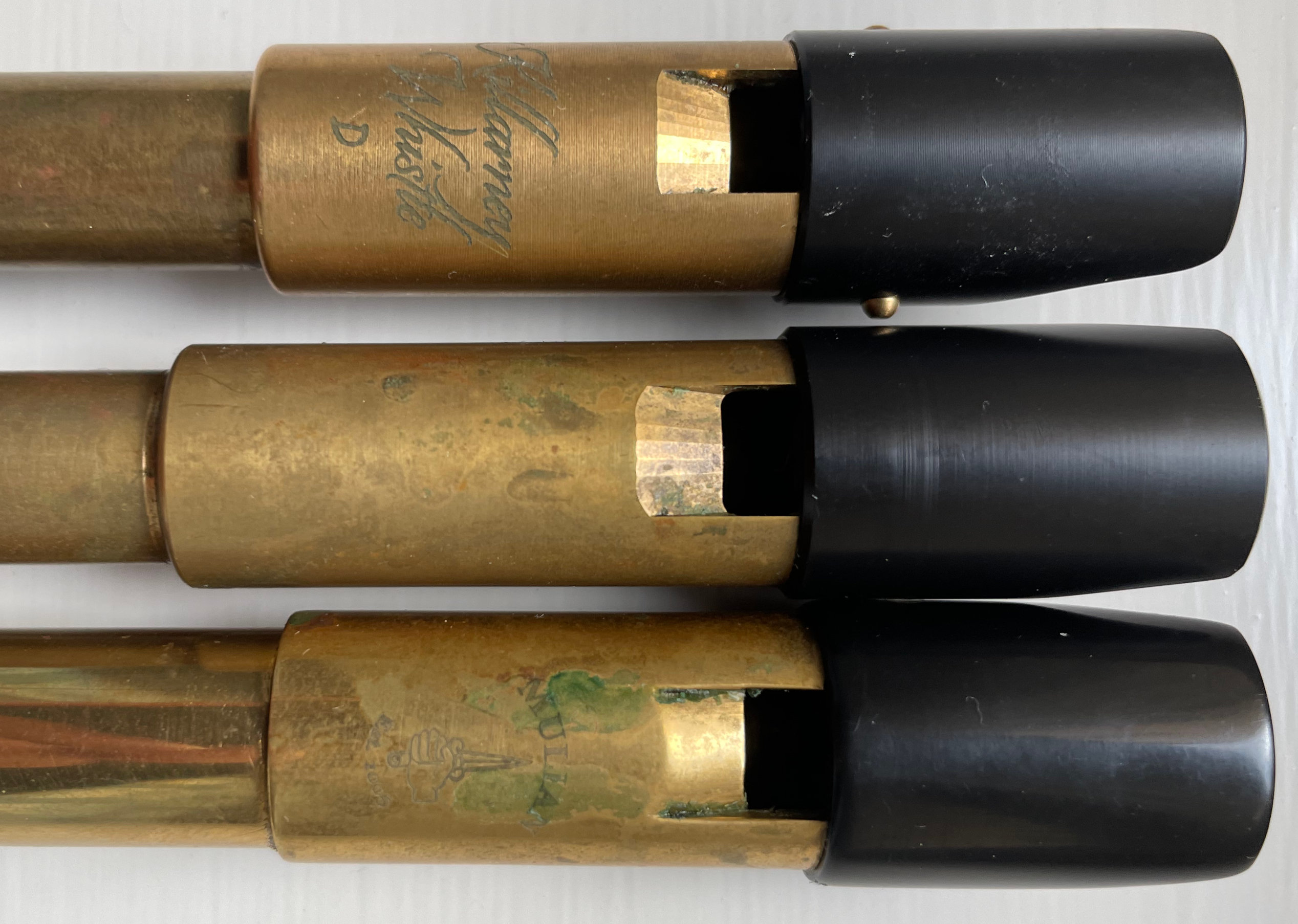
the pins that hold the head together are also different
Not necessarily set in stone, that. Killarney even sent me one without the pins put in [a fair bit of glue visible though).
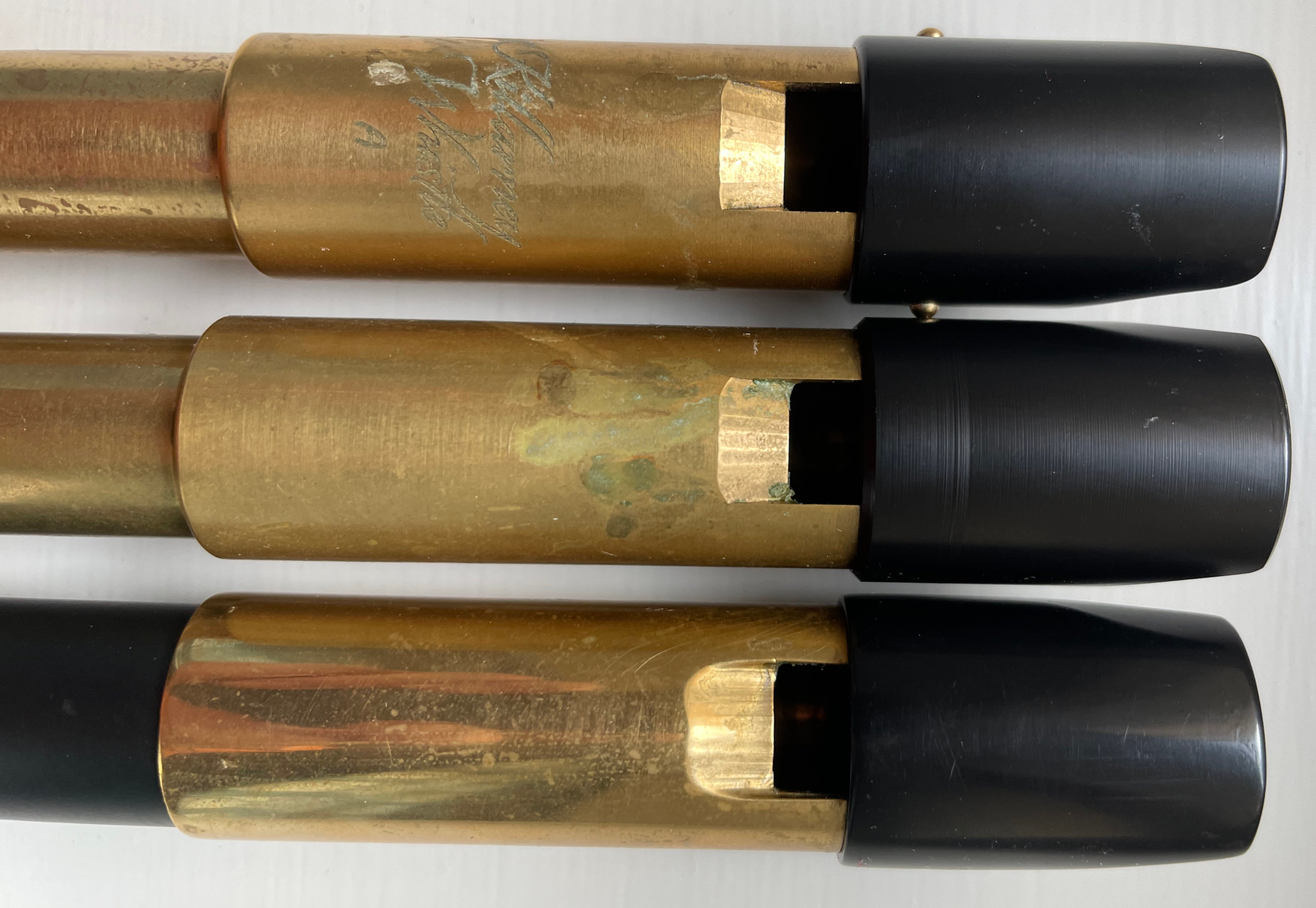
The Killarney adheres far more closely to the Sindt design and feel. I have the D’s and A’s of both makes in front of me. Both are head swappable but voiced somewhat differently. The Sindt sound is more compact and purer, scaling evenly across its full range. The Killarney is more open and louder, with a tad of grit to it. As long as I’m already knee-deep in subjective verbiage, the Sindt is palpably the more elegant of the two.
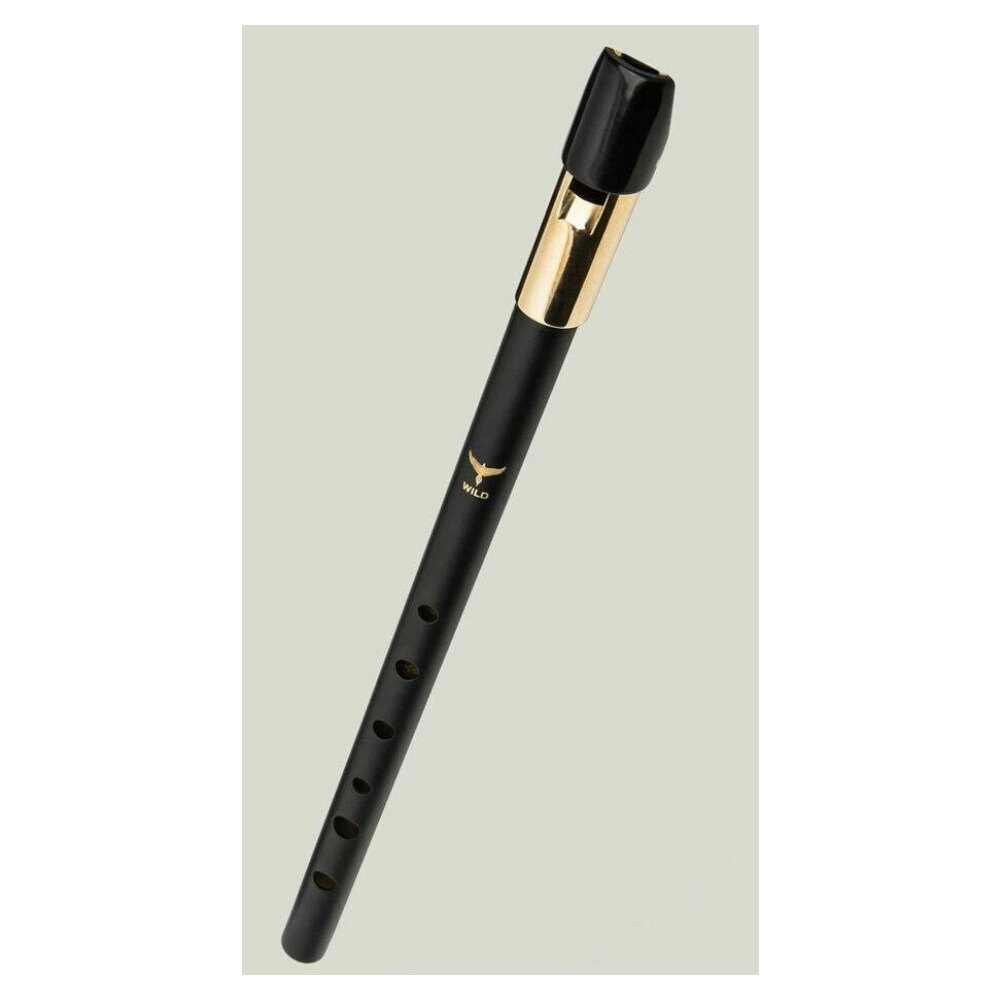
I can add the Wild A and the Mullan D to the comparison. I find them to be a step below the others in terms of response and sound quality but can easily imagine that many players would find them to be just what they’re looking for. The problem is that variation from exemplar to exemplar is clearly more noticeable and ranges from perfectly okay to flat out unacceptable.
The Wild A arrived with a curled metal shaving from the planing of the ramp still attached to the edge and resting against the windway exit. It was unplayable and there was clearly not so much as an optical inspection after it left the machining line. I have a couple of Mullans with interchangeable heads. The best of them works nicely on any of the bodies and the worst is miserable on all.
I had suspected that if there were an OEM behind any of this, they would be in Pakistan. The reasons tie into OEM flutes more clearly of that origin that are marketed through the same channels we’re otherwise talking about. I’m guessing that Lir is also made at that facility but would be surprised to learn that Killarney is.
I wonder then if the Mullan and the Glenluce are actually the same whistle, made by the same company in Pakistan? They look very similar from photos.
Out of interest, is the bore size the same on the Killarney and the Mullan? If it is the same tubing, do the tone holes align as well? I suppose it’s possible that Killarney buy in standard bodies but manufacture their own heads.
I know someone with a Sindt D, it is a nice whistle. I asked him to give me first refusal if he ever decides to flog it, but I reckon I’ve got no chance!
Not too much mystery about “Glenluce”, it’s a name used by Hobgoblin Music for their lines of instruments. They also provide the information about where the “Glenluce Wexford” whistles are made (unlike other importers), and that is Pakistan.
It’s not quite that simple. An OEM (Original Equipment Manufacturer) typically serves several VARs (Value Added Resellers). Each will specify a product from a range of options. In the present case these would include such things as the type of finish, decorative markings, the position of the VAR’s logo, the level of post-production quality control, etc.
Assuming that some or all of the VARs we’re talking about really are served by the same OEM in Pakistan, there are also two degrees of milling the ramp. The Mullan and, judging from online photos, Glenluce are worked noticeably more finely that is the Wild.
…is the bore size the same on the Killarney and the Mullan? If it is the same tubing, do the tone holes align as well? I suppose it’s possible that Killarney buy in standard bodies but manufacture their own heads
.
The body of the Killarney is slightly narrower in diameter and much thinner walled — matching the Sindt that all of these things are mimicking. Any review you’ll see of the Mullan or the Wild will comment on how unusually heavy they are. There’s no reason why the type of tubing couldn’t be an OEM option but it would also require potentially significant additional machinery. If a VAR were only ordering one of the two parts and manufacturing the other locally, the head joint would be by far the more likely one to farm out.
There’s nothing unusual about OEM or third-party supplier involvement in the large-scale production of musical instruments and it has zero intrinsic implications for the quality of the branded products. For comparison, the computer I’m using to write this comment is marked “Designed by Apple in California. Assembled in China.” This says absolutely nothing about where a single one of its components was manufactured, but there is no doubt that many of the same components appear in competing products. What does that tell us about which of them are better than others?
Oh, nothing; that’s not what I was getting at at all. After the discussion about cheap whistles, I was wondering whether there are whistles in the higher quality ranges that are finished according to the requirements of the brands, but are fundamentally the same.
It wouldn’t surprise me, for the reason you give – it seems that almost everything, from the cheap mass-produced to the high end, is farmed out to volume manufacturers. It could be argued that that’s problematic, as the work often tends to go to countries for which the revenue is a much bigger priority than workers’ rights or concern for the environment, but it doesn’t make the finished item somehow less good.
I forgot to say the thinner walls is the reason I chose it over the Wild and the Lir. Not losing my grip on the Killarney is enough to strain my arthritic hands after a while - I don’t want anything much heavier unless it also has a wider bore (bigger usually meaning easier to hold with limited mobility).
When someone starts deliberately trying to defame or malign a company, rather than idly pondering how the whistle-making industry works in the modern world?
Libel laws are different in different countries; this being a US site, US law applies. If someone has cheated you, you are free to broadcast that info so long as you’re being entirely truthful. A big topic oft revisited at C&F is the provenance of instruments, and that is fair game so far as it goes; after all, musicians want to make informed choices, and that is entirely fair. If the actual, original maker has earned an unpopular reputation due to consistent poor quality or to its business practices, the source can object, but this isn’t libel in US law. One’s reputation is not sacrosanct if one’s practices are demonstrably objectionable. Whistles made of components from elsewhere than home base earns a “Meh”. If you have ethical concerns about sourcing from a different country because of its politics, that’s something you have to work out for yourself.
I’d gone looking for a better image of the Wild whistle. The heads on the Wild and Mullan whistles look “more shiny and rounded” than the Killarney head. On the Killarney, for example, you can easily see where the ramp was serially milled. The Zoom microscope clearly shows 7 facets, the outer pair being a bit over twice as wide as the inner five. But on this image the ramp is highly polished. The edges are also taken off the Delrin mouthpiece cover. A lot of abrasives died for this image!
I have a Wild D but it’s currently out on loan. If it were in the D comparison, it would contrast the same way it does in the A. I believe that Mullan and Wild are the same OEM (with Glenluce and Lir) and that the way the ramp is worked is a VAR option. The pic that Terry located shows the higher finish also on the three Mullans I’ve seen, including the one above. The Wild A in my pic shows how both it and my Wild D are worked. The metal shaving that was still attached to the edge on the A when I received it, and the irregular surface of the ramp seen in the photo, indicate some type of planing (or manual gouging), rather than rotary milling.
So, interesting that we seem to be seeing pretty definite indications of OEM approaches in both moulded plastic head whistles and these machined head whistles.
Interesting that Sindt heads are a bit longer after the window. More tuning slide overlap?
Looks like the OEM doesn’t supply the fixing pins - Killarney’s bulge and the others are flush. And I would have thought the OEM would have been responsible for milling the ramp, but the Wild ramp does look rather roughly cut.
On that topic, I had a visit from a lady from Melbourne last week looking for a new flute. She showed me her McNeela Prattens. I played it and thought, hmmm, 60% of what a Prattens should yield. I looked in the embouchure hole and was shocked. It was hacked, not voiced.
I would have thought such things as “flush or protruding fixing pins” and “milled or hand cut ramp” to be good examples of OEM options. Again, though, I don’t reckon that the Sindt clones are all made at the same facility, nor does any of this indicate that Mr. Sindt is himself farming out parts of his production.
Yeah, fair point. I’m clearly not used to thinking along those lines!
Again, though, I don’t reckon that the Sindt clones are all made at the same facility, nor does any of this indicate that Mr. Sindt is himself farming out parts of his production.
No, I wouldn’t expect so either. I’ve made a few whistle heads along those lines and all you need is a lathe to bore out and turn the three major parts, and a mill to cut the slot. Could even be done on a lathe with a milling attachment, or if necessary, a drill press and hand tools. It would be a process that repaid a “mass production” approach. I was making them one head at a time, and it seemed that most of the time was spent setting up for the next cut, and very little time making it! If you were making a box full, you could really turn them out.
FWIW, there are more and more sellers/makers hopping on this particular bandwagon all the time. It’s hard to keep up with and frankly I am not sure I want to.
Anyway:
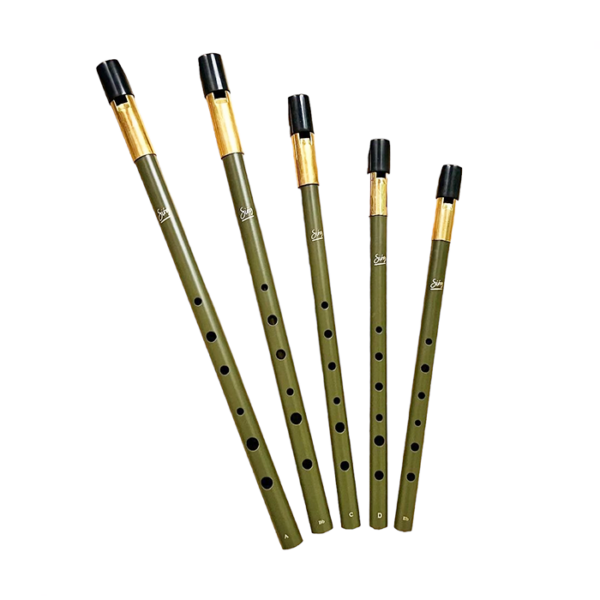
Sióg whistles anyone? A container load of them must have landed, they’ve come into in all sorts of music shops recently.
I hadn’t spotted those. They appear to have the same curved ramp base and polished finish of the Mullan whistle, except they retail for more than twice as much. Obviously I don’t know whether it is pretty much the same model, but if it is I’d want more than nice green lacquer for the extra £50.
The thing is, ofcourse, that is not quite the whole story. When the Mullans were on ebay first, I looked at them and considered if they were a worth a go. Between the postage, Brexit tax and ebay charges they would come in just over 100 euro. At that point I lost interest.
I can get a Sióg in various shops if I wanted to get one (I don’t, in all fairness) and spend as much as I would to get a Mullan delivered. The Mullans are only cheap when you are in the UK.
These seem to be priced to align with the Wild, Lir, Killarney etc. so they potentially appeal to a whole market of people, tourists (they are green, the fairies made them!), who walk into a music shop with buying a whistle in mind.
The Mullans come in a decent bit cheaper even with shipping for those of us in the States, but it is interesting to me that pretty much all the other brands are lock-step in pricing. When the Killarney came out, it was an obvious clone of John Sindt’s design, but cheaper and easier to get your hands on (no waitlist, online ordering, quick international shipping, etc.). Since Sindt was so well-regarded, it made sense that the less-expensive, more-convenient alternative would be so popular. Especially at a time when Sindts were going for astronomical prices on the secondhand market!
I would have thought there’d be more competition on price, maybe more experimentation with bore width or other features, etc. Instead, the main difference in so many of these designs seems to be the color! Maybe that and some of the marketing/branding is enough. And you’re right, they may not be selling to whistle “connoisseurs” necessarily, and hoping that they’ll appeal as a tourist souvenir. I just don’t get how all these whistle brands expect to differentiate themselves!
I will say that I have seen a sharp uptick in McNeela-branded merchandise at sessions here in the States over the past few years, including the “Wild Irish” whistle. Whatever he’s doing marketing-wise must be working!