Tin penny whistle

I’ve no doubt that image of an eagle was used in the Civil War. I’m just skeptical that it would have been stamped on whistles sold to civil war soldiers. As far as I know the Union wasn’t issuing whistles to soldiers. I suppose a maker of tin whistles could have machined up a die for stamping whistles fairly quickly and gotten it into production, but it’s not a trivial or inexpensive undertaking. At the start of the war nobody thinks it’s going to last anywhere near as long as it does, so it would be a while before someone realized it was going to last for years, and a while before someone wants to ramp up production.

If somebody plays the whistle they likely already had one. Would they buy one as they marched off? Maybe. Would a peddler have come through camp selling union branded tin whistles? Possibly. But everything happens more slowly then. It takes more time to ramp up production, more time to get objects into the supply chain. As mentioned civil war iconography showed up a lot on on children’s toys marketed well after the Civil War, and whistles would have been close to the “toy” end of the instrument spectrum. It could be from the Civil War, I’m just skeptical. It feels wrong to me. I’m a US historian for a living, specializing in the period from 1865-1920, for what that’s worth, but I certainly could be wrong and would happily defer to a Civil War specialist

I am surprised to see that website selling nazi memorabilia and think it is quite an unsavoury business.

Normal tin whistles are not chromatic by nature, no matter how often you repeat that. If they were you’d have the same fingering for accidentals on all of them. That’s why I mentioned the blues harp. Those are even called diatonic. Because they are. Even if you can “force” them with tricks like bending to play chromatically. A diatonic blues harp is even worse than a whistle because it has some notes missing so you cannot even play a normal scale on them without bending the notes. A recorder is chromatic - therefore the fingering for sharps and flats is pretty much the same on all of them (not mentioning German and baroque system). On whistles with a thicker barrel you can use cross fingering to get all notes pretty consistently. On others you can half hole. Whistles are by nature diatonic instruments that can be played chromatically. Nobody ever said “you can only play two keys on a whistle”. What does that even mean “chromatic by nature”? If I need a lot of half holing and cross fingering (which differs from whistle to whistle) to play chromatically how does that mean it is “chromatic by nature”? Makes no sense IMO.

The Civil War is an industry in the US. it remains politically charged to this day. I believe you have some idea of how this might play out over there? When I’m in Cork I plan to see the Collins memorial, for example. I read Ernie O’Malley’s The Singing Flame not long ago

The Gettysburg battlefield is a moving and extremely important place, but it’s famously plagued by “history kitsch.” The battlefield itself speaks more clearly than most to strategy–you can see clearly where Lee was and why Pickett’s charge was a terrible idea, and where Joshua Lawrence Chamberlain, hero of professors everywhere, initiated his famous bayonet charge and why it might have worked. But it’s also IMHO marred by lots and lots of gaudy 19th century monuments put up by each individual state and then individual units in both armies.

The town itself is architecturally attractive, looking like a typical PA town, but it’s filled to the brim with junky historical gimcracks and dubious and inexplicable recreations of as you see, Nazi junk, WWI junk, Viet vet stuff, revolutionary war fakery, etc. It can still be a very moving experience to visit Gettysburg but I have to wish it had been accorded a little more dignity. The Antietam Battlefield, where Thomas Francis Meagher’s Irish Brigade was decimated, got less attention early on, so while it has a lot of kind of miscellaneous monuments (one to Meagher, for example) their smaller and the site overall has a lot more dignity and restraint. The National Park service is always debating whether or not to remove some of the more unfortunate monuments

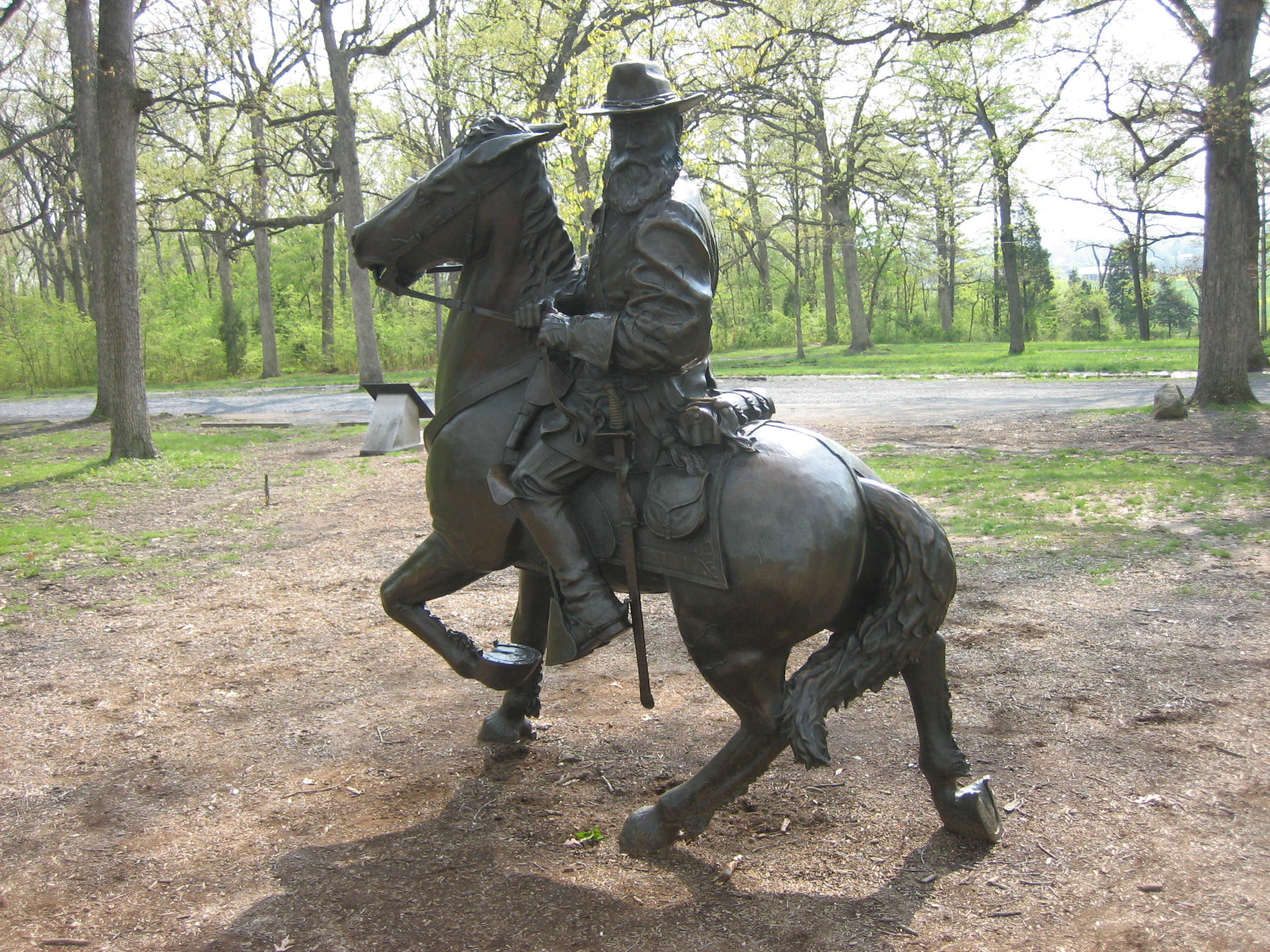
Like this one, where Rebel General Longstreet looks like one of the dwarves from Lord of the Rings

The Civil War is an industry in the US. it remains politically charged to this day.

Well, I wasn’t referring to the Civil War but to the Nazi memorabilia they sell through the site. ‘Support your museum’ , buy an original SS collar tab. Charming.

Top Rated Products In Our Store:

  • Original German Mother’s Cross Ehrenkreuz der Deutschen Mutter In Gold Certified

-Original WWII German Scarce Waffen SS Collar Tab Certified By The Gettysburg Museum Of History

-Original WWII Era German NSDAP (Nazi) Party NSDAP 1936 NATIONAL PARTY DAY BADGE

etc

yes, did you see where i wrote “The town itself is architecturally attractive, looking like a typical PA town, but it’s filled to the brim with junky historical gimcracks and dubious and inexplicable recreations of as you see, Nazi junk, WWI junk, Viet vet stuff, revolutionary war fakery, etc”

There’s a significant subset of the population for whom “history equals wars and stuff” and “wars and stuff are cool” and they don’t really care which war and what was being fought for. We live with this as best we can.

The site you linked to is a private site–it’s not part of the national park service and enjoys no government support or endorsement. Historians and the Park Service have often debated whether or not Gettysburg should be "policed’ to some extent, but generally commitment to free speech prevails.

Yes, that’s the eagle I was referencing early on in thread. Markings/stamps on various military issued items. Here is a cap device with the eagle:
https://www.ebay.com/itm/CIVIL-WAR-HARDIE-HAT-CAP-INSIGNIA-LARGE/312324117362?hash=item48b7f7d372:g:gs0AAOSwXitb72aO:sc:USPSFirstClass!06460!US!-1

I suppose it partly surprised me because selling that sort of stuff is illegal in most European countries and seeing that sort of sales on a site linked from the forums threw me.

Best leave it at that, before the mods feel they have to get busy deleting posts.

I would suggest that possibly the Union Army Band may have marked their gear. That’s why I suggested earlier in thread that contacting the US Army Band may provide more historical information.

The interest in Nazi memorabilia still seems to be an enduring part of the fabric of historical collecting in the US. While I have never personally appreciated the appeal, one tends to assume that most recreational collectors will view such objects simply as triumphant spoils of war, and that viewpoint, presumably, is why the trade is not illegal. But it must be said that there will also be those for whom such mementos serve darker values, and that, of course, is another discussion.

That pretty much says it.

I see it as sort of like trading in scalps, only somewhat less grisly.

Let’s move on now, shall we?

It’s certainly possible. I doubt the military bands would have had a whistle though. Fifes, yes, whistles I suspect not. Fifes already had a long history in military bands, and there are lots of pictures of fifers in the Civl War. I don’t know of any playing the whistle. Also would they be loud enough to be of use in a band outside with snare drums and bugles?

So if they were not officially issued for use in regimental bands, it seems unlikely they’d be issued to soldiers as official gear. But accounts of the war often talk about soldiers tossing stuff out of their packs as they march, to save on weight. And it’s well known how little standardization had taken place even halfway through the war–uniforms, weaponry, other gear all remained very much a hodge podge of stuff, despite efforts to get them all looking the same. Pennsylvania men didn’t want to look like Michigan men.. If they can’t issue standard uniforms, which they have trouble pulling off, then it’s hard to imagine they would be issuing official US government tin whistles.

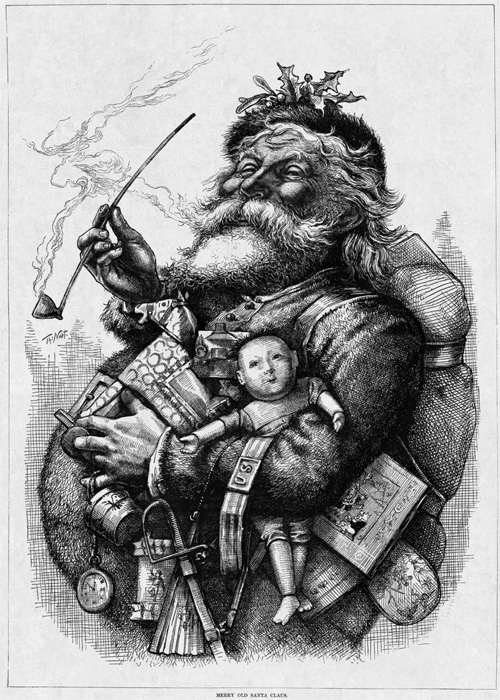
In this Thomas Nast image, from 1881, Santa Claus is bringing children presents including a Civil War reproduction sword and belt

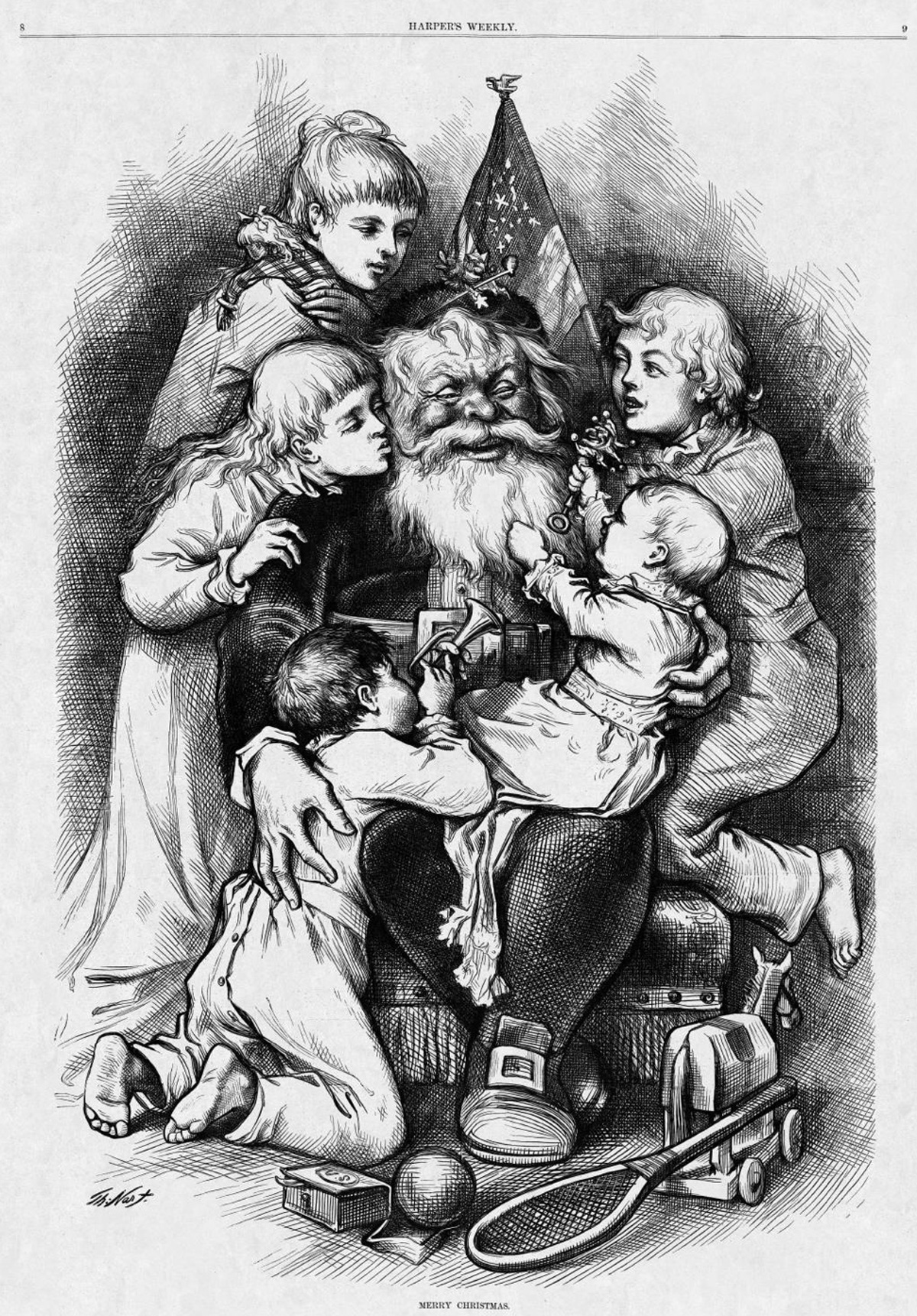
and in this 1879 image the boy has been given a reproduction Union cartridge box, lying on the ground, and he has a toy bugle. I have a feeling those eagle-stamped whistles were issued as toys. But again I’m just making a case for why I’m skeptical, not claiming to be right.

All of you have made very valid points. I appreciate the input. Thanks for contributing.

Jane

Excellent job! As for that particular and hundreds of other eagle designs, it’s very common to find articles from the mid to late 19th century with it. And not just military items. Of course, you see it on coins, toys, butter presses, furniture, table ware, cross stitch work and folk art. Just like how we stick American flags on everything, they used to stick eagles on everything! Even now, you’ll find eagles on some patriotic goods & novelties, you find them on the dollar bill and on top of flag poles.

Hopefully you can give us some better pictures and tell us how it plays as well! (If it’s got a lead block and you’re fearful of lead poisoning, a little clear fingernail lacquer brushed on there will do the trick.)

Frankly, I’m not going to argue with you about this any more. It’s gone well far enough. Just do your diatonic thing and have fun with it! That’s the main point of playing a whistle, after all, is to have fun playing music!

Here is a YouTube vid that seems to get a lot out of the whistle.

https://www.youtube.com/watch?v=eOmba730e0A

Just watched the video! He is amazing and I lve the sound. Thanks for directing me there.

Jane

It’s cool that he can do that, but it’s worth listening to the same piece on an actually chromatic instrument, like, say, the Boehm flute.

https://m.youtube.com/watch?v=8p0qo30LUfo

Which was specifically designed to play chromatically with even volume and consistent timbre in all registers.

There’s something great about pushing the limits of your instrument. There’s also something great about not trying to make one instrument be something it’s not.

A Boehm flute is Chromatic “by nature.” That is, Boehm ignored the conventions of the wooden flute altogether produced an instrument that easily played chromatically. It very quickly became the standard flute in orchestral work, in jazz, in pop music. Why? Because it’s chromatic “by nature,” designed that way from the ground up.

People still play the “irish flute:” I do, for example, and it’s great. It has a distinctive sound and feel. People still play acoustic guitars even though leo fender solved all the problems of the acoustic guitar when he invented the telecaster. But people don’t play the “irish flute” in orchestras unless they are specifically playing music from the era before Boehm. Because while you can make it play chromatically, it’s not chromatic “by nature.”

It seems to me that all instruments have strengths and weaknesses. A sax has great dynamic range and volume but cant play chords. A piano has great dynamic range and volume and can play chords but isn’t portable and you can’t have vibrato. A guitar can play chords and is portable but has lousy volume and dynamic range and you can’t sustain a note. etc etc.

You can make a whistle play chromatically and great, pushing the limits of the instrument is useful and cool. It sounds terrible, to my ears. playing the Toccata and fugue, which was written for the organ, an instrument that’s chromatic" by nature." I might listen to it as an example of “wow that’s cool” but I wouldn’t listen to it as music, if that makes sense.

But, just for your information:

http://thebarclayflutestudio.com/getting-started/

https://henglerwoodwindresourcefile.weebly.com/uploads/2/3/8/2/23823569/oboe_fingering_charts.pdf

http://hautboy.org/fingerings

https://www.dulcians.org/fingerings.htm

https://i.pinimg.com/originals/8d/08/7b/8d087b582891f1735801f4ff27550fb9.jpg

http://www.flageolets.com/music/bainbridgepreceptor/

http://www.anne-bell.woodwind.org/ABCtutor.htm

http://wenner_floeten.s3.amazonaws.com/assets/151/Grifftabelle_Csakan.pdf

https://www.reddit.com/r/tinwhistle/comments/7ximys/whistle_fingering_chart/

These are fingering charts for simple systems wind instruments – flutes, oboes, clarinets, bassoons, whistles, csakans, flageolets – most of which are old. Fingering charts go back to Pretorius and probably before, for as long as young nobles have had to learn how to govern the ventages of their instruments. They are all chromatic. Most of these instruments don’t have more than one or two keys (and those are usually for the bottom notes) and many have no keys at all.

I’m not posting this to belabour the point, but, to say that the whistle is a non-chromatic instrument is plain wrong. The evidence weighs against this argument, which as I’ve said before, is probably more due to the overwhelmingly diatonic tradition the penny whistle gets used within (ITM). The tin whistle derives from a very long tradition of simple system wind instruments the players of which had to cope with chromaticity without having the luxury of Mr Boehm’s work.

Most of these fingering charts were constructed by men far more knowledgeable than me: Quantz and Hotteterre being two names I know well. They certainly knew what they were doing when they constructed their fingering charts for all these “diatonic by nature” instruments. I don’t claim for myself any authority, but as you might guess from my name here, I have more than a couple tin whistles. Most of the whistles (and assorted wind instruments) in the Museum I have owned at one time or another. I have studied works on old instruments. I’ve played a number of old & simple system instruments including clarinets, flutes, oboes, bassoons, flageolets and whistles.

To a one, they are chromatic. Do they have keys? No. Does every note along the gamut share the same levelled tone quality? No. That’s a design feature of the Boehm style of instrument. These other instruments are simply not designed that way.

Well! I can see that there are as many different opinions regarding whistles as there are regarding fifes. Although I find everyone’s input fascinating, I find one’s individual ability with any instrument to be
what appeals to me. Yes, certainly a piece written for one instrument will surely sound better when played on that instrument, but the ability of an individual to learn how to play it recognizably on any other instrument has to be impressive. Thank you all for your input and your links. I love this forum.

Jane