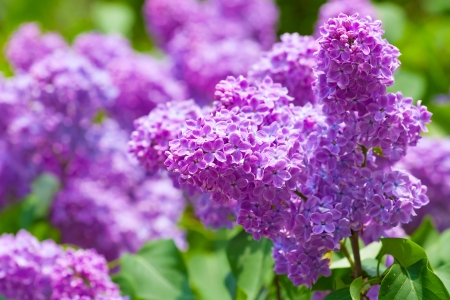
Syringa

Some of you have followed my quest for the best drone reed material. It started out a couple years ago (I blame Ted) with soft species like Teasel, Japanese Knotweed, Curly Dock, Bachelor Button, Milkweed, etc. Then progressed to Elderberry and Forsythia, then to Wild Sunflower, Phragmites, Cloud Nine, Mallow Nine bark, and now to Syringa.

The journey has been worth all the wasted time with hundreds of reeds being made, and helpful suggestions in design from a few experts - and great feedback from a few Guinea Pigs.

The search has ended.

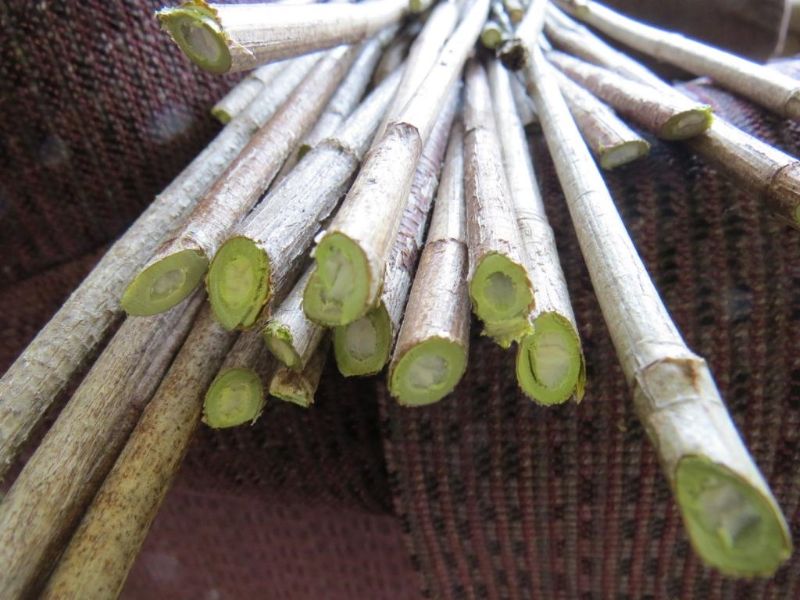
Syringa and Elderberry are the winners. I give the edge to Syringa because the stems are perfectly straight, consistently, while straight Elderberry stems are a rare find (not that they need to be straight to work–but it helps a lot). Syringa sounds great, and perhaps even more stable through climate and humidity changes than Elder. The only difficult thing is curing time. I found that hollowing out the stems while still a little green speeded up the process. The best thing is Syringa grows just about everywhere - both in local neighborhoods and in the mountains. Syringa is the Idaho State flower BTW, so it may grow more abundant inland than along the coast. Syringa was the favorite species of Native Americans for making arrow shafts.

Also of interest, I haven’t noticed the potential allergies and lung congestion that may accompany inhaling reeds made from grasses, even Elderberry. It’s non-existent with Syringa.

I planted a couple domestic Syringa bushes around the house about 7 years ago. I’ve made reeds out of some of those stems, but also out of wild bushes growing up the canyons in the foothills. The sweet smelling white flowers bloom any time from now until July…depending on elevation. Syringa is also called Mock Orange in some areas.

This morning I went out and picked a few more stems. I’ve been so impressed with Syringa - having played Syringa drone reeds for over 6 months now, through all kinds of heat/cold and dry/humid conditions, and never once in the last six months have I experienced even a hint of instability with the drones. They have always fired right up, and never stopped, just like in the Youtube video posted below.

I know many have expressed interest in obtaining some of these alternative reeds, but it’s very difficult to reed drones blind, w/o the stick. Making drone reeds from Syringa, Elder, and Forsythia is a much different process than making them from cane and cane-like grasses. The time it takes to make a good one from Elder or Syringa can be hours if done properly. Plus, waiting time for them to fully cure so they can last forever.

I put together a 6 minute video this morning of harvesting Syringa stems from the bushes I planted a few years ago. This should go a long way to helping pipers with drone problems. The end result will be…and has been total stability–in my experience anyway. Plus a great and powerful sound - depending on the size of your exit holes.

https://www.youtube.com/watch?v=_TnpkLFgAi8

..interesting…
And - which of the 12 lower classifications of the species is the one you’re using?
M

Cool video. I have some Syringa growing in my back garden…now where did i put my pruning shears!

I’d forgotten that Syringa is a name often referring to the unrelated Lilac with lavender or white flowers.

http://www.statesymbolsusa.org/symbol-official-item/idaho/state-flower/syringa

Idaho State Flower

The flower Mock Orange (philadelphus lewisii) is the Idaho State Flower. Mock Orange is also called Lewis’s Mock Orange Syringa (a confusing name as it usually refers to the unrelated lilacs) and Wild Mock Orange. Mock Orange is a deciduous shrub, native to the western United States, and Idaho and Montana. Mock orange is an ornamental plant with aromatic flowers, best used in a shrubbery border or as an informal hedge.

Kingdom - Plantae
Division - Magnoliophyta
Class - Magnoliopsida
Order - Rosales
Family - Hydrangeaceae
Genus - Philadelphus
Species - Philadelphus lewisii Pursh

Mock Orange flowers reliably bloom in late spring. Mock Orange flowers are white, 2-3 cm wide and smell like orange blossoms. The Mock Orange flowers are hermaphrodite and are pollinated by Bees. Each Mock Orange flower has four sepals, four petals, 1-4 cm in diameter. Mock Orange flowers have many stamens, and an inferior to half-inferior ovary. The position of the ovary on Mock Orange is below the level of attachment for other flower parts. Mock Orange flowers are commonly (but not in all species) sweetly scented.

lovely sound!

It’s the lilac’s taxonomic genus, so I’ll admit that at first I assumed you were referring to lilac suckers. 'Round here, we call Philadelphus Mock Orange. :slight_smile:

Those drones do sound great, BTW. Remarkably ready yet stable, too.

I probably misspoke when I said this philadelphus lewisii shrub grows everywhere. After doing a little research, the coverage maps all show it growing in CA, WA, OR, ID, and MT only. I don’t know the difference between the wild and tame varieties–I think the ones I planted are tame (from the nursery) and they seem just the same as the ones growing up the canyons. There are other philadelphus species growing around the states, even the world, but the plants (esp stems and blossoms) look different - not really close to the “shready” stems of lewisii.

I would like to pursue this further though…to see what differences there are between the various species. I have a hunch there’s something special about Philadelphus…the way it’s genetically made up to produce such straight growing shoots, and to remain flexible yet strong. The tongues are amazing on the reeds I’ve made. It’s a challenge to get them to stay lifted up so the air can catch them and send them into a vibrating mode. But when you get them there, they stay. I’ve bent some of the tongues almost 90 deg. upwards…and they don’t break, but remember the position they were in and go right back down where they came from.

I wouldn’t count out lilac. A couple years ago I tried making some reeds from some bushes I have, but concluded they were too “woody.” But, that was before I caught on to the “sucker” idea. Yesterday, I made another one with some success (dry, dead, straight old sucker), but will have to wait until some green twigs I cut cure before I know any more.

I have said it before and I’ll say it again: Alain Froment was convinced the reeds in Ennis’ drones were not only glued in but were lilac reeds. I am not sure he was right on either count but that’s what he said.

Yes, I remember that well. I told Ted the other day I was beginning to understand why Ennis would glue the stems into the drone stick. They simply don’t need any adjusting.

I’m only 6 months into this experiment. They’ve held up QUITE well inside - through dry heat in the winter when it’s cold and snowy out, and rainy outside and cool and humid inside. The thing I want to know now is will the drones remain stable when I take the set outside this summer.

I would like to know what Froment meant by “lilac” since the name can be confused with other plants like Mock Orange.

I would like to know what Froment meant by “lilac” since the name can be confused with other plants like Mock Orange.

Hm,. yes but translate that to the time Ennis’ reeds went into the set and what you’d find in an Irish context. I have at some point considered Buddleia as a possibility (just because you’d see it growing everywhere on derelict buildings etc) but without close examination we’ll never know (and even then, they were also supposed to be black and covered in grime from smoky environments).

I have no idea what all species grow in Europe, but I suppose it’s possible someone may have sent Ennis some twigs from elsewhere seeing how Dan Sullivan supplied Rowesome with California cane back in the early days.

This from a Wiki article on philadelphus

  • Philadelphus, /ˌfɪləˈdɛlfəs/)[1] (mock-orange) is a genus of about 60 species of shrubs from 1 to 6 m tall, native to North America, Central America, Asia and (locally) in southeast Europe.

We used to have a big Philadelphus shrub in our garden. We called it a “mock orange” and I remember that I was highly allergic to it when it was pruned. I got bad asthma attacks from it. Maybe someone could send me some choice cuts for making drone reeds - it could be a “win-win” situation!

I have a friend who had the same reaction to some Japanese Knotweed I sent him. The reeds were already finished too. He got a bad asthma attack just from handling and drawing air through them while adjusting the tongues. I got a itchy rash on my hands and arms from handling loads of them in the sun. I wear gloves now!

I’ve gotten some bad coughing spells from drawing air (probably dust) through many of the reeds, esp Elder, Knotweed, and Ryegrass, but not Syringa.

Maybe someone could send me some choice cuts for making drone reeds - it could be a “win-win” situation!

PM me your address. It’s been about a year now since I discovered a canyon choked full of Syringa. This pic was taken that same day. I’m going back up there today to see if any of last years shoots are starting to develop checkerboard bark patterns. You can see the stem on the lower right is starting to show some…even while green.

I really like knowing people know a lot about reed making before I send out raw material. The process is quite different from making drone reeds out of cane. Since this species grows around here in abundance, and since these reeds appear to work good forever, it’s probably better to learn on Syringa than Elderberry–good specimens are rare. Some of these stems may still show some green inside once you remove the pith. But within a few weeks the wood will all turn brown.

some Japanese Knotweed I sent him

Are you even allowed to transport Japanese Knotweed?

I made one drone reed from Syringa over 30 years ago. It worked, but I didn’t pursue it any further. Eugene Lambe made some drone reeds from Snowberry that worked. I also made a couple of them and also found them to work well. I would think the green material may benefit with a couple of years of curing, not just drying. Curing involves the break down of the sap by bacteria, fungi or a virus. That takes time to reach stability. Would be great to make some double reeds from these plants. I have made several from Elder, but Syringa is as yet untried.

I’ve never heard the name “lilac” confused with Mock Orange; they’re too different. Folks in my patch might not know a Mock Orange when they see one, but they would never call it a lilac; lilacs seem to be planted everywhere here and we know them as well as we know dandelions. Point to a Mock Orange and say, “That’s a lilac,” and even a child would reply, “No, silly, that’s not a lilac. THAT (pointing to a lilac) is a lilac.” OTOH use the name Syringa, and that’s where we can get into difficulties. If you pointed to a Mock Orange and told me, “That’s a Syringa,” I now know to say, “Oh, you must be from Oregon.” :wink:

Here in Oregon, when we see this flowering bush, we call it lilac…

And when we see a Mock Orange, we call it Syringa…

But when you look up Syringa on the internet, it gives you results for both Mock Orange and Lilac…

And if you search for pictures of all the different species of Philadelphus, you will get several different types of Mock Orange. The one you have in the upper Midwest is different than ours, and ours is different than the one in Texas, and different still than the one that grows in New England.

That’s why I’d like to explore the difference between all the different kinds of Philadelphus. The stems all look different. Today while harvesting more Mock Orange, there was another white, sweet smelling, flowering bush that I thought was Syringa, but it wasn’t the one I was looking for. It had smooth bark and no suckers, just non-straight branches. The one I harvest has rough bark (shredded) and suckers. Bark like this - https://uconnladybug.files.wordpress.com/2013/06/mock-orange-bark.jpg

Good point about drying vs. curing. I had a nice 8’ x 1" Syringa stem curing in the sun room, but alas, I don’t know where it has gone. I’ll find you some more. I saw some huge trunks of it today, some were 4" in diameter and 30+ ft. tall (I took pictures).

I didn’t know it was such a problem in Ireland. It’s a huge nuisance here too, but no rules against it here in WA or OR. Arundo Donax is illeagal to transport here though.

Just curious - about how long does it take for green donax cane (for reeds) to dry/cure? Is there a better time of year to cut these?

Also, has anyone noticed any difference between normal cane (solid green), variegated cane (green with white stripe) or even albino (solid white) cane? Other than coloring, I mean…