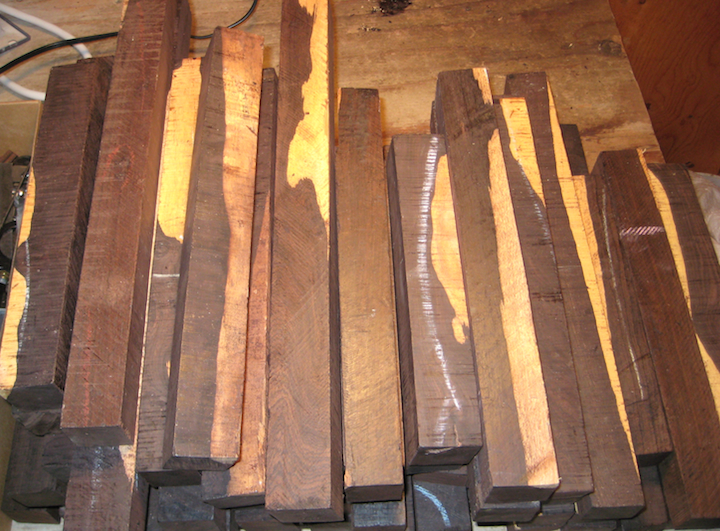
Here is yesterday’s blackwood haul from my wood supplier. I will use these for the middle and lower joints on Folk Flutes. These are from the pieces rejected by the clarinet manufacturers for various reasons - usually knots, checks, cracks, bark, rot and sapwood. My wood supplier (Gilmer) gets this for cheap and then sells it for cheap, either in 30kg bags or by the piece. I usually go through a large barrel of these and pick out ones that have no visible cracks or checks or rot. I don’t mind the occasional knot and these are very easy to cleanup when encountered. But what I really look for are pieces that have the sapwood, and yet are otherwise clear and perfect. As if sapwood was a defect! If possible I like to include some sapwood in the finished Folk Flute as an inclusion. Many of my Folk Flute clients like this; but I have also observed that some clients are horrified by it. Sapwood may have been the sign of an inferior instrument 100 years ago. Now its use is part of the modern lutherie style and philosophy of making the best use of the resource. The people horrified by this need to get over it.
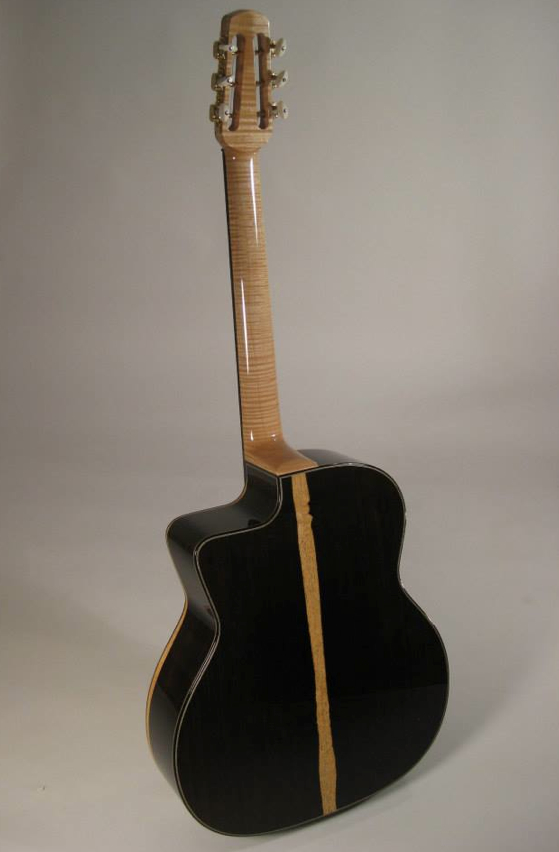
I just saw pictures of a gorgeous guitar by Shelley Park with blackwood back and sides, featuring a strip of sapwood at the bookmatch join, and on the upper edge of the sides. I am wondering why I didn’t order the one she made me with such blackwood three years ago, instead of East Indian Rosewood. What was I thinking? I may order one someday…
Sappy blackwood… (thanks for the editing Kevin!)
Here is that guitar that Shelley just finished. This gives an idea of what this blackwood sapwood looks like in a finished instrument.
For more information on her guitars see http://www.parkguitars.com/
Casey

