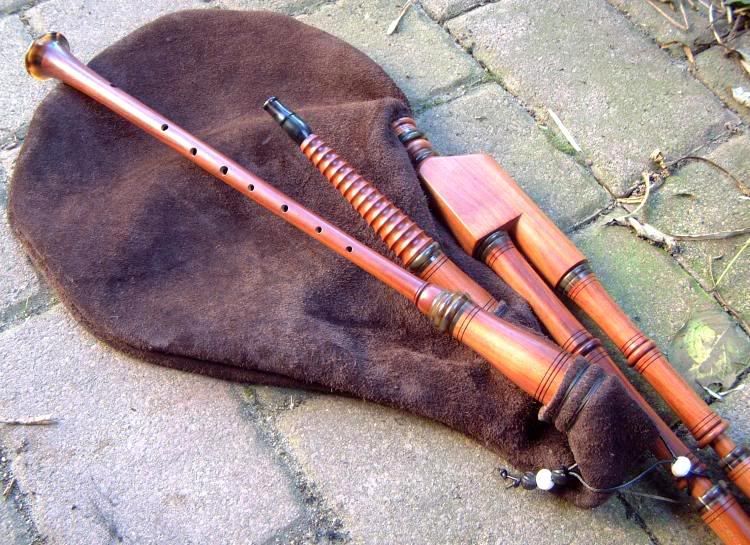
Pictures of Your Pipes

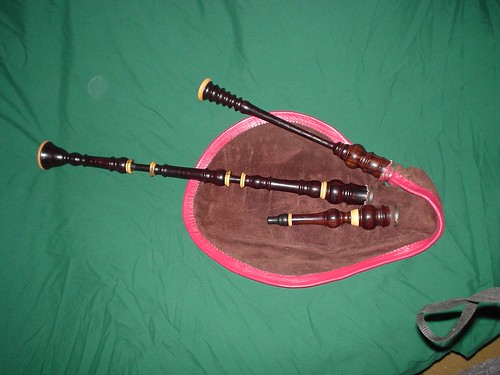
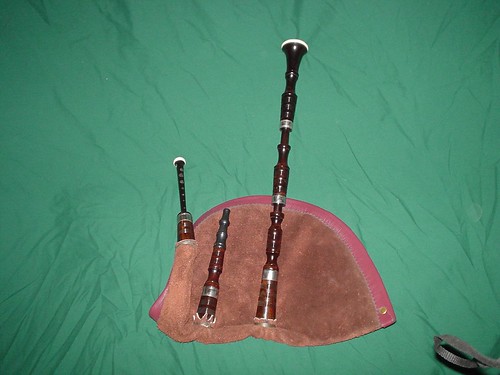
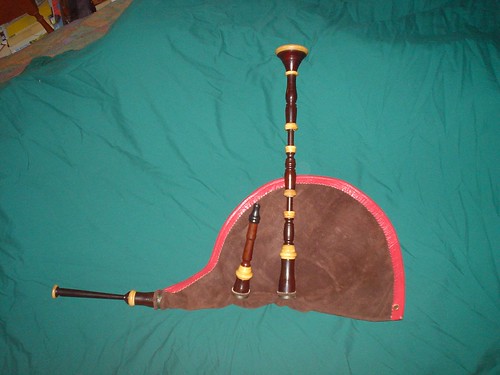
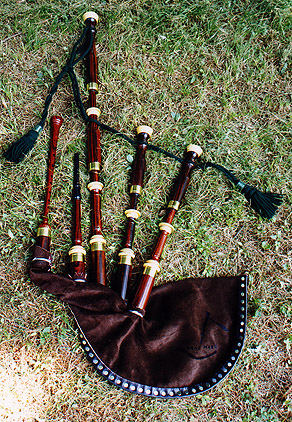
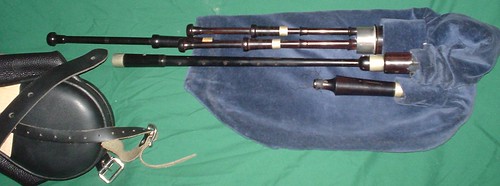
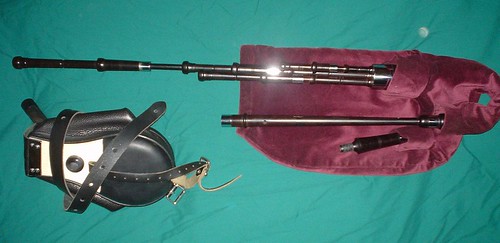
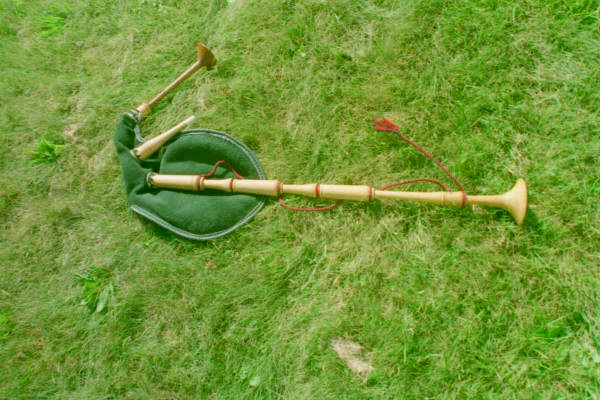
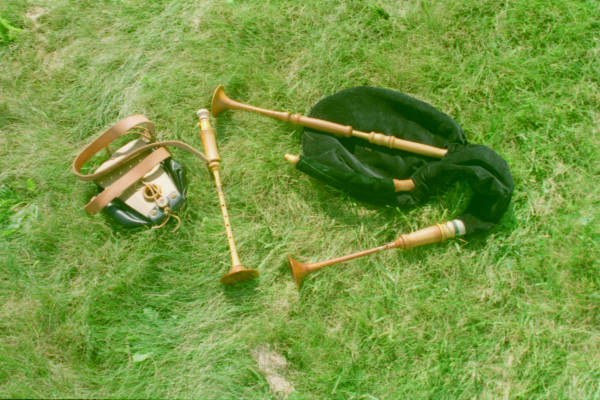
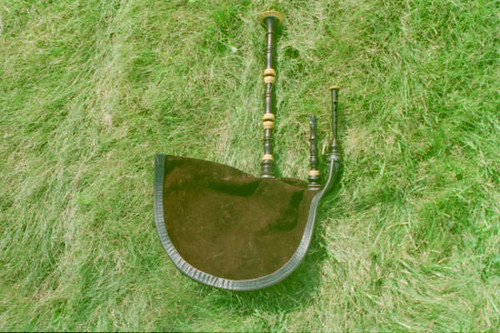
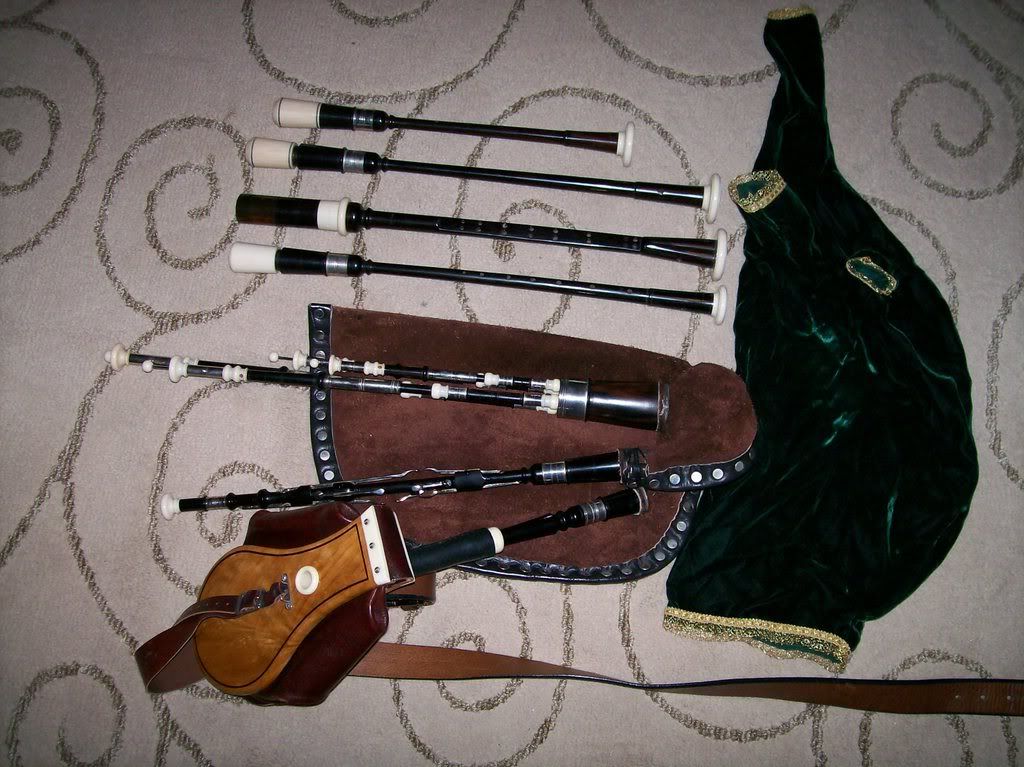
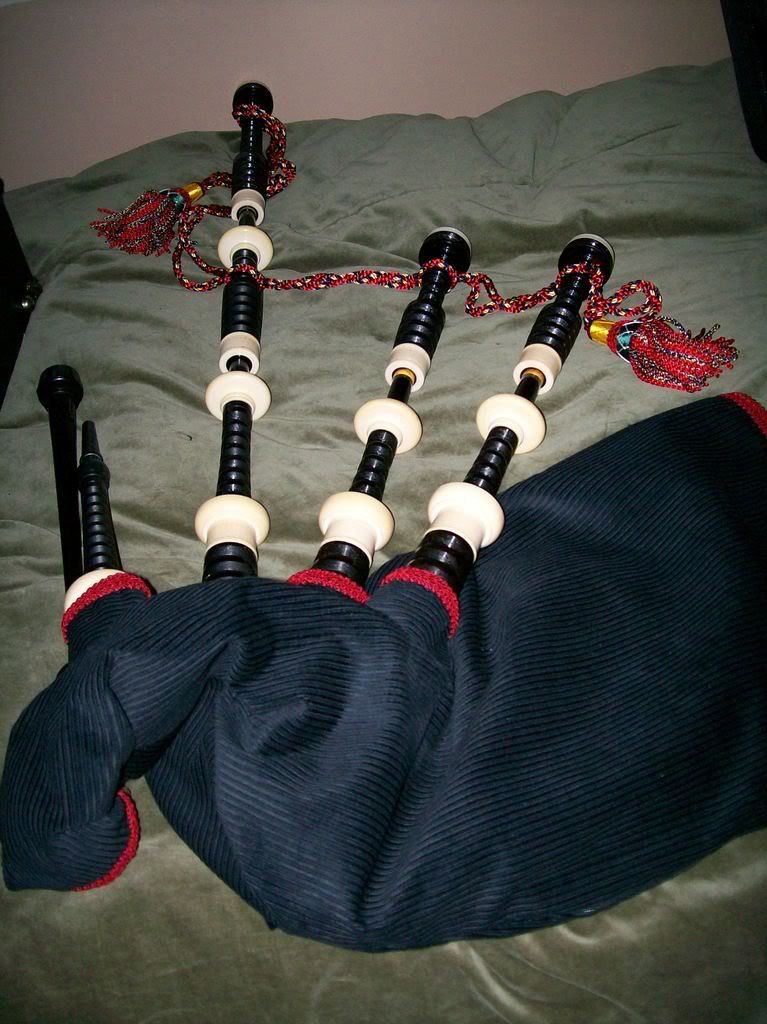
Here are my three sizes of Highland pipes, what the 19th century makers called
No1 Great Highland or military bagpipe
No2 halfsize or reel pipe (today called 3/4 pipes)
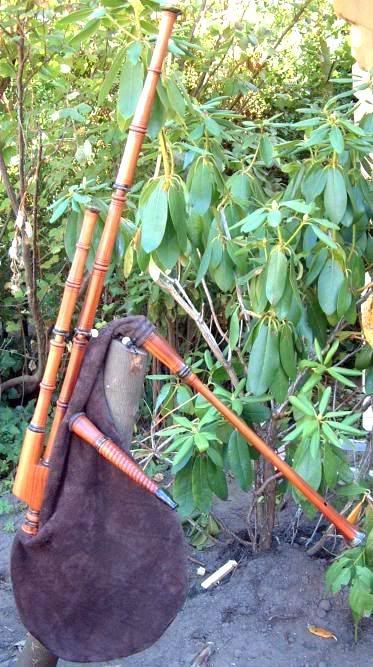
No4 miniature Highland pipe (today called smallpipes)
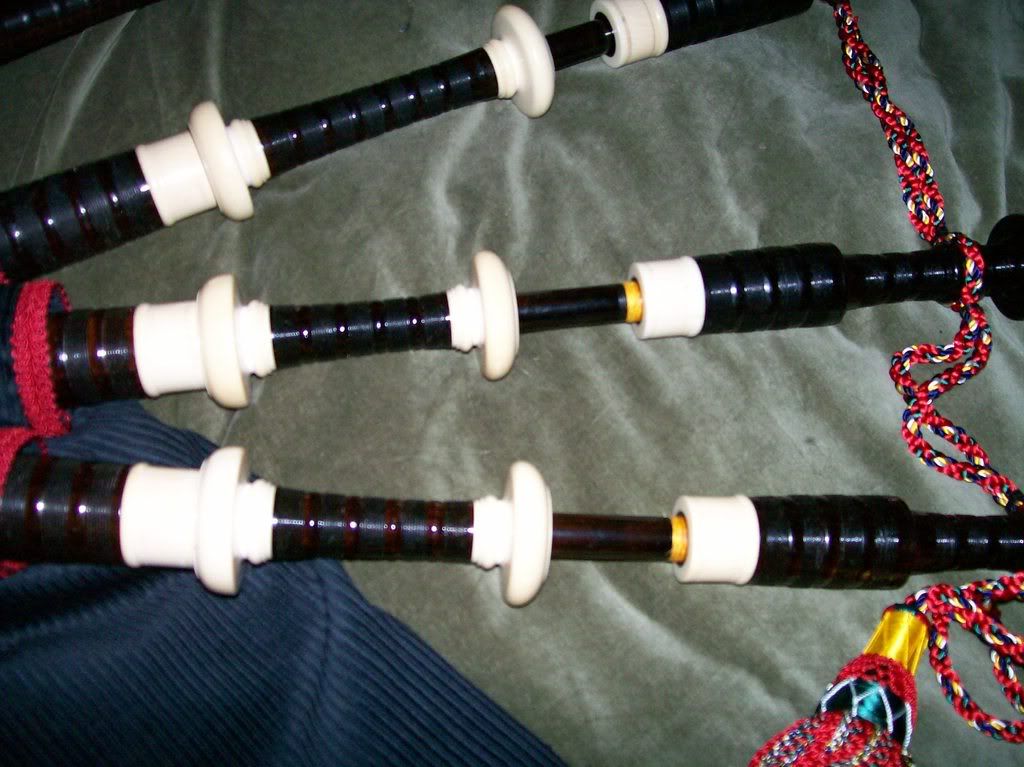
The GHB is blackwood, fully mounted in hand-engraved aluminum, by Dunbar.
The reel pipe is ebony mounted in ivory and nickel, c1900, by Glen, with a Jon Swayne chanter in A in ebony with high B key.
The miniature pipe is cocus fully mounted in ivory, c1900, unknown Glasgow maker, with John Walsh chanter in A.

Swayne’ s pure dead brilliant IMHO

That miniature pipe have a conical chanter ?

or more like practice chanter (cylyndro-conical as opposed to coni-cylindrical?)

Veuze in C by Mac Harg
Veuze in C (do)

NSP in F by Burleigh
Northumbrian Smallpipes

Cornish pipes in D and G by Goodacre
Cornish Doublepipes

Biniou kozh in B-flat by Dorig LaVoyer
Biniou Kozh in B-flat (Si bemol)

Biniou kozh in G by Mac Harg
Biniou Kozh in G (Sol)

Biniou braz by Mac Harg
Biniou Braz

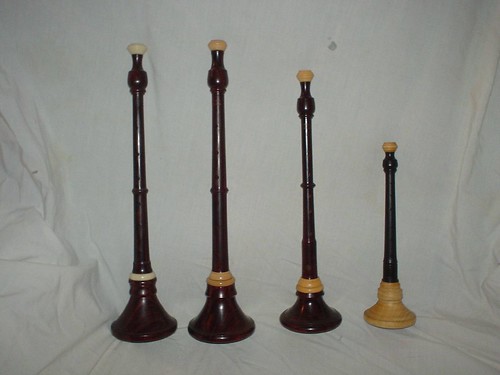
Assorted bombardes by Mac Harg
Assorted Bombardes

SSP in A by Ray Sloan
Scottish Smallpipes

Border pipes by Ray Sloan
Border Pipes

English Greatpipes in D by Julian Goodacre
English Greatpipes

Leicestershire Smallpipes in D (with C chanter) by Goodacre
Leicestershire Smallpipes

Biniou kozh in B-flat by Michael Mac Harg
Biniou Kozh

Hey Charlie, do I see a 22 pouce cornemuse chanter in that group shot of your pipes? (a bit right of center)

Bill

I wish Bill :cry:

nah its merely a monstrosity I cobbled together myself out of south asian parts.

Here’s me playing my Goodacre Cornish doublepipes, for a gathering of Cornish Bards:

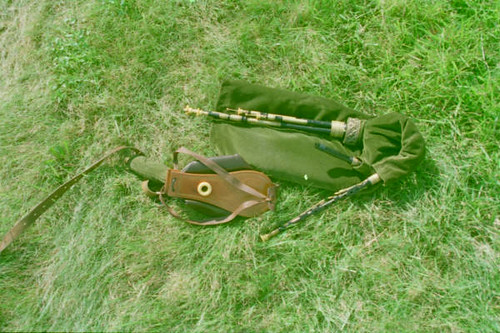
Here is photo of my Smallpipes;

My newest set By John Rutzen;

Rutzen SSP in D


Photobucket

NSP in D , 7 keyed chanter, by Ray Sloan with Multiple SSP Chanters A, Bb, Double A, and D

Here are my Highland Pipes;

Photobucket

Photobucket

1950’s Robertsons with Ivory mounts

Just looking at those ivory mounts on that Robertson explains why elephants are endangered!
Kintailpipes: You might be interested in hearing about a custom double-chanter set of D smallpipes I had made years ago.
One chanter was for the upper hand, the other for the lower hand.
The great thing about the NSP is that it’s a closed system, so this set, when played like a normal single-chanter set, sounded like a normal single-chanter set. But, at will, you could play notes on both chanters simultaneously for glorious harmony. It had the normal three NSP drones. This set was in D. I sold it years ago but I think I can find a photo of it to post.

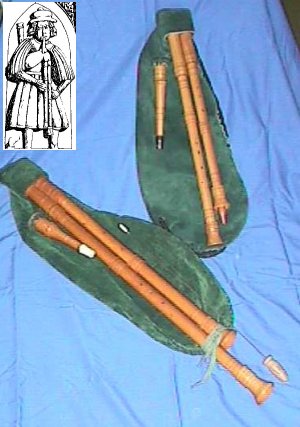
I just received my mediaeval bagpipe made by Jens Güntzel. It received 2 plastic and one A. Donax reed with it. The Donax reed is a bit louder, but the plastic reeds play really good too! The drones also have synthetic reeds with glass fiber blades. There are 2 screws in the dronereeds, one for adjusting the strengt, you have to adjust it if you switch from plastic to Donax reeds. And another one for removing and replacing the blades if they get damaged.
Here are some pictures:

Cool! :slight_smile:
They look kind of heavy, are they?

They feel lighter to me then my GHB. It looks very big and heavy, but the wood used isn’t very heavy. They weigh just over 2 kilo’s (about 75 ounces). I don’t know how much GHB’s weigh, but I think around 3 kilo’s (110 ounces). When I play them it doesn’t feel as heavy on my shoulder as my GHB.
The drones are the same lenght as GHB’s (just one tenor ‘missing’) and the chanter is a bit longer.

If you think these look heavy you should have a look at other medieval pipes Jens makes at www.dudelsackwerkstatt.de - there’s some really heavy stuff there! (iron nails, dragon heads and 9" drone bells etc)

Scoutcow, what fingering does that mediaeval pipe use? Is it similar fingering to the gaita gallega?
Here’s more of mine, my gaita gallega in buxo:

and here’s my gaida with four gaidanitsi in four keys (do, re, fa, sol, keynotes G, A, C, and D) with extra drone sections so that the drone can play various notes:

and here’s the double NSP by Denny Hall out of blackwood with real ivory. It’s brilliant: due to the closed nature of the NSP, you can finger this thing exactly like an ordinary NSP and it will sound exactly like an ordinary NSP. But whenever you choose you can play both chanters for harmony. It’s in the key of D and has a high E key.

It uses completely open fingering and for the high G and high A you have to put your top middle finger on.

That’s one fascinating little NSP Panceltic:
Shades of Musette de Court! :thumbsup:
Can ya manage any Boismortier on that?

Htt

I have forgotten one of my favourite bagpipes:

German Schäeferpfeife by Thorsten Stoye in G/c: Plumwood, Imitiation Horn Rings (an important error: I don´t like plastics on bagpipes, but I made the order in my beginner stage, when I did´t know a lot of things of the bagpipe world), Leather Bag. Believe me, this bagpipe sounds really really GOOOOOD!!!

Schäeferpfeife 1

Schäeferpfeife 2

Great gaitas!!!

When you say “open fingering” and “closed fingering”, do you mean:
open fingering = Galician
x xxx xooo
x xxx ooxo
x xxo ooxo etc
closed fingering = Asturian
x xxx xoxo
x xxx oxxo
x xxo xxxo etc

At least that’s my (limited) understanding of them.

Well, the information that you say is correct, but I´m not talking about the “asturian closed fingering”. I´m talking about the “Galician Closed fingering”:

Open fingering in Galicia is a modern thing, and it´s adopted for play with clarinets (they use open fingering). In the process for get a chromatic scale, the closed fingering was not the best thing for get half-tones, so galician people adopted another fingering (the open fingering) more versatile for the chromatic labor.

Anyway, the closed fingering is the most ancient fingering in the world of bagpipes. Try to find an open fingering in the old world of bagpipes: it´s very difficult. In Galicia, the closed fingering was the antique form for play the bagpipes, like in Asturias, the difference is that Asturian bagpipes continue this tradition, and the Galician Bagpipes adopted the open fingering (most of them, but you can find a lot of old bagpipers that still use the closed fingering). Now you can find a closed-fingering revival in Galicia, because the good job of modern luthiers can get a closed fingering chanter with a chromatic guaranty.

The questions are: is the asturian closed fingering the same as galician closed fingering? Can we find only one galician closed fingering?

To the firts question, we can say that it´s not the same thing, but quite similar. The differences are in the FA# note fingering (talking in D major scale):

Asturian:


xxx xox o FA#
x

Galician:

xxx xoo o FA#
x

xxx xox x FA#
x

Also there are differences in the DO # note fingering:

Asturian:

xoo xxx o DO#
o

Galician:

ooo xxx o DO#
x


Also there are diferences in the DO note fingering:

Asturian:

ooo xxx o DO
x


Galician:

oxo xxx o DO
x

And of course, there are differences in the method for get half-tones, but this is not a traditional problem because ancient bagpipers usually plays only in major scales. Minor scale tunes are a very modern invent.


To the second question, we can use the same answer like the “traditional model of Galician bagpipe topic”. You can find in Galicia three closed fingerings at least.

1.- Closed fingering of first type. Pontevedra zone (this fingering is collected in the book “Casto Sampedro”)

xxx xxx x DO
x


xxx xxx o RE
x


xxx xxo o MI
x


xxx xox x FA#
x


xxx oxx x SOL
x


xxo xxx x LA
x


xoo xxx x SI
x


ooo xxx x DO#
x


xxx xxx o RE`
o


2.- Closed fingering: Melide zone (this fingering is very popular in the four-voiced bagpipes, or bagpipes with bass drone, tenor drone and double reed drone, where the tenor drone and the double-reed drone are fitted in a “V” form common stock.

xxx xxx x DO
x


xxx xxx o RE
x


xxx xxo o MI
x


xxx xoo o FA#
x


xxx oxx o SOL
x


xxo xxx o LA
x


xoo xxx o SI
x


ooo xxx o DO#
x


xxx xxx o RE`
o


3.- Closed fingering: Mixture (you can use the FA# note in closed or open version, acording to some ergonomic musical rules)

xxx xxx x DO
x


xxx xxx o RE
x


xxx xxo o MI
x


xxx xoo o FA# (Open Version)
x

xxx xox x FA # (Closed Version)
o

xxx oxx o SOL
x


xxo xxx o LA
x


xoo xxx o SI
x

ooo xxx o DO#
x

oxx xxx o RE`
x

ooo xxx o RE`
o

oox xxx o RE`
o

xxx xxx o RE`
o


In this post I have attached the last bagpipe picture of my collection. You can see my Gaita Tumbal in B with closed fingering chanter, made by my friend Diego Piñeiro from Santiago de Compostela (He also makes Xeremias from Mallorca, Galician Clarinets and other stuff): Boxwood, Brass and Cocobolo rings. Boxwood incrustations.Goat bag. Loud drone and loud double-reed drone. This bagpipe is like the old ones which are used in Pontevedra.
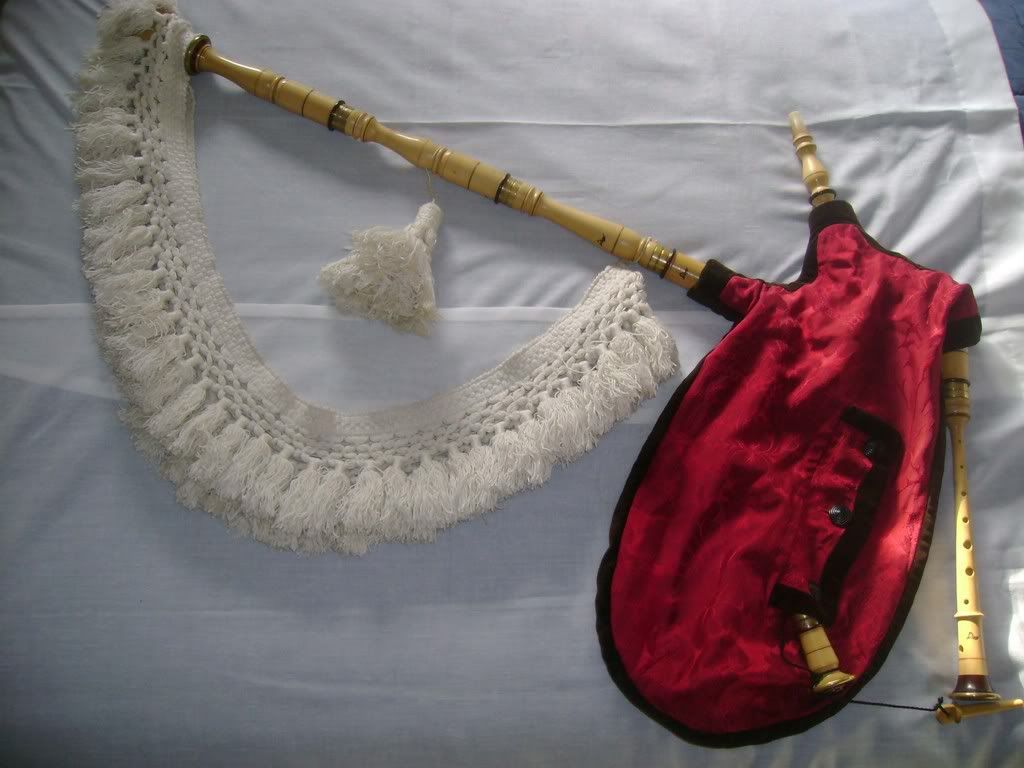
Gaita de Diego 1

You can see here that chanter and little-drone (Ronquillo, Pieiro or Chillón) are using double-reeds. Ronquillo is a chanter who always plays the same note (the fifth):
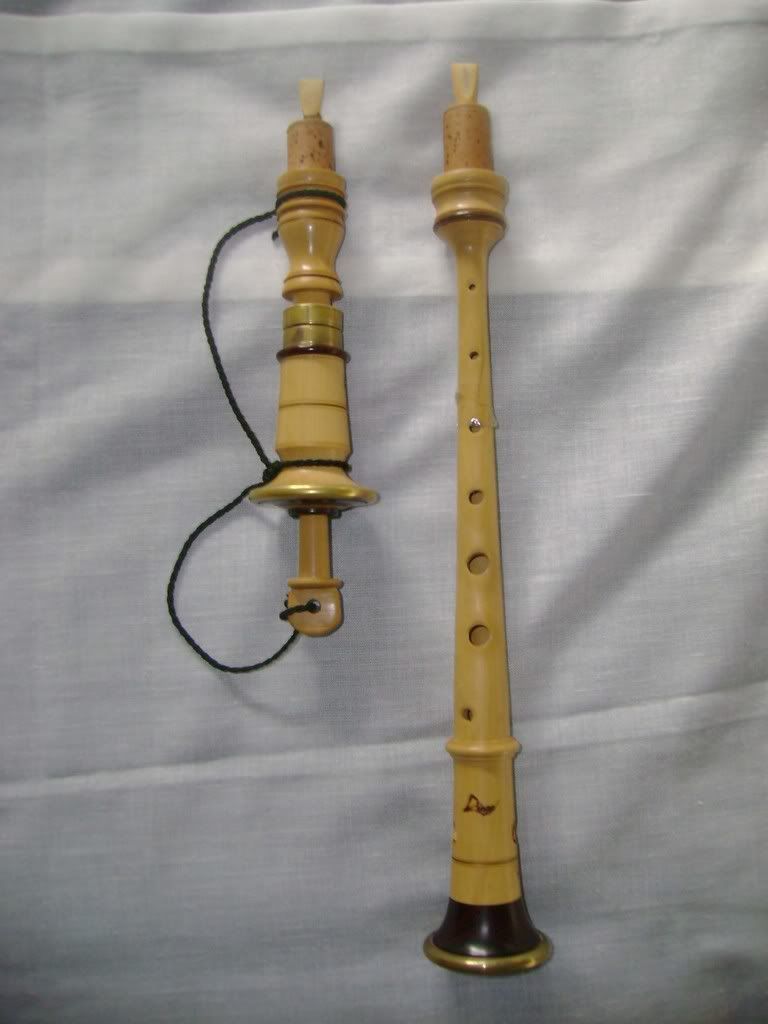
Gaita de Diego 2

Boxwood incrustations in Cocobolo rings:

Gaita de Diego 3

A poor change of the “scottish process” of Galician Bagpipes for Bands is that the Ronquillo don´t use anymore double-reed. Modern ronquillos uses single reed, and don´t play the fifth, only play the tonic :frowning:

Luife