As a complete beginner, my sensitivity to different whistle tones is not yet fully developed. Would anyone with experience of both MK Pro Low Ds and Overton (Colin Goldie) Low Ds like to try and describe the difference between their respective tonal qualities. Do they both produce the “cosmic drainpipe” sound? To my untrained ears the MKs tone sounds fatter rather than rounded and almost akin to the sound of the Uillean Pipes but then that’s my ears.
Mikethebook, I don’t think that it makes a difference how you describe the different tonal qualities of whistles. If anything it will close your ears to hearing what the whistles really sound like because you will have a preconceived idea of what they sound like. Everyones understanding of different words, and especially descriptive words, are influenced by their experiences. So my idea of “resonant” or “bright” or “fat” etc is different to everyone else’s… and none of us are right.
The best thing that you can do is to listen to as many recordings of the respective whistles and listen carefully and deeply. Your ear will develop over time and you will learn what you like and don’t like in a sound. Forget about trying to describe the sounds. Words just get in the way of your direct experience of the tone. The answer to your request is in the sounds of the whistles themselves and not in anyone else’s description of it. It’s just another obstacles getting in the way of the sound as it is.
I agree with therykos, mostly, that verbal description is pretty meaningless, unless both describer and describee already have extensive shared listening and playing experience with many different examples - and I mean live, not recordings or clips. Cases of descriptive words meaning very different things to different people are rampant on the Chiffboard. And the physical response of the instrument is at least as important to a player’s perception as the acoustics.
For example, “the MK’s tone sounds … akin to the sound of the Uilleann pipes” makes absolutely no sense to me. I can hardly think of 2 instruments that sound less alike than low whistle and pipes. If your perception allows for that comparison, then I’d have no confidence that anything I could describe would communicate anything, because we’re living in different sonic universes.
Mind you, that’s not a put-down. The perception of tone quality takes time and practice to develop. Beginners are often listening for the “wrong things” from the perspective of more experienced players. And a given instrument in my hands may sound quite different in yours.
To choose a good instrument, you look around at what the good players out there are actually playing. They’re the vanguard, and their choices speak louder than words. 

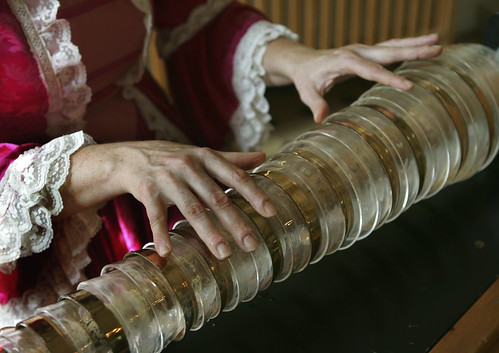
VS
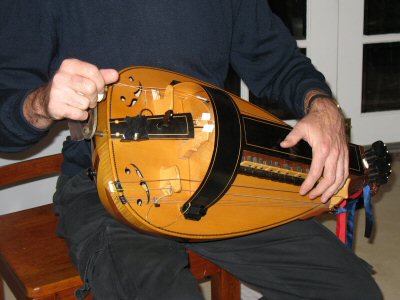
Wise guy, eh? 
Actually, pipes and hurdy-gurdy …
Well said, and the pictures say it all.
I’ll bet you a buck if we both take a whistle and whack it up against a tree, my clunk will sound just as good as yours. 
And I agree with both of you, and was thinking just this morning how odd it was that we (yes, I’ve done it!) tend to use terms like ‘flutey’ to describe softer (even woollier) whistle tones when most of us are trying to sound anything but flutey (by that definition) on flute!
I should clarify things a bit. When I compared the tone of the MK Pro to the Uillean Pipes I was meaning just the chanter when played alone. Listening to the low octave of the MK Pro reminds me a little of the fat honking tone of the chanter. I’m probably just digging myself into a bigger hole though!!! 
Yep. 
Ha ha. Moving swiftly on, whilst you (MTGuru) are in conversation, did you see yourself mentioned in a recent thread called Whistle Angle referring to the different angles at which people hold whistles (especially low whistles) in relation to their mouth.
Dr Phill wrote:
Everything affects the whistle tone. The angle at which air enters the windway is one of the many variables that can be used to control the whistle tone. I have not studied those players, but I would not be surprised if the angle of the whistle changed with the note they are playing, the tune they are playing, the whistle they are using, and whether they are posing for a photo.
I think MTGuru posted an essay on this topic which would be of interest, but I am not sure what to search for.
Can you point me to that essay by chance?
Oh, sorry Mike, I forgot. Sure, I’ll track it down for you.
Hey guys what about this!! Taken from the Piper’s Grip low whistle web-site:
The description of the “Vibe” series of low whistles on the Alba Whistles website reads (and I quote): “This is a very Uilleann pipey sounding and is not in any way a replacement for our Standard Low D but more to complement it, it has a differant sound to the Standard Low D more Vibrato hence Vibe.”
See, I’m not the only one comparing the sound of a low whistle to that of the Irish pipes.
Link to Alba sound samples:
http://www.albawhistles.com/sounds/index.php
Seems to be marketing. Sounds nothing like pipes to me. 
I agree with you and the guru, they don’t sound alike at all. But like people are saying, describing the sound of the tin whistle is a very individual, subjective thing. How else can you explain pduggan’s “woolier”. The best one yet!
Hi Mike, perhaps you’ve already made a decision about getting one of these whistles, but here’s my input nonetheless:
I have owned both the Mk pro low D and a Goldie/Overton low D. The Goldie obviously has that “cosmic drain pipe” sound and is a bit “reedier” sounding to my ear, whereas to my ear, the Mk pro is maybe a bit “fatter” like you said and somewhat more flute-like in tone. For what it’s worth, I did sell my Goldie recently, keeping the Mk. Although the Goldie is an AMAZING whistle, I sometimes had difficulty getting a good seal. Also, despite a legendary lower register, the Goldie’s upper register could sound a bit raspy and unpleasant to me.
I chose to go with the Mk pro because it has good overall volume, the nice fat lower register, and a smoother, more pleasing upper octave. Also important to me is that the Mk pro has smaller holes (yet retaining good volume) and more comfortable hole spacing for me. This makes it a bit easier for me to play faster tunes than on the Goldie I think. Now that I have spent some more time with the Mk pro, I’m actually finding that I can lean into the notes more than I originally thought. Although not the blatant “cosmic drain pipe” that the Overtons/Goldies are, I do find that my Mk pro has a touch of that “cosmic” sound–especially when I lean into it.
Sometimes I do miss the unique sound and expressive qualities of the Goldie, so I’m considering getting an (alto) low F from Colin Goldie to play solo–especially on airs. I plan to continue to use the Mk pro for session playing or when I want the lower key. I will say that, as I spend more time with the Mk pro, the more I’m learning to unlock its expressive potential. Funny how that works, huh? : )
Hope this helps!
Thanks for taking the time to explore the differences you’ve found between the two. I found it very helpful. I have yet to talk to Colin Goldie and, in case he’s reading this, I won’t until I have the necessary money I’m waiting for. I’ve no wish to waste his time. I have settled on a Goldie and, in fact, your message has only confirmed that more. First, since I will never, I believe, take part in a session I would much prefer a subtantially quieter instrument which Colin may be able to give me. Second, it is that cosmic drainpipe sound I’m after, my interest being solely in expressive airs and slow Spillane/McNally tunes. You yourself used the term expressive in connection with the Goldie. I wasn’t aware that the holes on the Goldie were any larger than on the MK Pro (but that in any case is something I would discuss with Colin; smaller holes mean lower volume). However, since I’m learning on an Optima Low D, I may decide on a Goldie Low F as a stepping stone towards a Low D eventually. Thanks again for your helpful input.
I followed this thread at first, as I own both a Goldie Overton and an MK low D. I cannot think of a single concert with my band in the last year, in which I did not use both. The knowledgeable denizens of C&F have already answered Mikethebook’s question. This morning, something is driving me to add my ramble.
Attempting to somehow choose a low D whistle in a scientific way, through research and questions, can be successfully accomplished, intellectually. However, I suspect that the practical, gut-level success of that endeavor only comes after a whole lot of time with individual instruments in hand. No whistle is perfect. And what is meet, right, and just in one player’s ears, eyes, and hands, may be very different for another individual.
I am never comfortable with threads which have titles such as: ‘whistle 1 vs. whistle 2’ and the like. Many chime in, and I always wonder the result. At the quality level of Colin Goldie, Misha Somerville, Mike Burke, Pat O’Riordan, Glenn Shultz, Paul Busman, and others, it is no longer a competition. One instrument is not ‘better’ than another - simply different, with different physical, practical, and aural characteristics. One may prefer one maker’s instrument over another, but this preference is highly personal, thus making others’ opinions relatively invalid.
As our Guru and many others believe - as do I - it is not possible to describe a whistle’s sound in words. We can use descriptors, and some seem to have an almost atavistic reality to them, such as ‘cosmic drainpipe.’ However most of these words and terms can mean such different things to different people. Beware that road in your decisions. There be dragons.
We are left with a quandary. How does one choose an instrument that will end up being a successful part of one’s musical world? Our older son is a professional saxophone player in a major American city. He spends quite a bit of time and money, finding the ‘right’ mouthpiece. And believe me, the vast majority of these mouthpieces cost many times the price of whistles from the above-mentioned makers. Does he ever find ‘the’ one? Yes he does. And then time makes its inevitable march forward, and the cosmic gears grind. I will then get a phone call or an email, and realize that the hunt for the grail has again begun. And yet, over the years, I have found that he - after a whole lot of searching - has seemed to gravitate to 2 or 3 mouthpieces for each horn. Others come and go. Those exalted mouthpieces stay.
And so… again… How does one make a choice of instruments from the myriad whistles out there, without spending the gross national product of a small country in the endeavor? One can order a whistle, play it, keep it for awhile, sell it, and order another. This merry-go-round may be pleasing at first, but becomes self-defeating in the end. I find that many who stay on that amusement-park ride, are more interested in the instruments themselves - as beautifully constructed objects - than they are in the music the instruments produce. They never really learn to play their whistle… And many times, one may sell an instrument that he later wishes he had kept. Somehow, a person must find a way to live with examples of the instruments of his choice, for an extended period of time. Whether the borrowed instrument comes from a friend, a whistle smith who is in an indulgent mood, or from another agent, that period of time is the key to a better chance at a successful choice. In the end, to own a signature whistle or two in the keys in which one plays, I expect is the ultimate goal. If one thinks in this way, it is doubly tragic to hear - as we do from time to time - that a player’s whistles have been stolen.
Colin’s and Misha’s whistles are very different. Each has subtle characteristics which make it brilliant, unique, frustrating, and satisfying. On a concert play list, I often jot the name of a whistle I wish to use for a specific selection, so that in the heat of battle, I don’t have one more stressor, in having to ‘choose’ in the moment. I find that I often change my mind between the Goldie and the MK, while I am actually on stage. Interchangeable? I think it depends on my mood, the audience reaction to the band, and other momentary factors. Mikethebook: You cannot go wrong with either instrument. I think you know that. The choice is entirely personal, and while others may sway you for a moment with their prose, you must make the final choice. Trust your gut.
Ramble off…
Best to you.
Byll
^ What he said^
with knobs on.