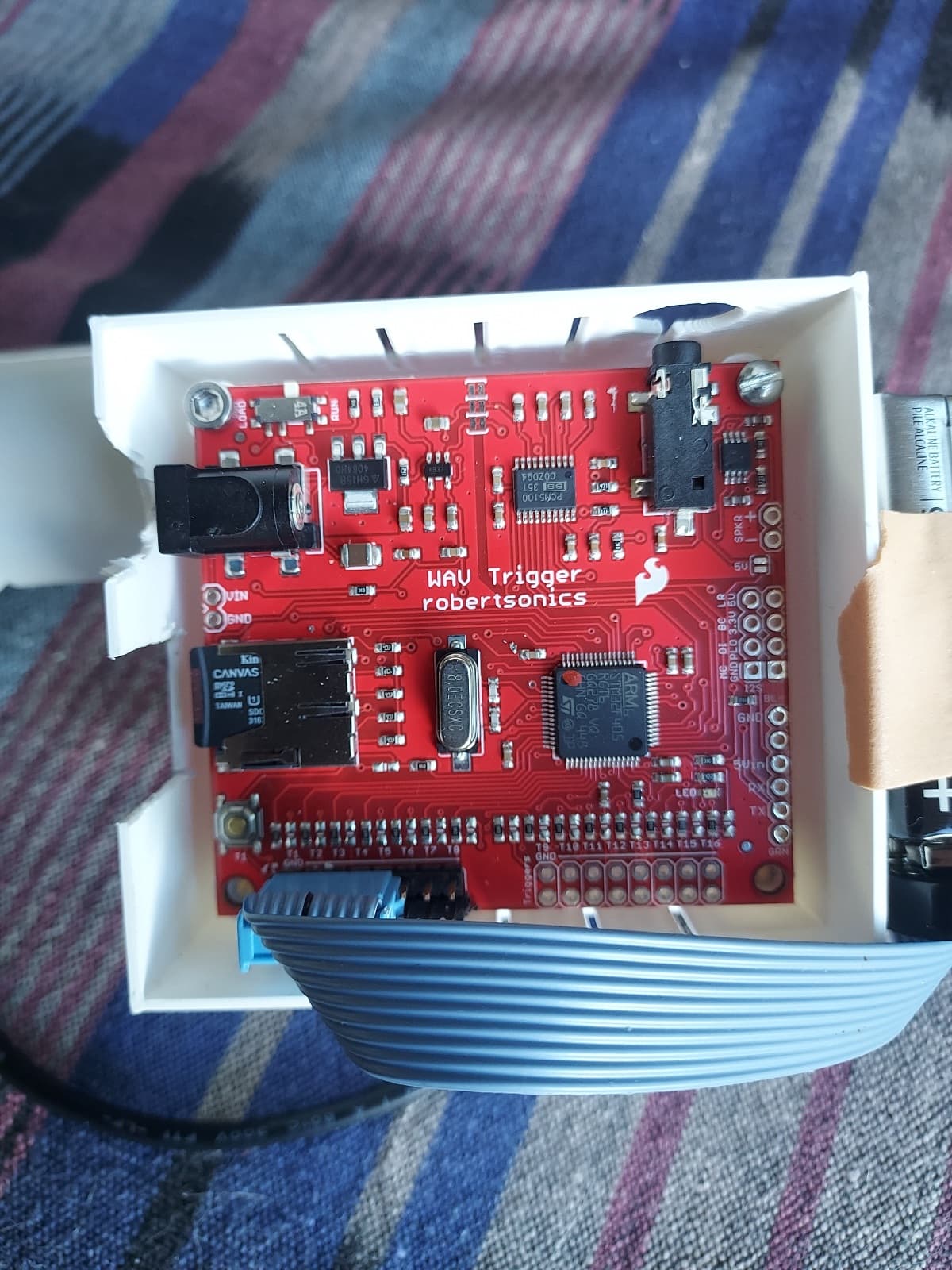
I hope this will be of interest to those who have acess to a 3D printer, or know someone who will print for them. My pipemaker (Carbony) does not yet offer regulators. Being well into my third year of piping, I had the idea of making my own electronic regulators, with the main goal of learning the physical techniques required for regulator playing; audio fidelity taking a back seat. While it would have been easy enough to wire up a bunch off 555 chips to provide tone production, I looked on line first to see what might be out there that would be a better solution. I found it in the WAV Trigger board from Robertson Electronics. What this board does is allow you to put .wav files onto a micro SD card inserted into the board and cause these to play by activating input lines on the WAV board. No programming required.
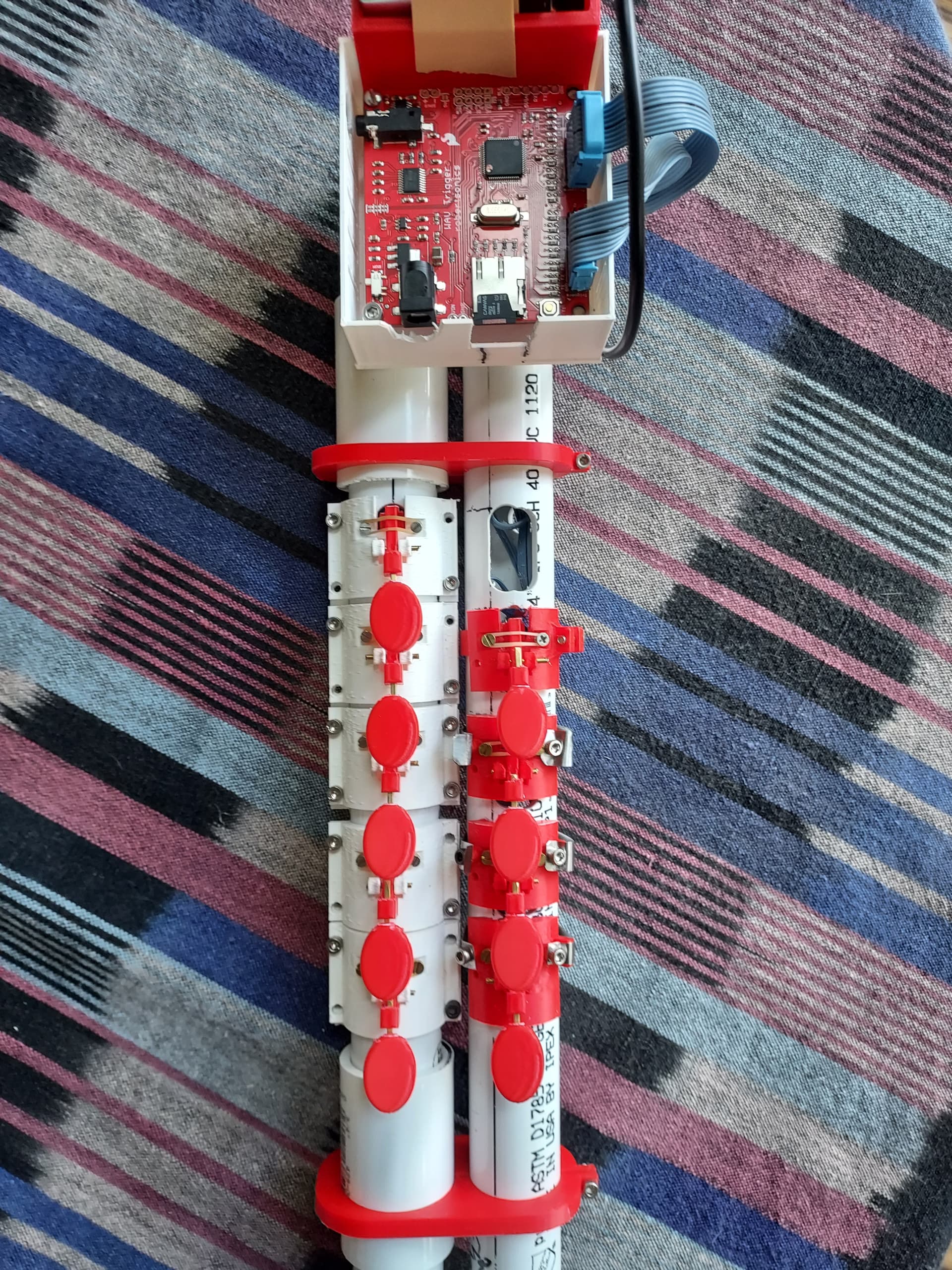
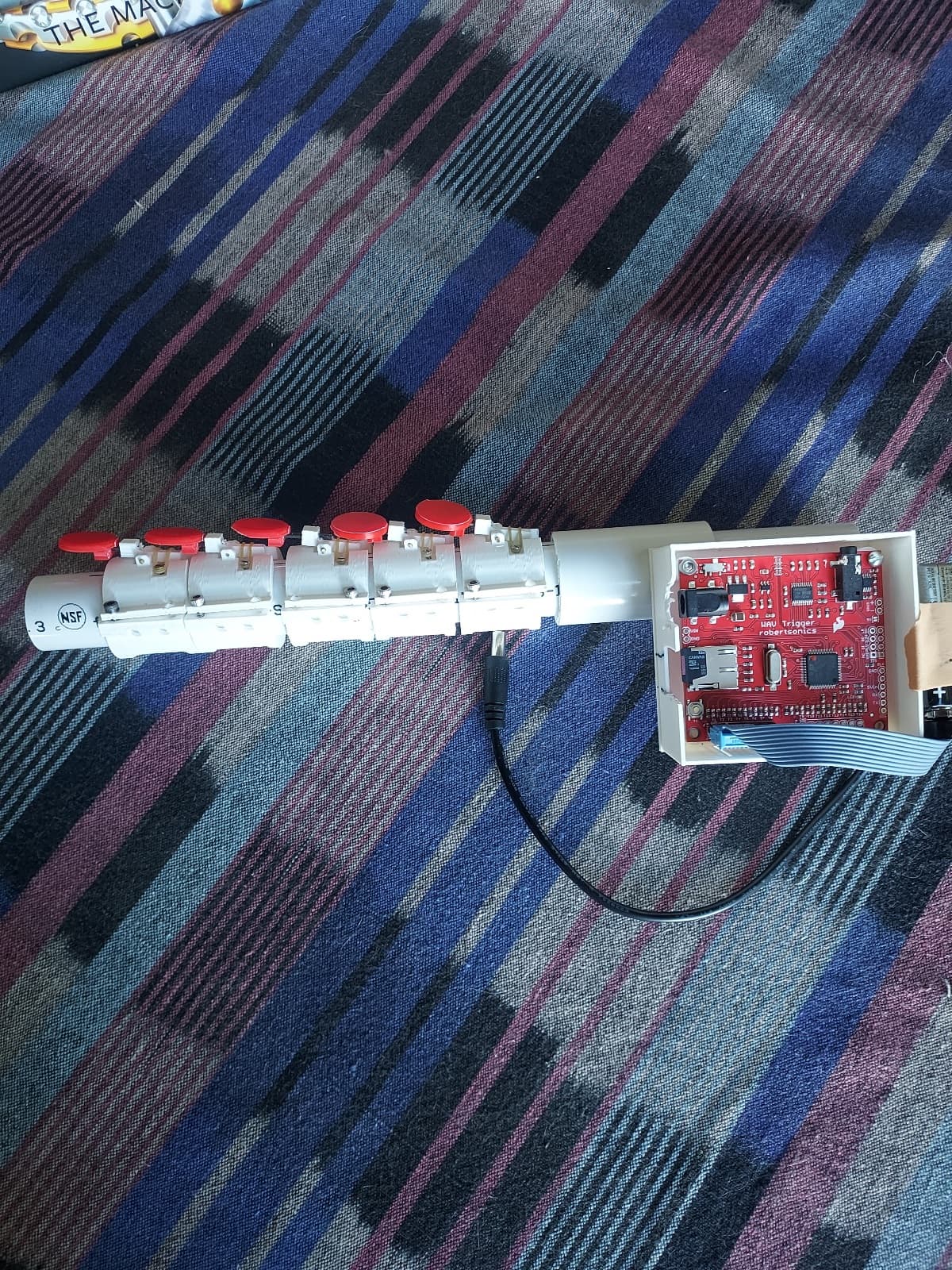
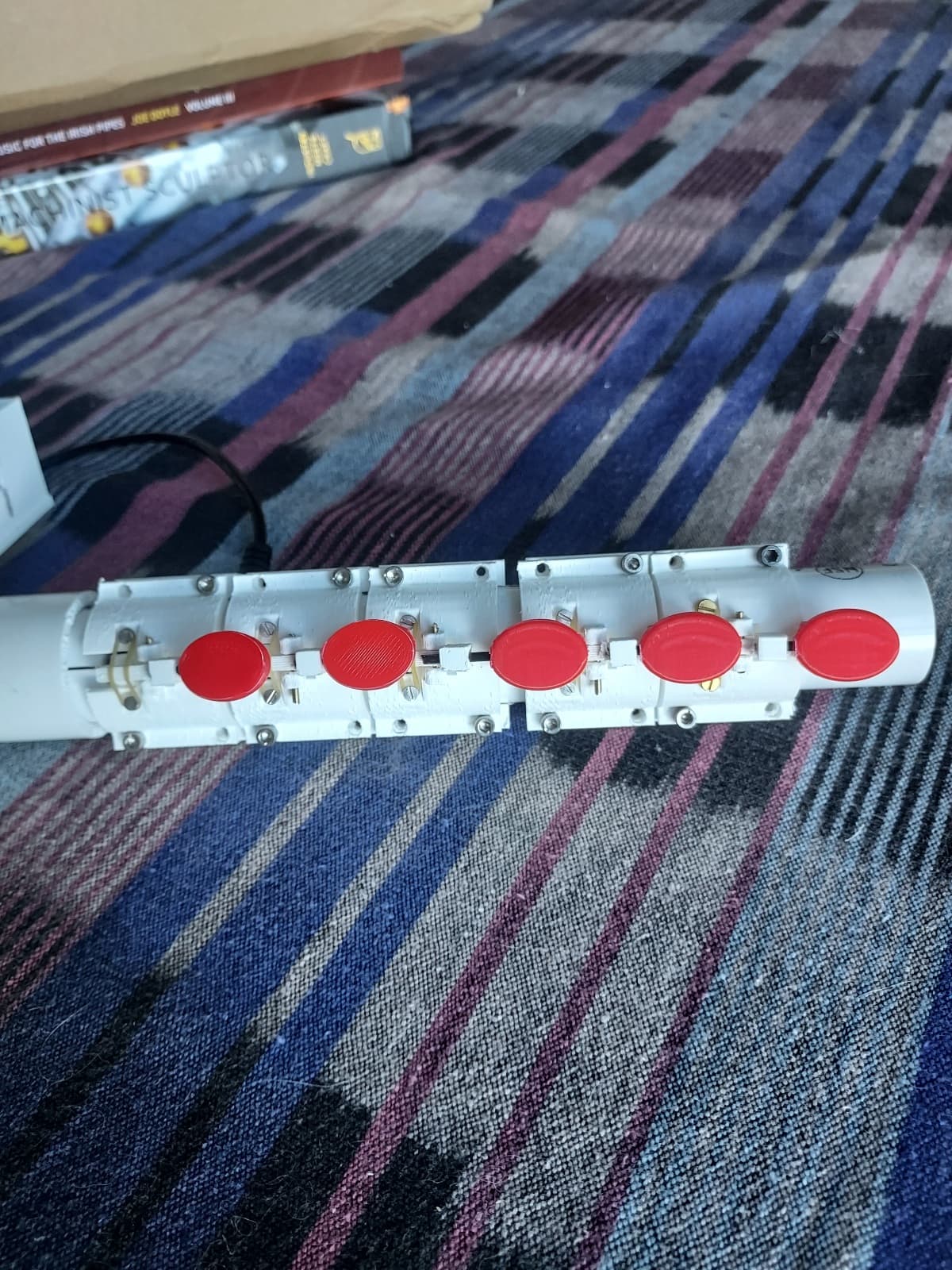
See the attached photos for my first pass at a tenor regulator. I based the key spacings on the McKeon/Rowesome plans offered by NPU. The body of the reg. is 3/4” PVC pipe. The swtches and keys are mounted on 3D printed parts that bolt to thectube. To provide the 5 tones for the tenor regulator, I recorded myself playing these on my chanter, a few seconds worth for each note. The WAV board will play the note for as long as you have its regulator key pressed, so no need to record a lengthy note.
The board provides a standard 3.5mm audio jack for audio out to drive head phones or a speaker directly. Another barrel connector provides power, and Robertson offers a 9 volt battery cable that makes this an easy way to connect in the battery.
The only wiring you have to do is connect two wires from each switch (these are underneath the red keys in the photo) to each set of contacts on the board. You can solder these directly to the board, but I had some “harmonica” connectors and ribbon cable left over from my electrical engineering career, which left only soldering to the microswitches under the red keys.
My UP teacher gave me some etudes to start with, and I am off and running (well, crawling) on my regulator playing. I have started printing parts for the baritone reg., which will be an exact duplicate of the tenor, but with only four keys. He also kindly provided at my request a recording of his baritone reg. tones, so I will have those for my barry reg.
This has been a fun project. If anyone out there wants to give this a try, I will be happy to talk with you.