I came across a tune the other day (Elizabeth Kelly’s Delight, https://thesession.org/tunes/953#setting40251) that has a lot of big jumps into the second octave. Yes, I can articulate them (and they lend themselves to some ornamentation anyway), but I’m looking at this as a great opportunity to practice slurred jumps. Don’t get me wrong – a few hours of technique development sounds like genuine fun to me. But it also got me curious: what other tunes you like have similar kinds of jumps that I could use to practice?
Two non-GHB reels that come to mind are Brenda Stubbert’s and Paddy Ryan’s Dream. Both of them have repeated low-A-to-high-A and low-G-to-high-G jumps in their B parts.
I agree with Mr. G. Never heard 4 parts played, and those 3rd and 4th don’t really add anything to the original, in my opinion.
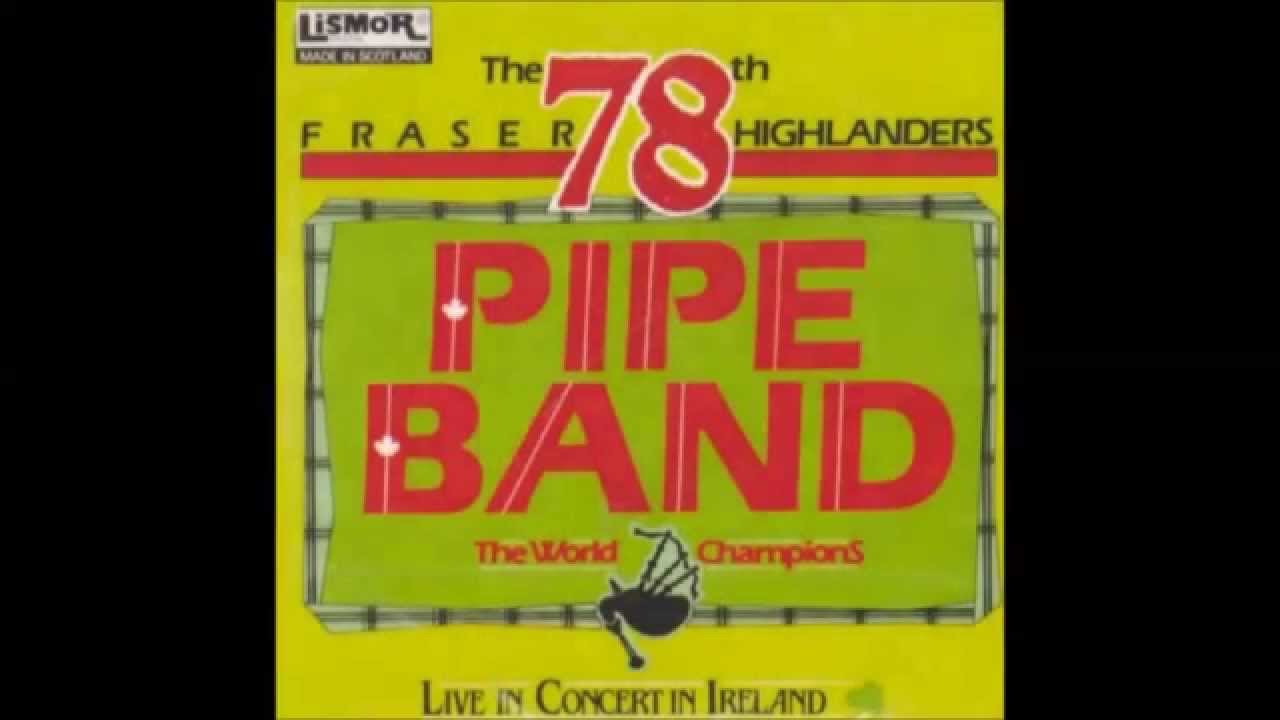
The Scottish Highland bagpipe tradition is full of tunes with octave jumps - try “Pipe Major George Allan”, by Donald MacLeod, or “The Clumsy Lover” by Neil Dickie, or several of Gordon Duncan’s compositions.
Olcan Masterson’s once -popular “Convenience Reel” has a few tricky jumps in its’ 3rd part. Just found this : https://youtu.be/iYkTUOuicRM?si=LTGsGpnxo3GFXn5W
There’s tons of others that I play but I can’t remember the names
Keep in mind that many Highland pipe tunes it creates the wrong effect to play them as if they’re leaping between various low notes and High A, because that’s not the effect or purpose of the High A’s, rather, due to the difference in volume between the low notes and High A, and the way the “skirl” or “crow” aspect of High A makes it blend with the drones, the High A’s disappear and the effect is of detached low notes.
A Scottish fiddle group played the Highland pipe tune Rathven Market with separated low notes with no High A’s at all, to match the way it sounds on the pipes.
I may be wrong but I get the impression the OP is not looking as much for large jumps (practice tunes like Miss Johnson perhaps? Or the Hunter’s House. The Big Leap wants to suggest itself and that might work but the Long drop perhaps suits better here) but rather ones like you find in Dusty windowsill or Troy’s wedding.
I don’t know, Peter Phelan used to come out with that sort of stuff but I can’t remember the tunes he played at the time.
You can always try get your teeth into Cathal McConnell’s take on the Harvest home
It’s one of the ones I couldn’t remember the name of. I remembered something with “house” or “home” but searching those words on Tunes on The Session didn’t produce it.
Another tune with tons of jumping around (especially in the endless variations) is The Masons Apronhttps://thesession.org/tunes/74
Back to the Highland pipes here’s Rathven Market both in the original Highland pipe key of A and in the key of D.
The second part and the last part have those High A’s which disappear into the drones and aren’t perceived as melody notes.
The A part of Tom Billy’s can be played with a full octave jump too, though it isn’t aways done that way. (Definitely isn’t by me, but it’s a fun exercise all the same.)
These are excellent, just excellent recommendations. Some of these tunes I knew but didn’t think of, many are just new to me and I will just enjoy learning.
Mr. Gumby and pancelticpiper are correct that I never quite narrowed down what ‘jumps’ I had in mind but Mr. Gumby guessed correctly. Octave jumps that share fingering sent me down this path but there are a few other intervals that I struggle to get clean: like B4 to A5, A4 or G4 to E5… anything that depends on quickly changing air speed.
If it is jumps, but not necessarily octave jumps that you want, we play a version of Margaret’s Walt with some ‘pedaling’ in the B part. I find this good practice.
I am now learning to play this in A as I have a keyed flute and it is good practice for the G# key… and some folk claim that A was the original key anyway.
Perhaps not the kind of jumps the OP was looking for but I just heard piper/fluteplayer David Stone play Kitty O’Neill’s Champion Sand jig (he called it Kitty Linnane’s and it is also known as Kitty O’Shea’s, the title Tommy Peoples used for it : Tommy Peoples’ Kitty O’Shea).
Get your teeth into that.
FWIW, he made a fine job of it (and played Woodland Flowers after it)
I pulled up the Altan track to see how Frankie Kennedy tackled that and he didn’t, he sat that one out. Possibly a good idea although there’s no reason a fluteplayer couldn’t play the tune that way, even uf it us perhaps not very flute like. Depending on style you could find solutions that don’t match the fiddle note for note around that pedal movement. Mind you, the tune depends on that movement quite a bit for its impact. But sometimes you need yo shake a tune a bit to make the phrases fall into the right place for your instrument.
FWIW I learned the tune (on the pipes) from the playing of Joe and Dermot McLaughlin in 1982. They played it in D, which worked well but may not suit the flute that well either unless you have good hard bottom Ds.
If you mean Dinky Dorian’s, yes. Why wouldn’t you? Big interval jumps are a thing the flute is almost uniquely good at compared to most other instruments - they’re “easy” because of how flutes work. Here are dots for the Altan set including DD’s - the last tune, The Shetland Fiddler, also has some big jumps: https://app.box.com/s/6fbzk23nidt6gmcm7gujt86so9spgp53
And here’s an old video of mine including a rendition of the whole set: https://www.youtube.com/watch?v=dIUB-CV9ri8&t=231s