I’m basically a beginner, and have been interested in carbon low d flutes for irish music. I currently own Dixon’s 3-piece flute. The Carbonys are to expensive, and at this stage in my learning I shouldn’t even consider. There are two carbon flutes that I have found, that may be reasonable. One is Erik The Flutemaker’s carbon flute, and the other is a Goldenfrequency’s carbon Bansuri G flute (low D irish tuning). The link to it is: “www.ebay.co.uk/itm/124544623932” .
Does anyone have any knowledge or experience with these flutes. I have very limited knowledge in this area, and would appreciate your knowledge, expertise, and opinions regarding these carbon flutes.
Thanks in advance
I have no experience with carbon fiber flutes, but I did take a close look at the photos of the flutes you mentioned. I would hazard the guess that if you are focusing on trad-style flute playing, neither of those instruments will be ideal. That’s not to say that they won’t work, or that they don’t sound nice or any such thing. The bansuri is quite a different animal than the types of flutes that most players here would choose for trad. Bansuri tend to have a wider bore for a given key, bigger finger holes and an embouchure that is larger and rounder. Taken together, you will be getting quite a different response than you would get from a flute designed for trad-style play.
As for Erik the Flutemaker’s offering, it looks quite nice, but again it has a very round embouchure cut–virtually a big circle. I also didn’t see anything indicating whether he has done something to introduce a taper in the bore to help with the second octave tuning. I’m guessing not. It has a very bansuri-esque look to it so I’m guessing you would have tuning issues in the second octave.
I don’t know that any of that is a deal-breaker, necessarily. But if you are set on a carbon fiber flute within a certain budget, you may not have a lot of options. I don’t know how important it is to you to get something that is carbon fiber (since you might have to compromise on some other desirable characteristics to get it) versus another material with design features that are more ideal for the style of music you want to play.
Why? There are other options for durability. If you are interested in a lighter flute, forget it. The Carbony flute is a weighty monster, unlike their whistles. If I have a chance, I’ll put one on the scale.
If you wish to tell us what sort of music you want to play and also roughly
what you can pay, we can make suggestions. Also, may be worth counting that
if you buy wisely the flute can one day be sold–it’s money in another form.
My guess is that neither of these will be as suited for Irish traditional music as the 3 piece Dixon you already have. I have that one, too and it’s great.
The video by Erik is so drowned in reverb that it’s impossible to say how it really sounds.
The bansuri looks great. I think I’ll buy one just for fun.
I don’t think BTW that you can say much about the playing characteristics just by the shape of the embouchure. I designed my flutes particularly for Irish music and they all have a round embouchure. But the huge finger holes are another issue. Also the size of the embouchure - looks like maybe 11mm or more, if one can tell from the pic. If it is that big, the stopper needs to be rather close to the embouchure and that might also influence the sound as to not be all that suitable for Irish music.
Roughly 3 years ago I owned one of Erik’s carbony flutes. I was at the same stage and found the material and sound sample quite impressive.
Finally I couldn’t get the same dark sound out of it. The tone was rather pure, which darkened a bit after installing a lip plate as on the flute you linked
on ebay. The most drawback IHMO is the very weak low E note.
The E note (especially in the 1st octave) is the biggest issue with the cylindrical thin-walled design. If you want to keep the size of the lowest three holes within “normal” dimensions, the E will be rather weak and breathy. Or you need to increase the hole which will increase the stretch (as on the bansuri and on low whistles). Or you also need to increase the size of the other two holes of the holes for the lower hand.
I solved the problem for my home made flutes by increasing the E hole to 9mm. So the lowest 3 holes are 11.5, 13.5 and 9mm. Sounds great but doesn’t look very symmetrical. And you need thick fingers to even be able to play it.
Other makers solved it by increasing the wall thickness at the E hole with either a collar on the outside like Gary Somers on his practice flute or by an insert on the inside, like Ricard Vallina did with his PVC flutes.
Really? That statement surprises me a little bit because I have found that the shape and size of the embouchure have a pronounced effect on the playing characteristics. There are a lot of talented makers out there creating flutes for playing ITM, and I don’t think you can find very many professionals who opt for a round embouchure cut! I’m not saying they don’t exist, but I’ve perused the websites of many of the maker’s whose creations get mentioned here routinely, and I see a lot of elliptical embouchure cuts (and even some rounded rectangles), but never one of those big, round bansuri type cuts. It doesn’t mean that a player cannot learn to work with it, but how many trad flute makers use a round embouchure cut? Probably a reason for that. On my own flutes I can tell the difference if the dimensions of the ellipse travel too far outside the elliptical boundaries and approach “roundness” by even so much as half a millimeter. I think there is a size range that constitutes the “sweet spot”, and one can push that boundary (some players like larger embouchure cut), but things start to change once it gets past a certain size. Certainly Baroque flutes often have a round embouchure cut (which is also quite small), but they don’t get used for trad play very much I’m guessing. And the OP did mention that he was interested specifically in Irish music. You can play trad on a bansuri, but it doesn’t mean it will be as effective as using a flute that is designed for the purpose.
You haven’t played one of mine then. Obviously, since so far, nobody has, except me. However mine only look round. I drill them at an angle and make the edge very sharp - it’s more modeled after a quena, just sideways. Works great. And I did compare them to at least 3 other well known makers. Unfortunately, there’s not too many shops around in Germany that actually carry “Irish” flutes. And I can’t buy a whole lot, just to compare.
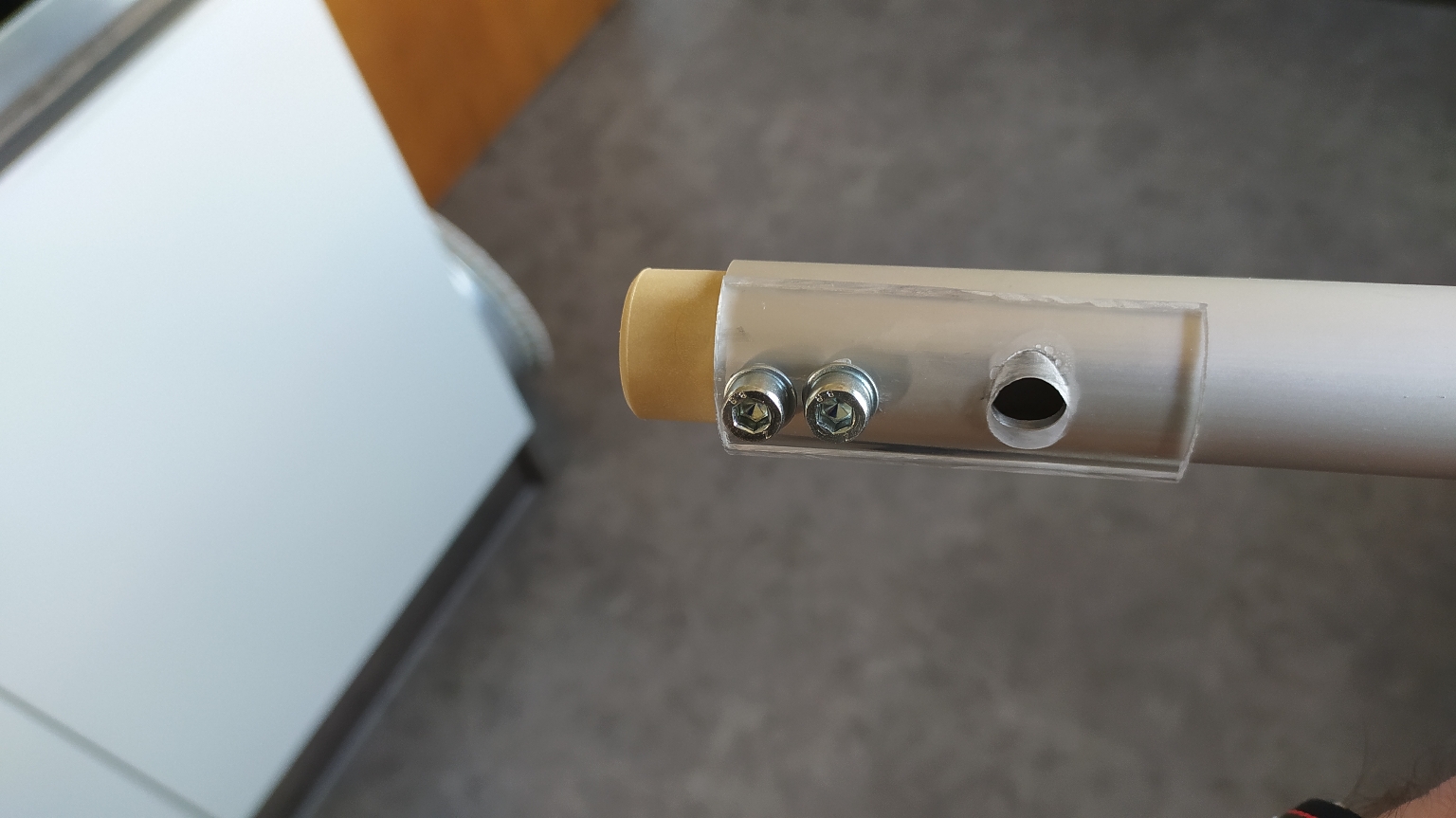
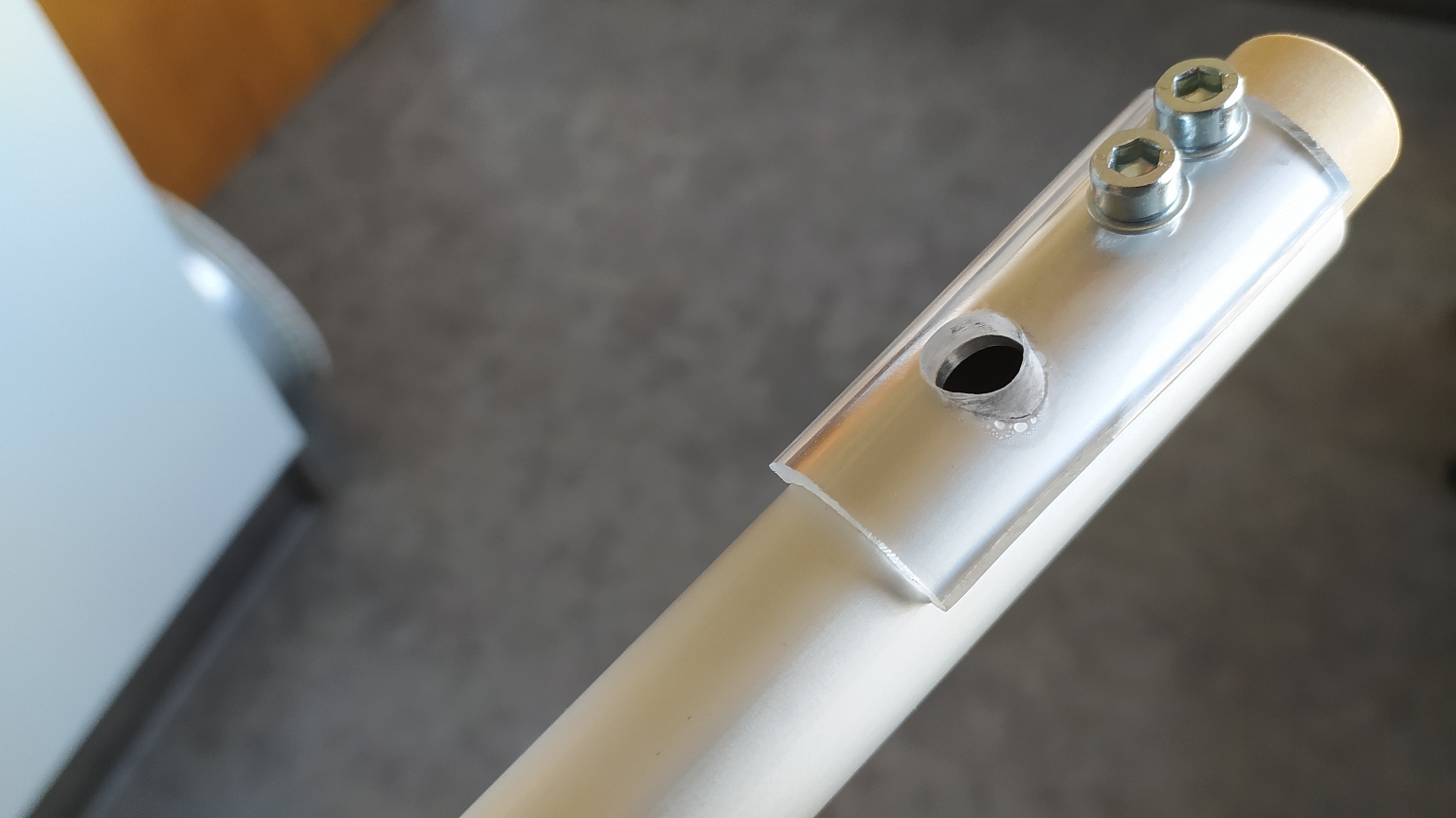
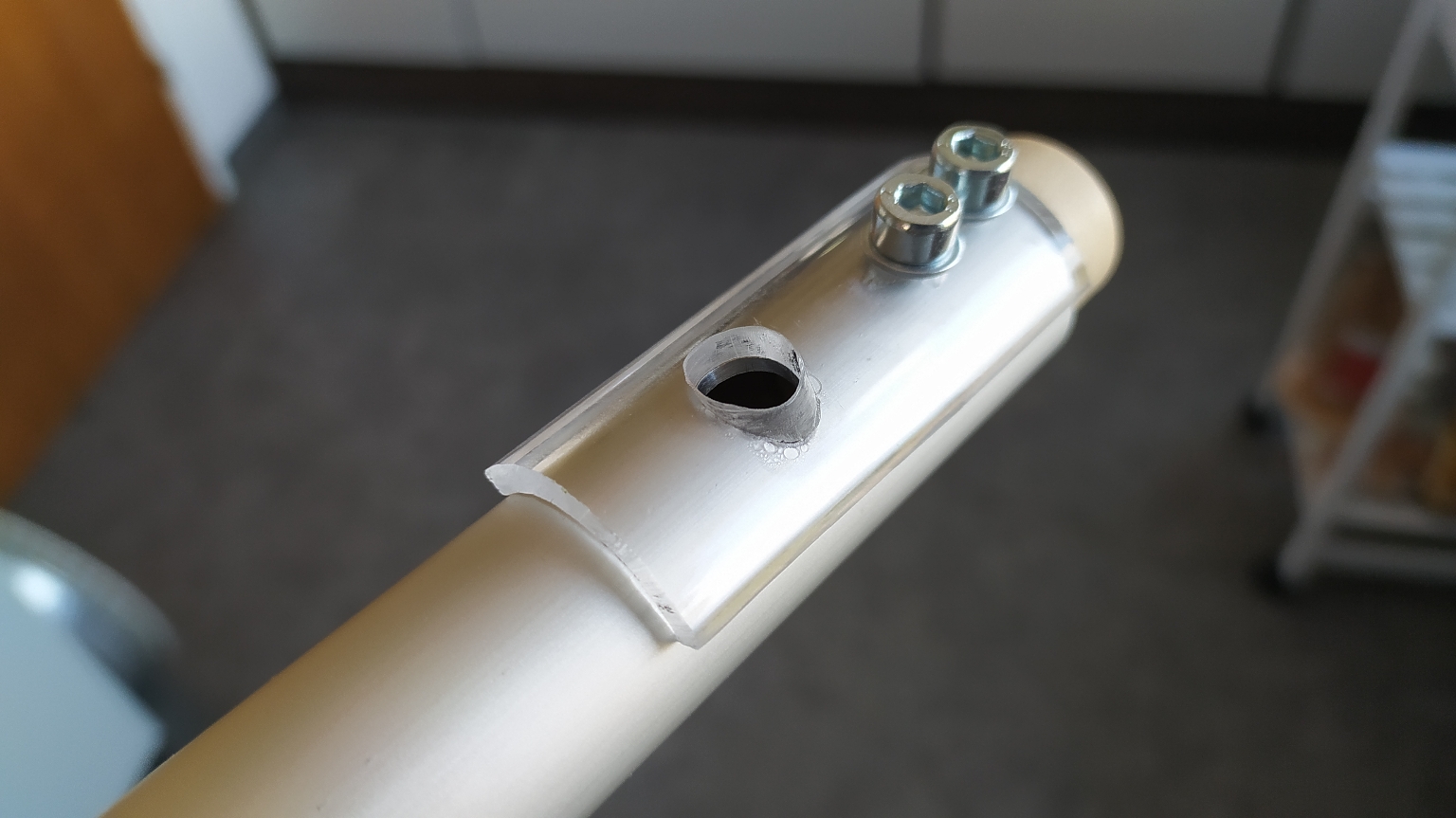
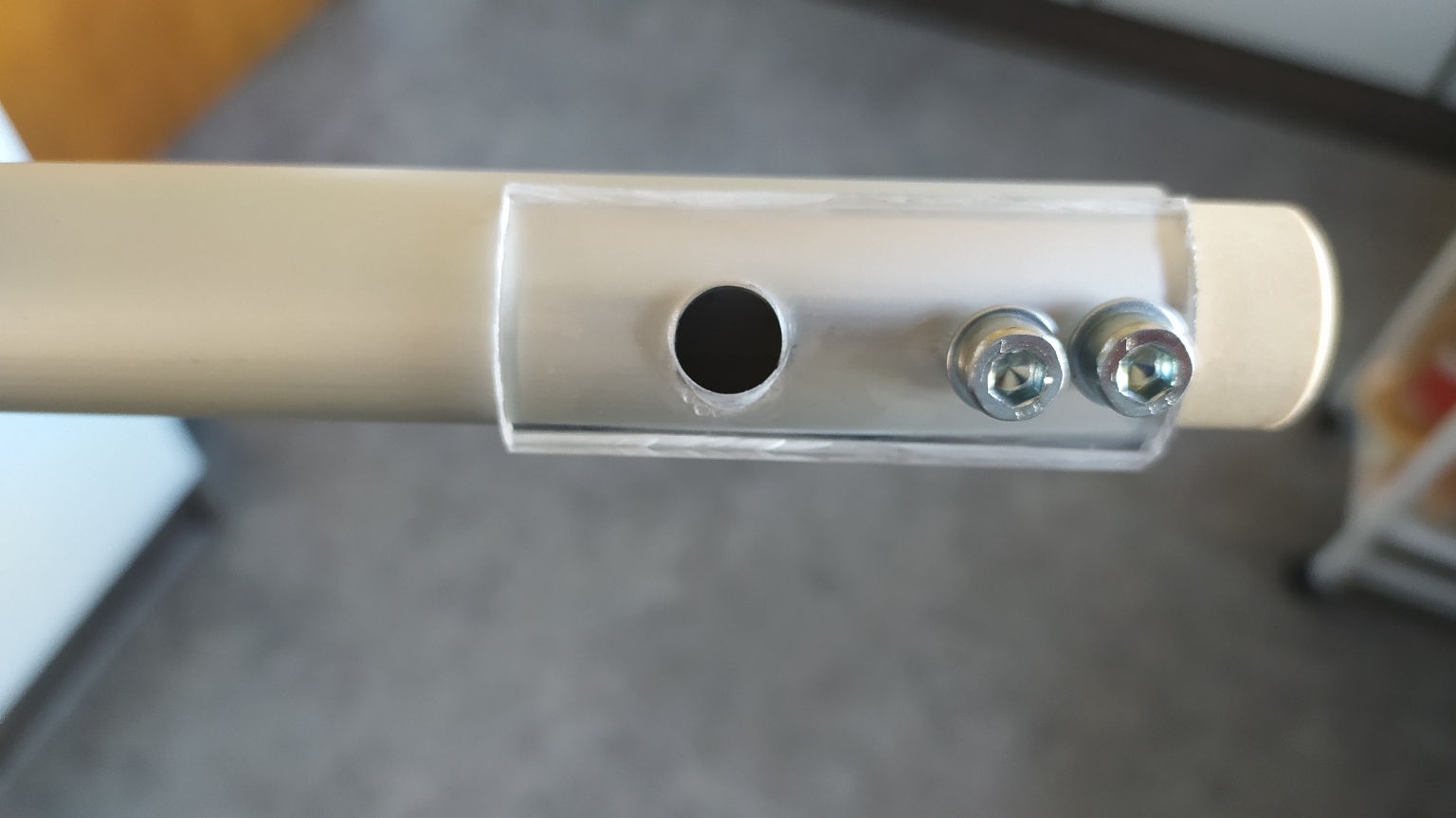
A few pics, since pics say more than a thousand words.
This one I made with a clear acrylic lip plate. The lip plate is 2mm. Wall thickness 1.5mm. Bore 2.2 cm. Embouchure 9.5 mm. Stopper set at 18mm. It’s blown in an open style, not covering the embouchure, just slightly touching the lower edge. The far edge is in line with the holes, since it’s a one piece design. I wanted to make an extra thread about it. Maybe next weekend.
But that’s the one with the long foot and extra 2 holes, right? The Dixon doesn’t have that. So it’s probably quite a bit shorter. The Carbony has one extra hole in the foot, I think.
Well, no…it’s true that I have not played one of your flutes But your design is quite interesting. However, it’s not quite apples to apples, if you know what I mean. The pictured flutes (the bansuri and Erik the Flutemaker’s) versions appear to have the more typical round cut, and presumably their undercut is conventional (in degree) but that’s impossible to tell. Your pictured flute obviously has some unusual modifications that will have a noticeable effect on it’s response. Like the addition of Adler wings to a lip plate (for example).
The big question for me is not whether a round hole will give you a decent tone, or whether you can make a playable Irish flute, but rather whether the player’s ability to achieve more nuanced execution of traditional ornaments is at all reduced as a result of the shape? Again why do so many of the top modern makers (and historical makers) seem to favor an ellipse over a round shape? And I would genuinely welcome other viewpoints apart from my own. Any other makers care to chime in? And again, we are speaking of ITM oriented playing as per the OP.
You’re probably right. I might get one of those just to try however. They do look cool and are not expensive.
The main problem that I see however is not the embouchure shape but the size. A big embouchure (bigger than about 10mm maybe, but the lip plate has an influence on that limit) on a cylindrical bore means the stopper must be rather close to get a halfway decent octave tuning. And that will weaken the low notes. So my guess is that you will not get the dark, reedy, “hard” sound that is required or preferrable for Irish music.
On a baroque flute IMHO the problem is more the small holes in combination with the small embouchure that makes it not suitable for Irish music. I have no baroque flute, so how big is the embouchure typically?
I would strongly recommend looking beyond carbon fiber. If what you want to do is play Irish traditional music, I don’t know if you’ll be able to get a CF flute that will consistently do what you want for a reasonable price.
I understand price being an issue-- most of my first flute was payed for with crumpled dollar bills I got as tips, stuffed into a coffee can over the course of a few months. There’s a delrin M&E flute going for $200 on the Irish Flute Store right now-- I haven’t played an M&E, but from what I’ve heard they’re pretty reliable as beginner flutes, and there are definitely people on the board who swear by them. I’d also say Copley sells his very well-regarded delrin D flute for $360 if you get it without rings (you should get it without rings)-- which is 300 dollars less than the Carbony. A Ralph Sweet Shannon is 275, and if you want wood, one of Mr. Ellis’s essential flutes is going for 400-- he could tell you more about it than I could, but they look great and all the recordings I’ve heard have a really solid sound. All have their supporters. Shipping and exchanges can raise prices pretty quickly, but there are also makers in Europe producing really great keyless flutes for comparable prices. Like the M&E, I haven’t played any of these, but I’ve heard a lot of lovely music played on a flute by di Mauro, for instance.
I hope no one else minds me doing a rehash of entry-level flutes thing on the board again, but it seemed appropriate. I hope it helps.
Also, to put the weight of the Carbony further in perspective, my six-keyed blackwood flute with tuning slide also weighs 12.4 ounces.
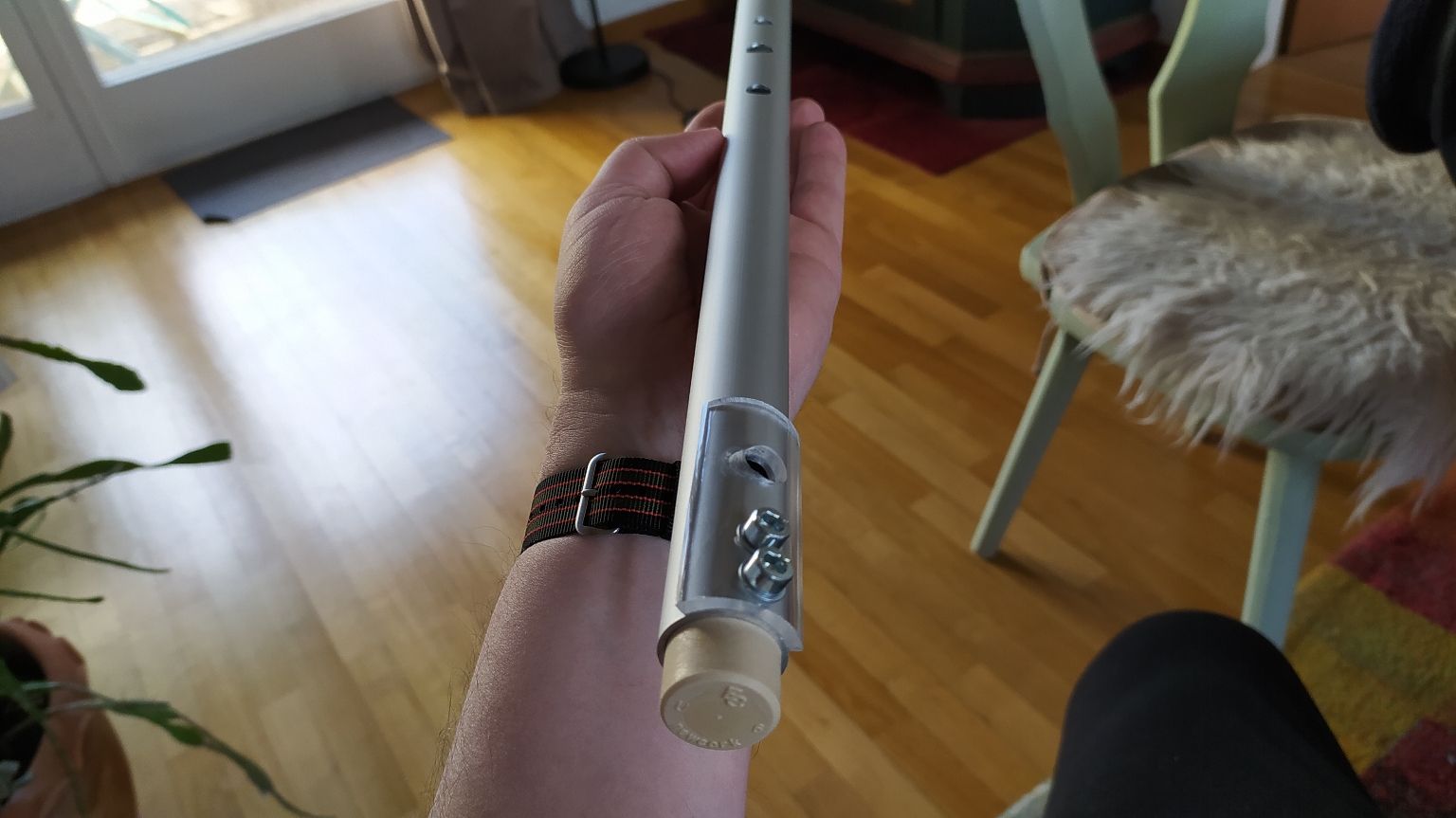
 But your design is quite interesting. However, it’s not quite apples to apples, if you know what I mean. The pictured flutes (the bansuri and Erik the Flutemaker’s) versions appear to have the more typical round cut, and presumably their undercut is conventional (in degree) but that’s impossible to tell. Your pictured flute obviously has some unusual modifications that will have a noticeable effect on it’s response. Like the addition of Adler wings to a lip plate (for example).
 . That is really tiny.