Was reorganizing this evening and decided to line up all of my previous prototypes for a laugh. The purple ones are my (almost) final models; I’m going to knock down the color a bit with some more black pigment- you can never really be sure how this stuff will look!
I will also be electro-etching the Loch Monster into the barrels. Now and again I’ll do one-offs with different colors, styles etc. Perhaps a foot ring? Who knows. Waiting on the tubes to get back from the shop with my new tonehole dimensions.
Cool, I wasn’t familiar with those! The vaguely baroque-looking turnings at the base of mine add extra material so that a pair of o-rings can securely hold the tube yet allow it to slide smoothly.
I have one of those as well, I’ll have to break it out and see how it plays. (Not good as best I can recall.)
About the OP’s “Loch” whistle design, I would have as much thickness as possible at the socket because as you know plastic whistle heads tend to split there.
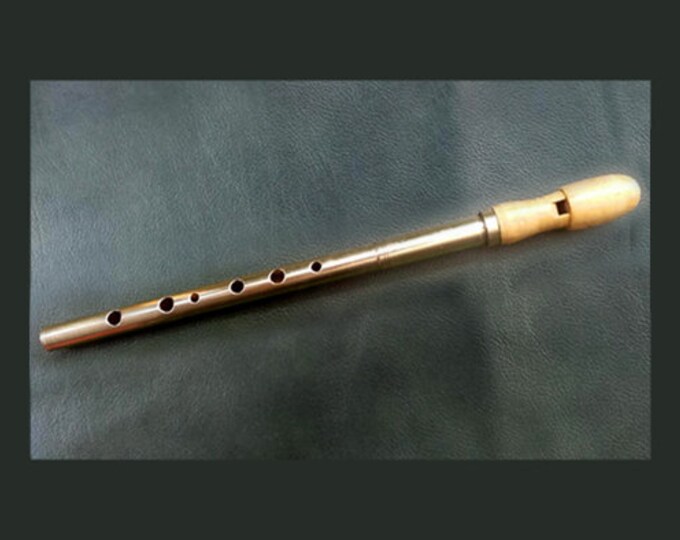
You are taking a marketing risk in using a Recorder-style head.
People coming from the Recorder world and perhaps also from the Boehm flute world (who have seen a Recorder or two in their day) will find it attractive and/or familiar. I would expect a whistle with a Recorder style head to have a thumb hole, is that part of your design?
On the other hand I’m guessing that most people coming from the Irish-trad world will hate it. They’ll want a sleek no-nonsense design in black. (I talked with the owner of Susato and he said his ivory-coloured and wood-coloured whistles sold great in Japan but in Ireland they only wanted black.)
Yep, that’s what those recorder-y rings are for - reinforcement.
I think it’s less recorder-like in person, but the juxtaposition of a meaty head on a narrow body certainly looks a bit odd. I just knocked up this particular image for fun. For the actual release of course I’ll have photos that are color balanced and show many angles. I would have preferred to make these even more Generation-like, but a long, skinny “nose” tends to get warped even with LFS (Low Force Stereolithography) as the model must be repeatedly peeled from the membrane separating the laser and the build platform. This tends to impart a small amount of Z-axis warping to very thin, long parts.
Frankly I’ve had a lot of difficulty with modeling the mouthpiece shape as Fusion 360 tends to have a meltdown computing certain kinds of curvature. One thing I do like about the head shape is the chamfering toward the end of the mouthpiece - I find that it really encourages one to elevate the whistle and play with better posture. I might add a decorative ring to the foot to try and visually balance the top-heaviness.
Absolutely not. I have very strong feeling toward thumbholes; to me they are both unnecessary and actively interfere with the tone as moisture leakage starts affecting the seal. I’ll make a note to emphasize this is a 6-hole instrument when I finish my website.
I’m planning to make limited runs with different colors, styles, and decorative etches on the tube, which will include a black and silver one. Here I was trying to do a little callback to the old red tops and blue tops, but the color turned out too bright and kind of clashes with the brass. It would probably look better with nickel plated tubing. Since I’m printing these rather than injection molding, there is a little less pressure to go for mass appeal since I don’t have $25k to recoup on a mold, but I also don’t want to turn people off from even trying one, so I appreciate that feedback.
Ok I don’t want people thinking I have NO design taste, so here’s a silver tube and natural lighting. The original image was more to show the evolution of the current instrument from very humble PVC beginnings
Sorry for the hideous sizing issues with these images - BBcode size commands are not operating correctly. I’ll see if I can edit the sizes on Imgur.
All the real estate I have to work with is a five foot by three foot dinner table. Amazing what this technology can make possible. Currently a friend mills the tubes for me, but everything else happens right there.
Since the pandemic I’ve been eating on the couch anyway!
I get that it’s a bit of a risk to stick your head out, but TBH I think there are plenty of whistles that have the same design out there, it’s fun to see one that looks a little different! Would obviously have to hear how it sounds, but I’d prefer something a little different over another Gen/Feadog/Waltons/Oak/Potter/Clare-looking design. Not that it’s a bad look, I just think it’s kinda fun to mix things up. Maybe it’s the fact that I’m the proud owner of one of Gil Lehart’s very distinctive copper-ringed flutes…
But that’s just me, and to be honest if you’re looking to market this more widely I’d agree with the other comments, it’ll really depend on if your brand of “different” resonates with your potential customer base.
Cool design. Looks like a not generation clone. Which gets my respect. Half of my issues when I’m trying to make my whistles, is to not just make a generic tune over tube clone. I want something that is set apart from everything else. Memorable. This does that very well. So good job. I really like the insert. Its a much better design than the ones I tried when I was trying 3d printing heads.
In fairness, the head looks slightly less chunky in the latest set of pictures. THe main question is ofcourse how well they work and that’s the eventual measure they are going to be judged on. Looks are more or less secondary to that, even if they do play a role.
Oliver Bouchard uses a broadly similar (-ish) set of shapes for his boxwood heads. I find those too top heavy for my liking but some people rave about them.
I’ve discussed resin safety at length in the past, but the short version is that the printer I use has a much stronger laser than other consumer SLA machines, so the resin can afford to be much less reactive. You get a very stable, inert final product thanks to this, and I also use a UV curing oven to further settle the resin. After that, the whole thing gets a coating of medical-grade biocompatible clear coat, just for the sake of overkill.
Although the model depicted above is a two-part design, I’ve actually found I get better results when I don’t separate out the plug. Could be a warpage/alignment thing, but in any event a strip of sandpaper is sufficient for finishing the windway. The blade takes the majority of the hand-finishing; and it’s one of the less consistent parts of the process. I made two excellent whistles on Monday but yesterday a further two tests just didn’t turn out (I think printing orientation might be to blame there). The real trick is being able to tell what dimension should be adjusted from how it plays.
My usual practice space (unused area of a local church) might finally be opening up again, so I hope to get sound samples recorded soon with these final models and a nice microphone and camera setup. Apartment life really complicates things, even without a global pandemic.
Comment to the MadmanWithAWhistle:
Just wondering, in all your trials with mouthpiece/fipple design, have you tried adding any wall around the top sides of the window, on the three sides (obviously not forwards towards the blade direction). I noticed some time ago, some YouTube whistle reviews by Nathaniel Dowell where he put a three-sided wall of stick-tack around the window and it immediately adjusted the tone by (to my ears) adding much more richness of tone of whatever whistle he put that on, it increased the volume of all the lower frequencies in the tone and perhaps even added richness to the tone in other ways. It may have increased clarity and volume too, but that was less certain. But the richness of the tone, especially in the first octave where the high D whistles and higher-key whistles can sound thin, was amazingly improved. The alto whistles also benefited. Not sure about the “low” keys with this issue.
Just wondering, and since you’re in the prototype process, why not test out options there?
Thanks! Still looking at final materials cost, labor etc, but probably in the same neighborhood as Killarney for the basic model; other more artsy limited editions will go for more.
Ha! Ironic story, I spent all this time designing the indexing and geometry of the plug, the idea being it’s good to have access to polish and/or adjust the critical surfaces, but I’ve since found I get better tone printing them in one piece and just using a narrow strip of sandpaper to finish the windway. One of the few times the simpler/easier/faster solution actually is better
As people are saying it’s how it plays that’s the important thing, and I would love to try one once you get it into production. (I would like a black head if you don’t mind…though Pete Fountain Clear would be great too.)
A couple makers are offering 3D printed uilleann pipe chanters, which potentially can solve the longstanding challenge of getting decent-playing uilleann pipes into the hands of beginners.



 . How much will you be selling them for?