I´m from spain and I live in Granada in the far south of the country, here we have very high summer temperatures, 38ºc degrees yesterday for example and some days we have more than 40ºc.
Well, I have a keyless polymer D M&E flute and today the cork has fallen only by gravity and I am not able to put it back, my flute is losing a lot of air and I´m not sure what I can do.
Maybe I need a new cork?, there isn´t any luthier in my city and and I do not want to be without the flute for one month at least by sending it back to ireland.
If I recall correctly, a standard wine bottle cork fits that flute. If not, just sand it down a bit. If this won’t work, you can try wrapping some plumber’s (Teflon) tape around your old one. Have fun!
1.You could use some Teflon tape as it’s a lined polymer head.
2.Using heat from a lighter will puff back up compressed cork. Put some cork grease on and put back in.
Buy a bottle of wine. Drink it and sand down a new cork.
The face of the cork should be one diameter of the headjoint bore from the center of the embouchure hole. But you can play about with the distance till you get where it sounds best and the octaves are in tune.
Hold the stopper cork (carefully!) in the steam from the spout of a boiling kettle, rotating it slowly, for several minutes. Wipe dry, apply cork grease and refit. If it is still loose, repeat the steam treatment for longer. If that fails to sort it out, then replace it as per previous advice. However, I doubt the flame from a lighter trick will work - you need rehydration! Yes, be sure to position it correctly - probably a couple of mm further back than the bore diameter. Test for a good seal by covering the embouchure hole with a finger and sucking hard on the tuning slide tube. If the cork moves or you can suck air past it, you need to have another go at the steam treatment or just replace. If you can suck up a good vacuum and get a pop when you remove your finger, all is well.
Dry heat makes the little air-spaces in the cork expand for the obvious reason, Patrick, though in my limited experience of the technique it is rather easy to scorch the cork which is not good cosmetically, and if you overdo it and it starts to burn/char, it goes hard and loses its sponginess. Steam is safer and both expands the air-chambers by heat and rehydrates the wood structure.
I am with Jem. Steaming the cork should revive it. It’s the best way to do it IMO. If you happen to have a vegetable steamer pot, the type with a screen that holds the veggies over the hot water, you can just leave the cork in the steamer and turn it now and then. You can cobble one up by placing a wire strainer over a pot of water.
A quicker and easier way to re-hydrate the cork is to boil some water and then leave the cork submerged in the hot water until it cools. You’ll have to place an object on top of the cork to keep it under the water but other than that it is no muss and no fuss. Just wet it and forget it.
You know, my old polymer M&E is tough enough that I’ve just sunk the whole head, with the cork in it, down into warm (not boiling hot) water when the cork gets loose. Remove the crown to wet both ends of the cork. You might not want to go that far but it’s worked for me.
Of course polishing off a bottle of wine to get a new cork is probably more fun.
I had the same problem one month ago, you have two options:
To make a new cork, but you have to be a bit skilled with knife and sandpaper. I suggest you not to use the cork of a wine bottle, but possibly to buy new unused corks.
Here in Italy, forexample, I can buy, for less than 5 Euros, a package of 10-12 new corks (they are used by people who pruduce homemade wine.
Put some bees wax (not candle wax, but natural bees wax) in a can. Heat up the can with a lighter, and when the wax is completely melted dip the cork into it.
Then put the cork into the head of the flute and wait till the wax returns solid blocking it.
errata corrige: I read that your flute is not wooden: so don’t try to use the wax, it’s useless on polymers
Admittedly, most of the corks or cork-clad tenons I have to do this with have a suitable “handle” attached to make it easy and safe to hold them over the steaming spout. If I had to do a separate stopper cork with no adjuster or any other simple piece of cork, I’d stick the up-tube face of it with a skewer or large needle to make a handle to twirl it in the steam by.
I’d already (when making my first post) thought about the cultural availability of kettles - I know well that non-tea-drinking cultures/homes often don’t have one. It’d be a rare home in Britain (even today with other immigrant cultures, mod cons like microwaves etc. and lazy folk) that didn’t have a kettle - usually an electric one these days, mind. Lots of southern Europeans would not necessarily have one as a standard kitchen item.
Thank you guys, i will buy a teflon roll tomorrow and I will try to put the cork in hot water too. 39.5ºc today at 14.30pm hard day for us again. I could put the cork in a glass of water on my window and would be enough.
I’m afraid to rehydrate the cork, maybe it can expand too much and then not go well in the bore but i will try anyway, if doesn´t work i can put another cork.
You’re welcome. I would strongly advise steaming rather than soaking - you have more control (to avoid over-expansion) and will not saturate the cork to the extent you may have water squeezing out of it when you put it back in the flute!
The PTFE tape method is fine in polymer or metal-lined wooden heads, BTW. It is not a good idea to Teflon-wrap corks or tenons of unlined wooden heads or sockets other than as a very short-term, emergency fix.
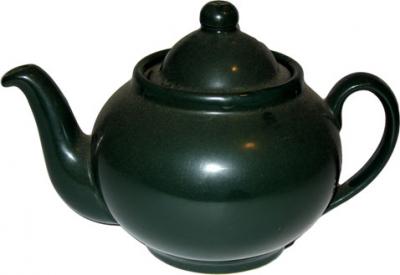
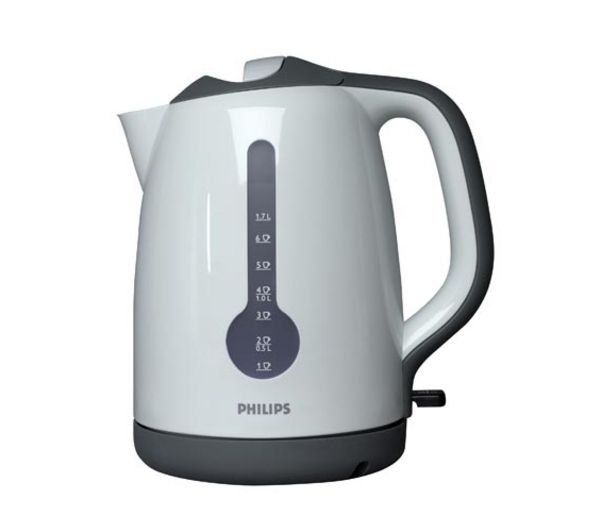
Um, a teapot is not a kettle! Not much use for steaming…
Teapot (for brewing tea) - won’t put out much steam or for long enough.
Traditional stove-top kettle (for boiling water) - best option as can be kept simmering, so steady steam output.
Modern electric jug kettle - will serve, but will keep turning itself off, going off the boil and having to be turned back on.
If you don’t have a kettle, the earlier suggestion of using a kitchen steamer or improvising one with a sieve or colander over a saucepan of boiling water (and a pan lid over the colander) is a better one than pouring otherwise boiled water into a teapot.
I have a friend who have a bar an a coffe machine with a steamer, maybe this is the best option, taking tweezers and putting the cork under the steam jet.
I think the wine corks are softer and less compact than corks used to make flutes, I haver worked some years as waiter in hotels to pay my studies and the most of corks that I have seen are very soft, I´m not sure if this kind of corks are ok for flutes.
Yeah, wine corks will do just fine. The espresso machine steamer jet could well serve nicely too.
As for wine corks, I actually prefer to make replacement flute stopper corks out of the plastic ones… cut them to size by gently heating the flute’s own slide tube. But those are pretty much disappearing now, in GB at least, as most of the wine makers/retailers go over to screw caps, the point having finally been proven that they do a better job than cork!
Not in spain, here only the white wine bottles have plastic corks, when you offer a red wine wine with plastic cork to someone they think it´s cheap wine. Traditional wine makers ever said that the wine must rest on the cork.In addition a cork without porosity and odor is a sign that the wine has been preserved well and the cork is ok for a flute.



 But those are pretty much disappearing now, in GB at least, as most of the wine makers/retailers go over to screw caps, the point having finally been proven that they do a better job than cork!