Earlier this month I decided to fork out the £12 and get a Clarke Original.
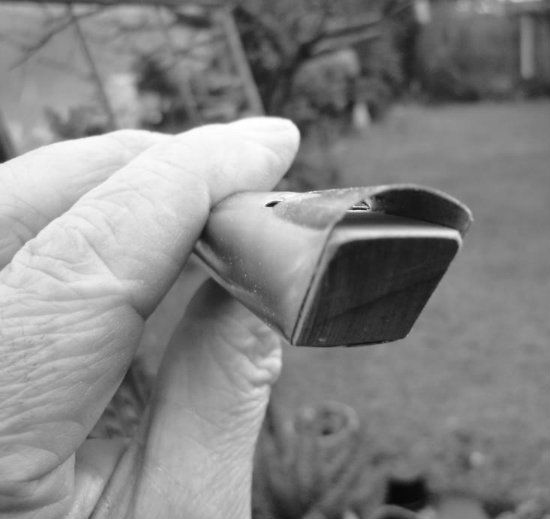
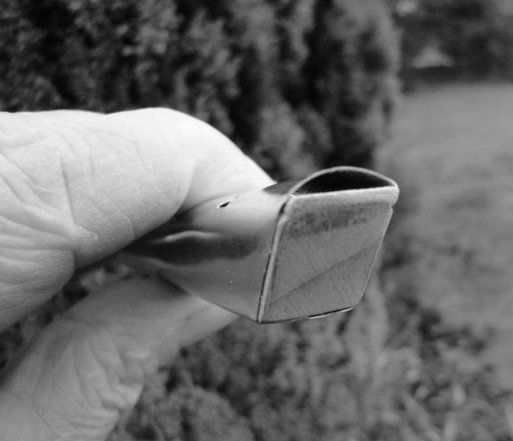
On unpacking I was amazed as to just how big the windway was.
I expected it to be bigger than your average Gen but this was huge,
you could bivvy over night in there if the weather turned a bit iffy.
So this afternoon I set about doing a little mod to help things along.
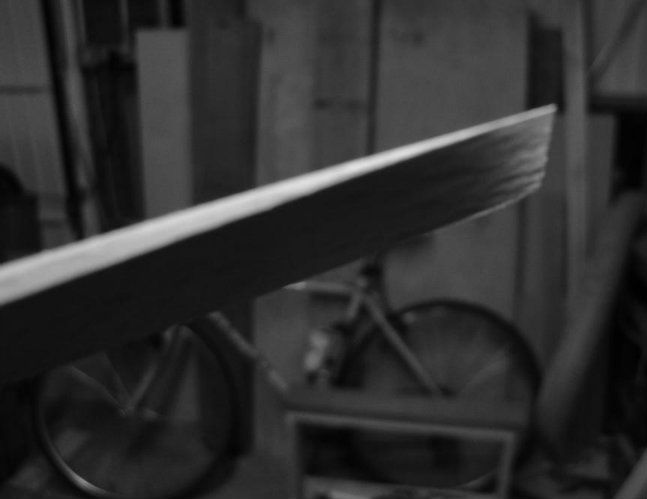
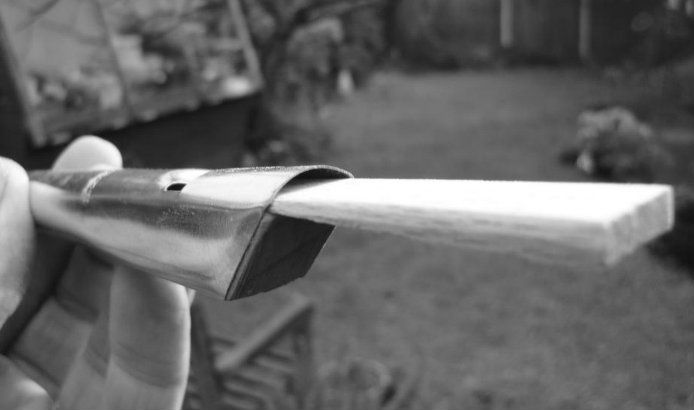
First I cut a small wedge from some beech and sanded it to a feather edge
as I didn’t want to reduce the exit windway size.
Fitting was straight forward the only issue I had was the fipple block
had been rounded slightly on the top edges but once the wedge was fitted tight
at the sides it sealed things up.
Then after a quick toot to assess that I’d got things about right it was just a matter
of super gluing it in place and cleaning up the outside edge.
The result is a whistle that hasn’t lost any of it’s character
and doesn’t require an inhaler for every phase.
The bottom end is a little weaker, not much, it’s Ok
but the top end ‘g’ to ‘b’ is much sweeter same volume as a Sindt
it was far too loud before.
Edit… I tryed to get the photos a bit smaller but photobucket is a pain in the butt and wouldn’t alter the size.
Pretty neat. Most of us would just squash the top of the windway down a bit.
As for Photobucket, it does let you resize your pictures but it is not obvious. You first open the image you want to resize. Then click on “edit”. Then select “adjust”. Then select “resize”.
Thanks, I wanted to keep the round top
also I can adjust it with a bit of sand paper.
Yep went through the resize process but only done the first one.
Never mind I think you get the idea.
I can see from one of your photos that the soundblade has the rounded “M” shape that Clarke is using now. That’s terribly inefficient, and you can improve the whistle considerably by straightening out the soundblade so it’s straight from side to side, parallel to the windway floor.
This can be a bit tricky to do, but once you’ve accomplished it, you’ll be impressed at what a big improvement it makes. You’ll need to tinker a bit with the distance between the soundblade edge and the windway floor. You should see a rectangle of daylight under the soundblade when you sight through the mouthpiece, about 1/3 of the height of the windway. Trial and error will tell you exactly what position is best for this.
Also, if that’s a black lacquered Clarke, the lacquer may chip when you adjust the shape of the metal. Black fingernail polish very nicely repairs any missing black on these.
Hi Jerry,
Thanks for the input,
yes it is the ‘M’ shaped sound blade, I have seen them
flattened and have wondered how it’s done but I’ll give it a go when I’ve a
bit of time.
Is it worth sealing the top of the fipple block with some super glue,
it just feels like it’s clogging up a bit after 10 minutes playing?
BTW it’s the plain silver Clarke so any mauling around shouldn’t look
too bad.
I’m fairly pleased with it, although it was quite expensive posted to the UK. Because of this I hardly ever take it out of my flute/whistle drawer for fear of breaking it and I still play my dented, slightly rusty Clarke original more than the fancy tweaked one. I did have to “tweak” my beater whistle slightly after a dent to the fipple ramp destroyed its tone, but carefully lifting the ramp up by less than a mm made everything good again.
I wouldn’t be inclined to try to seal the wooden block to reduce clogging. Rather, I would use Duponol or improvise with a dish soap solution.
Duponol is sodium lauryl sulfate. The main soapy ingredient in liquid dish soap is ammonium laureth sulfate, which must be very similar. These same ingredients are common in shampoo.
I have at last found a use for those old clarinet reeds. They fit perfectly in to the cavernous Clarke mouthpiece as a wedge, as described in the first post. Once I get a second whistle, I’ll glue it in place.
I know this is ‘bouncing’ an old thread. That’s what happens when one uses the search function!
There’s an almost V shape in the middle of the blade, so it looks like a valley: --v-- When I got one of these whistles, I thought it was kind of odd. I would think that too much air would escape over the blade, but mine plays pretty okay with the M shaped blade. Might have to try straightening it.
Any ideas why the M-shaped blade design was chosen?
One handy tool for messing around with metal whistle blades is one of those paint can opening thingies you get at Lowe’s Depot. Fits right into the window and can be used to lift and press down with a flat surface. L-shaped steel brackets (of the sort that might be used to attach (Ikea et al) furniture to a wall also work, and come in a variety of widths to fit many whistle sizes. If you can find one on Ebay, a surgical instrument called a “cottle elevator” also is very handy for lifting and pressing on various parts of a whistle windway.
Also thanks Jerry for the black finger nail polish trick for touching up a scuffy Clarke! Who would have guessed that nail care products would be so useful in the intrepid whistler’s tool kit.
I’m new to the tin whistle (apart from a brief flirtation many years ago when at school) but I don’t think I like the Clarke very much yet. I got myself a Feadóg today, which is so much easier to play in the higher register. The lowest notes (E and D) seem a bit unstable to me, though, on both whistles. They break up very easily. I suspect that’s something to do with breath support and remembering that a tin whistle isn’t a clarinet.
I might wait a while before gluing in the tip of a clarinet reed. I suspect it might be worth learning how to blow through the thing first.
I find that I have to blow very gently in the lower register, to the point that the notes are barely stable, and much harder than a clarinet in the upper register on the Clarke. The Feadóg is much easier over the break (to use a clarinet term, perhaps) from the lower register to the upper register, though the higher notes in the higher register are difficult to hit. Is there a third (altissimo?) register? I get some notes higher than I’d expect when I try to get the high A and up. It must drive the local canine population quite mad.
Clarinerd- truly, practice practice practice. I started out about a month ago on two soprano D whistles, and hitting those high notes were about killing me-shrill, piercing, and set the dog to barking. But now, after more practice, I find I hit those notes more surely, with confidence; they are far less shrill, and are gradually sounding better.
Even the dog thinks so.
Lisa
It’s a whistleplayer’s right of passage to fear the high notes. Reach them (don’t “hit” them) confidently and unapologetically, and you’ll be well on your way.
Edit: that said, there are some noisy-ass whistles out there, especially the so-called “high-end” whistles. Stick with Clarke or Generation-inspired whistles, if you ask me.
I straightened the sound blade. Just a little movement at first produced an enormous effect! I thought there was another whistler in the room with me, it was suddenly so loud! But I noticed that, while low D was suddenly much stronger and firmer, E was vibrating a lot. So I straightened the blade until it was flat and now I can only play D, E and F while G, A and B are wobbly, breaking whispers!
I’ve just dented the top of the blade to return a slight curvature to it - not nearly as pronounced as it was, and have just noticed a considerable improvement! So perhaps the optimum is halfway between flat the deep V of the M shape? Note: I have not reduced the size of the windway at all.
I had a look at the Whistle Shop site page on tweaked Clarkes. What’s the result like?
@ clarinerd, I have experienced many similar feelings about my Feadog Mk IV. Easy in the higher register but D breaks up constantly. Also, can’t get a pure sound from any low note. But I have since been told that all Feadog’s have a “raspy unsophisticated charm” to their sound which is appropriate for the pub environments they typically inhabit, which I thought sounded like, a. a load of bull and, b. an interesting excuse for poor craftsmanship, if in fact true. It could just be there are many bad Feadog players out there who can’t get a good note after a couple of pints!
So, as a total beginner whistler, and ex recorder and clarinet player, I have now got two “instruments”. A Generation and a Clarke original. The Generation lacks any semblance of character, but is functional. The Clarke has what I consider a lovely breathy quality, but can not be taken seriously as an instrument as the higher notes are almost impossible to hit unless one blows it like heaven only knows what. I must say that I am a bit irritated that these products exist. If you can’t make a decent instrument, why make one at all? Why the heck must I spend my time tweaking an instrument to just try to get it vaguely playable? Aaaaargh.
Theres been a ton of debate on these forums on if the cheapies are amazing or garbage. I’m generally not a fan of them. A large part of the issue is just quality control. And I feel like the cheapies can be harder to play. Makers who hand make whistles usually do things to make the second octave more in tune with the first, make sure its in tune, etc. The cheap ones, you could have gotten a dud. My Gen Bb and Feadog arent duds but I definitely dont like how they play. But I did start on them so their existence is still useful. But it does bug me that someone could want to try the instrument and get a dud and give up on it thinking they were the problem. Which a lot of the time they were, but if it was actually a dud thats pretty sad. I have a Clarke Sweet Tone and it actually seems fairly decent. Could be worth trying if you can pick one up.
I feel like it could just feel like you have to blow super hard because you arent used to it, and because it gets high and loud which subconsciously makes you want to blow softer. I haven’t played a clarke origional though, just a sweet tone. So it could take a much harder push, I’m not sure. The problem for me on the sweet tone isn’t if I can hit the high notes or not, I just dont want to because they are too loud and high haha.