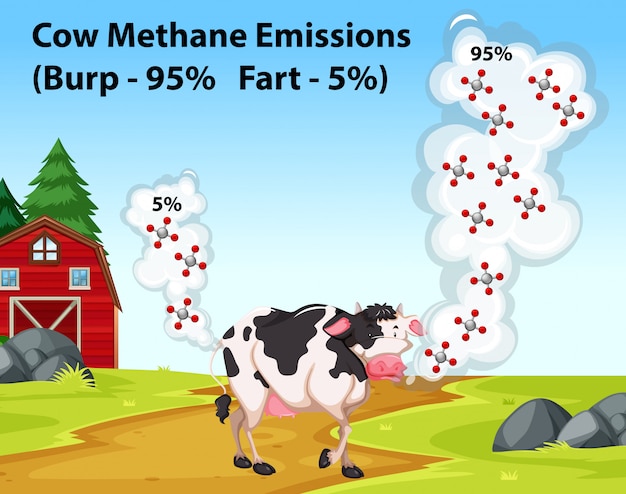
Global livestock accounts for 14.5 per cent of man-made greenhouse gases. The Rumen or fore-stomach, the first of four stomachs in cows and other ruminants is where fermentation breaks down feed and produces the bulk of the methane gas that domestic cattle create and release into the atmosphere through burps and excretion. Adding as little as .3 per cent of Asparagopsis Taxiformis, known as Dulse or Dillisk in Ireland to both cattle feed and dairy-cow feed reduces methane production by from 80% to 98%.
Dillisk, duileasg as gaeilge, was referred to as ´famine food´ in Ireland. This Red Alga also fixes carbon from seawater, thus reducing Oceanic Acidification. There has always been a cottage industry in Ireland for gathering Dulse. (See the lyrics to Dulahan). This new research could be an economic as well as ecological boon to the Republic. A science heavy article can be found here: https://www.biorxiv.org/content/10.1101/2020.07.15.204958v1.full A much more readable article can be found here: https://www.huffpost.com/entry/climate-change-seaweed-methane-cows_n_5fdbcbe9c5b6094c0ff08393
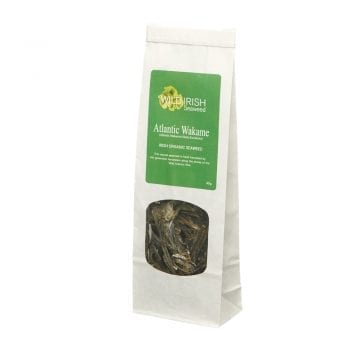
I don’t know about ‘famine food’ and cow farts, seaweed is riding a wave of popularity between Prannie Rhatigan’s book and everything else, ‘foraging’ trends and a variety of ‘Wild Atlantic’ (always ‘Wild’ or ’ Atlantic’) seaweed baths and sea vergetable products that have become available in recent years. (Here is a local business)
It’s a handy mulch for the garden (the veg garden is covered in about a foot of it and there’s loads around our fruit trees and bushes).
We also pick dulse, wakame, kelp/kombu carrageen and other ones to add to the diet. And bring back a bit of samphire while we’re at it. Plenty of it to be had, if you know where to look. It’s not a miracle cure though.
The travelling Wild Atlantic Seaweed Baths recently (before the latest lockdown):
The Korean grown/harvested stuff has a finer structure, the stuff you get here is a bit coarse.
Harvested and sold locally too :
Kelp used to be the big thing here, the ‘sea rods’ were harversted and dried and sold off to the plastics industry. There used to be big bundles drying all over the place near the coast. That ended some twenty years ago. But it was a bit of income for fishing communities for a long time.
The whole discussion around feeding cows seaweed to reduce emissions has been around for the last four or five years, IIRC.