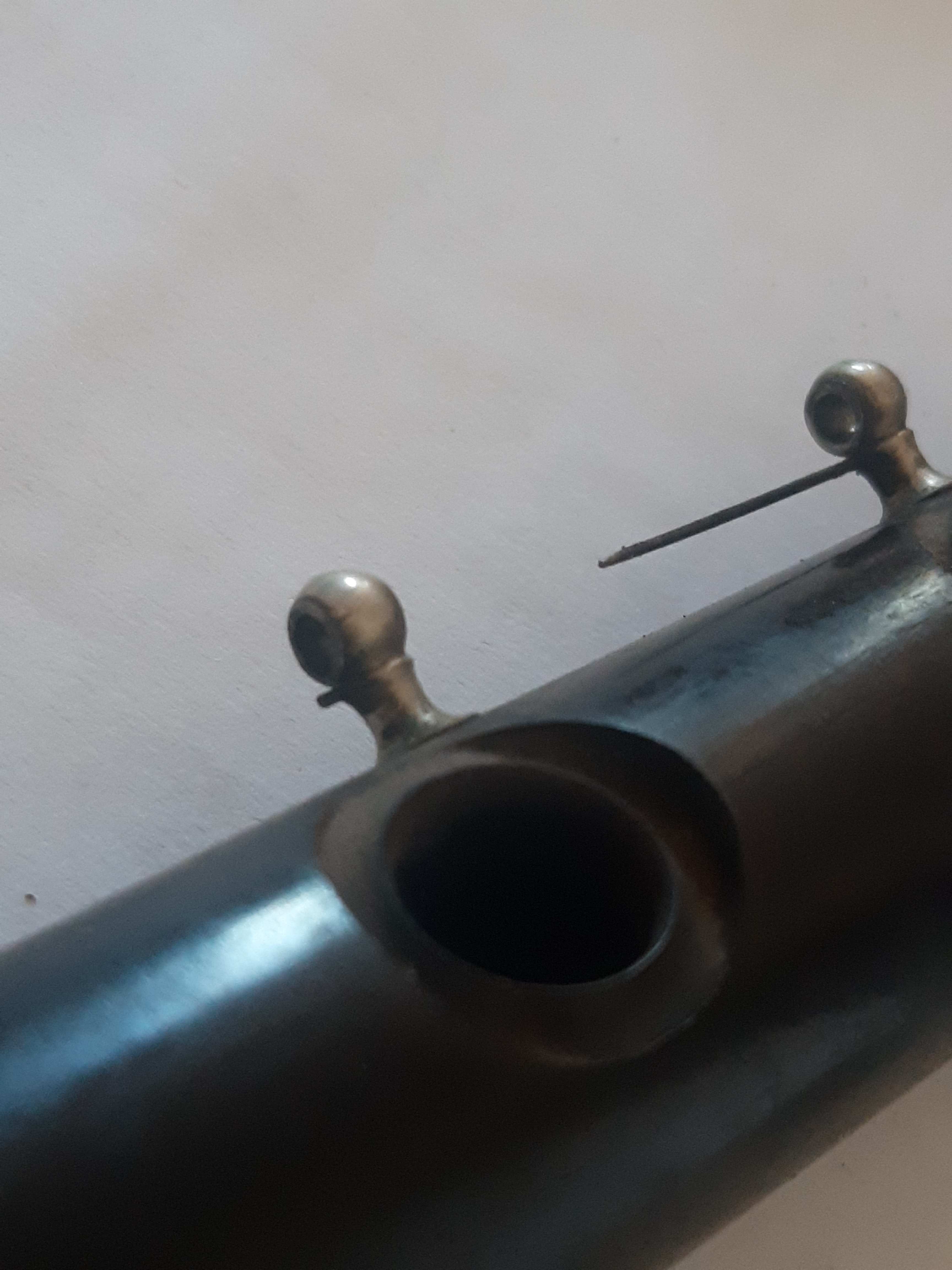
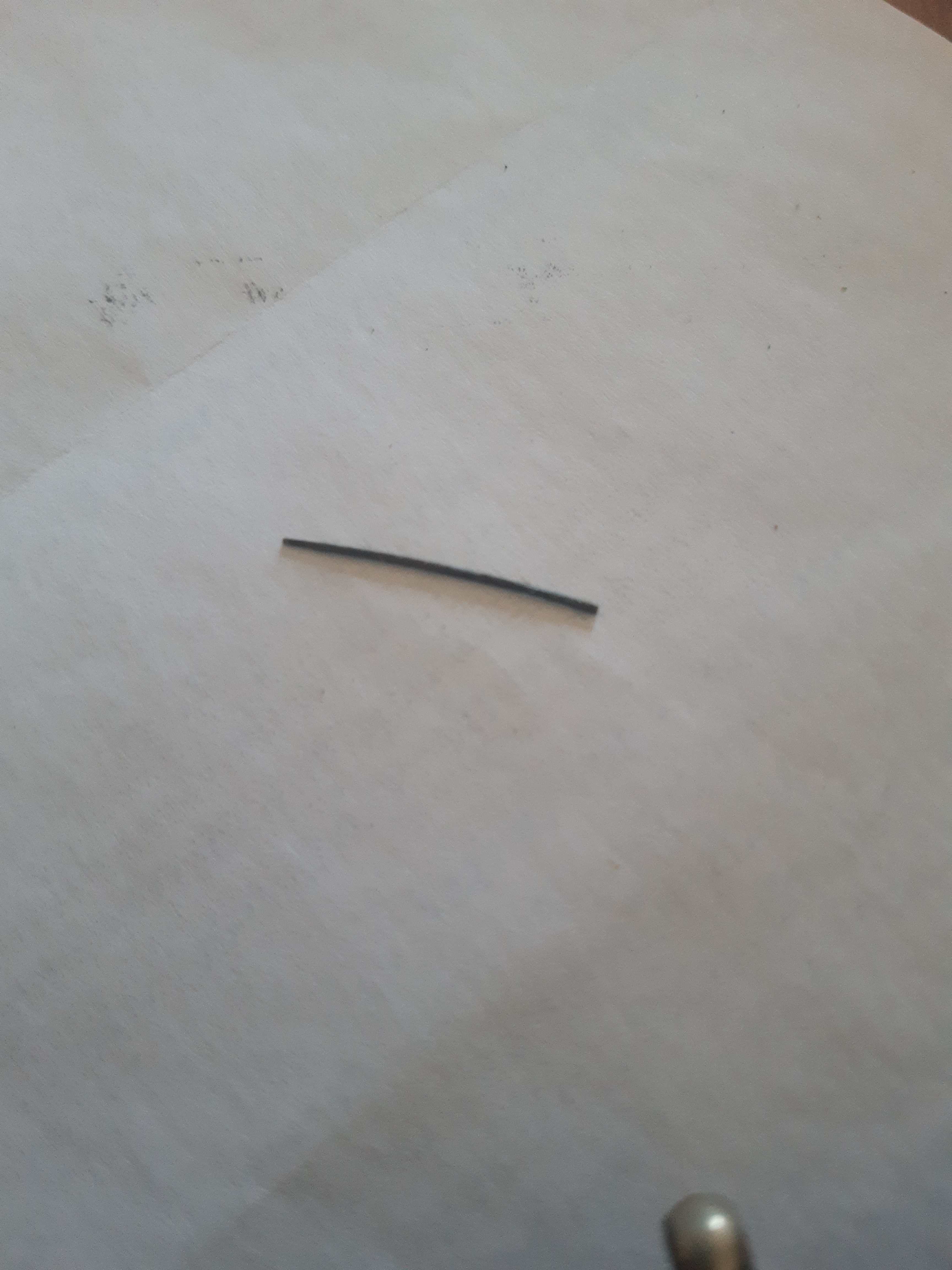
Certainly fixable, but not easy. Springs are usually riveted, not soldered to the keys. So, to repair a broken spring, you need to find or make a replacement spring of similar strength. But you also need to make or find a rivet, and attach it to the key. These are not straightforward tasks for a maker or repairer!
Can you see if it was riveted? Springs often break at the rivet point, probably because of work-hardening at that point.
And are we talking steel or brass springs. Do you have access to vernier calipers to measure the spring? Good to know length, thickness and the width at both ends.
Here are two pics for you to see the setting. It doesn’t seem to be riveted. The spring is roughly 21mm long, 0.7mm thick at the base and 0.5mm at the end. It seems to be steel.
Ah, silly me. This flute is post mounted, I was expecting it to be block mounted. So ignore everything I had said!
Yes, these needle springs are replaceable and should be readily available from any supplier or repairer that deals with modern metal flutes, clarinets, etc. You will need to be able to measure the diameter to be able to order the right spring. Vernier calipers or preferably micrometer!
From memory, they are tapered and simply push into the hole through the post until they won’t go any further. So you should be able to get the old stump out by pulling on the tail or pushing on the broken end.
This spring has probably been there for rather a long time and rusted, which might be why it snapped. So do be very careful not to snap off the protruding bits while trying to get it out.
I haven’t dealt with replacing needle springs in a long time, possibly someone else had and can remind us how best to remove them. Or you can probably research the question on the internet. A quick look for “removing snapped needle springs” looked promising!
I’m remembering a bit about handling these springs. But don’t rely on the memory of a 78 year old regarding springs he dealt with 50 years ago! Anybody else, feel free to jump in!
From memory, (woah, dangerous!), when you reassemble the keys, you don’t try to engage the springs. Once the keys are back in place, you use a tool with a notch filed in the end to guide the spring under the hook that accepts the spring into the hook. If that makes no sense, Google it!
Woah, I’m feeling rather old! Probably because I am rather old!
Yep, thank you for the advice regarding keys reassembling. I already done it successfully before breaking the springs And yes, I had to guide the spring under the hook after putting the key in place. To be honest, I broke the first spring trying to bend it more as the two last foot keys weren’t very responsive. But as they were all rusty, I think it’s a good thing to replace them.
Is the Blued Needle Springs-Individual-.70mm (.028”) x 56mm of this page is the good one to buy ? Blued Needle Springs
Also, I have to change the key pads. From my measurements, the original ones were 4mm thick and 14mm diameter, and 3mm thick and 9mm diameter. They seemed to be felt and bladder (yellowish and very thin). Are these ones good replacements ? Replacement Individual Pads Medium Woven Clarinet Pads (the thickness seems a little less than the original ones but maybe deformations made my measurements a little random…)