Hi guys, this is O’Sullivan’s March.
On staves 1 and 3, at the end off the staves. The last 2 bars have a bracket that say 1 and 2 over them. Can somone tell me what this means please?
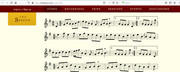
You play your first part up to the repeat sign the first time, the second time(the repeat) you take the part marked ‘2’ instead of the last bar you used during the first pass.
In fairness, the notation in question is a bit clumsy, taking two four bar parts, effectively making it an eight bar unrepeated part, where an eight bar part repeated would be perhaps a more common approach to the tune.
Ah, it makes sense now, your a fountain of knowledge Mr.Gumby.
Thanks alot now I can get on with learning this song lol
There are a lot of different versions of that one going around.
I started out, decades ago, with the version Pat Mitchell recorded and went through a few since.
DBA ABd|edB AGE|GBA ABG|AGG GED|
DBA ABd|edB AGE|GBA ABG|AGG G:||
f|edf edf|edf edB|ded def|gfe def|
~g3 faf|edB AGE|GBA ABG|AGG ~G:||
The latest I learned last year, from the playing of Mayo musicians Marie and Tim McHugh:
AFF DFF|AGF ~G2 B|AFF DFD|EDD DdB|
AFF DFF|AGF ~G2 B|AFA dAF|EDD D2:||
d|BAd BAd|BdB BAF|AFd AFd|ABA ABc|
dcd fdB|AGF ~G2 B|AFA dAF|EDD D2:||
which marches along quite nicely. They played ‘Lannigan’s other ball’ (as Gary Hastings calls it) with it.
It’s a D version but it works fine in G, I possibly prefer it in G on the pipes but both work fine.
Which version of O’Sullivan’s March would you recommend for me to learn, this is the only one I have really looked at
I’d say the one you like best. Or the one the people you intend playing it with play. Or both.
Here’s another one Séamus Ennis had, he actuyally had a song to the tune. :iam O’Flynn pklayed that one as well but I learned it off an Ennis recording:
T:Sweeping cobwebs out of the sky
K:G
GBA ABd|edB A2 G|GBA B2 A|BGG GED|
GBA ABd|edB A2 G|GBA B2 A|BGG G2:||
d|edg edg|edg edB|dBe dBe|dBG ABd|
gee fdd|edB A2 G|GBA B2 A|BGG G2:||
But there were other ones as well. Play what suits you at any given time.
Iv never heard that one, Gumby. Any idea where I can listen to it, doesn’t seem to be on youtube
Never mind it states it’s another name for O’Sullivan’s march lol
Liam O’Flynn’s recording of it is on ‘The fine art of piping’, see here. A flute version by Fergus McGorman is here .
I wonder; in the grand total collection of all Irish/Celtic music composed to date, are there more than half a dozen whole notes used?
Is Irish/Celtic music originally composed mainly for dance? If so, maybe that’s why.
I have a stronger background in bluegrass which also includes AABB fiddles tunes styles of anglo/celtic origin. From what I understand, they were originally written as something to folk dance to. Melody less important than having the proper rhythm. So they are mostly 1/8th which a 1/4 note once in a while, a 1/2 maybe at the end of a phase, and a whole note almost never.
-l2t