I recently had an opportunity to take these group/comparative photos of a bunch of C19th Rudall & Rose concert flutes gathered together. #4683 is my own flute, the rest belong to other people I know. (Before anyone asks, there wasn’t time to do comparative sound/video clips - maybe another time! )
The group pictures all show the flutes arranged the same way - I didn’t move them at all during the shoot, so with heads at top they are, in age order and from left to right: #2632; #3621#4298; #4683. Other separate shots follow the same sequence.
All four flutes are of cocuswood with sterling silver keys. None of them have any non-original parts - variation in wood colour with aging is normal, not indicative of replacement or mix-n-match parts.
#3621 and #4683 have Patent Heads, the others plain normal stopper adjusters (though #2632 has a silver-clad finial) and tuning slides. #2632 and #3621 have flat round keys with cork pads. and both have up-turned touches to their long F keys which necessitate turning the lower body joints outwards in relation to the upper body tone-hole spine-lines (Nicholson fashion…). #2632 has an inverted upper body-to-barrel tenon/socket and has a high E trill key; it also has plain hockey-stick overlapping low C/C# touches. #3621 has an unusual roller touch for the low C, overlapped on the C# touch. The youngest two flutes (probably made within 2-years of each other) both have the classic “claw” C/C# interlocking touches. All four have pewter plug C and C# stops, the older pair also having pewter plugged Eb keys. #4683 has an extra Bb touch.
The variation in embouchure cuts is remarkable. #2632 has a smallish, round and rather raggedly shaped embouchure (which plays admirably, it must be said!). #3621 has by far the biggest (a classic R&R ellipse), to match its enormous tone-holes - this on a flute made some time in the later 1830s. This flute HONKS! The other two also have classic ellipses, #4298s being smallest and #4683’s intermediate between the others, but much more undercut than either of them. (The embouchure photos were all taken at a similar distance and have been photo-manipulated roughly the same, but are not scientifically matched, so are not precisely to scale between themselves, though they do give a very tolerably realistic comparison.)
#4298 is partially overhauled and playable but has some repairs outstanding, not least a bad (but easy to fix) barrel crack - hence the binding and tape as interim reinforcement and sealing. The others are all in full playing fettle.
Holy Hand Grenades, Batman. What a fine assemblage. I see several things which trip my trigger, to wit:
Upturned long F touches
Extra Bb touch on your own one (hey man, nice touch!)
Roller C key
That lovely trill key
Those trill keys are awfully spindly-looking, but that is an extremely useful device for certain situations. I’ve got that one, plus an E trill key, on my own Rudall.
Yes, interestingly only on the two earlier ones. So perhaps the bold turning forward of the RH section was starting to become less fashionable by then?
Now, note also the shape of the key cups - the right hand (later) pair are “salt spoons” (as we’ve come to call them), with seats presumably for “elastic balls”. But the earlier pair have “pointed” flatter top cups which you might imagine were designed for card-backed pads, except they were probably not invented by then! So, what sort of pads did they have originally ? Just leather disks perhaps? Can you tell us what the seats are like on these, Jem?
Jem, your image also nicely demonstrates the reason why Rudalls with the high E trill key also have an inverted tenon arrangement. The edge of the key cup would click annoyingly on the barrel socket ring!
I have a Hartmann flute here for repair which gets around the problem by having a double cup arrangement for the High E trill key. The larger hole area allows the holes to be drilled further down. For some reason, it reminds me of Madonna.
Come on then, Rob, give us a pic or two, or point out where you’ve posted some in the past if you have…
@ Terry - my OP blurb partly answers your Q about the keys/pads on the earlier two flutes - they have flat discs with thin, flat cork “pads” glued or shellacked to them - in the case of #3621 there is (I was told) reason to think that most of the cork discs are the originals. They work pretty well. Unfortunately I can’t at present describe the key seats for those - I didn’t examine them closely/can’t remember… can try to find out, though. The later two with salt spoon cups have the normal mid-era R&R smooth, slightly concave seats for elastic balls/purse pads - which also work just fine with (adapted/thinned where necessary) modern card-backed clarinet pads. I’m responsible for the (incomplete) overhaul of #4298 as well as for my own #4683, so I can speak better to those.
Or just tell us by how close it comes to the top shoulder of the LH section. Oh, and the length of the barrel. Another way to give it more room would be a shorter barrel and a bit extra on the LH.
Here’s another example of a flute (#1959) with the reverse-tenon arrangement (I took the image at the DCM):
Note it also has the pointed flat-plate key plates.
Sorry I misread your intro, Jem. Just woken up and anxious to get down to the workshop. Should have waited for the cup of coffee I’ve come back up for!
OK, cork, eh? Oboes often use cork, so why not flutes? It has to be top-grade cork, far better quality than say tenon cork or stopper cork. But it’s still available, for modern oboes.
If the cork was original, I’d expect to see a volcano-type seat to give a sharp cutting edge to seal “into” the cork. If they were originally leather disks, I’d expect a flat-bottomed seat. I’d be very interested to find out what the others have if you could ask the owners.
Thanks Rob - it is quite a big key-cup/pad, so presumably hole too..
(P.S. You forgot the thing about shrinking your pictures to max width 750 pixels so they don’t bump the page display width… )
Terry, I will ask when I get a chance - may be a few days, and I’m not likely to be seeing them in the flesh again for a while. I might even be able to get a picture or two if you’re patient.
Yes, presumably that’s what makes the difference. But it invites us to wonder why they didn’t think of that earlier, or, what other change permitted them to do that, or, what have we lost by doing that. The answer probably lies somewhere up the third octave, where one of those locations can also permit a more stable or in-tune fingering for some difficult note. That being said, it’s unlikely to bother many of us!
(P.S. You forgot the thing about shrinking your pictures to max width 750 pixels so they don’t bump the page display width… > > )
Ah, so is that the magic number?
Terry, I will ask when I get a chance - may be a few days, and I’m not likely to be seeing them in the flesh again for a while. I might even be able to get a picture or two if you’re patient.
Either would be great, and entirely at your convenience or opportunity, thanks Jem.
 )
)


 I’m good with that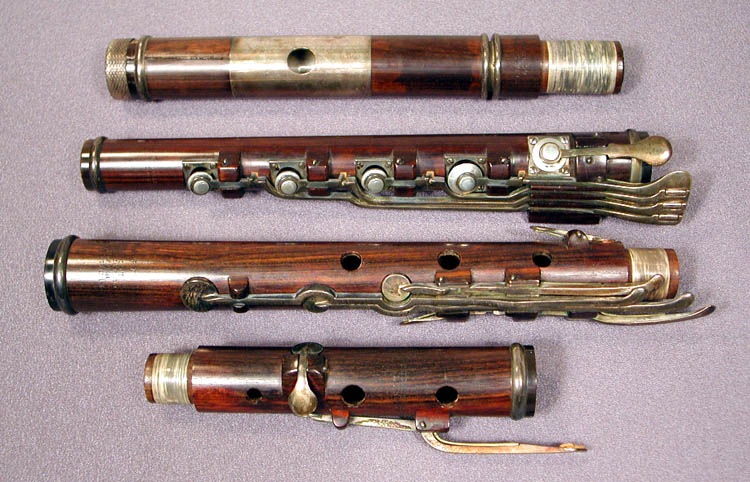

 )
)