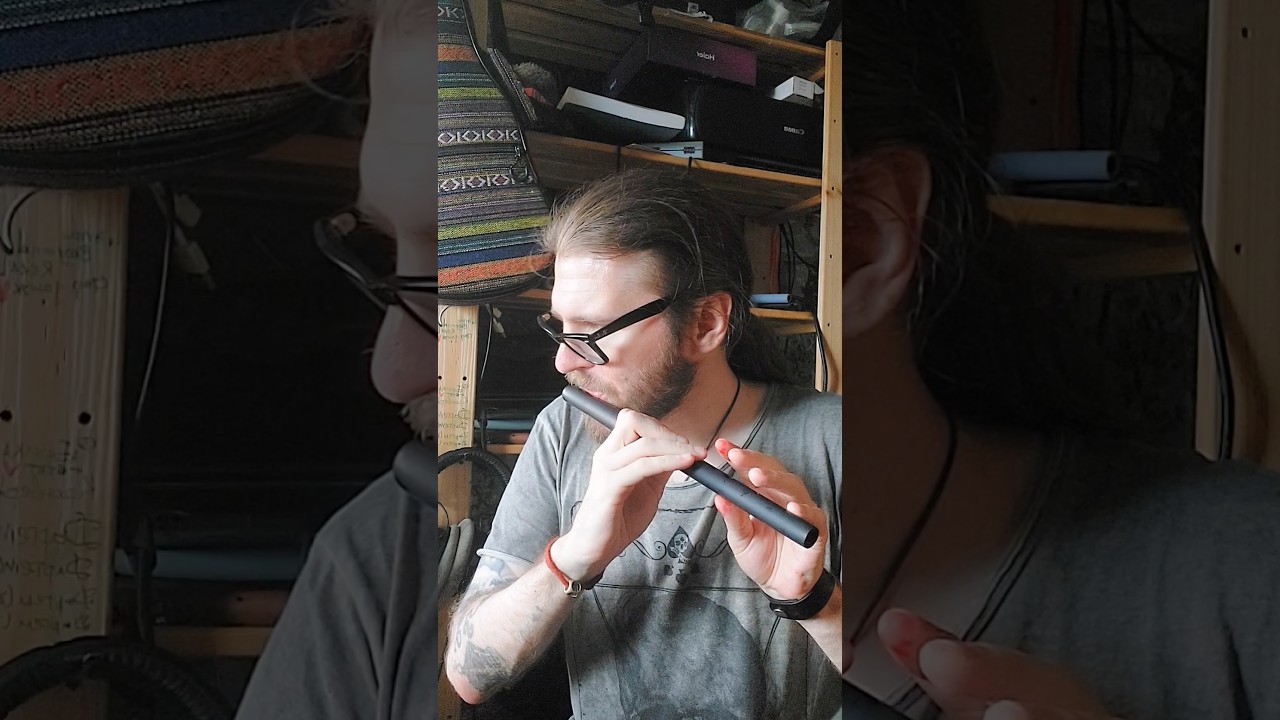
Hello everyone, I am the maker of Galeon flutes. First of all, I would like to express my huge respect to all the predecessors who make traditional Irish flutes.
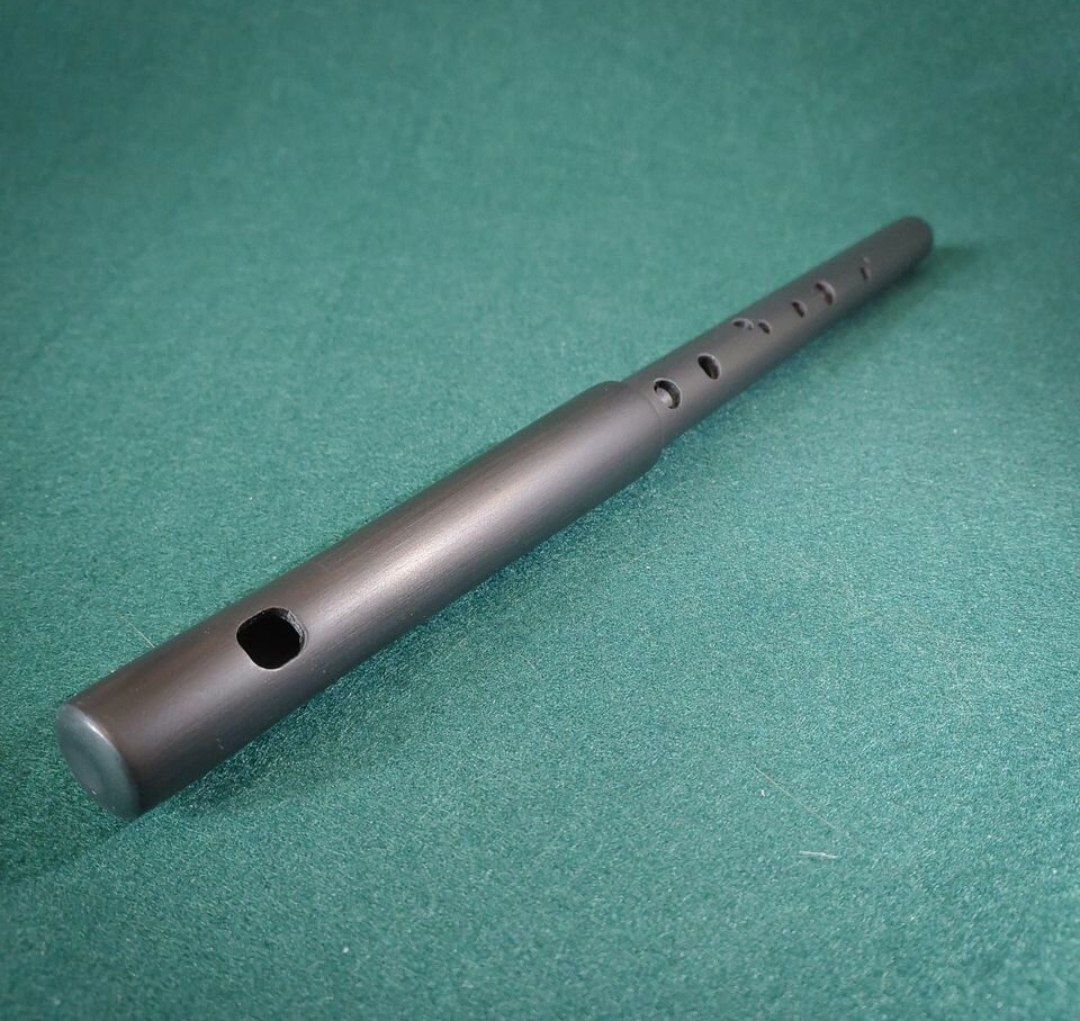
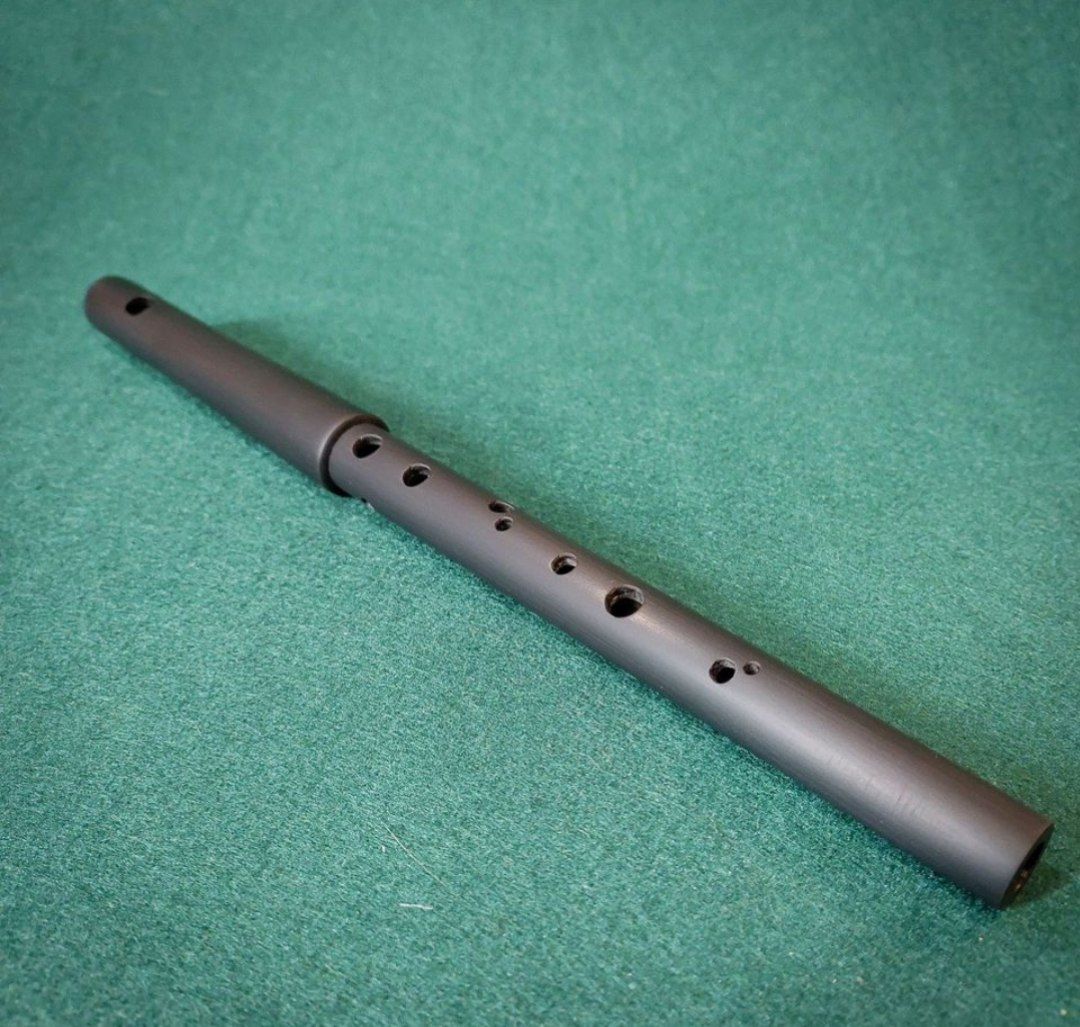
I started making Irish flutes with Delrin in 2012, and about four years ago, I began using 3D printing technology to produce keyed Irish flutes. I believe I can share some insights:
The initial reason for making 3D-printed flutes was that I didn’t have the conditions to produce wooden keyed flutes—this requires a fully equipped independent workshop, machinery, and a stable supplier of instrument-grade wood. Fortunately, after 2020, China’s 3D printing capabilities have become incredibly advanced. I can choose from many 3D printing factories to collaborate with, and there are various resins with different properties available. These factories can handle printing on a meter scale, with some capable of printing parts as large as five meters or even bigger. With current high-precision resin materials, SLA printing technology can achieve an accuracy of 0.05mm, which is much higher than FDM printers and enough for musical instruments.
Regarding McGee’s first question: At what stage are we with 3D printing now? I noticed a post from 2010 in this thread titled “Three-D printing - a threat to flute makers?” which mostly discussed the high cost of 3D printing. Now, 15 years later, 3D printing has become increasingly affordable and precise, you can even get decent results with consumer printers. However, it’s important to note that there is a significant difference between consumer-grade FDM printers and industrial 3D printers. Consumer-grade printers are essentially advanced toys, while on the industrial side, it’s worth mentioning that the newly released Apple Watch Ultra 3 this year already uses titanium alloy 3D printing technology for its case, which is then finished with secondary processing. This is a commercial product on a scale of millions. So, the reality now is that 3D printing is fully capable of mass-producing components for industrial products, with just some additional processing required. For instrument making, there are technically no issues—what remains are commercial considerations.
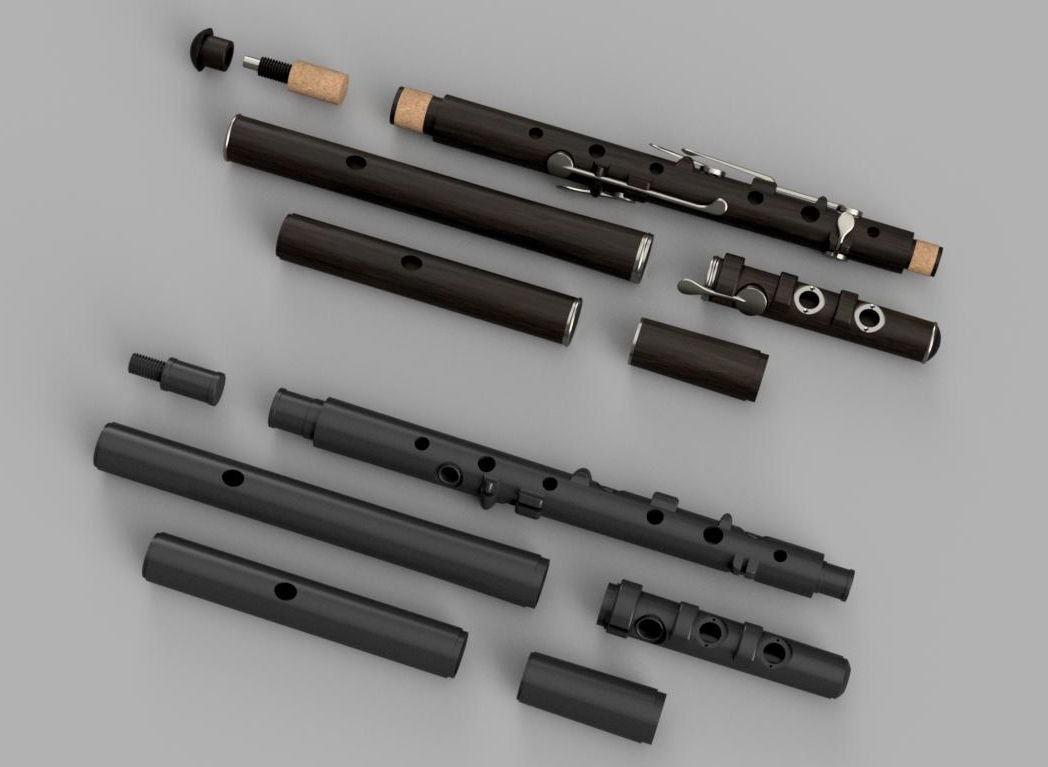
The second question concerns the gap between 3D-printed instruments and wooden instruments. Taking the Galeon 8-key flute as an example, I believe it can achieve over 80% of the performance of a traditional wooden flute. Here are some comparisons:
Performance: Traditional flutes have the advantage. Wood offers a unique sound that is irreplaceable. However, in terms of basic tone and performance, 3D-printed flutes are entirely adequate, especially after fine polishing of the inner bore.
Appearance: Traditional flutes are superior. Currently, among resin materials, only white offers the highest precision; other colors have lower precision, while most users prefer darker appearances. For key materials, 3D metal printing only achieves about 0.2mm precision, and the surface finish is not ideal, leaving much room for improvement in the future.
Cost: 3D-printed flutes have an absolute advantage and can be produced in batches.
Reliability: Each has its characteristics. 3D-printed materials won’t crack due to dryness, but they are prone to deformation under high temperatures and discoloration when exposed to sunlight. However, new printing materials are continuously evolving, and there are already various high-temperature resin available.
The third question is about who is most affected by 3D-printed flutes. My view is that entry-level wooden flutes are more impacted, as beginners are less sensitive to sound quality and performance but highly sensitive to price. 3D-printed keyless flutes can be produced at very low costs (I even hope they can immediately replace the poor-quality flutes from Pakistan). The impact on keyed flutes is smaller because users who purchase keyed flutes are either wealthy enough to want the best from the start or already have some experience with keyless flutes and tend to prefer traditional wooden keyed flutes.
One additional point: I think it’s necessary to distinguish between “DIY with consumer-grade 3D printers” and “commercial brands using industrial 3D printing technology.” The former can be shared and discussed as a personal hobby and technical exchange, while the latter is a commercial endeavor. 3D printing is just one step in the process—or rather, it can only produce preliminary parts. These parts still require fine polishing, assembly, sound tuning, and more to become a qualified instrument. All of this demands years of accumulated experience from the maker.
To summarize:
- 3D printing is not only revolutionizing musical instrument manufacturing but will also bring changes to every aspect of our lives.
- 3D-printed flutes have a certain impact on traditional instrument makers, compelling them to reflect and create more competitive products.
- 3D-printing will reduce the production cost of flutes (and other instruments) , making previously hard-to-attain instruments accessible to more people and helping to further promote some niche instruments.