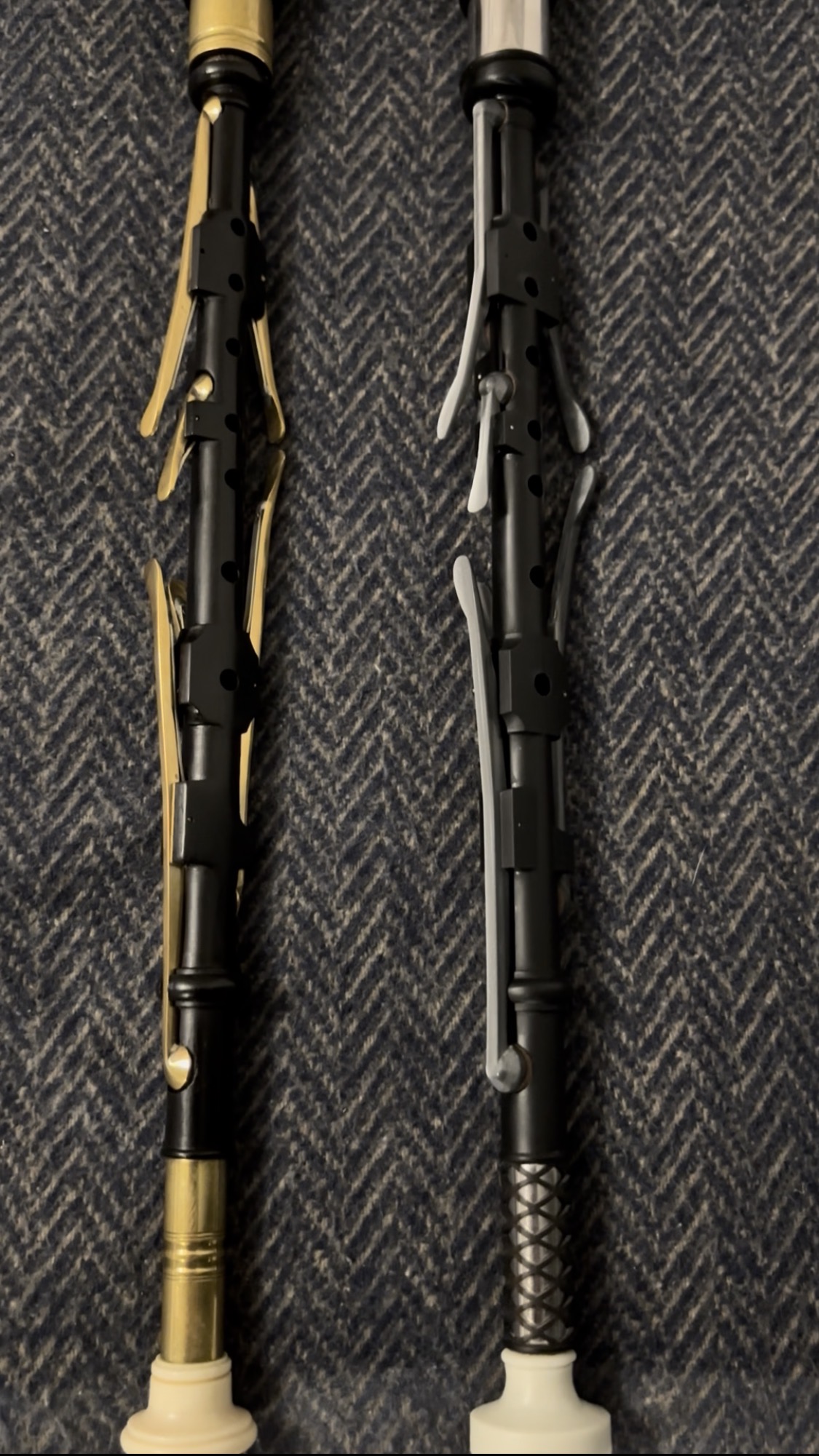
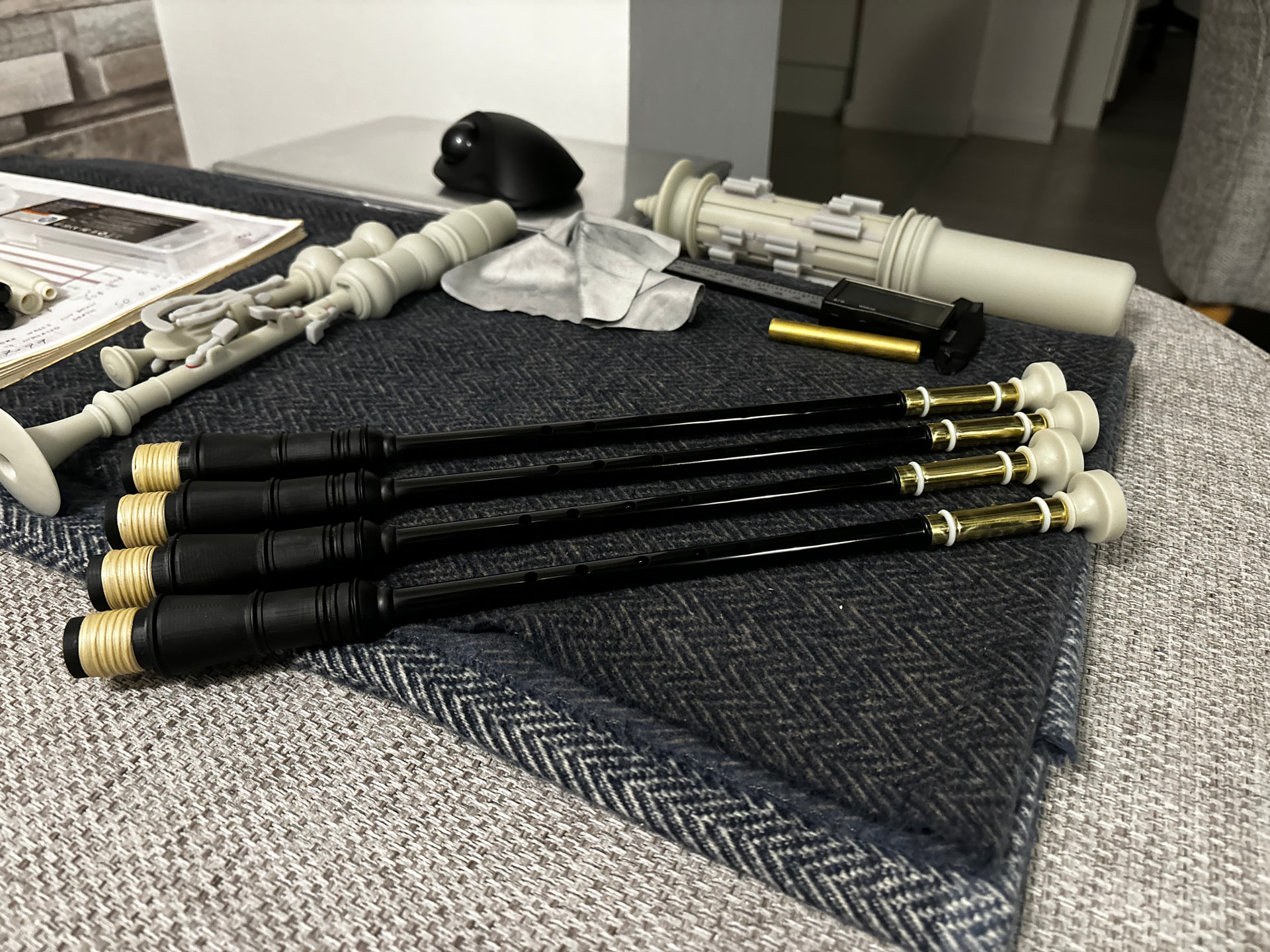
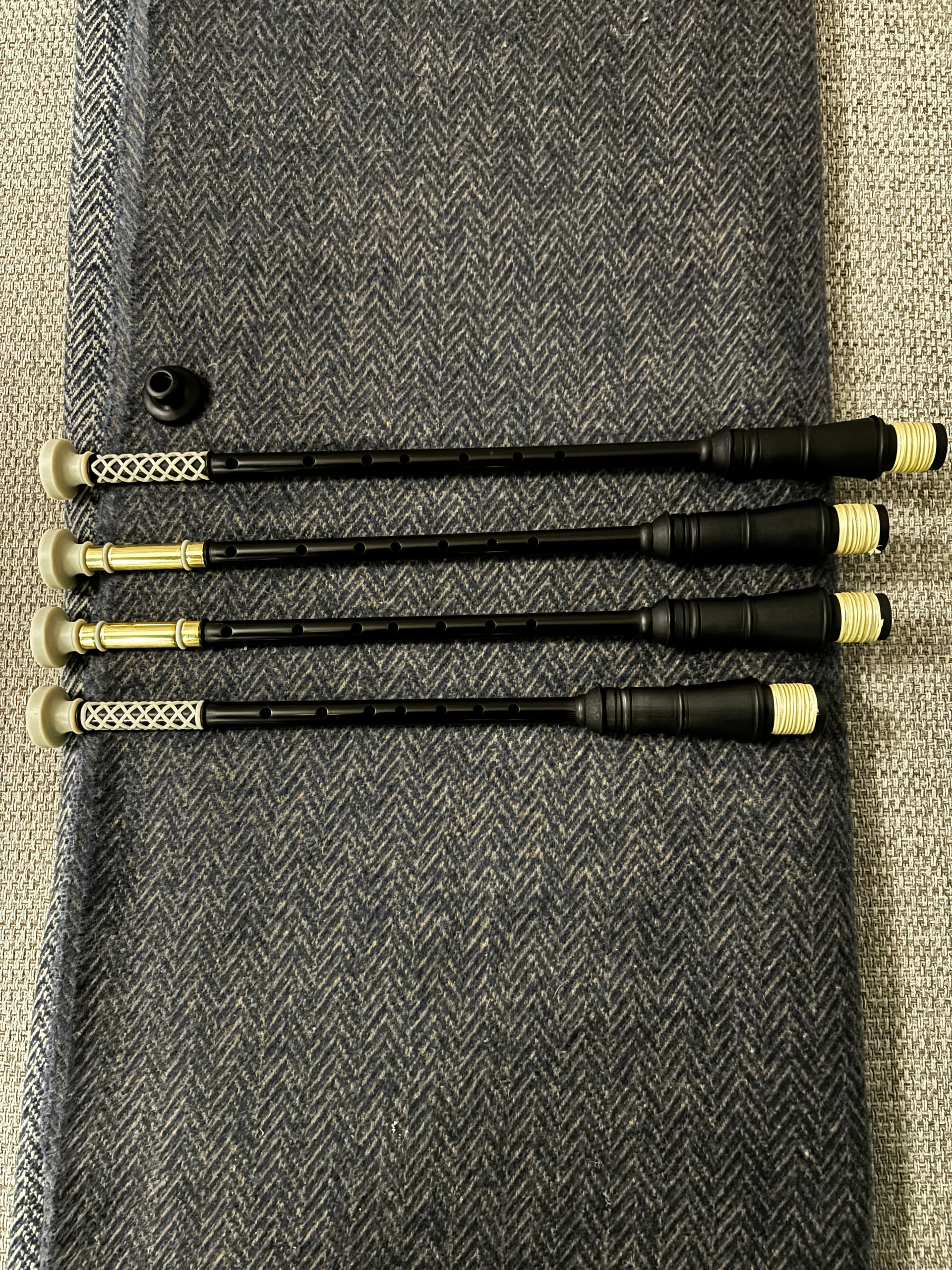
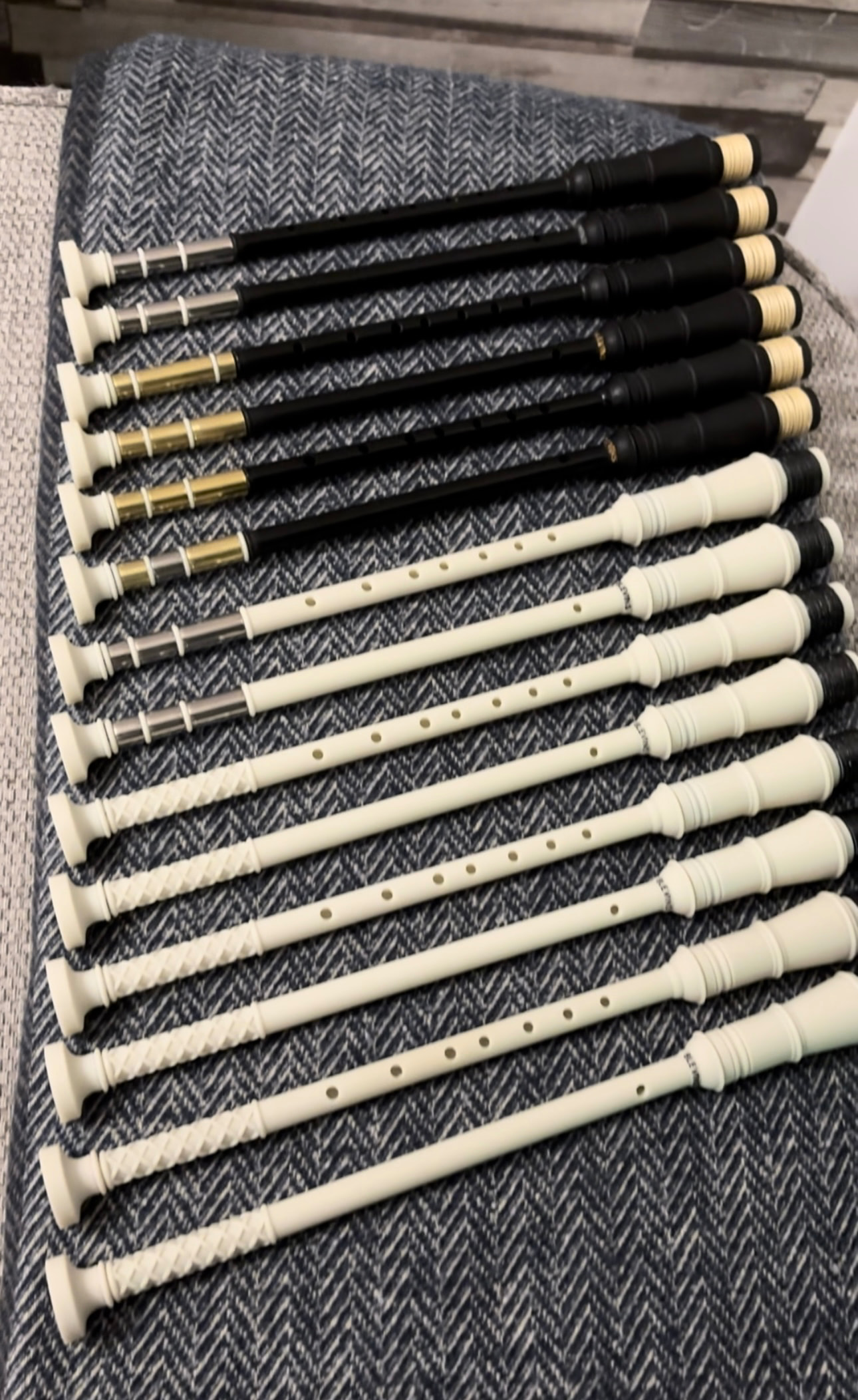
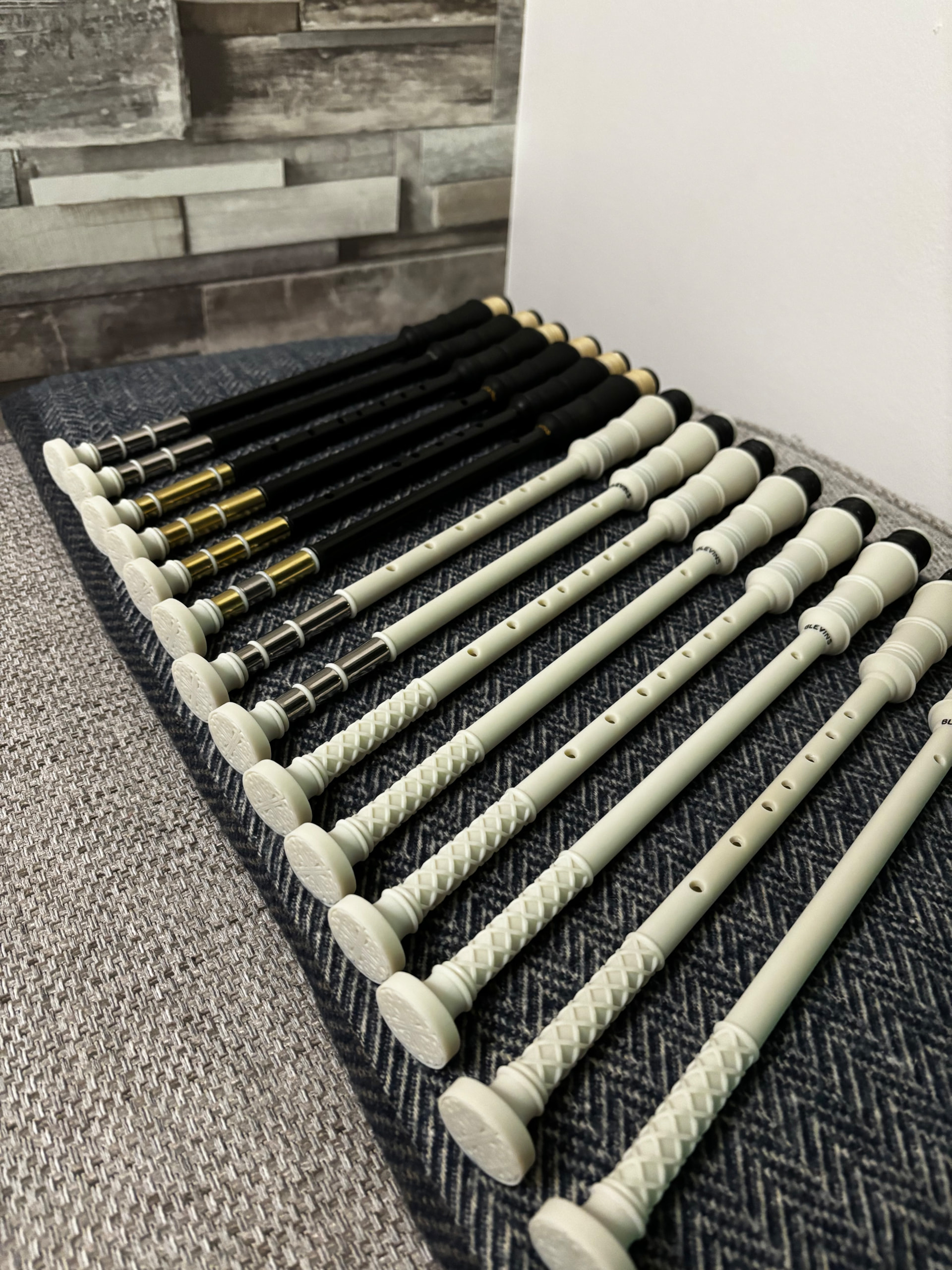
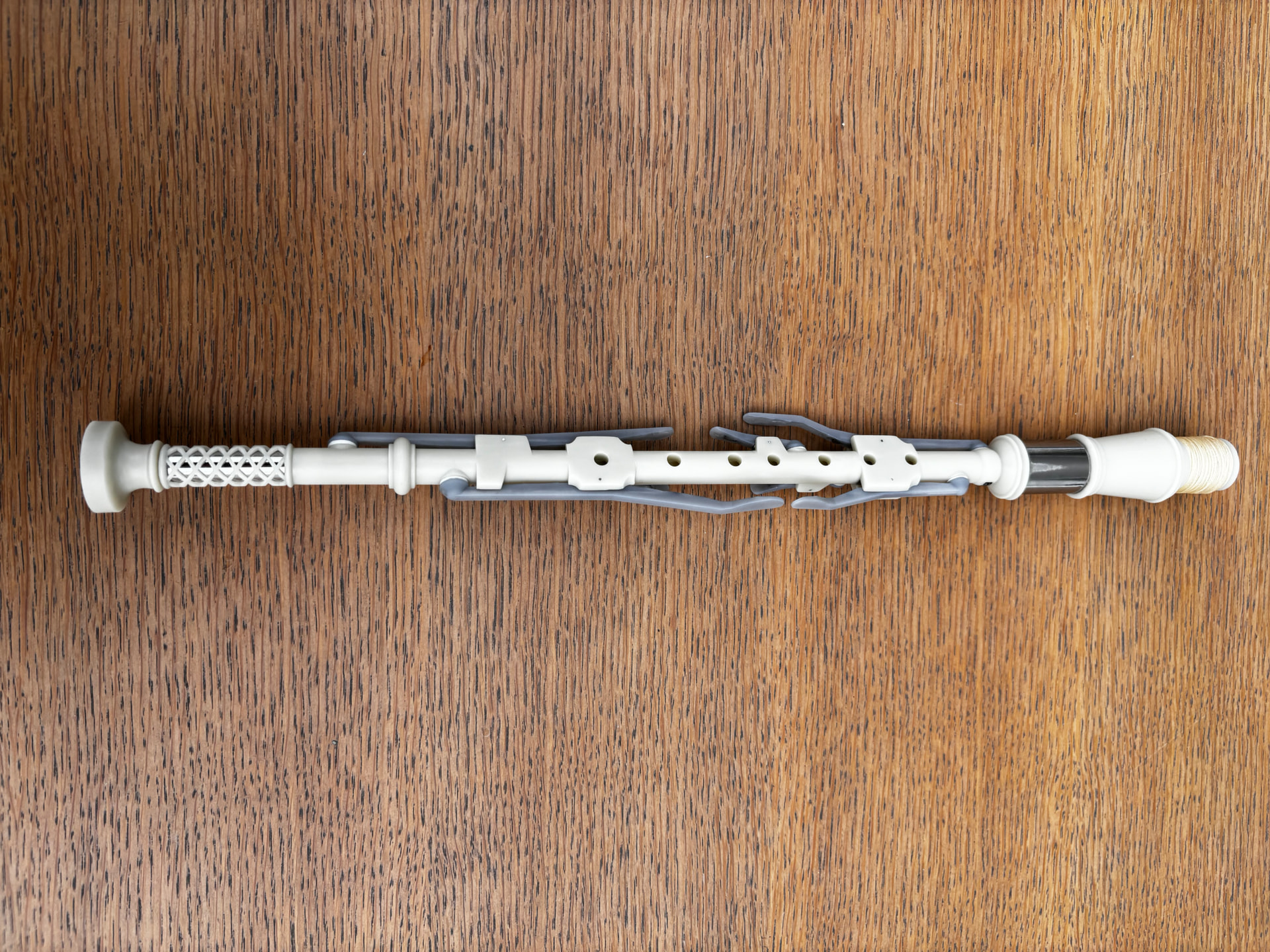
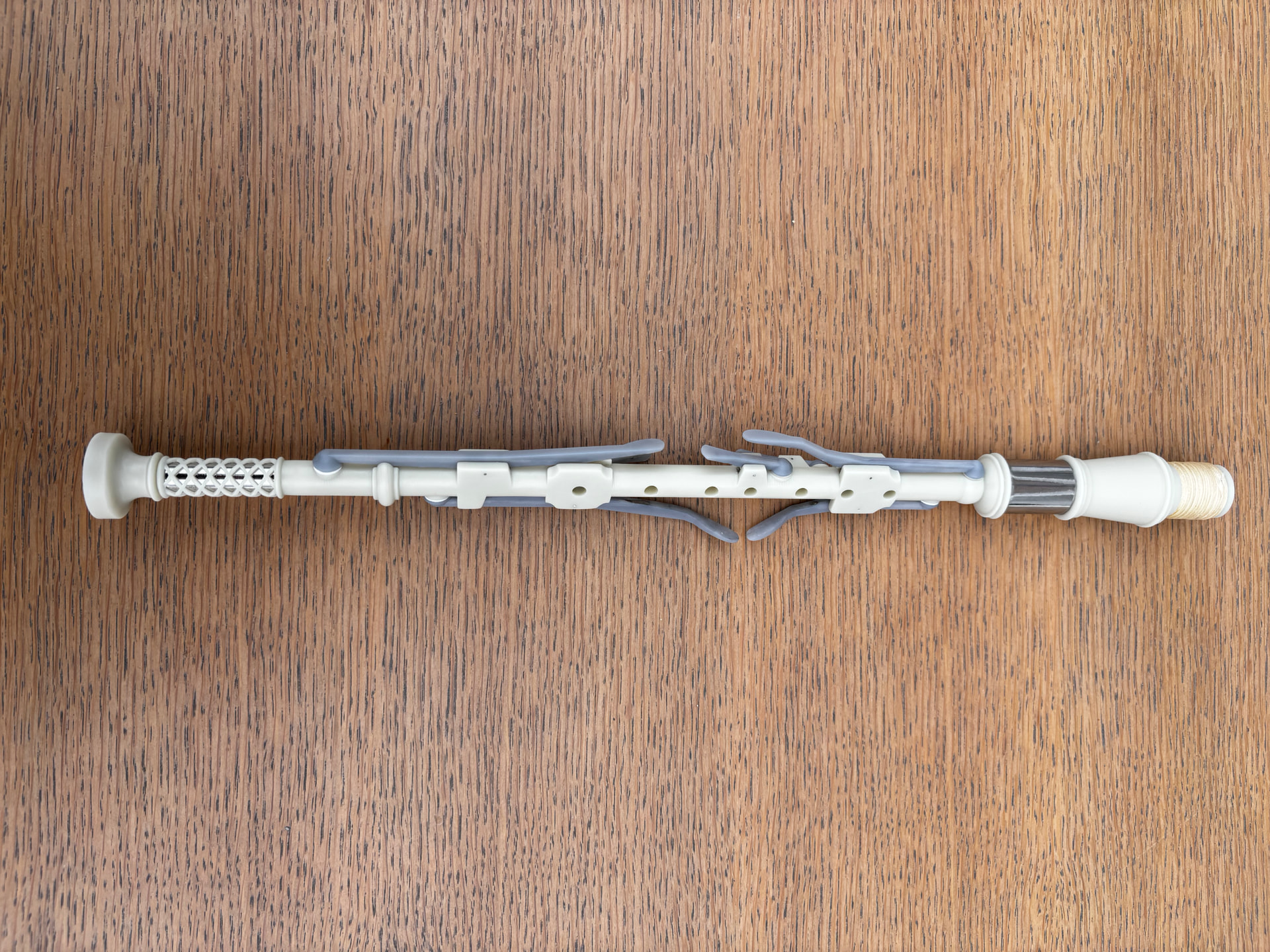
Today I printed a chanter thingy on a Bambu Labs printer at a makerspace I’m a member of.
I’ve been advised that 5€ will cover the cost of the print.
I still have to make a cap - which I think I’ll design myself.
But I may well go on to have a go at the rest of the main components, more to see if it can be done than anything.
It took 5 hours and a bit, and once I’ve made good, I’ll post some photos.
Now to also find a reed builder - or perhaps I can make one myself! hehe.
Indeed, I’ll be interested to see the results. I started with a Rowesome-based design myself, before tweaking a few things to end up with the current Beckendorf chanters. I found it easier to start with a good reed, and test chanter designs against that, than hope that the chanter is good, and try to make a reed to match it.
Also, my chanters are 3D printed from resin on an SLS printer, which has a higher resolution and more reproducible results than an FDM printer. It will be intriguing to see how it turns out!
Sure! From the original Rowesome design, we added more of a throat to the bore. Just a slight one, but we reduced the taper in the top 2-3cm to make it more accommodating of the reed. After that, it was just a matter of hole placement and diameter. Find which notes are in tune, and tune the rest to match that. (In both octaves, too!)
Hi, I used to produce SLA printed simple and keyed Northumbrian small pipes, tone was superb, but there was little interest from the NSP fraternity sadly.
To be honest, I’ve kind of abandoned the idea - yea I know, very quickly.
But I just wasn’t up for the amount of work I’d have to do to even get to the ‘working chanter’ stage, so I found another option.
I’m now working on making the other parts of the UP kit, and hope to post about it soon.
Hi, I’m the person who designed the linked file. I’ve been iterating on the design almost daily and haven’t updated the printables.com listing.
At this point I have a complete 3D printed practice set. There are some components you can’t print: belts, bellows fabric, bag cover fabric, valve flaps, glue, hose. I have yet to make my own bag, and I’m still playing on my David Daye reed.
I’ve been quietly gathering opinions about it at various gatherings and festivals; most recently I took it around County Donegal and Sligo. Opinion seems to be largely positive once I’ve made it clear I’m in no way trying to compete with the beautiful craftsmanship from traditional pipemakers: I’m just trying to make an affordable “my first pipes”, just as David Daye was.
I’ve been playing on it for maybe a year now. Spending so much time designing parts has meant I haven’t spent much time practicing, so I’m not an accomplished player. But many other pipers have played it and sounded great.
Uilleann Bagpipes has a link to the OpenSCAD files used to generate the .3mf or .stl files you can print. It still needs a lot of work: the bellows probably need a redesign, and I desperately need to start making detailed assembly instructions. But if you enjoy a challenge and don’t mind emailing me a lot for help, it’s at a point now where anyone with a printer, reed, bag, and a hardware store, should be able to build their own practice set.
No, and I don’t want to turn people off of the design with my lousy playing.
Next time I’m in the company of a more accomplished piper, I’ll ask if I can record them playing the set, because this is a totally reasonable thing for a person to want before sinking a bunch of time into building it
I think it’s important to disclaim that “consistent sound” is like 60% reed, 20% technique, and 20% chanter. “In tune” is maybe 40% chanter, 40% reed, and 20% technique.
I’m currently having trouble with my back D that I wasn’t having at all in Ireland: taking it back and forth from 20% humidity to 97% humidity may be taking a toll on the poor reed. In any case, I’ll go set up the recording rig now.
Just so we’re clear, I’m also not sure I have it right. All I meant was that the reed plays a huge role in both intonation and pitch stability: I shouldn’t have put numbers to it. Similarly, bag pressure can affect the pitch.
It might have been more helpful to describe intonation as layered: beginning with the chanter, built up with the reed, and finished with technique.
I admit my earlier response was fuelled by a partial misreading of your earlier post. I would agree however that it would be impossible to quantify these things. The interactions between reed, chanter and players are more complex than a few numbers.
 hehe.