Just curious as to what everyone who plays at sessions here trots out the most. Anecdotally, I’ve seen a lot of Sindts and Killarneys at sessions on both sides of the Atlantic, with a fair few Susatos and Dixons in Ireland (both being fairly prevalent in music shops) and Burkes in the States. Obviously these are sweeping generalizations, and I’ve seen plenty of whistles of all sorts in the hands of players.
I’ll go first and say that a Killarney D and Eb both sit in my flute case. I almost never go into a session with just a whistle, but I’ll pick one of those Killarneys up for a set as a change of pace from the flute every so often. I also have a Chieftain D that has been played a couple times at sessions, although I find it overpowering for anything but a big noisy group with banjos and accordions, and mostly use it for busking. The Killarneys, in the other hand, are fairly easily drowned out, especially in the 1st octave, although they can often be heard better by others than myself (funny how acoustics work!).
Also, I’d love to know peoples’ thought processes behind their choice. Why is your session whistle(s) the one(s) you use at a session? Is it all about volume for you? Strong 1st octave? Tone that plays nicely with others? Not in any way looking for recommendations, just wanting to take a bit of a survey and start a discussion!
I got my first Sindt during the early naughties, 2002 or thereabout. I was playing every Sundaynight for the sets , at the time the Sindt was the go to whistle for that and it was the playing out whistle for me for more than a decade. At some point people were paying such silly prices for the Sindts that I sometimes felt the whistle attracted greedy looks and I started feeling I couldn’t leave it unattended and had to look after it all the time. When the Killarney first arrived it became the rough and ready, and (then) not very expensive alternative.
I am not concerned much with volume, both Sindt and Killarney are just about as loud as I would want them, even if the noise gets such that I can’t hear myself the whistle can still be heard by most other people across the room. And if the sound gets completely lost I really have no business being there. ‘Cutting through’ is not on my mind, both whistles blend well into the overall sound of any group and that’s what I want from them.
I have gone off playing out since and between lockdowns and everything else opportunities have disappeared anyway.
I’m perhaps something of an outlier in that my go-to is always a Low D.
When I first gave up flute and went to Low D (in 2006) it was a Burke. Then for a few years it was an MK. Now it’s a Goldie.
For one thing I’m used to playing in flute range, so the Low D sounds right to me. With Low D I’m there with the fiddles and flutes and all.
The second consideration is that there’s a regular who always plays High D whistle, and one of those is enough.
When I do use a High D (rarely, and only when the High D person isn’t there) it’s my old Feadog Mk1 or a Killarney. Both are rather quiet, which is how I like it. I don’t want a loud blasting thing.
About the thought processes behind the choices, for both High and Low Ds the primary thing for me is perfect tuning.
Next, with the Low D it’s air efficiency. Though for me it’s not as important in reels and jigs as it is in playing airs.
The Sindt whistle is the go to whistle for many folks around here and kind of local to the area so everyone has one. Yes, I do play the Sindt often, however, I’ve preferred wooden whistles all along so I also play a rosewood high D made by Ralph Sweet (RIP) and also a blackwood high D made by Joseph Morneaux who apprenticed with RS and now owns the shop which is called Musique Morneaux. These whistles are also local to the area so there are a few around among the players.
I like the tone and feel of the wood whistles and the loudness is enough to be heard among the larger sessions. Wood whistles are a bit wider so easier to handle. The wood takes some time to warm up, but when it does… it sings!
It’s funny, this is confirming a bias on my part against some of the prevailing wisdom that I’ve read and heard about “session” whistles being loud whistles. You’ll even find a lot of makers using that terminology for a wider-bore version of their D whistles. I can definitely understand the impulse, having had the experience of not being able to hear myself. But playability and tone beat pure volume any day of the week for me.
I had a WD Sweet whistle in delrin that I stupidly sold on, but was a great player. I believe it’s a derivative of the Sweetheart design, or at least looked awfully like the Sweet whistles I’ve seen. At some point maybe I’ll get another one…
I’ve never figured out the rage for wide bore session whistles. The whistle is pretty cutting. Most will carry in most sessions. In a huge group or amplified session, who the heck cares anyway. I even heard a Sweetone hold its own in a group of 17 in a full bar. I prefer my Copeland, but that is not particularly available to many. I also have preferred my Sindt. But I have heard many wonderful players of many different whistles from tweaked Generations to O’riodans. For the listener it is often the players skill as much as the whistle.
Another one here for the quieter whistle. In this case one of my old Generations. Plenty loud enough in our small session. In fact, I will still play one in large sessions.
I have some Susatos that are great for playing outside, but I wouldn’t personally bring them into a session. As others say, I want to blend in, not “cut through.” That seems such a violent imagery for music, and what happens when everyone wants to “cut through”?
I also play a melodeon, and will happily accompany a quiet mandolin or a harp in our session; at the right volume. It’s perfectly possible, desirable in fact, to do that.
Here in England we’re going back into lockdown on Thursday, so sessions and gigs seem farther off than ever.
PS. I’ve just bought a wooden whistle of moderate volume, certainly not a so called “session whistle.” It’s really for band work, but when we get back to doing sessions I might experiment leading off a few tunes with it. Though I suspect I’ll just go back to my old Generations.
I have some Susatos that are great for playing outside, but I wouldn’t personally bring them into a session.
I’m not a session player, but I acquired an ‘Eb’ & a ‘B’ Susato pre used, & I find them to really be too loud to play at home, so seeing you refer to them as good for outdoors playing makes sense.
I noticed that many of the whistles mentioned on this thread are tuneable. I play in small, mostly impromptu groups that include the mandolin, guitar, squeeze box, fiddle, and some vocals. The tunes are not strictly Irish so they’re not really sessions. How important is it to you session players that your whistle is tuneable? I very rarely have to tune my whistle once the group gets going. The string players tune often as they go along.
I suppose it’s a function of the sessions a person attends.
Here they’re small affairs, often perhaps 5 to 7 people, and mostly fiddle and flute. The main issue with volume is being too loud.
A large session especially with banjos and accordions is a different proposition of course!
I have experienced those, generally at a festival, 30 or 40 people and multiple banjos and boxes and uilleann pipes and guitars and (say it ain’t so) a drum or two. This was back when I was playing flute and with flute you can get a big sound if you really blast.
But I remember one session where, in addition to all the banjos and screaming pipes and such, a guy was holding forth on the world’s loudest accordion. I broke out the dreaded uber-loud Susato High D that I used to have (extra wide bore, extra huge holes, the loudest whistle I’ve ever heard). I later gave that thing to a busker, and good riddance.
I don’t often play whistle in sessions, preferring the flute, but if I do, it’s usually one of the the John Sindt “D” whistles I’ve had for over 20 years now I would think, having been told about them by John Skelton. Never regretted buying those whistles, and several students I had at one time in Aberdeen bought them as well, and are still playing them.
In a loud or noisy session, I might use the Tony Dixon plastic “D” I bought from eBay out of curiousity and was pleasantly surprised with.
If ever the sound from the Dixon gets lost, it’s time to go home, although I would have the nuclear option of the “D” Overton soprano bought in the mid 1980s.
In a large session I just pop in ear protection and ride the wave. Unless you’re the one leading the session there isn’t really a reason for you to be heard, just to blend and add to the general conviviality.
For a normal session (if there were any) I play an OZ Visor D,
unless it gets loud then a Milligan with a session head,
unless it gets louder yet, then a Kerry Optima Cobre D,
and if it gets really loud, a Chieftain Custom D with a McManus body (which could curl the hair in a goat’s ear).
Otherwise, I’ll just drink a beer and shout at my companions til it’s over.
This is something I have a bit of a take on, because I’ve noticed that sessions with many whistle players often feature a congealed mass of slighty-out-of-tune whistles at the top of the range. My theory is that more novice players tune their whistle to an iPhone app or something similar when the session starts, and figure that’s “good enough” for tuning. The issue is that tuning just one note or even a couple notes at one temperature (often before fully warming up), one breath pressure, and on an app usually more designed for guitars and ukuleles than whistles isn’t really good enough to say “good enough.”
In a sense, then, the tunable nature of the whistle actually works against good tuning, because it gives a player too much freedom to alter the tuning in a way that doesn’t actually help matters. For a lot of these players, a well-made fixed-pitch would actually be better, because it would eliminate the second-guessing and over- or underthinking that happens with tunable whistles. Plus, at least with the whistles I’ve played there’s usually 10 or more cents on either side of the pitch easily accessible by varying breath pressure. Just get to the session, warm the whistle up, and adjust your breathing/playing as needed.
Fixed-pitch instruments are very common in sessions thanks to the ubiquity of accordions and concertinas. Tune it well every so often, and then they’re good to go more or less. I’d imagine the people over on the concertina forums aren’t too worried about showing a up to a session and not having a tunable concertina! So I wouldn’t worry too much about a non-tunable whistle, although ultimately it is nice to be able to dial in the tuning a bit better once you know what you’re doing.
I too bought a plastic Dixon out of curiosity and found it surprisingly good! The responsiveness and balance between octaves isn’t quite the same as my Killarney, but it’s a lovely little whistle. Liked it so much that I got the nontunable version to leave around the car (it was only $15!).
I also have a plastic Dixon whistle. It’s one of my favorites (though my cats seem to hate it the most). Were I to play in a session, it would be my first choice. A Becker PVC whistle is on its way to me, so we’ll see how that does, too.
Well, maybe I am playing in a session here, though it feels more like a jam-session in someone’s porch or kitchen, which is where we tend to play. The thing is, if someone broke out in an Arlo Guthrie folk song, it wouldn’t bother anyone. I have been “guilty” of introducing Stephen Foster tunes on occasion.
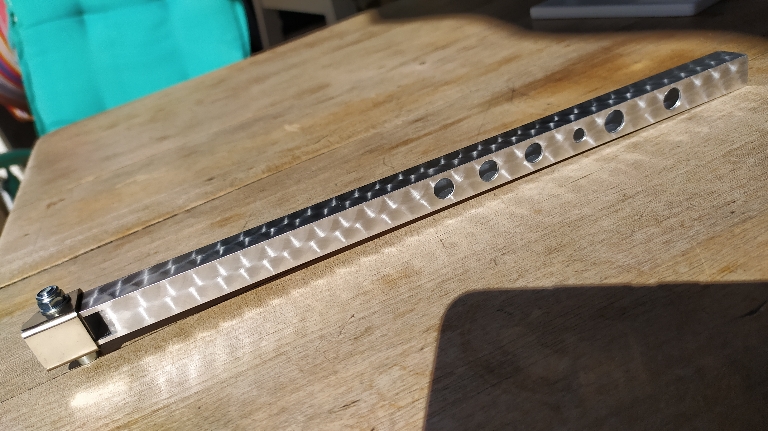
Should I ever play in a session (not very likely at the moment), it’ll be on this one, which is the best whistle I have been able to make so far. Volume is not as loud as a Susato but definitely louder than your average Generation.
 I even heard a Sweetone hold its own in a group of 17 in a full bar. I prefer my Copeland, but that is not particularly available to many. I also have preferred my Sindt. But I have heard many wonderful players of many different whistles from tweaked Generations to O’riodans. For the listener it is often the players skill as much as the whistle.