Yes I’ve often heard that theory, but as I’ve mentioned before I live in Southern California and I always have a whistle in my car. On a hot day the car-whistle is quite hot (sometimes too hot to hold or put against your lips) yet whistles like Overtons and Goldies which have very narrow flat windways clog in a few seconds.
The solution of course is to use a surfactant, which eliminates the issue. I only need to apply the toothpaste every few months.
Low Ds with curved windways (MKs and Burkes for example) never require this, for me anyhow.
Guess it depends on what kind of unicorn you’re after…
or this:
Looks like you’ve found the latter in the Goldie: even if it’s not beautifully perfect in every respect, at least it doesn’t utterly fail on any category.
On a hot day the car-whistle is quite hot (sometimes too hot to hold or put against your lips) yet whistles like Overtons and Goldies which have very narrow flat windways clog in a few seconds.
Low Ds with curved windways (MKs and Burkes for example) never require this, for me anyhow.
Far from being the player’s fault! This is simply a design feature of the instrument.
“Far from being the player’s fault! This is simply a design feature of the instrument.”
Well all I would say is to that is look at live recordings of Mike McGoldrick, John McSherry, Ross Ainslie, Jarlath Henderson, etc playing Goldies and see how often their whistles clog. As close to never as makes no difference. The narrow windway enables the whistle to play and sound as it does. To make people believe clogging is the fault of the instrument just encourages the workman to blame his tools rather than following the simple steps to prevent it happening.
Keeping the whistle perfectly clean, a bit of attention to the blowing style and not eating peanuts between each tune is al it really takes.
Never heard of em. Anyway, are they here to discuss? Didn’t think so. Really it’s just simple physics. A smaller aperture means increased propensity for clogging whenever fluid is introduced to the airstream. If some folks don’t get much clogging, great for them! That doesn’t change the nature of the design.
If you ride a tall horse it’s further to the ground than a short horse if you fall off. That’s also simple physics. It doesn’t make it a design fault of the tall horse. As long as you’re aware it’s a long way to the ground you’ll put in extra effort not to fall off.
I have an MK Pro, which I like. You can really push it, taking the tone from fairly pure up into tons of harmonics. I haven’t seen anyone weigh in on the Burke Viper? I’ve heard good stuff about it.
Seeing those videos establishes that their whistles aren’t clogging. What the videos don’t establish is why they’re not clogging.
There are two possibilities
the whistles are designed in such a way that they don’t clog.
the whistles are designed in such a way that they clog, but the players are employing strategies to keep them from clogging.
What we can’t know from watching videos is what they did to their whistles before the camera started rolling. They may treat their whistles with a surfactant. I know after treating mine I played it for months with no problems.
I did find a video of Davy Spillane playing where he’s unclogging the windway repeatedly during his performance by holding a finger over the window and blowing silently through the windway. It’s said that he plays an Overton with an extremely narrow windway.
Another thing is the technique some players of really big recorders use, which one Low Whistle player told me he used, which is to inhale through the windway as you play to keep it clear. It might not be apparent from watching somebody play whether they’re doing this or not.
I’ve owned Burkes in a number of keys from high D to Low D.
Michael Burke does an admirable job of maintaining amazing consistency throughout this range of pitches- if you know how one size Burke plays, you know how they all play. They’re great for Studio Musicians who need to play in a wide range of keys because you can just pick up any Burke and know exactly how it will perform. I’ve seen numerous professional musicians show up at Studio calls with rolls of gleaming Burkes in every key.
In my experience people coming from orchestral/pop/jazz backgrounds tend to like Burkes more than people coming from Irish trad backgrounds.
As for the Burke Pro Viper, what you get is a full loud low octave, extremely powerful Bottom D, 2nd octave that’s a bit stiff, High A and especially High B that are just quite loud and a bit on the harsh side unless blown just so, great tuning except for the subtle Burke B-b quirk, a fatter tube than most Low D’s, butter-smooth voicing, a clean pure tone, a large appetite for air, and last but not least a futuristic uber-shiny high-tech look. Show up at a gig with a roll of these and the orchestral players go “oooh!”
The MK gives you a more slender tube which I find more comfortable, much less air consumption, better volume balance between the octaves, much more complex timbre, an easier/more nimble 2nd octave, and way cool colours that make people go “oooh!”.
Clogging issues have been well covered in forum threads. Yes, there are factors related to the design and materials of the instrument that contribute to clogging issues, while there are also player factors that also enter into the issue. Some people are just prone to be wet blowers and some people are dry (er) players. I’ve noticed in my own playing I start out very wet but after playing awhile, fifteen or twenty minutes or so I get dryer and makes playing easier without clogging concerns.
As for surfactants treating the whistle… is it possible the players are using surfactants, mouth sprays, beverages, that make for drying playing during performance or recording?
I’m intrigued by Nick Metcalf’s new alloy whistle that has a teflon coating to the windway to prevent clogging. He’ll be making them early next year, I gather, to sell through eBay and Amazon. I’m hoping someone will buy and review one (its expensive to buy from the UK because of shipping and import duty) because it also has a tapered design, the bore being normal but the tubing thinner towards the top supposedly to even out volume between octaves. It could be an interesting low D to play.
Nick Metcalfe is pretty active on Facebook and he also has a new website. www.theirishwhistle.com. I just visited the site. He seems to be actively making and marketing whistles. He has some sort explanation for shortcomings there. Maybe visit his site and hopefully you can get some satisfaction from him. This kind of stuff could ruin his reputation and I’d imagine he would/should be very keen on keeping his customers happy and his reputation intact.
I just followed the advice from Colin Goldie that our member Mikethebook posted a while back:
"I bought a soft blowing Goldie Low D and had problems with clogging…I spoke to Colin and this is what he suggested I do:
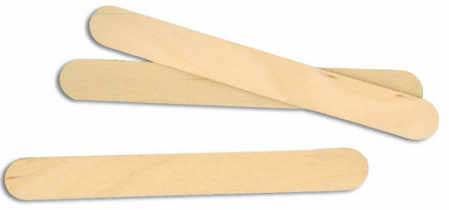
The method uses toothpaste (not the gritty sort) and a filed down dampened wooden lollipop stick (not sure what you call them in the US - popsicle?) - and make sure it goes into the windway easily so it won’t break off and get stuck - I guess you could use a thin plastic card too but the wood rends to pick up dirt in the grain. Work toothpaste into the windway and using the dampened stick “polish” the inside of the windway with it. Then, using a cotton bud with toothpaste on it, polish the bevel and also the wall of the block below it to prevent the build up on water on the bevel. Then rinse the whistle out with cold water."
Yes here in the USA the flat wooden stick is called a popsicle stick.
Here, a lollipop stick is round, made of rolled paper.
Back to the topic of Low D whistles, I’m currently playing a Goldie, switching back and forth between two headjoints.
One, the one that came with the whistle, has a very narrow windway.
The other came with a Goldie-made Overton Low C.
They’re both the same ID and the same length and both play fine on the Low D body.
However the Low C head has a higher/more open windway.
I’ve long known that Colin makes a variety of windway heights. My understanding is that nowadays he engraves the specific height in mm on each whistle. These heads were both made before he started doing that, so I don’t know what he would reckon them.
Taking a crude measurement with calipers (in inches) I get .025" for the D head and .037" for the C head.
It’s remarkable how differently the D body plays with those different heads.
The narrower windway feels more enclosed/contained, gives a darker rougher tone, slightly greater efficiency, and a slightly stiffer 2nd octave.
The wider windway feels more freeblowing, gives a cleaner brighter tone, slightly less efficiency, a lighter easier 2nd octave, and a slightly more powerful Bottom D.
I can’t say one is “better” than the other, they’re simply different. I am spending more time on the freeblowing headjoint…
To clarify Colin’s system of windway heights for those who have them etched inside the bottom of their Low Ds:
1.00mm very soft/easy blower
0.97 standard soft blower
0.87 medium blower
0.80mm hard blower, only made to order.
He also makes windway heights between these number so a Low D with 0.93mm etched inside is a medium/soft blower. For a Low C the numbers shouldn’t be much different.