I just acquired new regulators, and I am not happy with how they are tuned. I am very happy with how they are are made, they are solid and durable. But I really trust my ears. I have studied music, I know what just intonation sounds like, and this is just not it.
Individual notes vary within the regulator, although most of them lean towards being a bit sh#rp, but a couple are a bit flat (especially on far end from the reed).
I guess what I am looking for is some form of control for each note individually, without having to do stuff that is too scary. I could be okay with reed adjustment (prefer not to), but not reed making/scraping. I know about blu-tack but the regulator keys hardly lift, giving me too little space to work with. And are not easy to take off (they are held with a thin metal pin without a bit of bent metal at the end). but when I tried to use tape instead, the reed keys do not properly close anymore.
also, I am I correct in that it is easier to flatten notes than it is to sharpen? it seems like there is not many interventions for that.
Anyway, I guess this is what I signed up for by acquiring regulators
What are your best tricks for individual note pitch control? is there even such a thing? I would really like to have my regulators “bang on” otherwise its all just a bit.. meh
I could be wrong here but I feel like you might be missing some basics about tuning the regs. You don’t need to remove the keys.
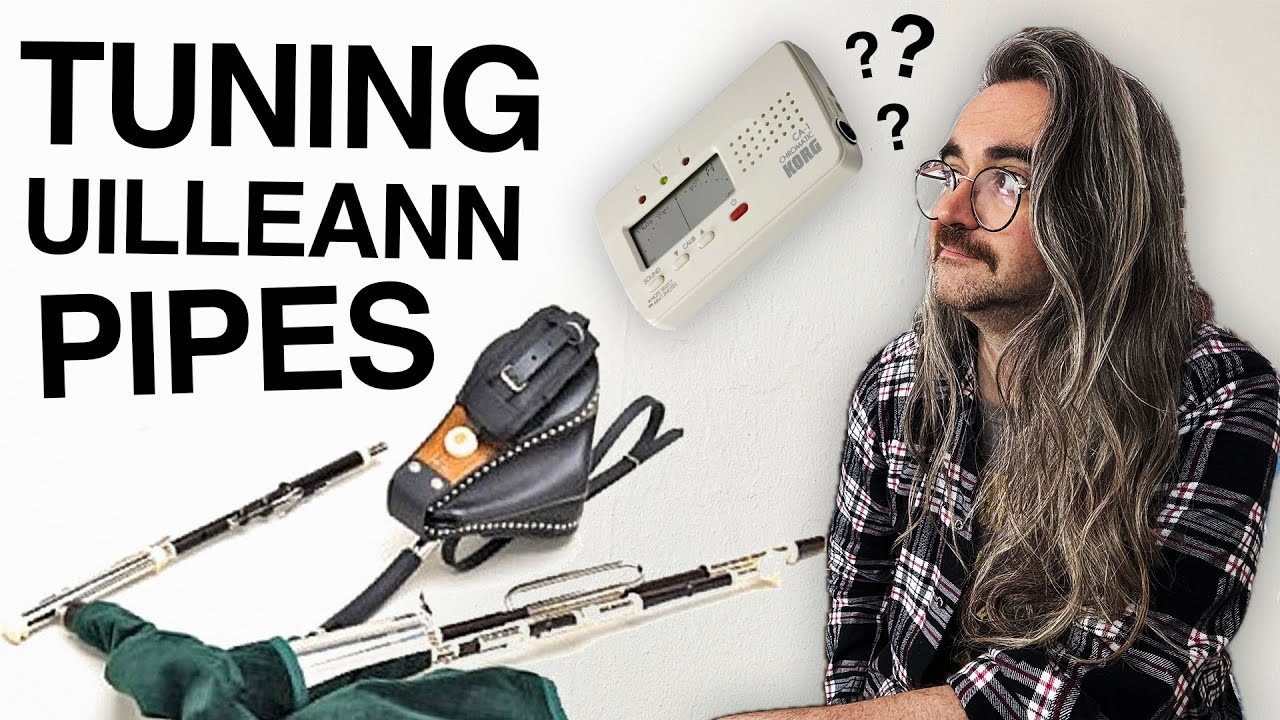
I looked around and was surprised by the lack of easily discovered videos. After a few minutes I did find this though. Hopefully it will give you a basic staring point. Jump to 27 minutes in.
Edit: I like Jason’s videos but I’ll admit I’ve only skimmed this one so far and it seems he touches on using a rush to tune your chanter earlier on. This is the core idea for tuning your regulators so you might want to just watch the whole video.
Anyway, good luck with your new regs. Learning to tune them and then learning to play them in tune are, oddly, distinctly different and real challenges but really rewarding once you get there. And then they go out of tune again anyway and you despair. This is the way.
ah great! indeed, that alreadys gives much more clarity. In combination with this page UilleannObsession.com - Extras - Geoff Wooff I am getting somewhere. Good call, I am definitely missing some basics still.
However, any adjustment with a rush tends to affect other notes, and the blu-tack placement can shift when the rush is pulled out even slightly. Are there any other interventions people use, or are a rush plus Blu-Tack or string really the only tools available? It all feels a bit restrictive. I would really like to have a way to correct individual off-notes on the fly without throwing the whole regulator out of balance.
Also, what do I do when a note starts off flat.. It doesnt seem like there are any ways to deal with that.
Terry, I don’t recall when the last time we spoke was, but the last time I was in Australia was September ‘89…. and yes I am still going, still earning my living making Uilleann Pipes, I guess I am a couple of years younger than yourself but HAVING to work at 75 would not be fun, unless one is improving…. or trying to. I first met you in Canbera, Easter ‘76.
Firstly, speak with the maker of your regulators and get their advice. That’s the most important source of information for your right now.
Secondly, if you’re new to the regulators, don’t expect to sound good on day 1. Most people begin with just the baritone (middle) regulator, and spend the first weeks, or even months, just trying to hit the D key on tempo.
Lastly, although experienced players will use the full 5 ranges of keys, those of us of more moderate ability tend to stay on the lower ranges (1, 2 and 3). I’m probably going to be beaten up for saying this but you can probably ignore the highest range (C-A-C) for the first year or so, and these notes tent to be the most difficult to get in tune.
One big aspect of the regulators which people tend to assume about before acquiring them is that by getting a set from a well respected and regarded maker, that they will “just work!” and that just pressing down keys will result in great, perfectly in-tune notes.
This is not true. Any regulators from any maker with any reeds in them will require some amount of pressure control to sharpen/flatten them to blend with the chanter. We can get them most of the way there with tack and rushes, but there will always be a certain amount of having to blow them into tune that only comes with time and practice. Don’t go messing with the reed itself, the odds are good that it is totally fine and you just need to learn how to play it.
After some time, you will likely get to the point where you have settled the regulator in to behaving the way you want it to. From then on, the only adjustments you will need to make will be to fine-tune any individual “problem notes” (there’s always a couple), and to sharpen/flatten the whole regulator by pushing in/pulling out the reed from the seat or adjusting the tuning pin.
Hey Geoff. My phone just randomly cued up a recording of you playing the Fox Chase at a WCSS recital. Always enjoyed your piping - and oh, those Harringtons!
Back to the original question - flat sets, as Geoff will readily assure you, are less hungry for air, and you can work the regulators more. Listen to Ronan Browne playing the most amazing chordal accomplishments on his own Harrington B set, or Mikey Smythe doing the same on his Woofe C#. Creating music like that on a wide bore D set is that much more challenging, not that it can’t be done, viz Leo Rowsome.
I never liked Blu Tac, occasionally the boogers would get loose. People who are in a hurry swear by it though. But I’ve always used wires wrapped around the tuning pin, with bits of cane tied to them. I use musical wire - very stiff stuff - you need a jeweler’s pliers to bend it. But it never loses its shape.
You do have to tune a note, play a chord, listen to the result, hear that against the drones…you develop a feel for it over time.
Ha ha ! Yes, “The Vegetarian Foxchase”, complete with a Limerick Haircut.
With regard to getting the regulators in tune, those notes I made 30 + years ago are somewhat out of date after making , and tuning, a further 100 sets.
Two small points; I’ve had better results with regulator reeds when using narrower staples. So, for my flat set chanter reeds with an internal staple diameter of 3.4mm I often use staples for the regulators between 2.5 and 3mm diameter.
Where there are faults in the scale that cannot be alieviated by rushing or tone hole adjustment then a change in the ‘stopped length’ can often cure the problem. For instance say one or two notes stubbornly resist efforts to alter their pitch try making the bore shorter or longer. The idea is to focus the scale . The Northumbrian Small Pipes chanter’s stopped length is adjusted in this way to improve or cure out of tune notes.
to it seems that, when we are also working with the chanter, the drones, and possibly multiple regulator notes, all working at the same time, pressure cannot be used to bring the notes in tune, because all notes will then be influenced at the same time, right?
So far it seems the conclusion is that the notes should start off a bit sharp, and can be flattened to pitch with a rush/pin with blu-tack/thread. This means that this definitely not a quick process. I was working on trying to get this right with my pipes, and I am making great progress! However there are some notes that are too flat. Is there any way to deal with those?
I don’t have a solution for you based on any actual experience with regulators, but one thing that I would try if I was dealing with this problem on the keyed notes of a flute is to try to adjust the degree of shading of the tone hole by the open key. On flutes, if the key doesn’t quite open far enough, then the note will play, but be slightly flat. If the key opens too far, it might be sharp. Basically, the degree of shading affects pitch to some degree.
I don’t know if uilleann pipe regulators exhibit the same behavior, but if they do, then it might be possible to either bend a key or adjust the thickness of a key pad, or both, in order to affect the degree of opening of the key above the hole. The trick is also to have the key touches remain aligned for optimal playing, of course.
Just throwing this out there as an idea. As I say, I have not actually experimented with this on pipe regulators, so it might not be a thing in that domain.
Note my final paragraph in my previous message. Try pulling the end cap off by small amounts and see what effect it has on those stubborn out of tune notes. If those notes get further out of tune you can try doing the reverse , shortening the stopped length of the bore . A disc of cork small enough to fit in the end of the bore can be skewered onto the tuning pin for this purpose.
Some modern regulators have a threaded plunger system for changing the bore length.
In the end some changes to the reed dimensions can usually effect a cure.

 I first met you in Canbera, Easter ‘76.