The possibility of such confusion was the starting point for the article that spawned this discussion. My own feeling is that with recordings made before the advent of the microphone, the benefit of the doubt is more safely given to the banjo mandolin.
But without the mics would people in a room that size be able to appreciate the music properly? Isn’t that more like the ‘parlor’ setting that a mandolin works well in?
The same would, of course, apply to most traditional music and song where an ‘authentic’ sound requires reinforcement for public performance. Except for the dance hall it’s small room music - no-one was trying to fill a concert hall.
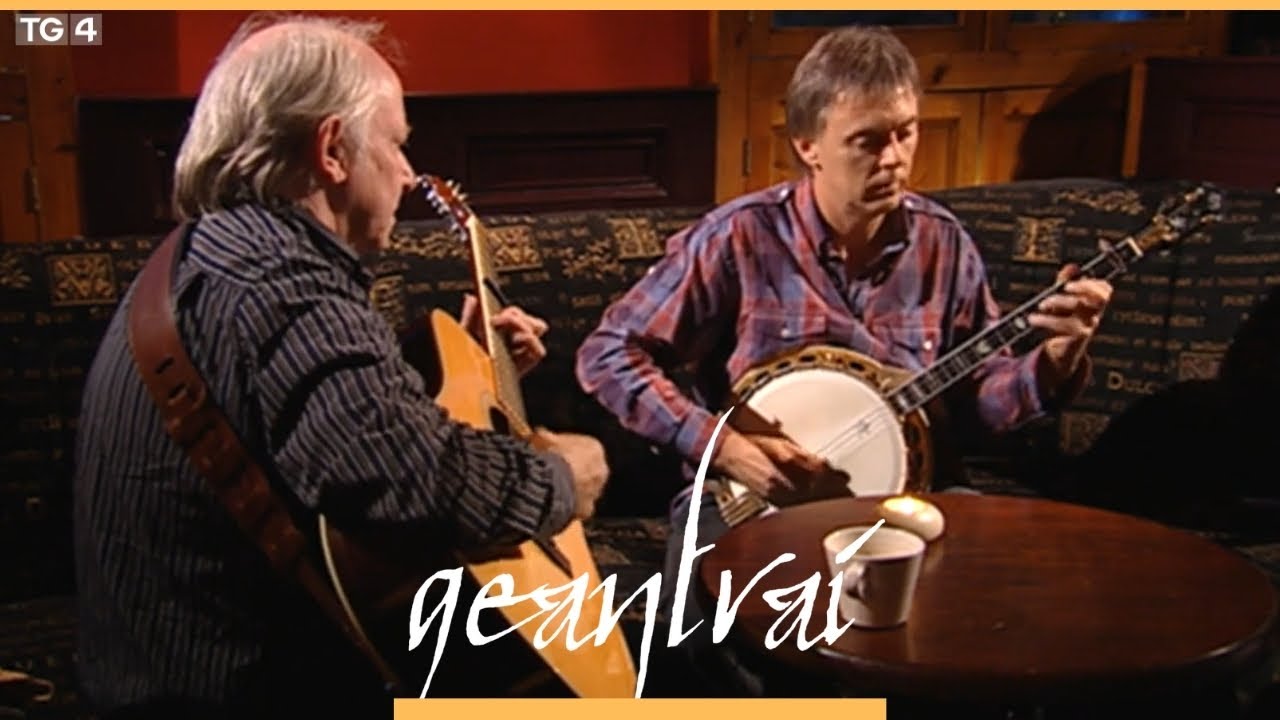
In all fairness, that was a TV performance for tg4 (hence the mics), filmed in the bar of Pepper’s in Feakle. (Which can be a noisy room when not filled with invited guests under instructions from a TV crew to keep quiet)
I wasn’t intending to be unfair. It’s just that in this and similar discussions I often think that the musical context and listening/dancing environment don’t get enough consideration.
My relationship to mandolin and banjo is the similar to paddler’s. I shifted from mandolin to flute when I graduated from a kitchen session to one in a pub and could only hear the wrong notes that didn’t harmonise.
I do wonder how much the association with the ballad scene and with “crossover” players from bluegrass, etc. has hurt the mandolin’s overall acceptance in trad. I have heard people complain about the mandolin from a “purist” angle, which is in some ways ironic given it has a longer history in Irish music (and a longer history, period) than the tenor banjo, which is by now largely accepted as “traditional.” Obviously, antiquity is not the same as “tradition” and what makes something “traditional” can be a complex and contentious interaction of various factors, but I don’t think it’s going out on a limb to say that the mandolin is seen as somewhat outside the circle of near-universally accepted “traditional” instruments like the box, concertina, flute, fiddle, pipes, banjo, and whistle.
There’s a certain side-eye given from many trad musicians towards the typical ballad bands/singers and I think that can affect how they view certain things associated with that genre. The same is true of musicians from other genres coming into Irish music and playing it in a way not seen as idiomatic. The Sierra Hull video in one of the articles posted by OP would I’m sure raise some hackles, as a good example of this.
All of which to say that for some, the mandolin probably brings some baggage to the table that goes beyond the mechanics of the instrument and the sound it creates.
I’ll say this, I can think of a few banjo players I’d play with who I think I’d tolerate more if they played mandolin instead!
It indeed has raised hackles but was, and remains, the best tutorial explanation I could find of rolls on the mandolin. Nevertheless, I’ve thrown in the towel and replaced it with what I trust will be seen by the ITM community as a more appropriate demonstration of what the current generation of mandolin players is doing.
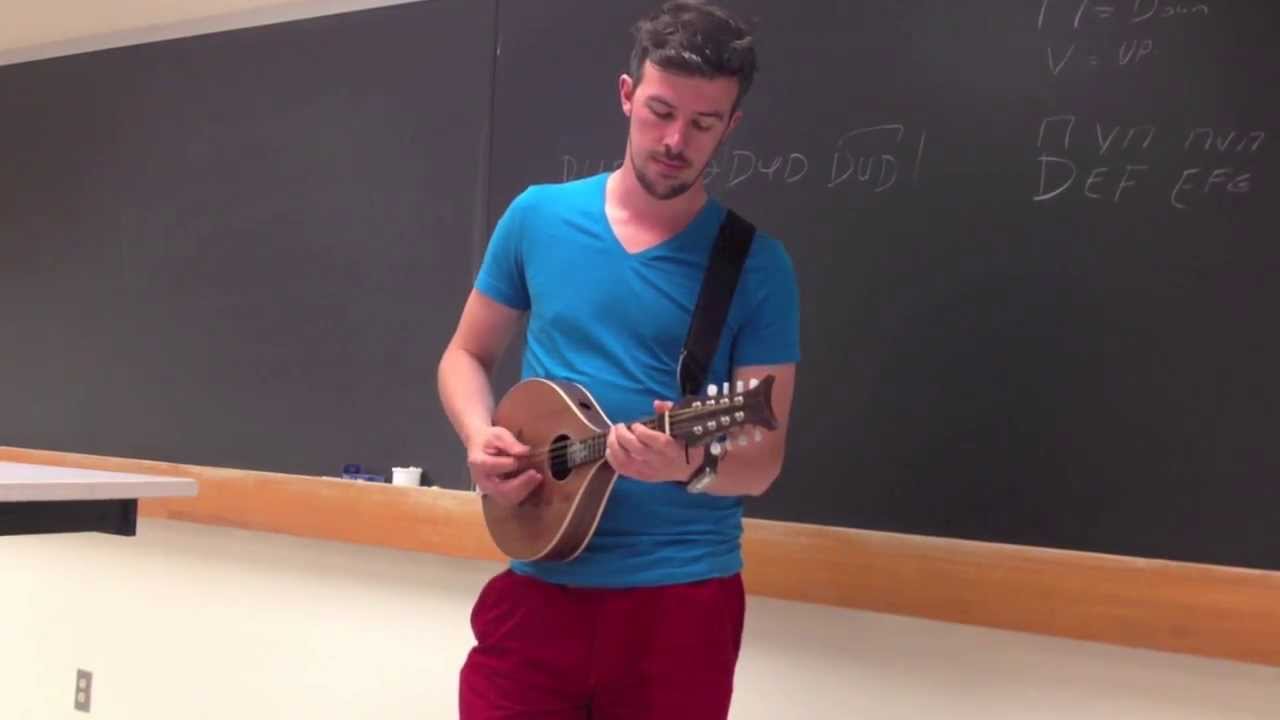
Another issue that hasn’t been mentioned so far (or if it was, I missed it), is the difference in volume between a mandolin and a banjo mandolin. I picked up an old Vega banjo mandolin from a Goodwill store and restored it. The first thing I noticed was that it was really loud. Louder than an Irish tenor banjo, in fact. It seems to have the opposite problem to a mandolin, with respect to session use. The mandolin I have sounds nice, but is too quiet to hear yourself in a large session, whereas the banjo mandolin could be considered obnoxiously loud. It could easily be heard in a large dance hall, but I prefer the sound of it with 4 strings rather than 8, and prefer it even more an octave down and scaled up to be a tenor banjo (which is still a relatively loud instrument).
The low string tension of an Irish tenor banjo with its single courses is also so much easier on the fingers than the high tension double courses of the banjo mandolin, and that also makes it much easier to play triplets at speed.
The banjo mandolin made its debut in a US patent from 1882, issued to Benjamin Bradbury. Its description states that, “the object of this invention is to give to the banjo a softness and purity of tone resembling and approximating to that of the violin.”
He describes a secondary effect that seems at odds with this, but the basic expectation is an instrument that is perceptibly quieter than an ordinary banjo — i.e. the 5-string banjo as we still know it. To boot, metal strings were just beginning to be used on the 5-string instrument at that time, which was still most commonly strung with gut.
I have a Fairbanks-Vega Little Wonder banjo mandolin from 1916, with a 10" rim. I also have an ordinary Gibson A-1 mandolin from 1918. There are light gauge strings from the same manufacturer on both. The two instruments certainly do sound quite differently but I would be hard put to say which has the more powerful voice. If the Gibson wouldn’t cut it in a session, the Vega wouldn’t either.
There is some latitude for setting it up with a more robust voice. However, there’s no way it would ever match even a modest tenor banjo, much less the often-reported strident banjo mandolins that have given the instrument such a bad name.
The first fretted instrument I ever owned was a single-strung Epiphone banjo mandolin, given to me by my grandfather over 70 years ago. Although I have no recollection of how it sounded, I clearly recall the group contexts in which I used it. Again, it was not an overwhelming voice in any of them.
I have never had any sense of triplets being easier to play on single-strung fretted instruments than on double-strung ones, I don’t get the impression that performers who switch between them have any such difficulty, either.
I still have a junk shop purchase banjo mandolin. I can’t do a comparison now because it currently has a piece of 1-inch hardwood ply in place of the head - a not very successful attempt at a quiet practice instrument during covid lockdown. Nice that we can make reversible changes of that extent on a banjo.
It was louder than a mandolin. Paddler’s “obnoxiously loud” would apply. I suspect that a tenor banjo requiring less lateral force to pick (roughly the same string tension but twice the length) allows a ‘better’ tone.
I am surprised to read how different your experience is to mine. I can only conclude that it is a matter of set up. My Vega banjo mandolin is quite similar to yours … 10" head, open back, etc. Mine is a style K, like this one:
I played around quite a bit with set up, head tension, string weights, damping the head, and did get it sounding quite nice, but it was undeniably much louder than my mandolin, which was a Mid Missouri / Big Muddy M-2, like this one:
I also have a couple of tenor banjos, set up GDAE, both antiques. One is a Gibson trapdoor TB4, and the other a Weymann like this one (but unfortunately, I don’t play like Padraic):
My Weymann banjo is probably as loud, or louder, than the Vega Style K, but being pitched an octave lower, it somehow has a less intrusive tone. But maybe that is just me, or a feature of my setup or acoustic environment. I eventually strung it with a single set of strings and it sounds better to my ear.
This also surprises me. Surely, the pick must travel a lot further to perform a triplet on a double course than a single string. Trying to minimize this movement to achieve more economy of motion and increase in speed often has me tripping on the second string. Using a lighter, more flexible pick, which also seems to work due to enabling less distance travelled, also doesn’t seem to work as well for me on my mandolin banjo as it does on my other instruments. I wonder if this is a matter of string tension being too high. I do have pretty light strings on it though.
Anyway, as I said earlier, I’m only a beginner in terms of skill, so my own playing deficiencies undoubtedly overwhelm any limitations of the instruments.
Thinking of tone and volume what picking style was assumed in the old adverts and the pre 1960’s accounts of Irish playing? In Enda Scahill’s beginners lesson that youtube offered me after the video linked above he specifically says that the arm rest may not come positioned for Irish style playing. Jazz and old-time players tend to pick further from the bridge which gives a softer tone. And maybe with a thicker pick. How were the banjolins normally played?
1 Like
The two articles underlying this discussion include sound recordings of double-strung banjo mandolins. Most tend toward the lower end of the demure/loudmouth scale. The tenor banjo arrived on the scene about 20 years after the banjo mandolin, to which it soon became an alternative where greater volume or projection was desired.
A well-behaved banjo mandolin will typically have a significantly lower head tension than a tenor banjo does. I’m guessing that a major factor behind the ill-repute into which the former has fallen, is gauging that tension by current standards for tenor and 5-string banjos. In any case, that is the single setup parameter that I would expect to make the greatest difference.
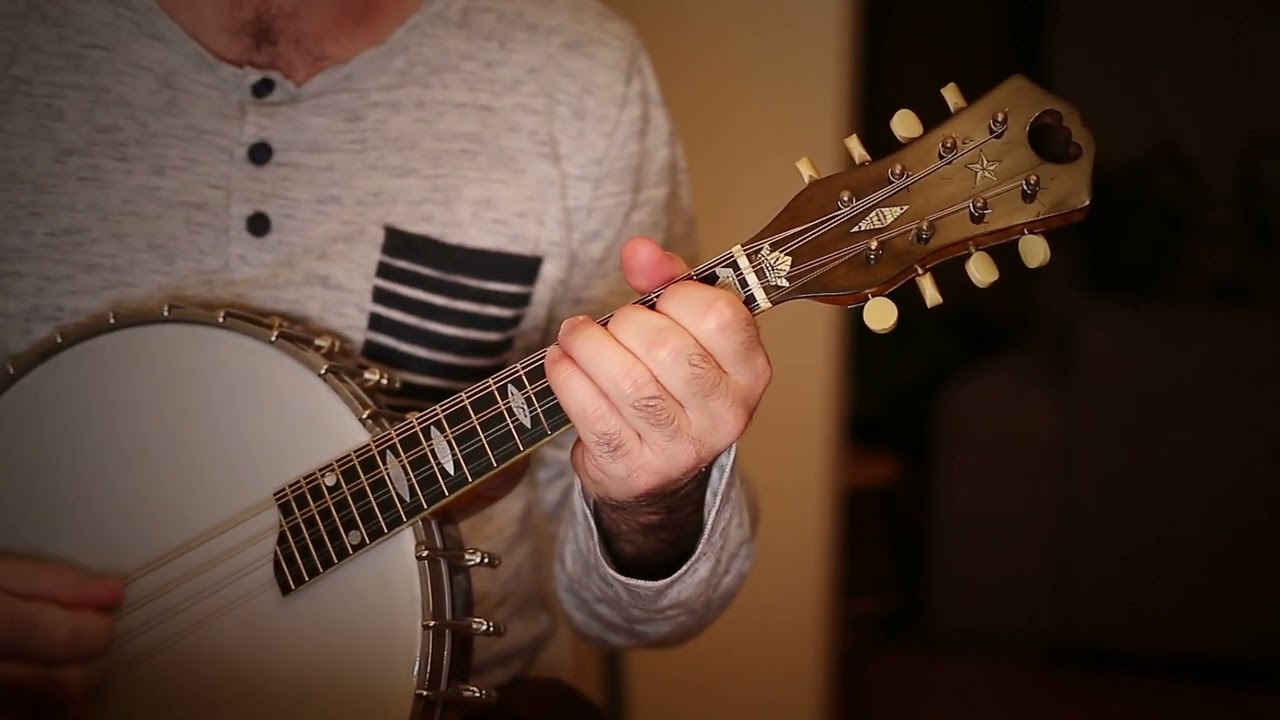
Here is a specimen performance on a banjo mandolin, using a Vega from 1922. (There’s a discussion of that manufacturer’s range of banjos in the first article.)
This can be compared to a tenor banjo in its initial CGDA tuning.
For further comparison before a few comments about triplets, here is an ordinary mandolin.
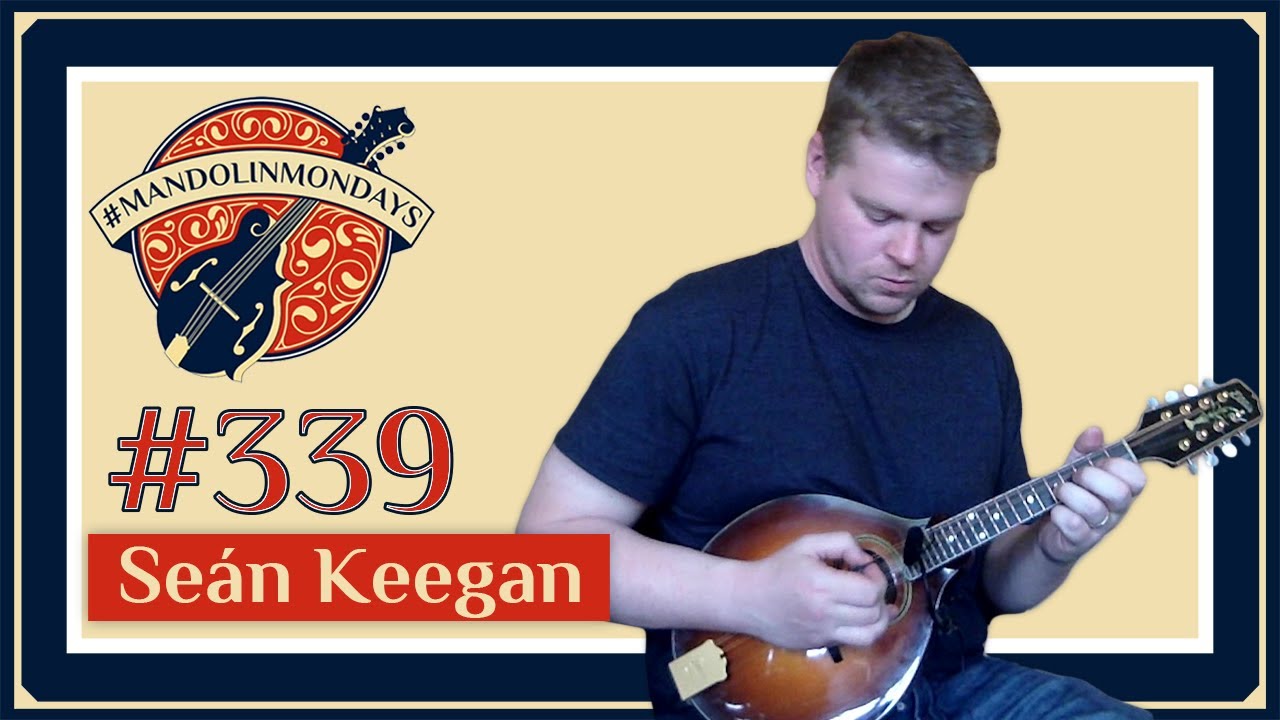
In all three performances, triplets are played in the same style, and with the same technique. The tip of the pick does need to move farther for a double string than for a single string but this doesn’t equate to lost motion, nor is it a motoric burden. The pick can be as close as the player desires to the string it is about to pluck, on both the downstroke and upstroke in either case.
Good point about head tension. I’m not sure a tune that spends most of its time on the bottom two strings is a good illustration of the tone for ITM though. This - same instrument I assume - is probably more typical https://www.youtube.com/watch?v=agXmmiA07Bg
1 Like