"When you suspend disbelief you are prepared to believe anything and this opens up the scope for seeing more possibilities.
“Creativity is certainly about not being constrained by rules or accepting the restrictions that society places on us. Of course the more people break the rules, the more likely they are to be perceived as ‘mentally ill’.”
"Creativity is akin to insanity, say scientists who have been studying how the mind works.
Brain scans reveal striking similarities in the thought pathways of highly creative people and those with schizophrenia.
Both groups lack important receptors used to filter and direct thought.
It could be this uninhibited processing that allows creative people to “think outside the box”, say experts from Sweden’s Karolinska Institute.
In some people, it leads to mental illness.
But rather than a clear division, experts suspect a continuum, with some people having psychotic traits but few negative symptoms. "
It confirms what I always thought. There are no clear boundaries.
Now I wonder if fewer Dopamine D2 receptors could result in a higher Dopamine production in order to achieve a satisfied state of mind, to compensate (at times when one wants to switch off the painful creative processes).
An interesting notion. One of the most worthwhile museums in Baltimore is The Visionary Arts Museum, which has as one of its raison d’êtres the featuring of compelling work by artists who are on the right end of the creative—>crazy continuum.
I will be going back soon, as I won 6 passes in a recent silent auction at my kid’s school, which is a school for kids who are on the right end of the learn-well-in-mainstream-educational-settings---->don’t continuum.
“Some companies have “skunk works” - secure, secret laboratories for their highly creative staff where they can freely experiment without disrupting the daily business.”
Not just government grants!
As to creative musical expression: is this not just another form of not being at peace, being unsatisfied with the world and being driven to changing it, expressing one’s inner musical landscape or cloudscape or whatever-you-call-it.
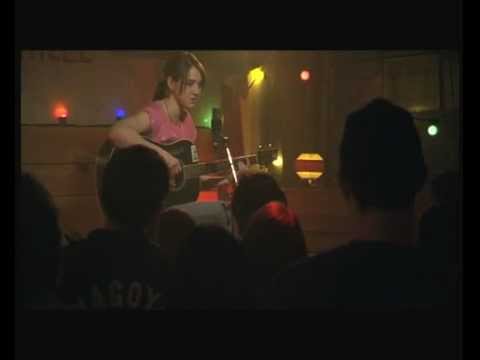
Thanks Denny! I hadn’t listen to Sophie Hunger before. That goes under the skin.
Yes, music, not new-agey stuff.
And better not to take serious what the critics write, like this crap from the TED page:
Indie newcomer Sophie Hunger’s haunting vocals – at once fragile and soulful – carried her wistful, blues-dappled acoustic folk from intimate cafe appearances to extraordinary word-of-mouth success and cross-Europe tours.
… Sophie Hunger’s music lures us to a hidden place in the fog where memories visit, enchanting and mournful…
Just read two interviews with her, in German. In one she said about reviews of her music:
[my translation from planet interview]
Interviewer: Most probably try to classify your music, to categorize it. Hunger: Absolutely. But actually only journalists do that, ordinary people don’t. Most people who go to concerts for the very simple reason: because they like hearing it. For us musicians it is really almost just that: one is playing music, because one likes to do it, because one likes to hear it. It is … I do not know what, but it is something simple. Basically, making music is something very simple.
I don’t disbelieve this, but I find it totally bizarre. Kind of a pot-calling-the-kettle-black statement.
The reason I say this is that I think creativity is what sets the great scientist from the good one, or the good one from the mediocre one. Think about it. Einstein equating mass and energy, Darwin and his finches, even Feynman and his ice water. What sets these guys apart from some good but unknown geek? Their creativity and ability to think outside the box, to challenge then-current assumptions.
My metaphor would be setting up an internal ‘virtual machine’ in your head, like software than can help a computer processor emulate another chip’s architecture.
It was George Bernard Shaw who said (with his tongue in his cheek) “All change results from the irrational man, because the rational man accepts the world the way it is”.
Fudge, I say. One wants to know how these folks defined ‘creativity.’ Consider the vastly
different sorts there are.
Probably the greatest musical
genius of all time, Bach, was a conventional normal guy in his life, whose musical genius consisted largely
in deploying widely accepted conventions better than anybody else. ‘Thinking outside the box’ fooey.
The thalamus mediates sensory input. That people get more unmediated smells, feels, sights
really doesn’t plausibly make for new and different thoughts
or extraordinary intellectual or mathematical or scientific ability.
I expect that mental illness and ‘creativity’ flow from very different sources. I’ve known
extraordinarily creative people in science, philosophy and math, many of whom were really squares, some of whom
were nerds. Nothing like DALI,
upon whom these guys, or the media, seize. For every creative loony there
are five creative nerds.
Have you ever read Virginian Woolf’s To the Lighthouse? One of its characters is an aging professor of philosophy, who spends some time musing (it’s a stream of consciousness novel, so the whole book consists of people thinking) about what he sees as two kinds of thinkers. There are those, he thinks, who progress from A to B to C to D, and so on, some with greater or lesser facility. And there are others who able to make the leaps: stepping directly from A to J or what have you. He admires the latter but has to admit - reluctantly, and with some disappointment - that he himself is the former, although a good one.
The Bach you describe is brilliant ABC thinking, but that’s not the only route to genius.
Edited: in fact, a comparison of Woolf’s To the Lighthouse (1927) and James Joyce’s Ulysses (1918-22) provides a lovely illustration. These two novels are the type-examples of stream of consciousness writing. Joyce was the trail blazer; a type-two thinker. Woolf was the brilliant follower who rapidly grasped what Joyce was doing and was able to put the new technique to use in her own work. To the Lighthouse is in many regards the more successful novel, and it’s certainly an easier read, but it’s Joyce who got the Nobel prize, because without Ulysses Woolf’s To the Lighthouse would never have been written.
Ironically for this thread, however, it’s Woolf who was mentally unstable; she committed suicide while severely depressed.