I’ve long been fascinated by the astonishing curve we’re all riding: Cheap data storage. NEWSWEEK has a fascinating piece on it. http://www.msnbc.msn.com/id/14096484/site/newsweek/
Turns out the first hard drive was built 50 years ago. Weighed a ton and was the size of two refrigerators. 5 MB.
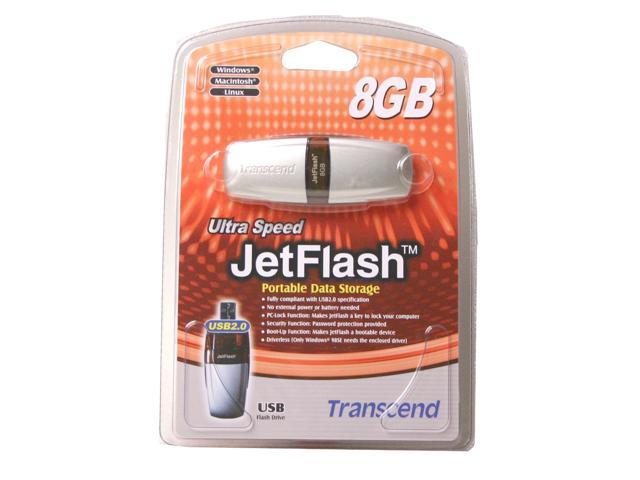
8GB USB thumb drives are now available, and the prices ALREADY down to $175 (newegg.com) I just bought a 1 GB for $24. That’s crazy.
I find myself wanting an 8 GB although I have no use for it whatever.
I can boot from USB on some of my newer servers. Never tried with a Windows OS though. I think it would fail because anything Win2K plus has a Hardware Abstraction Layer that would balk if it doesn’t dovetail into what it expects to see.
I know what you mean Dale. I saw this for US$99 after rebate and almost bought it - even though I don’t need it.
I quite remember building an 8K expansion board for my first computer. The board was about 20" square, used 58 chips, all in handwired sockets. I knew I’d never need the total 16K, which was cutting edge…
The first hard drive I ever got to use was a 10Meg, and it took three of us to unload it from a truck. Not as big as a refrigerator, but about four feet tall, 24 inches square.
We had a 5 Meg drive at U Cal Berkeley’s Mac User Group place with a viewable disk. The disk was about 36" in diameter, gold, with a huge tonearm like magnet reader off to one side, all sitting under this bubble-like plastic cover. Amazing!
My first computer was a Radio Shack Color Computer.
No disc drive. Not even a floppy. i/o was achieved through a cassette recorder and a patch cord. Hooked up to TV set. I think it shipped with 8k ram and I added chips to bring it up to 16 and them maybe later 32k.
THe first printer I owned printed on thermal paper that was about two inches across. Came in rolls like an adding machine.
And who can forget dot matrix, tractor feed? I guess those are still around for some specilialized application.
I also owned one of those Atari computers that had a built in MIDI interface. It wasn’t bad. Very popular in Europe I understand.
Sigh. I needed a flash drive for ONE assignment in this class I was taking this summer. Had no idea what they were. Unfortunately, the class was only 6 weeks long and that meant there was a test due the day after it started, with a week’s worth of work in one night, and I was going to have to spend that evening trying to find a flash drive . . . so I ended up dropping the class.
However, I do have to take this class eventually, so I watched the sales and got a flash drive for free after a rebate.
I discovered how . . . handy . . . it was for toting stuff back and forth to work, so I could work on my what-all at lunch.
I toted a PowerPoint across campus for a training session and felt very cool. Hahahaha! I’m not at the mercy of the network or broken floppy drives anymore!!!
Then it occurred to me that a slightly larger one would accommodate music.
I kept watching sales. And the prices kept coming down.
And now I have FDAD. It’s horrible.
I have a waterproof one now, too. It floats and it bounces. Just in case, you see.
I have no idea how much memory it had (it used those big tapes), but the first “big” computer we had at work was a HP1000. We had to have a special, dedicated room built for it that included it’s own air conditioner. We had 30 A/D boxes for instrumentation, etc., and maybe 8 or 10 “terminals”. My desk was right next to the printer, which sat on the floor. We also had a COLOR printer for graphs that had this little wheel that would pick up each color of pen separately.
My first computer was an Apple IIe also…no HD, but I did have a double floppy drive, heh heh. I was the shiz then…I was the only one on the block that could copy floppys.
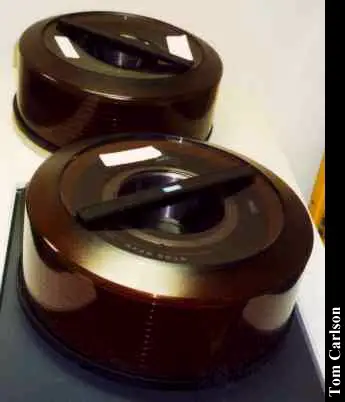
Until recently, my father to programmed Wang mainframes (that’s
the company’s name, I swear!). They were pretty old even in the 80’s
when I was a kid, but lots of schools were still using them, and he
wrote scheduling software for these old monsters. He used to bring
me into work sometimes, and I loved helping him mount the disk
packs, which looked like this:
You had to drop these into a compartment in a separate (and huge)
disk-reading machine, then crank the handle down to securely mount
them so they could be spun up for access. They were about the size
and weight of the stones used in Olympic curling. When I went to
engineering college in the mid-90’s, I saw some disk packs being
used as door stops. Hilarious. I had to call my dad. He said he had
just used some to restore a backup file. Clunky, but reliable!
I remember when pocket calculators first came out, sometime in the '70s. My father bought one for $100. It had a red LED display, took a nine volt battery and used reverse Polish notation.
We had to use a slide rule in Chemistry, but we were “allowed” to use a calculator in Physics (same teacher - so she knew we knew how to use a slide rule). I got a TI something scientific calculator, and it was about $100. It lasted about 10 years - I think I finally killed it by spilling hexane all over it.
I think that’s the biggest difference between then and now, not the size or speed, but that things were still being made to last. That was a big part of the expense (plus the R&D was still new and waiting to be paid for). I started out with an Apple IIe, then later an Atari ST-1024. Both are still functionable, though not in use. I have gone through at least 10 PCs, all of which have suffered one terminal problem or another.
So how much have we really saved? Hard to tell, when we don’t replace units with same, but are always buying something newer.
My first read of the title of this thread brought to mind something like:
A new high-tech refrigerator with large food storage capacity that also scans in barcodes and records the date of purchase of all food items stored therein, displays reminders of which foods are likely to be running out based on historic usage patterns, which foods need to be used up soonest to avoid spoilage (also serves as a reminder to purchase more if the food item has already been consumed), generates grocery lists, computes nutritional content of family’s eating patterns, suggests foods that might be added for more complete nutrition, etc. (walks the dog, changes diapers, gets the mail … )
I’ve not watched television in 20+ years, so I may be rather confused, but while in a shop last week I noticed, on one of the display sets, what appeared to be a commercial for a refrigerator with a TV built into the door, or at least some odd large LCD device. Wouldn’t this negate the exercise obtained by getting up and walking to the kitchen during commercials for a snack?
I can’t help but feel this is too intrusive. Just wait till the damn things start actually looking at you (2-way) and talking back to you/at you. Where will you be able to hide in your own house?
Great!!! I can finally use “When I was your age”, one of my buddies had one of those build it yourself computers with the machine language bit toggles on the front of the console ( it was blue so was it an Atari???. You’d toggle the appropriate bit, enter and re-toggle and do an opperand, or some such thing. As I recall it had a 12 inch floppy disk. It was really tedious to do a program.