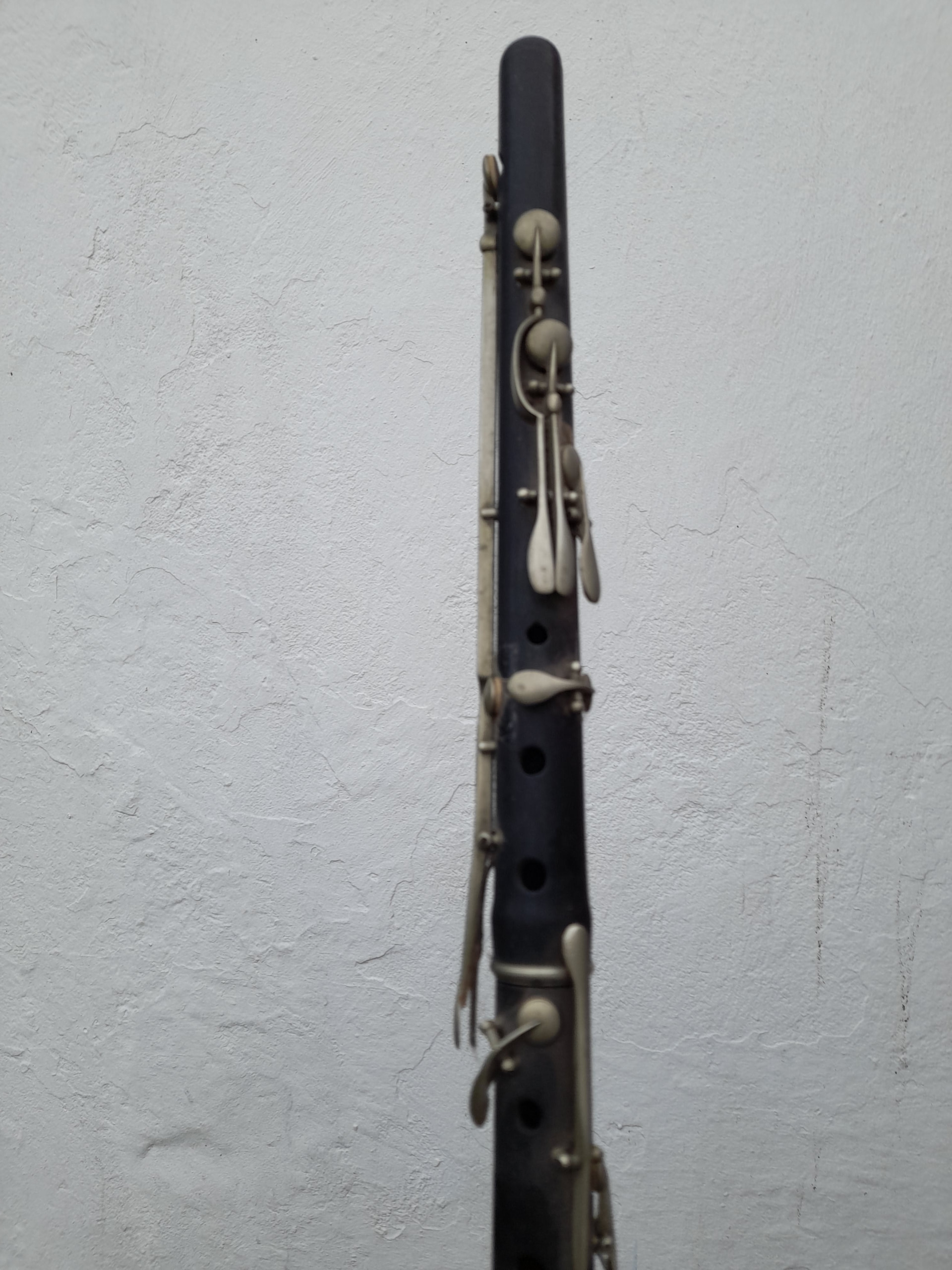
Is anyone making a low B key these days? It’s hard enough finding anyone making the low C and C#! While I would happily argue for those keys, I just cannot imagine ever needing or using the low B. Those lower notes can be hard to play (lots of good players struggle with them), and the low B historically has been much harder to sound.
I think it’s not really necessary, but if one day I find a good tune and realize it requires B3, I’ll regret not having a B foot, just like when I play my 6-key flute and realize I can’t play C4. It’s basically the same situation. Because I don’t just play trad (mainly trad), I play almost every genre.
I play mainly trad as well but venture into folk, baroque and jazz when the mood strikes me, so we are coming from a similar point. I like my low C and C#, but I don’t find the low C super easy to play when playing quick notes. C# is different. The only low B flute I ever tried, well, that was a bit of a pain in the butt to sound at any decent speed.
Maybe see if you can find one to try before dropping the extra bucks on one. Or talk to Aebi and get his thoughts on the whole issue. The flute I tried had a cracking low D and the low B key didn’t mess with sound in my opinion. That said, having tried one, I just don’t see the need myself. I bet it’s an expensive singular key as well…the low keys tend to be significantly more pricey.
Some antique Rudall & Rose flutes went all the way down to Bb on the foot keys, using the same mechanism that is commonly used on 8-key flutes, i.e., all notes below D operated by the right hand pinky finger, using hinged foot keys. You can see an example here:
But given how tricky it is to get even the normal C# and C foot keys working well on such a design, I would not recommend going that route. If you really want the extra low notes, then I would recommend restricting your search to makers that use a Boehm style mechanism where all keys are operated using the pinky finger, but via a long axle that runs parallel to the bore axis of the flute, rather than hinged keys.
But I think the main underlying consideration is an ergonomic one. Foot keys add a lot of weight at the end of a long lever, so this changes how a flute feels in the hand. For this reason, I think they negatively affect the ergonomics of the flute all the time, even when they are not being used. And they only give benefit when they are used, which is rarely. And even then, traditional designs/mechanisms often don’t work reliably. I think these are some of the reasons why many people in ITM tend to go for 6 key flutes.
Edit: to add a link to Aaron Olwell talking about Boehm style foot keys on the Olwell Birthday flute. I agree with what he says and I like the aesthetic, ergonomic and mechanical choices he made when making this key set:
Thanks a lot! Now I have a much better idea of what to expect.
I already have a 6-key flute, but there are some tunes I can’t play on it because of its limited range. That’s why I decided to order an 8-key flute for my ultimate flute for life. Then I realized I could actually get one with a B foot. Since I’ve never tried one before, I’m curious to see how it feels, especially as I do have some tunes that require a B3.
I would recommend restricting your search to makers that use a Boehm style mechanism where all keys are operated using the pinky finger
I’ve played an 8-key flute(soft pads) before, and honestly, it wasn’t too bad. However, I did find the C4 and C♯4 keys more difficult to operate than those on a Boehm-system flute. I’ll check with the maker to see if it’s possible. Thanks for your advice!
And even then, traditional designs/mechanisms often don’t work reliably.
Maybe I should just give the B foot a try. If I end up not needing the B3 key, I can simply take it down, or perhaps order a 6-key foot to swap in. I don’t think the extra weight or ergonomic drawbacks would bother me too much. My current 6-key flute (with a long D foot) puts quite a bit of strain on my left hand, so I actually think a C foot or B foot might feel more comfortable.
By the way, I’ve also added an extra B♭4 key, so what I’m actually ordering is a 10-key flute. I think it’ll be really nice!
I have this right-hand index key for B flat on my flute and used it in the beginning. But I haven’t needed it at all since I fixed my posture and grip to free up my left-hand thumb. I haven’t found any transition to or from Bb for which the thumb key wouldn’t work. Even for ornaments on Bb, the right-hand index C key or cuts with left-hand index or middle finger work just fine. So in my opinion, this key is only dead weight if your left-hand thumb moves freely (as it should).
So in my opinion, this key is only dead weight if your left-hand thumb moves freely (as it should).
The weight of one extra key isn’t a big deal. But you reminded me of something. I was thinking about the spring. Having two keys would make it harder to press. The thumb is the strongest finger, though, so maybe that’s not a big problem?
I think you’ve made up your mind to get a 10 key flute, so go for it. However, I feel the need to address this comment:
I think you’re looking at the music the wrong way…and not just looking at Irish trad music the wrong way but all music in a limited way. Music is so much more than the notes on the page. Flute has ALWAYS been limited, like all other woodwinds, in the range of notes available. A huge part of playing instruments like flutes is based on adapting the music to the instrument you play. Jump octaves, play thirds instead of the note you can’t reach, etc. There are so many ways to play any music on any flute, but 6 keys gives you a ton of flexibility and I cannot fathom anything can’t be played on a 6 key flute. There are a ton of great Irish trad musicians playing 6 key flutes wonderfully and playing whatever they want and not being limited in what they play.
My Aebi has a B foot. Not my choice; bought second hand. Yes, it’s difficult to play the low B due to the difficulty of achieving a good seal across keys using the pressure of the pinky finger and I don’t think I could achieve the note at speed. No, I have never felt the need to use it. I have several Boehm flutes, one of them open G, all with C feet/foots/whatever. Again, the times I have wanted a B foot are vanishingly small. Does the B foot improve the balance or sound of the flute? That I can’t judge. Otherwise I think you are making the right decision to get a fully keyed flute and I like the Aebi. Why compromise on a lifetime purchase.