"Perfect" Generations

Since a video of mine was given as an example, I might chime in (a bit late, I guess):

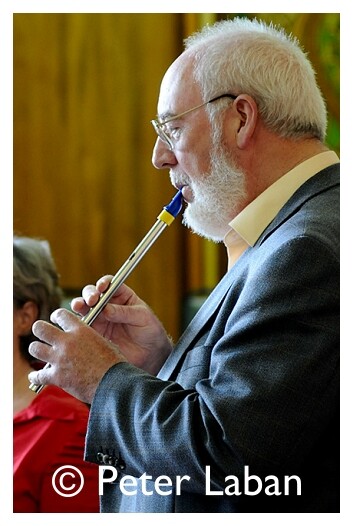
I have played many Gens over the years. I used to buy them (“new-style”, brass with red or green heads) in dozens and prepare them for my whistle students. I unglued the heads to make them play in tune, filled the cavity under the windway with babybel wax (this tamed some unpleasant resonances), removed the occasional bit of plastic and that was it. None of them were “unplayable”. But each of them was a bit different, some very good from the beginning, some less so.

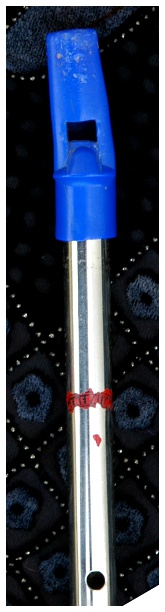
My two favourite Generations (the Bb in the video and a D) are “new” type whistles from the late 90s. Both happened to be blue headed ones. A friend gave me two “old” style D and Bbs from the 80s with the ridge. Both were nice whistles but not better per se. At some point I bought two “professionally tweaked” Gens in D and Bb for comparison. They were totally different from what I expected. While my original Gens felt full, lively, complex and sometimes temperamental, the tweaked ones had - hard to describe, I know - the well-rounded blandness of a Burke whistle plus some weirdly unrelated chiff added on top. The resulting playing experience fellt stiff and somewhat sterile to me. Apart from that, both whistle heads had cracked during transport.

Following these experiences, I don’t believe in the “magic of the old Generations” and doubt the marvels of “tweaking”. When you have a reasonably good Gen from the start it’s up to the player to adapt and lift its full potential.
4 Likes

Christian, thanks for chiming in! Fascinating!

That is basically the same thing I do when I tweak a whistle, and is basically what I was referring to when talking about what I think most other people do when tweaking an old Generation.

I think its worth drawing a distinction between this level of tweaking and the tweaking that Jerry Freeman does, which is generally much more elaborate, and does have a more profound impact on the playing characteristics.

It is reassuring to hear that your experiences with the newer Generations are no different than with the old ones. This is quite consistent with what MrGumby has been saying all along. I’ve personally experienced some variation myself, but that is based on a fairly small sample size, especially with the old ones which aren’t very easy to come by nowadays. My favorite so far is one of the old ones, but that may just be my good luck in finding a particularly good one. I did the simple tweaking described above on all of them.

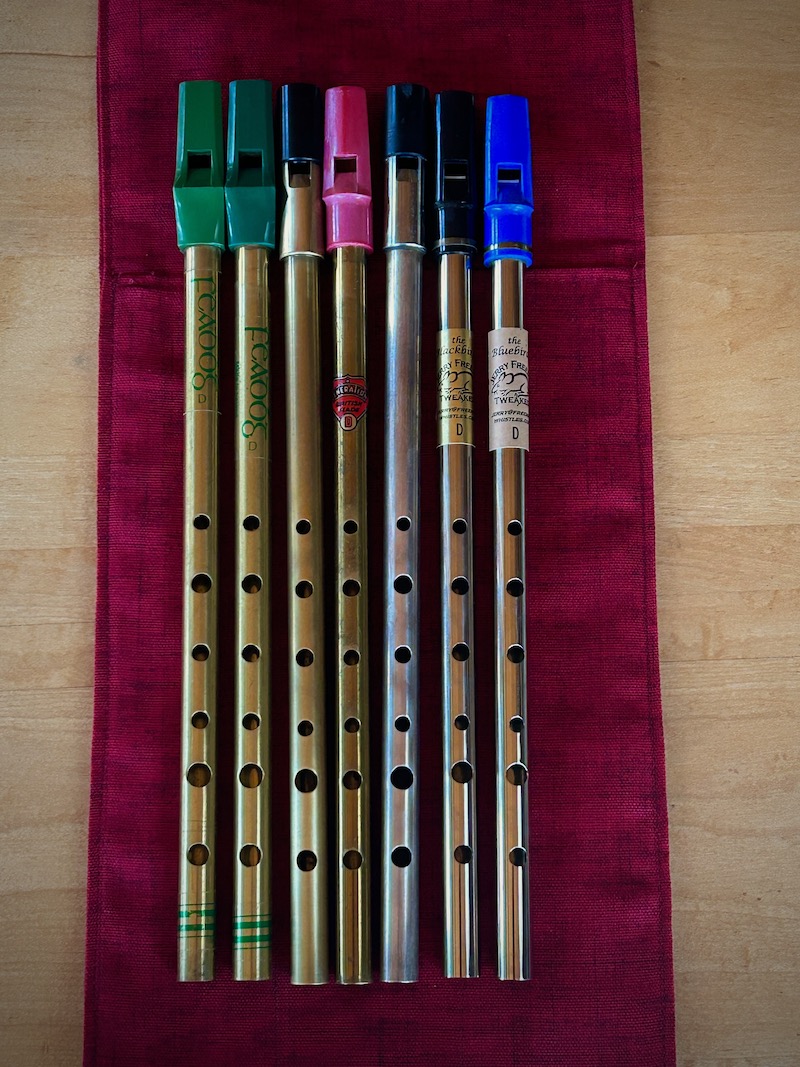
I spent some time this morning playing a few whistles and trying to order them in terms of sweetness of the upper notes and balance of volume. The image below captures my perception of that ordering, with the whistles on the left being sweetest and quietest, getting louder as you move right.

I think the order in this photo also captures my perception of closeness to the tone and playing qualities of the original Generations. You’ll see the old Generation in the middle, with the brass and silver Sindt’s either side of it.

The two Sindt’s are both quite close to the Generation in how they balance volume and how they sound tonally, but the slight difference between the tone of them allows enough space for the Generation to sneak in between. I think that speaks a bit to how much effort Sindt put in trying to make his whistle’s Generation-like.

Interestingly, I’d say that both the Sindt’s are closer to the Generation sound than the Freeman tweaked Generation is, which is to the right of the picture. And I think the Freeman blackbird (based on a new Feadog) is a bit more Generation like than the Bluebird which starts from a Generation. Its a subtle difference, of course. And again, a very small sample size. But I would say that in both cases, the tonal balance is already starting to get a bit outside my preference zone, with the volume kicked up especially for the upper notes, moving in the direction of the newer, louder whistles, albeit still at the quiet end of that spectrum.

3 Likes

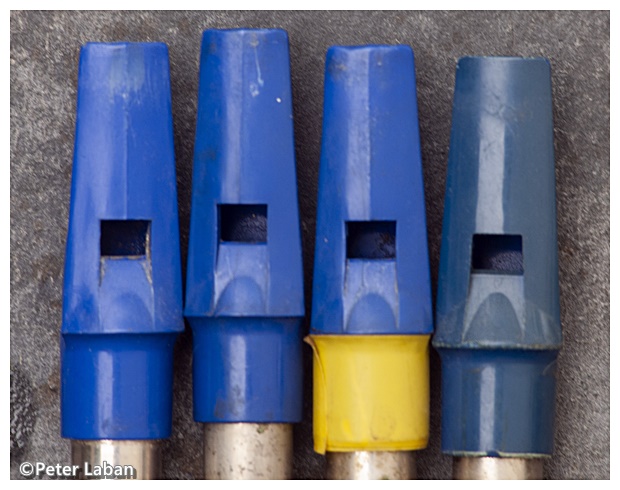
I have posted this before. Above are my Generation C whistles. The three ‘old style’ ones are all quite different from eachother. The ‘newer’ model is quite nice, perhaps nicer than some of the others, depending on the use. The yellow tape keeps a starting crack together and is covert nod to Patsy Hanly who used to play a Gen C wound similarly in yellow electrical tape.

In the past I have stressed here that the pre-1980s Generations were as fickle as the later ones. You had to pick the ones that suited best. Like the newer ones, they were all serviceable, but some were (much) nicer than others.

Their voicing was different, quieter and arguably more balanced between the octaves. The new model opened up the lower octave a bit but inevitably sacrificed other aspects of the voicing. Some of it resulted in an actual improvement, in other aspects perhaps less so.

All this to say, there’s no real reason to venerate the older models as strongly as seems de rigeur on the forum these days. Some of them came out lovely, others were average. Pretty much like the later ones.

On a side note, last Saturday night I saw an old C played, very nicely, that must have been standing in a jar in direct sunlight for a very long time. The head, originally red, was almost white. Several holes taped.

For a period during the seventies Generation used a plastic that was sensitive to light, resulting in discoloration and brittleness. This mostly affected the red heads.

Here’s another addition to this post. Just to show you never know how these things will pan out. This is one of the whistles Bríd O’Donohue used to record her first CD. It was obviously mangled when coming out of the mould but it was for the better. It was a lovely whistle and at the time one of her favourites.

5 Likes

Interesting that the whistle was notably better than average and the windway is at an angle so that from the players point of view, at the position of the window, the left side of the windway exit is roughly 0.5mm to 1mm further away from the blade than the right side. This would cause the resulting waveform to vary from the standard somehow, perhaps adding complexity and affecting how harmonics operate. I’d like to see that waveform shown on an electric monitor screen, or have someone on YouTube play it through all its notes, so we can hear it. Also, in the picture, the top of the windway near the window seems to show an indent, which may have affected the dynamics of the air flow by adding a partial airstream split effect. That would be bordering on genius if it works.

I’d like to know if any other whistle makers have deliberately experimented with this angled windway or angled blade design and what results they experienced. I’ve never seen it before. I suspect that for the player, the difference may show up in tone colour and chiff variations and a unique change in responsiveness (good or bad?). Alternately, have any of the whistle tweekers sawed through the mouthpiece and reattached it at an angle? What happened?

Hey, by the way, has anyone played one of the pre-Flageolet Generations? From back when they were all metal? How are they?

I’ve had a few Jerry Freeman tweaked Generations over the years that were the best for getting the ‘Generation’ sound without the raspiness of a non-tweaked one. Highly recommend them.

Neck and shoulder pain.

Yes, I bought a B flat one on Ebay. There were several of the on sale, some sort of old/new stock. I believe “Mr Gumby” bought one at the same time.

Honestly, I didn’t buy it expecting a great instrument (I certainly didn’t need another B flat whistle), I was interested because it was a pre-plastic head Generation whistle (btw. they always called them Flageolets for some reason).

Anyway, I was not disappointed, it’s really not very good. I wouldn’t bother with playing it, it makes a weak note and is generally hard to play. I think that the opinion is that the plastic-headed instruments were a considerable upgrade.

It has to be said that this is one example and maybe not representative … these particular whistles may have laid in a drawer or something for decades because they were poor.

In the end, I’m not bothered. I didn’t buy it to play it, just out of historical curiosity about old Generation whistles.

1 Like

Thanks, I asked because I also saw one on ebay for around $100, and was curious what they were like. I didn’t buy it, and it sounds like I’m not missing out.

Yes, I’ve seen a couple pop up on Ebay at about that price. I wouldn’t touch them, not rare or old enough to warrant that. I got mine for around 8 or 10 quid, much more reasonable for my curiosity.

Ditto. There are some fly by night sellers thinking they’ll get silly money handed to them

Only yesterday a notification popped up for a Feadóg mk 2 @75 dollar, with postage, customs etc bringing it well over 100. Ludicrous

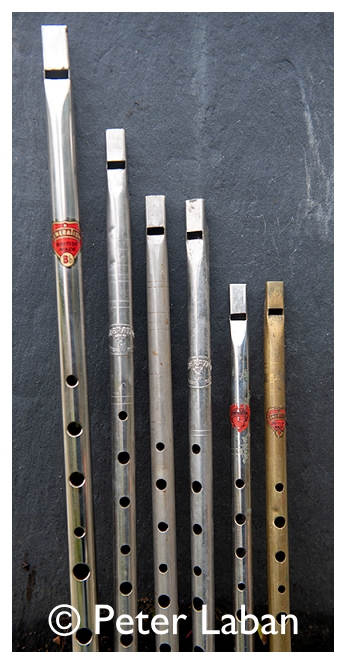
But as we’re here, I had to empty the memory cards to get some photos ready to go somewhere, so, before I did I once again lined up a few of the usual suspects for a quick snap, including the Bb mentioned above.

2 Likes