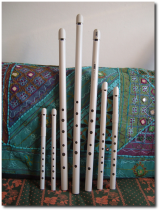
It is just about working but very quiet. I know it is all about the gap above the fipple and the angle of the lip, but whatever I do doesn’t seem to help. Any ideas gratefully received.
I have tried to seach this site, as I am sure this topic has been covered many times before but it tells me that “make” “low” and “D” are too common words and I can’t think what else to put in!
In general, the upper surface of the plug or fipple should be level with the lower surface of the ramp. Are your window dimensions as recommended? Have you slightly sharpened the edge of the ramp?
I don’t see it in your instructions, but most whistles have a bit of a bevel at the edge of the fipple where it leaves the windway. Make this very small for starters- you can always make it bigger.
You may have to experiment with how far in or out the fipple plug sits.
Good luck. When you get one that plays well, you’ll be hooked!
I tried that method too and failed, probably due to my limited metal working skill. However, Guido’s method also works with copper pipe if you use a pipe connector for the mouthpiece. (See ethnic wind’s website for some really clear pictures. Hope that helps!
Do you have your length and width right? I really don’t like the hole dimensions on that site too big of a jump for the wind across the hole.
For a Low-D I like something 1/2" Wide and 0.225 for the length of the rectangular hole. You can round the 0.225 to 1/4 inch but I like still like the response of 0.225 better.
To make a mouthpiece:
If you take a piece of 3/4 copper piping, type L not the cheaper type M. You can use type M for the body but not for mouthpiece. Type L gives you the right windway thickness.
Cut the piece about 5 inches long.
Then make a plug that fits inside the pipe 3/4 inches long.
Cut a U shaped slot in the pipe that is 1/2" wide and make it 1" long clean up the surface.
Use a file to create the ramp on the bottom of the U shape. Don’t make it overly sharp but make it look clean - make sure it is clean underneath as well.
Slide the plug in and leave 0.225 to 1/4" space between the plug end and the ramp.
Glue it in place - or drill it and pin it.
Use a file to put a 45 degree chamfer on the edge of the plug so that the air can proper expand when it gets to the hole. It need not be over 1/32"
Get a copper pipe coupler (the kind with not wall in the middle), cut out a 1/2" wide by 1/4" deep rectangular slot and clean it up real nice. Line that up with the plug and glue or pin in place.
For extra you can cut a 1/2" slot on the end of the plug to create “inner ears” which really focuses the sound like the square fipple whistles do.
Cut off the left over material on the beak end of the mouthpiece, use a hacksaw or bandsaw to cut your diagonal beak or round it as desired.
Get another coupler and a tuner and trim the pipe that attaches to the mouthpiece until it plays the Low-D note in tune. You can use beeswax on the coupler to make it seal better - and be tuneable.
I wish I had read your post before I started on making my own low D whistle! I too had trouble with Dennis Havlena’s instructions for the mouthpiece. I started over, trying a couple of my own ideas, and produced a working whistle, but it’s quiet and clogs easily. The windway is pretty small. Your recommendations look very promising, and I’m going to try again.
I have a couple of questions, though: Could you describe the 1/2" slot on the end of the plug? I’m new to whistles and don’t know what the “inner ears” look like, or just where the slot is on the plug.
Also, I intend to make a couple of smaller, higher-pitched whistles with 1/2" copper pipe. I figure that I’ll just make all the mouthpiece cuts proportionately smaller (2/3 the size used for the 3/4" pipe). Does that seem like a good plan?
Oh yes, and do you know of a good finish that’s not toxic after drying that can be applied to copper to keep it looking untarnished?
Thanks very much for the information; I’m looking forward to making good whistles!
i’m also interested in making a pvc whistle (as opposed to copper or brass)–i saw that you have some whistle-making books for sale on your website and a kit for a brass whistle; do you have anything similar for pvc whistles?
Actually the bigger book has plans for PVC whistles both low and high.
For a good non-toxic finish, there is a spray on Shellac in can. Since Shellac has been used for even confectionery use, I would say that it and/or wax are the least toxic finish materials that you can find.
However, just to let you know that Shellac is a secreted substance (Lac) by insects: http://en.wikipedia.org/wiki/Shellac
Mack Hoover first told me about the “Inner ears”, although it is an earlier whistle invention - not quite sure who first came up with it. By making a slot in the plug that is the same width of the window, it causes walls to be formed to either side of the opening. This causes the whistle to behave like a squarish type fipple much like the Overton’s, Shaw’s, etc only that you also have a curved windway. Having the walls on either side of the window create a great stability in the sound.
You can make the cut all the way from the window to the bottom or make it go part of the way.
When you make the window, keep this in mind “square” tends to be more “flutey” sounding and “rectangular” tends to be more “reedy” - but there are hundreds of other factors that can influence this as well.
I like the floor to be level with the edge of the blade. With a proper 45 Deg chamfer on the end of the windway duct, the air expands properly into a nice “windsheet” and doesn’t need “help” by raising the blade edge up into the airflow to force oscillation (creates extreme chiffiness).
One more thing, other tone modifiers like outer ears can be combined with the inner ears.
I have made the mouthpiece, per your instructions, and it definitely works better than did the one I made previously. Since I haven’t pinned it all together yet, I think I’ll make a new plug with “ears”.
Your information came along at the perfect time, and I very much appreciate it!
THen when you know the advantage of a low whistle and are ready to put in some hard-yards research, come and tell us what we don’t already know.
Be warned - there are quite a few before you - be of good heart! This is the civilization principle, humans have the ability to build on their predecesors (unfortunately, our “intellectual property” laws would make us all into lizzards - given that intellect is the property of a species, not a company or individual - [get active you who hear!])
Be lizzard-like and do it all yourself, get a patent and make slaves of your fellows, or be real - do the research and the work, get a result and share it for us all to benefit and for the world to roll for our children.
Visit Guido’s site - he show’s you how to get a result in Low-D AND - he has been round the block 10 times before you even knew there was a block to go round - AND HE is a civillized human .. do the course, then come back and be part of the solution.
Patents are too expensive - you have to sell a lot of whistles to pay off one of those.
The best kept secret is putting it flat out in the open.
BTW - Comments on the flute. A flute mouthpiece is the ultimate mouthpiece, it can makes adjustments to the windsheet for each octave. There is much to learn about how a whistle works from the flute. They just make your arms tired too easy.
I found Hoopy Mike’s reference to the Ethnic Winds website really helpful.. I decided to abandon the first plan and go for that design. It is miles easier to make. I ended up with a low A, which sounds great, although it is a bit breathy and you have to blow a bit too hard to make it jump the octave for my liking, still as a first attempt it’s not bad and it looks great.
I can’t work out how to post pictures here. If someone could explain I will do it.
my understanding is that you have to have the image posted online somewhere already (on your own webpage, or photobucket, or maybe you could use a myspace or facebook page to post it?) and then you link to the photo using the img button.
so let’s see… if i want to post a picture of Guido’s whistles, i:
right-click the photo on Guido’s page, and choose “copy image url”
Thanks for the input, everyone. As far being a lizard goes, I don’t mean to destroy civilization. It helps me to learn if I re-invent the wheel a little bit. I could have searched a little more and benefited from the available information, but I found Dennis Havlena’s instructions, got excited, and went for it. When I saw Daniel Bingamon’s post, it helped resolve the problems I encountered. Had I seen ethnic wind’s pictures, they would have helped, too.
So, I finished some whistles, and I thought I’d share them. I made the mouthpiece for the low D according to Daniel Bingamon’s suggestions above, and used Dennis Havlena’s hole-placement instructions, adjusting the B2 hole a little to suit my fingers. For the mouthpiece made from 1/2" copper pipe, I did basically the same thing, but made the lip a straight line instead of semi-circular. I am pleased with the result; the only thing is that if one points the whistle too far down while playing, the air doesn’t flow well enough to get the full second octave. I did use the thicker “type L” pipe for the body of the mouthpiece, but it appears to be thinner than the “type L” 3/4" pipe by about a third. No big deal, it works fine if I hold it up a little.
I also applied the same principles to bamboo, and ended up with an OK high D whistle. On this one, though, the windway is larger, and it takes more air than I’d like to get the 2nd octave G, A, and B.
If you’re considering making your own whistle, I encourage you to try it. It’s fun.
Here are a few photos:
[edit: the photos didn’t make it, and I don’t know why. I uploaded them to imageshack and pasted the URL’s in between the [img]'s, but no dice. Well, here are the URL’s, for now:]
Sound like a slightly long windway would have helped. Also you can sand away a little material from the block on the mouth side - this creates a taper and may help the pointing down problem.
I usually design mouthpieces to angle out just a little - never perfectly straight down. I’ve notice that some players that go full 90 degrees usually require longer beaks on the whistles. - But for a copper pipe whistle, it’s hard to find an adapter that is long enough. You can get brass tubing that fits over the pipe to make the sleeve for the windway or some plumbing stores sell pipe repair sleeves that go over the copper pipe - they are usually overpriced though.
BTW - Whistle business has been a bit slow this year (an understatement). I will probably be focusing more on instrument making books in the future - including update the Whistle Makers Anthology. Also, a “cigar box” mandolin, guitar or fiddle book to come out some time this summer.