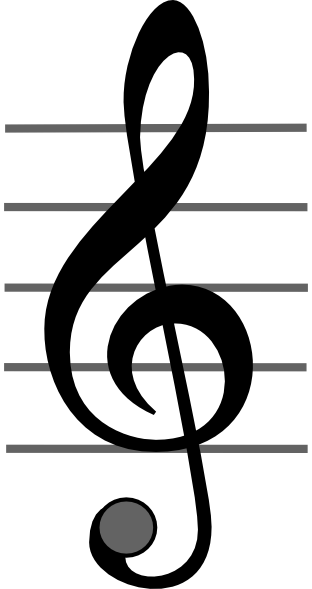
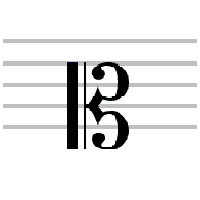
I am going to make a concerted effort to learn the clef and fingering of the whistle and try to move away from tab.
As an exercise, I printed out a copy of the sheet music for St. Anne’s Reel (one of them, at least) and I am going through and writing out the letter note of each. Then I will go through and mark down the fingering. Yes, I end up with tab. But in the process, I am learning in my way the clef and fingerings until it sticks in my mind.
But, This is one area where I need the rote method to start. Each time I repeat it, it becomes easier to remember. And it was working, actually. By the end of transliterating St. Anne’s Reel to note letter, I wasn’t using the cheat sheet.
I especially need to have the clef learned before the uilleann pipes arrive. It certainly won’t help me if I am having to continue to think too much of what the note on the sheet is supposed to be while learning the finger config on the D chanter.
So far, this is all for a High D whistle. At some people, I will have to integrate the Bb whistle…because I like its sound so much.
Now, your method of writing out the sheet music to tunes and then adding annotation as to name of the note and/or fingering is certainly one way to learn how to read.
But there’s another way that’s perhaps more intuitive, more direct, that will help you make a direct connexion between the dots and the sound.
I know because it’s how I learned how to read. What I did was simply take a big book of tunes and crudely attempt to play each one. At the time I had heard a large number of traditional tunes and I had them in my head but I didn’t know the titles of any of them. So I would hack along at the string of dots and suddenly, when what I produced was close enough to the tune to be recognisable, I would think “aha! I’ve heard this one!” and play it. In this way I quickly learned what dots SOUNDED like. I think I had hacked through at least a hundred tunes before this “aha!” happened, but once it did, I could sightread anything.
I was going to suggest something similar to pancelticpiper, but he beat me to it. To “read music,” we need the brain to see a dot and translate that dot directly into a note and a finger position. Writing out tabs, letters, etc. seems to me to be adding mental steps to a process that we are trying to reduce to one step: see note - play note.
Most very basic tutorials start with having you play one note (typically first octave G on a D whistle). The first exercise is a staff with several dozen G quarter-notes and you play those. Over and over and over. This exercise teaches pitch and tempo but it also drills into our head that the black dote on the page sounds this note with the fingers that position. The tutorial then introduces the rest of the notes one at a time with exercises that drill those notes into our brains.
This basic tutorial method is the step-by-step version of pancelticpiper’s “all at once” approach. Either way works and surprisingly quickly. I think pancelticpiper’s claim that he needed “at least a hundred tunes” to get it down is probably hyperbole.
I’m still an “improver” on the whistle but have been a teacher and instructor in other fields for the past 40 years.
I should also note that I am going to have to work on my transposition skills. I like the sound of my Gen Bb, but none of the music I find is written for it. Or maybe I am looking in all the wrong places.
What do you mean it’s not written for it?
Anything written for a D whistle can be
played with the same fingering on a Bb.
It will just come out in Bb instead of D.
Nothing wrong with that unless you are
trying to play along with someone else
in the original key.