I recently got a Clarke whistle, and I can’t figure out what kind it would be. I got it a while ago, and haven’t had time to practice much because I’ve had an insane amount of work to do for class, but now I’m done and I have to get it back from a friend who’s house I left it at.
I can’t post pictures at the moment, but it looks like the Clarke original, only it is completely bare metal, conical bore, and has a wooden fipple. This is the clarke original, right? I’m going to check it later with an electronic tuner to see if it is in tune. Does anyone know a tweak for those if I end up needing it?
By the way, this is my first post, and I’m glad I found this site. It’s exactly what I was looking for, because I lost the little sheet that came with the whistle, and had no idea what to do with it.
As a background, I’m an English major in St. Louis, and I play a little bit of guitar.
Thanks in advance for any info, and happy whistlin’.
That makes me happy, I didn’t particularly like the others, I knew nothing when I bought it so I made the decision based only on aesthetic appeal. It does have a good sound! I just wish I could make it come out more often.
Check out the links section of this site there are some great sites to help you learn the whistle. And by the way welcome to just about the finest site of its kind on the planet. I think you will find the nicest people play here
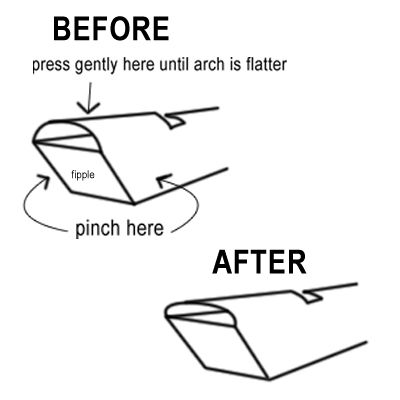
I played nothing but clarkes for my first two or three years of whistling. I’ve always enjoyed the sound of them. Especially the wooden fipple originals, although they take more breath to play, the breathy sound is unique. Clarkes are the only cheapies I ever bought that I didn’t have to tweak. Every other brand seemed to buzz a lot on the lower notes, especially Generations. The one tweak I did perform on some of my clarkes was to gently flatten the top arch over the windway a bit in order to lessen the air requirements. Be careful, though, not to use too much pressure, and pinch the sides of the fipple tightly while doing so; sometimes when the metal flexes out it can cause the glue seal around the wood to break.
I drew you a quick diagram to help illustrate this… hopefully it makes sense.
That’s a very clear diagram, nice job.
I like to plug up any open places around the sides of the fipple with some beeswax, for no particular reason except it makes me feel better. I don’t think it actually changes the sound at all, but I have this quirk of personality that doesn’t feel comfortable with a whistle with any leaky bits.