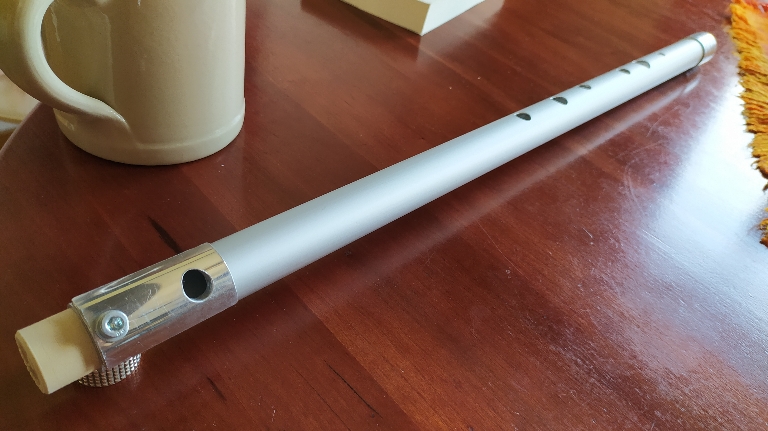
Since you mention the focus is recording, that presents choices you must make, selecting from the list of tones available in whistles, and what your music needs. Recording then gives you fine control of EQ, compression, dynamics, effects and volume in the mix of any particular track. That will allow one whistle to sound like 30 others if you so wish. So make a list of the options available in whistles and maybe get a few whistles that give you options.
You should establish some baseline requirements.
An old style thin-wall penny whistle is just NOT going to sound like a thick-walled wide-bore brass or aluminum whistle. My problem with the very reliable Susatos is that they sound very much like recorders, and I already have recorders. When I play whistle, it must sound like a whistle. Tone as an issue, has many related issues and model variations. Some, like the Killarney, handle the second octave and highest notes very smoothly and with great control. Many whistles get louder in the second octave, and maybe a little shrill or chiffy, but sometimes if carefully crafted that’s appealing. Sometimes, it’s really not. What do you want?
For instance, is it most suitable for a particular song to have a whistle that has a very pure tone, like a steady flute tone, or one that has more variations, more windiness or texture to it, more effects from the player involved?
The advantage of the higher priced models like Burke, Goldie, McManus, Milligan, Reyburn, Oz, Alba, Reviol, Setanta, Howard, etc., is that they typically play like professional musical instruments, they have reliable quality control where they’re made, they sound great, they respond well, they have a long-term base of users, they are occasionally upgraded because their makers are astute musical minds who deal with accomplished and exacting musicians regularly.
There is a long list of mid-price whistles that might suit your purposes. From inexpensive ones like the Tony Dixon trad brass or their excellent DX006, or the Walton Mellow D, in the lower priced range. Depends what you want. Consider these too: Chris Wall, Timothy Potter, Goldfinch, Tilbury, Becker, MK, some of Nick Metcalf’s whistles are mid-priced, some are higher (he’s a brilliant crafter with a lot of models available). Watch for the release of the new Kerrywhistle Cobre model and see what you think (to be released within a few weeks, from what I know).
For the alto range, the Optima by Kerrywhistle sound great. The Tony Dixon aluminum in A I like the clean precise tone of. If you want power and expressiveness and rich tone, the Thunderbirds in F and G may the solution. Alba whistles sound great. Chris Wall mid-key whistles sound very good too.
I’ve little experience with the Low D whistles, so others will have to offer comments there. Keep an eye out for innovations as well. The Bracker whistles with 9 holes offer a chromatic whistle. That makes a lot of sense to me. The Carbony is an all carbon option. The Erik The Flutemaker Irish whistle with plastic mouthpiece and wood body sounds terrific, and he also offers some pure carbon whistles. The Qwistle is a new whistle with a very strong and clear tone with lots of character.
If you’re going to follow up recording with live performance, I’d recommend a whistle that gives you a lot of reliability and confidence, that’s built strong.
See → YouTube reviews, comparisons, demonstrations, and Chiff and Fipple discussions.