I have only been playing for ten days now and still learning The Irish Washerwoman, however, when I play, going through the notes on the music sheet, l sometimes find that I completely forget certain finger positions and keep playing 'g’s when I should be playing 'd’s etc… Also, still not very smooth and fluent… Is this type of mind block common when learning, or am I expecting too much, as usual. Thanks…
Slow practice, the great panacea.
Keep the rhythm right, but slow the tempo down until you can’t make a mistake. Practice the tune in short segments, if that’s what it takes.
Give it time and practice slowly. If you can’t play it slow then you won’t be able to play it fast either. Give it time and enjoy it!
Also, still not very smooth and fluent..
What do you expect? :
I have only been playing for ten days now
These things take time.
You could also question your choice of the first tune to learn. Perhaps a simpler one or one that sits better on the whistle would make things easier?
Put in the work, have patience and things will eventually get better.
Thanks for the advice folks, I really enjoy the practice, I guess I will just have to wait for muscle memory to kick in… YouTube has been very helpful, especially the priest who does tutorials… I guess I’ve been watching too many well seasoned players playing at break neck speed.
Should I pick simpler tunes, or is it OK to go straight into jigs..? Never mind, back to practice…
I’d be wary of stuff on Youtube. The “Whistle Priest” chap posts very good stuff I think. Others can be pretty bad. There is no mediation for those putting videos on Youtube and there are some pretty poor players putting “tutorials” on there. Also, great speed is not the mark of a good player, just of someone playing fast.
I don’t know your level of experience with traditional music, so these comments are going to be pretty generic. There’s also a bit of an assumption that you want to go to the level of obsession with this music that some of us exhibit 
Folk music/traditional has particular a idiom. It’s not simply a string of notes. You need to start to internalise that. Learning strings of notes without having got the musical style, the tunes and how they work and how good musicians deal with them into your head is a path to disapointment and frustration. There is no quick way round that, and you will be learning and relearning this lesson for however long you play; like all of us.
It’s always the first bit of advice I give to anyone wanting to learn to play this music. Learn how to listen. Buy good recordings of good players (not simply of tin whistle players), and listen to them … a lot.
When learning, start with tunes you know. I think you mentioned playing Chistmas carols on another thread. Well, playing them is not just “mucking around”, you are learning the instrument, improving breath control finger positioning, improving your ear (relative pitch) etc etc. Playing simple tunes that you already know is a very good way to start. Then seek out advice on simple trad tunes to learn.
Some of these comments will depend upon how deeply you wish to delve, or the opportunities you have.
Find other musicians, and if you can, go to concerts and sit in on music sessions. You don’t have to join in, but you will start to develop a critical ear (think also of the recording that you have been buying) and start to recoginise more tunes. Sessions can be a good place for advice too.
If there are dances held locally to you, or at some folk festivals … go to them. The majority of the tunes that you are listening to are dance tunes. Find out how they work as dance tunes, what makes a jig or a reel work as a dance tune, because that is fundamentally what they are. Lots of us play as dance musicians, and I personally always have the feeling in me of the dance when I play a dance tune. Musicians play the dance and dancers dance the tune.
Lastly, and again, this depends upon opportunity and all sorts of factors. Try to get lessons. Have a look at local folk organisations and what they do.
Anyway, maybe all you want to do is sit at home and amuse yourself, so take all advice in your own fashion. But, for me, the deeper you delve, the more enjoyment you get.
Maybe try a simpler tune just to start learning where the notes are…doesn’t really matter what tune.
But try a simple folk tune (Go Tell Aunt Rhody?) or nursery rhyme tune (Twinkle little Star or London Bridge Falling down?), choose one that has some short notes and some longer notes, a tune with a few spaces as well so you can get used to taking in air during certain ‘handy’ places. Play slowly and you’ll naturally pick up speed as you get your bearings. 
Yes, you’re expecting too much. You’ve not even been at it two weeks. Whistle is a real instrument and takes years to master properly. Patience and dedication are required.
IMO it doesn’t matter much what tune you start with as long as you take it slow. Some tunes are easier, but if you exercise that patience dedication, you can get through just about any tune. The simpler tunes will allow you to get them up to speed more quickly, of course, but aside from some toughies you’ll be fine. You’ve got to learn the tough bits eventually anyway.
I have found Jigs and Hornpipes easier to learn than Reels, which can have more intricate rhythms.
Memorize a tune before going on to another one.
There are thousands of tunes, so it’s good to strategize what to learn:
(1) Tunes you like
(2) Tunes you know (ones you can hum or diddle along with)
(3) Tunes others in your area are playing.
4 tunes, 8 tunes, 16 tunes, 32 etc, …
Your playing will transform approximately every time you double your repertoire.
Learning to read music and coordinate your fingers with what your seeing takes time–and it’s better to take it slowly. You’ll progress faster in the long run. If you’re getting muddled, you’re moving to fast (cognitively and/or physically). You know the old adage, practice makes perfect? It’s not quite true: Perfect practice makes perfect. In other words, your brain and your body will learn (and cement) anything you do, right or wrong.
So if it’s not going right, you’re baking things in you’ll have to re/unlearn later. Right now, you’ll do well to play simple tunes slowly. And figure stuff out by ear, too–like Happy Birthday or When the Saints Go Marching In or Twinkle Twinkle Little Star, that sort of thing. That will train your brain to associate sounds and intervals with various fingerings.
Along with Ryan Duns, this is a fabulous resource: http://www.rogermillington.com/siamsa/brosteve/
Keep at it, and have fun!
Having a good day… Getting through the washerwoman without any mistakes. I have slowed down the tempo a bit and am concentrating more on changing the pressure of blowing for higher and lower notes… It’s coming together nicely.
As for ornamentation,… Not yet, tonguing is as far as it goes at the moment. Not so muddled today…
Each time I practice it does get better, so I am going in the right direction, mostly though I am enjoying it immensely.
Thanks for all the informative replies, everyone was a help, great stuff…
As for ornamentation,… Not yet, tonguing is as far as it goes at the moment
I would add to the previous post that practice makes permanent. I would think a more structured approach to learning tunes, adding little bits of technique and complexity with each new tune you tackle. Starting easier tunes and not doing them well, not over-reaching may well be a more satisfying and successful approach.
A lot of sessions and groups have some sort of “Top 20” or so tunes that are recommended as the first tunes a player should learn if they’re starting out.
For example, when I started I used the beginner’s tunebook of the Trad Society at University College Cork (since that was the session I was going to at the time). They seem to have taken their website offline, but they have some slower recordings on Soundcloud of some of the tunes:
https://soundcloud.com/ucctradsoc
If you want to play in a session, I’d recommend looking around for one nearby and seeing if they have a list like this, or just going and asking some of the people playing for some suggestions. FYI, outside of a friend who plays it every so often, I don’t think I’ve heard the Irish Washerwoman in a session (but that’s just anecdotal).
If you don’t have a nearby session, Shannon Heaton did a “First 50” book/CD set of tunes to learn on, which might be useful to you:
I’m going to link you to some scale exercises. These will help to get your fingers used to moving more smoothly.
https://musescore.com/user/33203/scores/50680
Irish Washerwoman is definitely not a song to start learning on. But if you’ve got most of it down, just slow it down at first. Here’s some other songs:
https://musescore.com/user/3340706/scores/966271
https://musescore.com/user/4193101/scores/1929766
This site has music that will work for your skill level. Practice and start slow. You’ll pick up speed eventually once your fingers remember the notes.
http://tinwhistlemusic.org/category/easy/
If you are adamant about learning jigs, just simply slow them down quite a bit, get used to playing them, then increase the speed little by little. If you are mostly learning playing by ear, you will want to know what each note sounds like, and its relation to the notes around it, and that does require practicing scales and arpeggios.
This site has music that will work for your skill level. Practice and start slow. You’ll pick up speed eventually once your fingers remember the notes.
http://tinwhistlemusic.org/category/easy/
It depends a bit what direction you want to take with your whistleplaying but I wouldn’t recommend that site. Repertoire aside, it does not teach you anything whistle specific.
What I recommended was pretty much sheet music at appropriate beginner levels to get basic practice and music-reading down (and what I could find online with a quick seach). But if you want to plunk down some money, get Mary Bergin’s tutorials, or an actual book geared towards tin whistle. Clarke’s and Walton’s have their own tin whistle books that have received good reviews. You can probably find them on Amazon.
Those are just to get some basics down, but watching and listening to YouTube videos of respected and well-established players will give you a sense of the musicality behind the songs.
You might find some helpful tunes for all levels here.
http://www.tradschool.com/en/
Shop for beginner books.
https://www.amazon.com/Stephen-Ducke/e/B00IOS9I0I/ref=dp_byline_cont_book_1
Staff notation, whistle fingering tabs, lyrics… and economical for plunking down money at beginner level.
Or here.
http://www.irish-folk-songs.com/sheet-music-and-tin-whistle-notes.html
Sean Ryan… How it should be done Imao… 
Thoughts…?
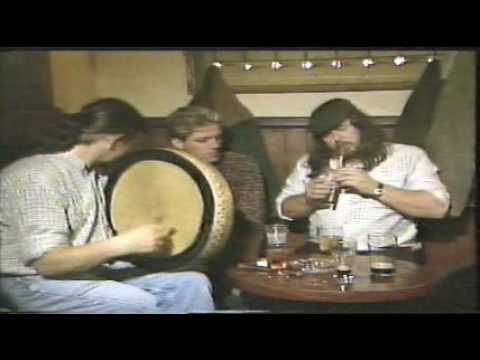
Nice whistling.
After a couple of weeks playing you might seek the sweet spot.
Or here.


I keep reading this thread title as “Getting Mullahed”. 