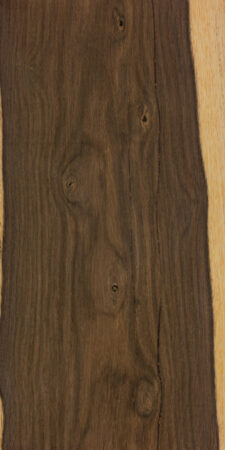
Just making sure that I am not going crazy, this is definitely not cocus wood, right?
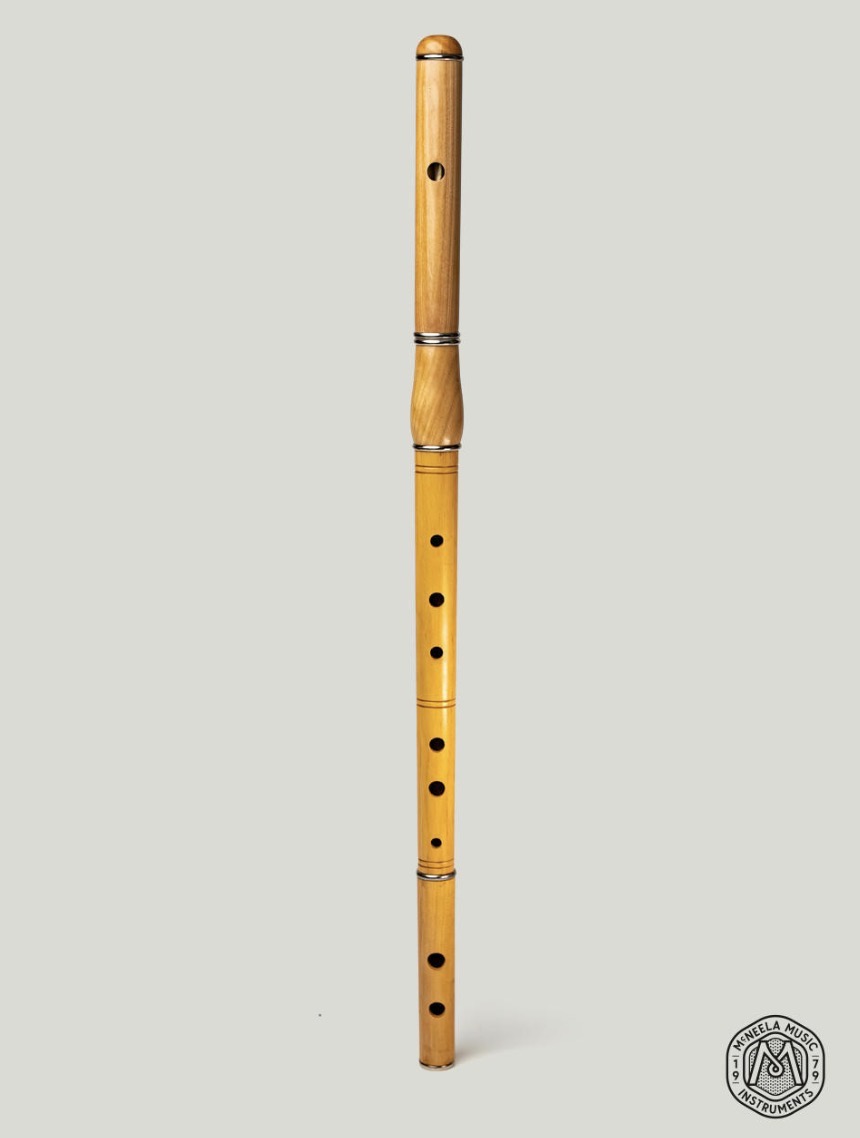
Haddon
Definitely not real cocuswood. The Pakistani “instrument” makers have a long history (I don’t know how long) of calling this timber “coccus” (sic, usually) but also sometimes “cocus”. From what I have managed to learn it is (again, usually) in fact the sapwood of sheesham/shisham - dalbergia sissoo, Indian Rosewood, of which they also use the red-brown heartwood (typically sold by the same makers as “rosewood”, rather more accurately/honestly!). Neither the heartwood nor sapwood are necessarily outright bad timber for flute-making, though they probably wouldn’t be used by choice by serious high quality instrument makers. What I haven’t managed to establish is whether Pakistani makers calling sheesham sapwood “coccus” is a legitimate, coincidental, historic usage in Pakistan and/or India, nor whether they understand that it is totally unrelated to genuine cocuswood - brya ebenus - from the Caribbean, which they most certainly could not acquire in quantity to sustain the output they produce. Without properly knowing the historical linguistic usage in Pakistan I would hesitate to accuse Pakistani makers of fraud regarding the timber, especially if they spell it “coccus”. However, western dealers who retail Pakistan-made instruments really should know and do better!
For clarity’s sake, yes, I’m well aware that the sapwood of genuine cocuswood is also blonde, but no picture I have ever seen of cocuswood logs or billets suggests it would be feasible to make an entire instrument section from sapwood - it isn’t that thick on the logs. Sure, we not infrequently see sapwood intrusions in both historical cocuswood flutes (makers using up “second class” but perfectly viable wood) and even some by certain modern top level makers who have access to some of the very limited amount of genuine cocuswood available in recent years, where sapwood inclusions in the billets are impossible to avoid and the small sizes of the logs which do become available makes such inclusions nearly inevitable.
The Pakistani “coccus” is not intrinsically useless for flutes, though neither is it ideal. The problems with those instruments arise from manufacturing standards - design detail, consistency of execution, finishing standards and quality control, all of which are typically and variably deficient. Those are the reasons to avoid these flutes more than the misleadingly labelled timber.
Thanks for the responses, I was thinking that I could be the sapwood. I was surprised about the Indian rosewood being used instead of legitimate cocus wood sapwood. I have been seeing that flute listing on the Mcneela website, and I’ve know that cocus has become very rare, so I had a hunch that I was probably not real cocus.
Haddon
Here is what the ad copy says for this flute on the website from which that picture is taken. It’s hard to understand how it could be billed as such when @jemtheflute so ably demonstrates that it is not.
“It’s made from cocuswood, which was one of the most highly prized tonewoodsof the 19th century.
Cocuswood is the only tonewood that’s comparable with African blackwood, and it gives you a louder, brighter and more focused tone, together with that full, rich, woody sound.”
Yup. Total BS with regard to the wood used by the Pakistani makers, even if the historical information about genuine cocuswood has tolerable validity. The likes of McNeela who present it as genuine cocus when surely they must know that it is not and cannot be, ought to be prosecuted under trade descriptions legislation!
You are correct this is not cocus. This labeling of cocuswood or cocus wood has been going on for a long time on inexpensive flutes from Pakistan. It is an entirely different species.
Strange, because according to this video Paraic McNeela himself says that the flute is cocus wood.

Haddon
He can say what he wants, but that’s NOT cocus. It may be be what they call that wood in Pakistan, but the traditional tonewood is a lovely reddish brown that darkens with age.
Eric