I don’t know if you have it, but there’s a wonderful book called
May It Fill Your Soul
Experiencing Bulgarian Music
by Timothy Rice
In the section New Approaches to Pitch and Timbre he says:
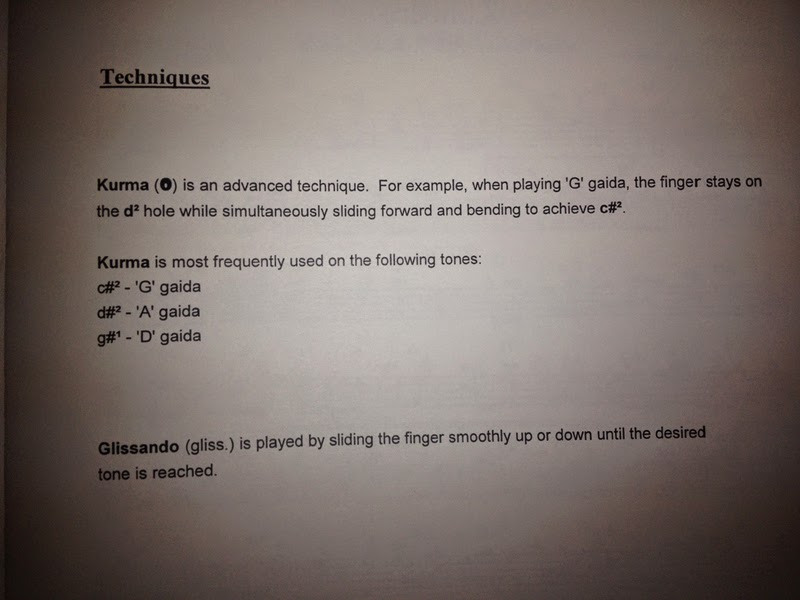
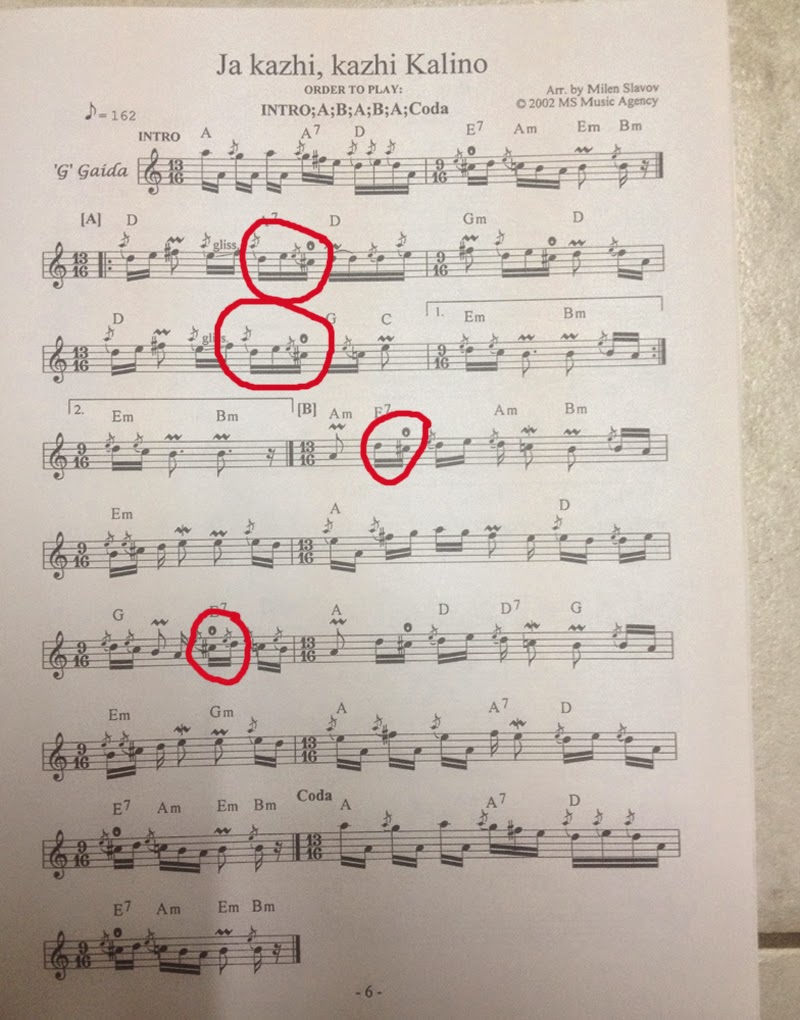
The Thracian or Strandzha gaida was a relatively high-pitched instrument of indeterminate or relative pitch… the new orchestras used Western pitch and all instruments had to be built to approximate the tempered scale. The directors decided that the tonal center would be A… Since the Thracian gaida was pitched higher, two gaidunitsi were created, one raised to D as the drone pitch and tonal center (raised from the traditional pitch around C) with a convenient A the second note to the bottom… the problem was that it played most conveniently in D whereas the best key for the Kaval and Gadulka was A. To play together in A the gaidar had to play in the instrument’s lower register (Tim means the lower hand) which required a difficult half-holing technique called Kurma to play some of the modes, and whose intonation and timbre weren’t as clear as in the upper register (Tim means the upper hand). To solve this problem a second gaidunitsa was created with a much lower tonic of A… thus the new ‘orchestral gaida’ had a lower, more muffled sound.
The implication is that Kurma is used for notes not available through the use of the Mormorka (on a traditional-style gaida only the three-finger, two-finger, and one-finger notes, that is, the upperhand notes, were reliably raised a semitone with the Mormorka).
Googling, I came across this Tim Rice article which says that the word ‘kurma’ covers “various crossfingerings and half-holings” which “the older generation used on only a few notes”
https://books.google.com/books?id=_syhAgAAQBAJ&pg=PA112&lpg=PA112&dq=gaida+kurma+-gaia&source=bl&ots=IIuroHVfw4&sig=A-71digNxGAZFf1hVJAcKWAXuvM&hl=en&sa=X&ei=dKOWVPvGMtD3yQTMoYKYAw&ved=0CCwQ6AEwAg#v=onepage&q=gaida%20kurma%20-gaia&f=false
The crossfingering part is puzzling, because as you’ve probably noticed the gaidunitsa is resistant to these… leaving various fingers up or down below the hole the note is emitting from has little effect on pitch, which is why gaidari will freely use so many different fingerings as they go along. (The Mormorka does what it does, of course.)
In his book Rice speaks of the newer generation of gaidari who view the gaidunitsa as a “skin saxophone” and relish playing highly chromatic music along with accordions and clarinets. I know that many newer gaidunitsi are designed to be fully chromatic, designed so that the Mormorka will raise both the upperhand notes and lowerhand notes a semitone.
As Rice says in the chapter Gaidari The Next Generation, speaking of Ivo Papazov’s huge impact on Bulgarian folk music
While studying traditional technique, the more advanced players imitated Papazov’s chromatic runs and arppegios, transposed sections of tunes that outran the gaidanitsa’s range, and played in keys and modes previously foreign to the gaida.
Personally though I love Papazov’s music I prefer it when the gaida stays close to its roots rather than imitate a clarinet.