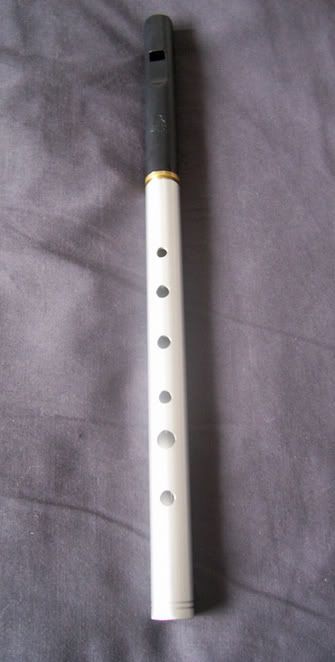
I’ve had a Dixon tunable aluminum high D for some time now and have always loved it. Every few plays I of course need to give it a wash because the tuning slide starts to get gritty. So I’d usually just give it a quick soak in warm water with a bit of mild detergent and the slide would glide beautifully again. I did this again this morning because I really had to tug the fipple to get it off the body. But this time the fipple is still hard to slide. I looked in the body and can see some mineral buildup where the brass of the tuning slide and the body meet.
Would it be safe to use a bit of CLR or another similar product to get rid of the mineral buildup? Or could that harm the aluminum? Should I polish the brass maybe?
For my Dixons, I use #0000 steel wool to clean the brass and then some Susato Joint Grease to lubricate it. Not too much, just enough to make a thin coating. Too much and it could slide while playing.
I have a suggestion that I think is worth a try. After you wash the Dixon, do you put it back together right away? If you do, maybe that’s why it’s sticking. When you wash a whistle, you should leave it apart at least for a few hours. I wash mine in the evening and then, leave it apart until the next day. Then, coat the slide with vaseline or chapstick. Hopefully, if this is the cause of it sticking, this will prevent it from happening in the future. Good luck.
Lyn
Hmm … There are a few things I don’t quite understand.
How does your Dixon tuning slide get so “gritty” that it requires the drastic solution of immersion-washing the whistle so often in detergent? Why does the whistle need more than a minute tuning adjustment of a few millimeters now and then, much less the drastic step of pulling the head off entirely? And do you not lubricate the slide?
On any whistles with a metal tuning slide, removing the head always entails the risk of damaging the slide by unnecessarily scratching or nicking it. Honestly, I always think very carefully before pulling the head, and then only for very occasional long-term maintenance – lubrication, checking O-rings, etc. And metal to metal slide contact without a light coating of cork grease or other appropriate lubricant seems like asking for trouble.
As for immersion, I wouldn’t normally think of doing that to a metal whistle unless I accidentally dropped it into a vat of motor oil or strawberry jam. And then only with distilled water to prevent any mineral deposits or oxidation from tap water.
Could this be a case of loving your whistle to death, of trying to over-clean and over-maintain it, resulting in damage?
A friend of mine plays that exact same Dixon aluminum, and I’ve never heard him mention the kinds of problems you describe.
To me, routine metal whistle maintenance means wiping down the outside occasionally with a soft damp cloth, and swabbing the bore with a cleaning rod after playing. And for extra shine, a gentle pass with a jeweler’s rouge cloth, carefully avoiding the slide. The idea of a caustic chemical like CLR would give me the willies. But gentle use of a very very fine steel wool to restore a corroded slide seems OK.
Again, I don’t quite understand. After presumably drying the whistle with a soft cloth to prevent spotting and swabbing the bore, the surfaces of the whistle should be dry within minutes. So what advantage is there to letting it sit overnight?
I’m not trying to be argumentative (well, only a little). Just hoping to clear up my curious questions. Thanks for the help!
Well,
I just found where I got the information about letting the whistle dry for so long. You don’t have to with the Dixon.
I have a Burke brass Pro D which you clean the Delrin whistle head with a soap solution that you neither rinse out nor dry with a cloth. You allow the whistle to dry completely before you use or store it. This soap solution keeps the windway clean and helps keep saliva from accumulating in the windway. I do this at the end of a day when I’m finished playing, so this is where I got letting the whistle dry overnight.
Sorry for the mix-up in drying time.
Lyn
It just does. When I play it, a lot of condensation and saliva gets in to the thing and if I don’t wash it regularly, the head seizes and becomes hard to smoothly slide. Also, it begins to reek if I don’t clean out the saliva, especially after playing with Guinness breath.
I’ve emailed Dixon about this question, but I have found them to be less than expedient with their replies, if they send one to begin with.
As for using steel wool, now that gives me the willies. The though of using something abrasive that could possibly rough-up the metal and make it even harder to slide.
Well, I guess I still don’t understand your experience with the Dixon. Metal whistles seem like such near-zero maintenance instruments, apart from the routine stuff I described above. My whistles get played constantly in sessions, they’re neither gritty nor reeky, and they stay in tune with an occasional set-and-forget slide adjustment.
As for the willies, Dixon probably used fine steel wool or an equivalent buffing abrasive to polish and smooth the slide in the first place. But a metal polish followed by cork grease or lubricant seems harmless enough.
In any case, good luck with the problem!
Edited to add: See the following current thread for an overview of what probably most players consider normal maintenance for a metal whistle, and the dangers of overcleaning:
I use these products in violin making, and in polishing. Very fine cloth sandpapers (I have down to 12,000 grit). 4,000 works well for polishing and light cleaning.
I think I’d be very wary about the abrasive method for the tuning slide as if you’re in any way rough with it (or just gentle over time) you’re going to wear down the fit and cause more problems. Just a wipe every now and then and a bit of slide lubricant or vaseline or coconut oil or whatever will work just fine. I guess it’s best to avoid separating the two parts that often but it’s tempting enough that no no-one’s going to take that advice.
My personal favourite whistles by the way, not had a problem
Maybe my solution was too simple…but I took normal kitchen oil and simply oiled it slightly, after I removed some of the more resistant stuff on the slide - just with finger, no brutal means.
And it works - it worked for a year or so, so I guess it should work a long time again.
On the other hand, why to do things always the easy way, it´s boring, innit?
I think I’d be very wary about the abrasive method for the tuning slide
I don’t mean to thin it down, but using a “grit” like 8,000 is simply like buffing it. Unless you scrub like the dickens, you won’t thin the tube any, simply help remove any fine dirt/stuff that won’t just wipe off. I use these fine grits (in sucession) to shine my collection occasionally, and in the previously mentioned violin work.
 And then only with distilled water to prevent any mineral deposits or oxidation from tap water.