Hi all. I’m just beginning this flute thing, but previously played the pipes. As someone who never had to control their breath before - how long can you play for on one breath? Likewise, what is a ballpark figure that is reasonable?
Welcome, Flotineer.
I would hesitate to say what’s a reasonable expectation, and for the following reasons: Yes, breath is involved, but different players have different capacities. The real meat of the issue is embouchure control; the better your embouchure, the less breath is expended. It’s sort of like putting your thumb over the end of a hose: It’s not that you’re blowing with force, it’s that the embouchure sets up a controlled jet that your lungs only provide the background supply for, and eventually you should be able to refine that jet to the point that not only won’t you need a lot of blowing force, but long phrases become quite easy.
But breathe you must. So, one of the fluteplayer’s good skills is to take breaths where they contribute to the phrasing of the tune; in that way, breaths perform a rhythmic function by punctuating, as it were. With this in mind, as you can imagine, it’s better to top off your tidal volume with judiciously-placed, serial brief takes (this doesn’t necessarily mean short phrases; that will depend on your embouchure’s skill level) than to deplete it all and then take a long, ragged gasp. Doesn’t go over well with audiences unless you’re into comedy.
When I started out I could barely get through four bars and could not hold a note for more than about seven seconds. I’d get dizzy. I can do a lot better now! Haven’t tested myself lately and the family is asleep right now.
While it’s great to be able to play very long phrases without taking a breath, I’d say the real game is breathing strategically and using breaths for effect, rather than out of desperation. Good players make it seem like they aren’t breathing at all, because they take breaths where it makes musical sense and thus it seems like part of the tune. I’m not one of those players, but I can hear it. Often lots of shallow breaths are better than big gulps.
Focusing the embouchure is the key, that and learning how to sneak the breaths in. . It’s been very hard but fun so far. Good luck
You really only need to be able to exhale for around 10 seconds, give or take a few. Try taking a breath, then pursing your lips, now let just a tiny bit of constant air escape while watching the clock. Most people should easily be able to make it 10-15 seconds before the air runs out. And you see, as Nano says, you aren’t actually blowing, your diaphragm is actually pushing the air out for you, without you having to blow.
Now where to take breaths is another matter…
Which leads me to disagree with the idea that more frequent shallow breaths are often a good idea rather than full breaths, this is really only a “thing” when a person hasn’t practiced taking full breaths quickly. Shallow breaths just lead to a vicious cycle of more shallow breaths and the often bad phrasing associated with running out of air in the middle of a phrase. So, practice quick, full breaths in. It’s not difficult, just takes some attention at first.
And then there’s how to properly take a full breath, but it’s too late at night for me to deal with that topic: But please, don’t start by letting your belly flop out over your belt as you inhale to prove you are breathing with your diaphragm properly. You’re gonna hear your stomach should move out when you breath in, you’re gonna read it written by music teachers and singing coaches, but please, don’t listen, none of them seem to have a grasp of human anatomy and biomechanics, unfortunately. Just breathe down, towards your pelvis, NOT out.
Ok, there I guess I did cover it, minus the functional anatomy lesson. 
Apologies for nitpicking, but the diaphragm actually contracts during inhalation: it is passive during exhalation.
but where, pray, would the merriment of online forums be without the frequent picking of nits 
I think needing to take breaths while playing dance music is what makes the flute such an interesting instrument. It’s both a search for the physical comfort of playing for long stretches of time without getting worn out AND throughout every tune only breathing where it supports the rhythm or at least does not take away from it.
I’m in no way proficient, but try to think as if I’m playing for dancers. Still hope to be able to actually play for dancers at some point.
Fluter Sarah Hale did a 2020 tune a week challenge. By the end of 2020 she was indeed very pregnant and started every video saying she was short of air, but her playing still sounded extremely musical while playing shorter phrases.
https://youtube.com/playlist?list=PLgDLLra7_mICHQechX0ckm4XRLzEdtdIU
She’s also doing a 2021 challenge of playing from the 100 most recorded tunes from the last 100 years!
From The Columbia University Department Of Surgery
https://youtu.be/0PyDEna7qs0
Yes, the diaphragm contracts and moves down, drawing air into the lungs during inhalation. I didn’t say otherwise, as I said in my original post I was avoiding the anatomy and physiology discussion. Passive during exhalation?? No, the diaphragm relaxes and moves up, forcing the air out of your lungs during exhalation. So, if we are nit picking, by definition, “passive” does not accurately describe the ACTION of the diaphragm during exhalation, and as I stated, the diaphragm is indeed pushing the air out of your lungs for you - no blowing required.
For what it’s worth, and not wishing to get into a war over anatomy.
A little over two years ago (Dec. 2018) I made a post about starting on flute: https://forums.chiffandfipple.com/t/flute-and-age/99715/1
At the time I could barely manage seven seconds of a low D. Now I can easily manage twice that–I just checked. I’m probably not going to get much better at my age (61). I might be able to manage twenty when the stars align. 15 seconds of low D is enough to get through tunes with control and a steady tone, or as steady a tone as a person playing for two years can manage. That’s because my embouchure got better, so the breath was more focused, and because i started using breaths as part of phasing. My problem isn’t lung capacity, it’s embouchure–my embouchure tends to get fatigued and fall apart. Many reasons for this. It’d be great to have more lung capacity, but I’m playing the hand I was dealt
I don’t know if that helps or not.
An aside. Playing flute is an athletic activity. It helps to be (or become) aerobically fit, to hang out for half an hour (hopefully more) most days at the border of becoming anaerobic. I try to walk vigorously every day for maybe an hour. This helps breathing on multiple fronts. Also sit-ups, which strengthen the muscles that control the blowing. You can develop a lot more control, which is really helpful, and you can actually blow for longer passages in part because you are less alarmed by the prospect of running out of air. In my experience, the stuff about the garden hose and closing off the nozzle is pure gold.
Perhaps more controversial but interesting to me is not to be too afraid of silences, allowing places
to take breaths. Fluting (IMO) is much like singing and the time to take a breath is part of the music.
The right places are often dictated by the music, and you can choose more places (even for a sip of air). This develops with playing into a rhythmic art.
An aside. Playing flute is an athletic activity.
Not true. Playing the flute is no more athletic than holding a conversation, unless you are running or doing squats while playing the flute, in which case you definitely have my respect.
Seriously though, beginners do experience the sensation of getting out of breath and sometimes lightheadedness but that’s due to improper breathing, not physical exertion.
Playing the flute requires no significant strength, power, or cardio respiratory output. Don’t believe me? Strap on a heart monitor and play your flute, you will not see a physiological cardiac response associated with athletic performance.
It helps to be (or become) aerobically fit, to hang out for half an hour (hopefully more) most days at the border of becoming anaerobic. I try to walk vigorously every day for maybe an hour. This helps breathing on multiple fronts.
I’m not going to comment specifically on you Jim, and I’m not offering any medical advice. That said, for the vast majority of the population, walking, at or near sea level, on relatively flat surfaces (as opposed to hiking hills/mountains) is an extremely low level cardio respiratory exercise, this is a a zone 1 or 2 exercise for all but the most physically compromised individuals (competitive race walkers not withstanding) , and nowhere near anaerobic/lactate threshold, zone 4.
Also sit-ups, which strengthen the muscles that control the blowing.
False. Sit-ups don’t strengthen the diaphragm, which is responsible for breathing. The main muscles you strengthen with sit ups are abdominals and hip flexors. Their anatomical functions are not breathing. [/quote]
You can develop a lot more control, which is really helpful, and you can actually blow for longer passages in part because you are less alarmed by the prospect of running out of air.
If you mean you can achieve this by doing sit-ups, again, False.
I’m as big a proponent of exercise and physical fitness as you will find, but it really has little to do with flute playing for the vast majority of the population. Many great flute players have been extremely out of shape smokers, go figure.
I’m really not trying to be argumentative, or get OT, but people do come here to find (hopefully) accurate information and there’s a lot patently wrong info that gets bandied about. I know your heart is in the right place Jim and you are trying to be helpful. I realize it seems to you that there are certain correlations between things you’ve done and your flute playing. I’m not trying to put you down and I think it’s great you exercise. That said, I do feel the need to correct things you’ve said that just don’t jibe with the science.
Loren
Certified Personal Trainer
Certified Running Coach
Formerly Certified EMT/Wilderness EMT
Many additional Health and Fitness Certifications that I won’t bore you with
40 years experience as an athlete and sports coach, plus all the mileage and injuries to go along with that experience 
This has been a very interesting thread, and Loren’s contributions are especially interesting. I believe I’ve read that it is not possible to consciously control the diaphragm muscle. Is that true, Loren? If so, how does one ensure that one is breathing deeply?
About exercise, I am sure I have read that William Kincaid, a famous American flutist of the past century, attributed his breath control to the swimming he did as a boy growing up in Hawaii. I’ve also been told that Catherine McEvoy swims regularly, and she doesn’t seem to be suffering any diminution of her ‘wind’ as the years march on. Chet
Being in good health and fitness makes almost everything easier, unless in the process you get injured.
It seems worth pointing out that this man is uniformly recognized as an excellent flute player
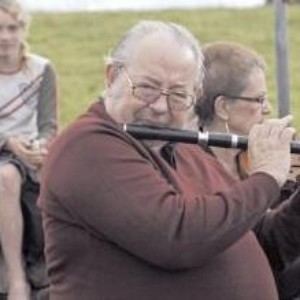
I would say - in a nitpickerly way - that this is open to debate; after all, if we can control our breathing, are we not controlling our diaphragms?
Despite what I said earlier, in the bigger picture I agree with this. What I did NOT advocate was frequency of breaths, although I realize that my earlier post might lead one to mistakenly come to that conclusion. If your embouchure’s right, even with COPD you can play quite long phrases (and I should know). What I am trying to convey is that until that fine day, where you take your breaths should not be a matter of random happenstance, but a real and functional component of performance, so in the trenches the depth of one’s needed intake will vary, depending.
I am glad if there has been some value for you in my contributions to the thread.
believe I’ve read that it is not possible to consciously control the diaphragm muscle. Is that true, Loren?
The reason there is sometimes confusion on this is that normal breathing controlled by the autonomic nervous system, well, automatically. No thought or conscious input required on your part, much like your heartbeat and digestion. That said, unlike the heartbeat and digestion, we do have the ability to override the breathing auto pilot and take over, to a large degree. You can’t stop or start your heart on demand, as this could kill you, and rarely could be of any value, however we wouldn’t be able to cough if choking, or hold our breath if submerged underwater without override control of our breathing. So we seem to have evolved, or been designed (take your pick), with misadventure in mind 
If so, how does one ensure that one is breathing deeply?
Here’s an exercise, start without your flute: Stand relaxed, but tall, even if you’re short  arms at your sides, feet about shoulder width apart, knees slightly bent. Relax your shoulders down and back, adjust your head level and inline with your shoulders, not jutting forward as if you’re looking at a computer screen. Look straight ahead and breathe normally.
How are you doing so far? No, seriously, are you actually standing comfortably with your head, shoulders, hips, and feet in the same plane? A mirror at the side is helpful for scoping this out. Mirror or not, many people will actually have a bit of difficulty standing in proper structural alignment, but that’s (mostly) a problem for another time, just do your best to stand up straight and relax.
OK, finally to the breathing. Nothing too fancy here, just stay relaxed, keep your shoulders down and imagine breathing DOWN, into your pelvis. This is the direction your diaphragm moves to draw air into your lungs, so that’s what you should envision, breathing down. Don’t let your stomach expand outwards as you breathe in. Tons of well meaning people preach the belly breathing thing, but seriously, Do. Not. Do. It. And here’s why: Your abdominal muscles and low/mid back muscles work together (in opposition) to stabilize your upper body on top of your hips, and you need to maintain a specific length/tension relationship between your abdominal muscles and your low back muscles in order for this to happen. Relaxing your abs while breathing in, which is what causes your belly to move out (not talking the beer and fast food here) destabilizes your mid-section, or “Core” as the kool kids these days like to refer to it.
So, just breathe in and down, till you’re full. Don’t start raising your shoulders or staring your chest to try to get more air in, you’re done when you’re done, it’s how the body works.
Hold it for a second, create your flute embouchure with the tiniest aperture that you can manage, think pin hole, and start letting the air out through the pinhole. If your aperture is small enough you may find yourself wanting to breathe before all the air is out of your lungs. Don’t worry, you’re not suffocating, that’s just your autonomic nervous system trying to reassert control - “Hello, you forget to breath??”
Take a couple of normal breaths then repeat. After 5 cycles of this, or when you have a good feel for breathing in and down, try getting the same full breath, but in a slightly shorter period of time, then exhale at the same aperture controlled pace as before. As time goes on, work on taking quick and quicker breaths, without sacrificing the fullness of the breath.
About exercise, I am sure I have read that William Kincaid, a famous American flutist of the past century, attributed his breath control to the swimming he did as a boy growing up in Hawaii. I’ve also been told that Catherine McEvoy swims regularly, and she doesn’t seem to be suffering any diminution of her ‘wind’ as the years march on. Chet
Swimmers get lots of practice overriding that the breath reflex of the autonomic nervous system!
Hope this helps.
Hey, I asked for it, didn’t I? What I meant by “passive” was exactly that: it relaxes. I’m not a native speaker of English, but this use of “passive” is not unheard of. Let me quote:
Expiration is typically a passive process that happens from the relaxation of the diaphragm muscle (that contracted during inspiration).
Source: https://courses.lumenlearning.com/boundless-ap/chapter/mechanics-of-breathing/
Considering I only speak one language, I’m not going to give you too hard a time about it
That exercise may be just the sort of thing I need. Thanks, Loren!
Happy to help 
The obvious next step in the progression is to do the breathing exercise with the flute, playing long tones and working on your embouchure to improve tone, efficiency, volume, projection, dynamics, etc.
And of course, tunes!
The issue of where to breathe within a tune is more about of musicality - phrasing and how you want to sound. I’d say listening to various players you like, playing tunes you want to play on the flute. Take note of where they take breaths, how often, and how that affects the overall feel. Take breaths at different intervals during a tune, or your playing starts to sound a bit…mechanical. There are lots of options once you have an efficient embouchure and you’ve ingrained getting quick full breaths so you aren’t constantly worried about surviving to the end of the current phrase. 
For the OP’s benefit and on the question of whether a high degree of physical fitness is required to play flute: Myself and Seamus Tansey have nothing in common regarding the quality of flute playing, but we’re both clear evidence of how far out of shape you can be and still get through a set of tunes.