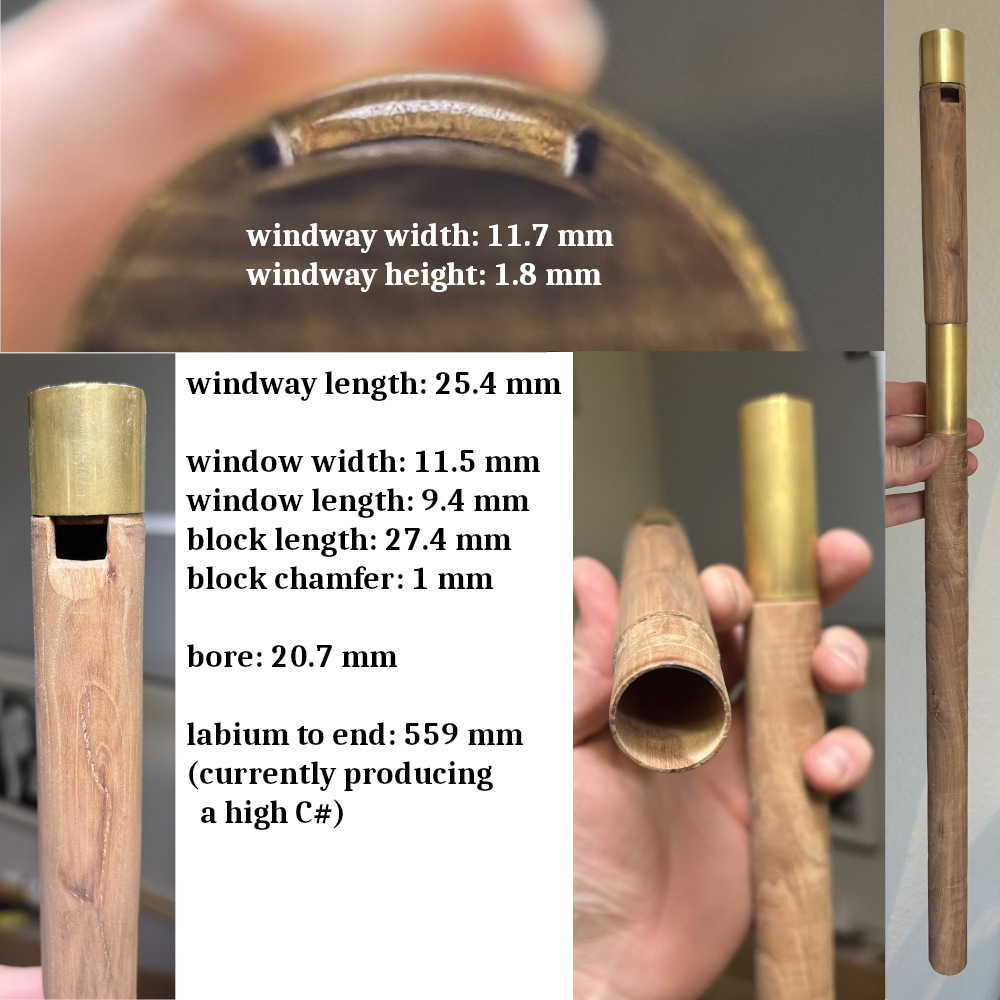
Had some nice hardwood fall from a tree during a windstorm, and thought I could make a low D whistle from it. Having some difficulty with voicing for the narrow bore – just not sure how to diagnose. I’m getting a somewhat breathy C# an octave higher than a low whistle (and a barely audible lower octave with very slight breath). Just curious if there might be any advice on making a narrow bore low D whistle. If all else fails, I can probably chop it down to make an alto G with more forgiving geometry. Just ordered a copy of Low Whistle Makers Anthology and have been looking through previous posts, but any help is appreciated!
Related topics
| Topic | Replies | Views | Activity | |
|---|---|---|---|---|
| Need advice for homemade low D tuning | 2 | 926 | March 24, 2002 | |
| Making wooden whistles - need some help | 6 | 6090 | May 18, 2019 | |
| Making greenwood fipple whistle | 4 | 1003 | April 8, 2010 | |
| Making a Low D whistle (yes, again!) | 1 | 690 | December 23, 2002 | |
| Making wooden whistles | 10 | 2050 | March 21, 2007 | |
| Whistle making question | 10 | 1963 | December 12, 2006 | |
| making a low D in bamboo - any "wish I had..." advice? | 2 | 642 | May 25, 2010 | |
| making a whistle from wood | 7 | 1846 | March 2, 2011 |