I was idly reading random old discussions on here about kwela-style whistle, when I came across a thread from a few years ago pointing out that some kwela players play with their lips partially covering the fipple to increase the volume of the first octave. Curious to see if this worked, I tried it out. I’m flabbergasted. While this doesn’t do anything to the volume of my Overton-style whistles, it has a dramatic effect on most of my other whistles, particularly those with curved windways. The most dramatic effect was on my Susato Oriole, for whatever reason. The normally-average bell note of the instrument turns into a booming sound loud enough to be heard over other instruments.
This got me to thinking: why don’t Irish musicians play this way? And then I quickly realized that playing this way effectively takes a lot of embouchure control and makes staying in tune very difficult, and I assumed that was the answer. You need to have your lip in an incredibly precise point, and the slightest imperfection will screw up the tuning or make the instrument squeak.
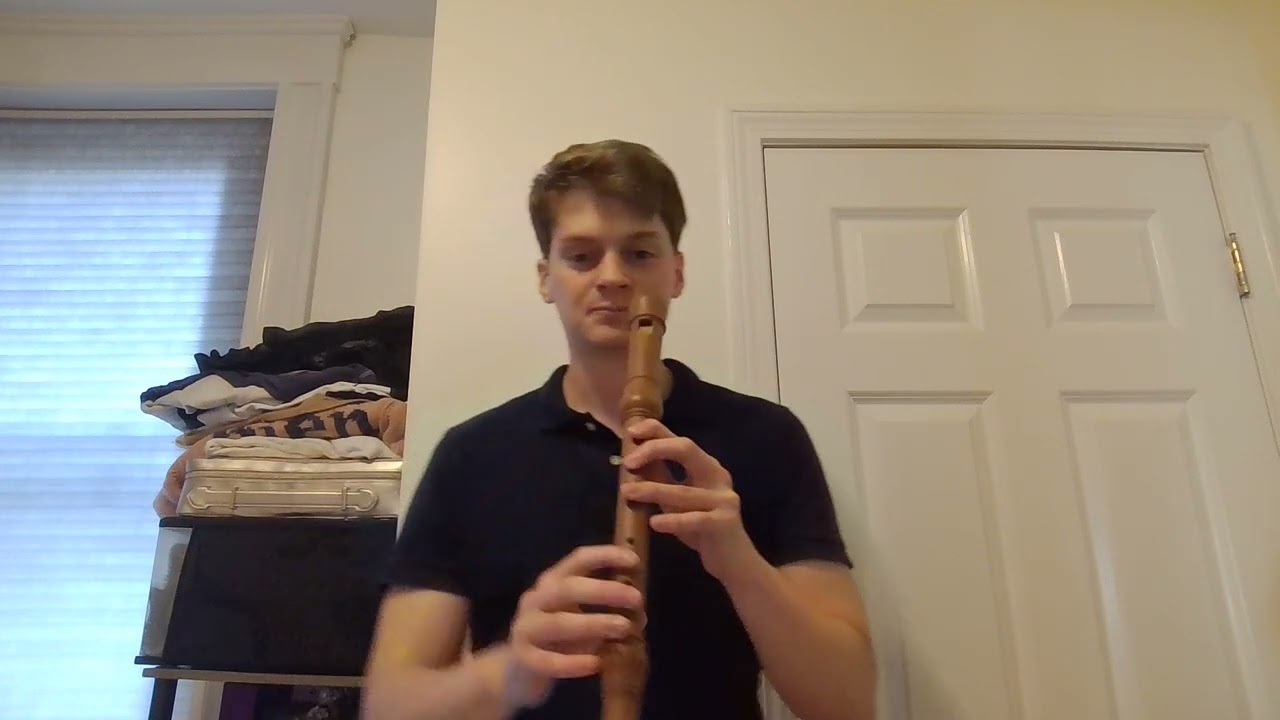
But then I had another idea: why not have a ring that goes over the head-joint, that can be pushed in and out with the lips to partially cover the fipple? Well, I decided to make one out of tape. And…my goodness. I can literally double the first-octave volume of my Oriole. It’s louder than a Chieftain. But if I want to go into the second octave, I just pull the tape ring back with my lips, and it jumps right into the second octave, no louder than normal. So…I can play louder in the first octave than in the second. And the best part is that, unlike pushing your lip over the fipple, the tape ring doesn’t seem to screw with the tuning too much.
Now, of course, I’m not going to be able to play anything fast with my makeshift tape design. But I’m sure that if I had the proper tools, I could make something that was more effective out of metal - something spring-loaded - that would allow me to tighten my lips or loosen them just a bit to move the ring up and down and partially cover/uncover the windway. Tightening your lips would push the ring just an infinitesimal amount forward, preventing the octave break and allowing you to “push” the bottom octave to its maximum volume (without going sharp! that’s the best part). Meanwhile, the second octave could be played no louder than normal when the lips are loosened.
Why doesn’t anyone do this? It might be a bit harder to play than a normal whistle, but man, would this be useful for sessions if you mastered it! I really wish I had the tools needed to experiment with this.
I assume you mean slightly covering the near end of the window as that has the effect you describe. You could achieve that by having the windway move (or perhaps just the top of it), but you could also couple that mechanically to the wedge to move it a lesser amount in the same direction as well in such a way as to correct the tuning at the same time. It would be easier though just to have a control to reduce the height or width of the windway to adjust the volume.
I don’t know that it would be a better idea to do the windway resizer thing. In the first place, I’m not sure what effect resizing the windway would have on the timbre, and it might screw things up; whereas, slightly covering the window seems to cause the volume to go up without screwing up the pitch or tone. Also, a windway resizer would seem to be a more complicated device than what I’m proposing, which could be accomplished using a metal ring and some springs. But most importantly, this is something you could do to ANY whistle. You wouldn’t need a custom whistle to make this work; just a spring-loaded device that sits over the fipple of your favorite whistle (similar to my tape device, but more sophisticated).
You can’t really hear the volume difference over video. But trust me, when I play with the ring pushed forward, low D, E, and F# are WAY louder. Low D probably has double volume. But of course, I have to pull the ring back off the window with my lips to reach the second octave.
Fascinating, never heard of it.
And they are doing it with their lips? You would have to take the whole mouthpiece in your mouth to do that… You’d better not have the urge to break
It does exist. Parks whistles, made by Gene Parks in Florida USA, has them on most of his whistle models. Infinitely adjustable volume, and it works really well.
Not really the same thing. My understanding is that Parks whistles have windows that can be adjusted, so you can change their volume in between playing. What I’m talking about is something that would change the volume WHILE you’re playing, and it would function by partially covering the front of the window (see my video).
I had a late-19th-early-20th century French flageolet that had this. There was a wire-mounted contraption that you could actuate with the right thumb that partly covered the window. It reduced the volume, but also flattened the pitch, as speculated above.
Very interesting! But that, too, must be different from what I was talking about. Because what I’m talking about increases the volume, while slightly flattening the pitch.
I would be curious to know how such a device would affect the second octave, specifically how easy it is to make the transition and maintain tone. I’m not a whistle player but for many years I made Native American style flutes (a fipple flute similar to a whistle) and makers would often make deep “chimneys” in the block on top of the flute, surrounding the whistle window. This allowed the player to push the flute on the first octave (and it was handy if you were playing outdoors–it acted as a wind barrier) but it means that the second octave was not as responsive, depending upon how deep and tall the chimney was.
The rule with woodwinds is that everything is a trade-off . I would expect there to be “side effects” from such a device. Do you notice any challenges or changes with the second octave?
Another approach might be to divide the windway into 2 channels, so the tongue or embouchure can choose to use one or more channels at any time, which decides how the wind aims. Use all the channels for regular playing and one particular channel if you want that louder result. Maybe one channel produces easier playing for the higher 2nd and 3rd octave? Or maybe that won’t work but getting that booming first octave is the main idea to work on. This idea needs experimentation. But if the full-sized windway is being partially blocked by embouchure or tongue to handle this airway alteration idea, a physically divided airway may make the mechanical splitting far easier to control, and not rely on any mechanical device on the whistle to be adjusted.
Would love to see some photos of what’s been done already, on this topic.
I’m a big fan of the Kwela style of whistle playing, and as Cyberknight points out, it really does make a huge difference to the volume and tone of the lower notes on a lot of whistles. But I think that the use of the lips directly is a key feature of the approach, not a defect. In essence, playing a whistle this way makes it more like playing a flute than a whistle, in that the player continuously micro-adjusts their embouchure to make the sound they want. It gives more expressive range and control.
I like that aspect, but of course it is pretty uncomfortable to do it using a conventionally designed whistle head, which requires a large amount of the whistle to be placed inside the mouth. Rather than trying to design a ring that is manipulated by the lips to cover the window, I think a better strategy for making this playing style more accessible would be to look at changing the configuration of the whistle head a bit to allow easier access of the lips directly to the window. I’m not sure exactly how to do this, but maybe a shorter windway, a rotationally different orientation of the beak, and smaller outside diameter of the head, would help etc.
The trouble with decoupling the lips from the window, by placing a device in between, is that it reduces control over expressiveness. It is kind of analogous to how those whistle-like windways that you sometimes cliped onto old fifes, to enable them to be sounded simply by blowing rather than forming an embouchure, don’t result in the same sound as playing it directly using the dynamically adjustable embouchure of the lips themselves.
Take a look at the Coda EDC - it uses a separate windway for each octave (with a couple of overlapping notes). It plays a lot like a tin whistle, but it covers two full octaves (including sharps and flats). https://codaedc.com/
If you make a windway shorter, the turbulence in it doesn’t settle down so much, so you get more chiff from it. Generation C whistle windway iw 28mm, while descant recorder (Dolmetch) is 45mm. I’ve been using lengths of between 30 and 50mm on my prototype whistles (quenillas with windways attached) and find the longer ones produce the sweetest tone due to the low turbulence at the exit, making them sound closer to recorders but while still having the character of whistles (perhaps because of lack of conicity in the bore). If you shorten it to get your lip nearer the window, you may get more hiss from it.
Something else I’ve found is that you can angle the windway differently without stopping the whistle working. Some angles make it harder to play the upper octave, and some hamper the lower one, but it leaves me wondering if you could enhance both by allowing it to swing to different angles while playing it, perhaps increasing the amount of variation you can put into the strength you have to blow it, though you’d still need to provide a compromise position for it for when you need to jump repeatedly between octaves at speed.
While we’re on the subject of revisiting month-old threads, I just realized I unintentionally ignored some questions on this thread, and I need to answer them to satisfy my OCD.
Not really. If you push the ring forward, it’ll make the second octave slightly flat, and blowing hard enough to push it into tune makes it a lot louder (which isn’t generally a good thing). But you can simply pull the ring back, and then the second octave plays like normal. The idea behind this design would be that you can change volume while playing, allowing you to play louder in either octave, when you want to.
Remember, the thing I’m envisioning would ideally be spring-loaded (unlike the makeshift thing I made out of tape in the video, which I was moving back and forth awkwardly with my tongue). You push it forward to get more volume out of the first octave, but if you relax and let it spring back, the windway becomes normal again and you can play the second octave a normal. It works just like kwela-style playing. The ring simply pushes forward and partially covers the windway when you want it to, but it springs back when you don’t want to use it.
It was! I’ve been getting more and more into Irish-style alto recorder lately. Really underrated as a trad instrument, if you ask me.
And while we’re on the subject of recorders, people actually have made recorders that have tongue-activated volume control keys. I believe some of them have complicated mechanisms that resize the blade when you depress a key with your tongue. What I’m suggesting on this thread would serve a similar purpose, but with a much simpler mechanism. Literally all you need to make this work is a ring that fits partially over the fipple (and is the correct size) and a spring. Then, voila, you can play the whistle kwela-style without needing to learn the precise and awkward lip placement needed for that style. Someday I hope to make a design like this!
 And the best part is that, unlike pushing your lip over the fipple, the tape ring doesn’t seem to screw with the tuning too much.


 . I would expect there to be “side effects” from such a device. Do you notice any challenges or changes with the second octave?

