I just got a .93 Goldie, and it came with some damage the seller on Ebay was pretty coy about. The beak is bent a little, and it looks like he dropped it. At least once. I’ve never played one, so I don’t know how it’s supposed to play, but it seems… fine? Should I be concerned? I don’t think I want to risk trying to bed the beak straight, but should I get a nail file and clean up the windway opening?
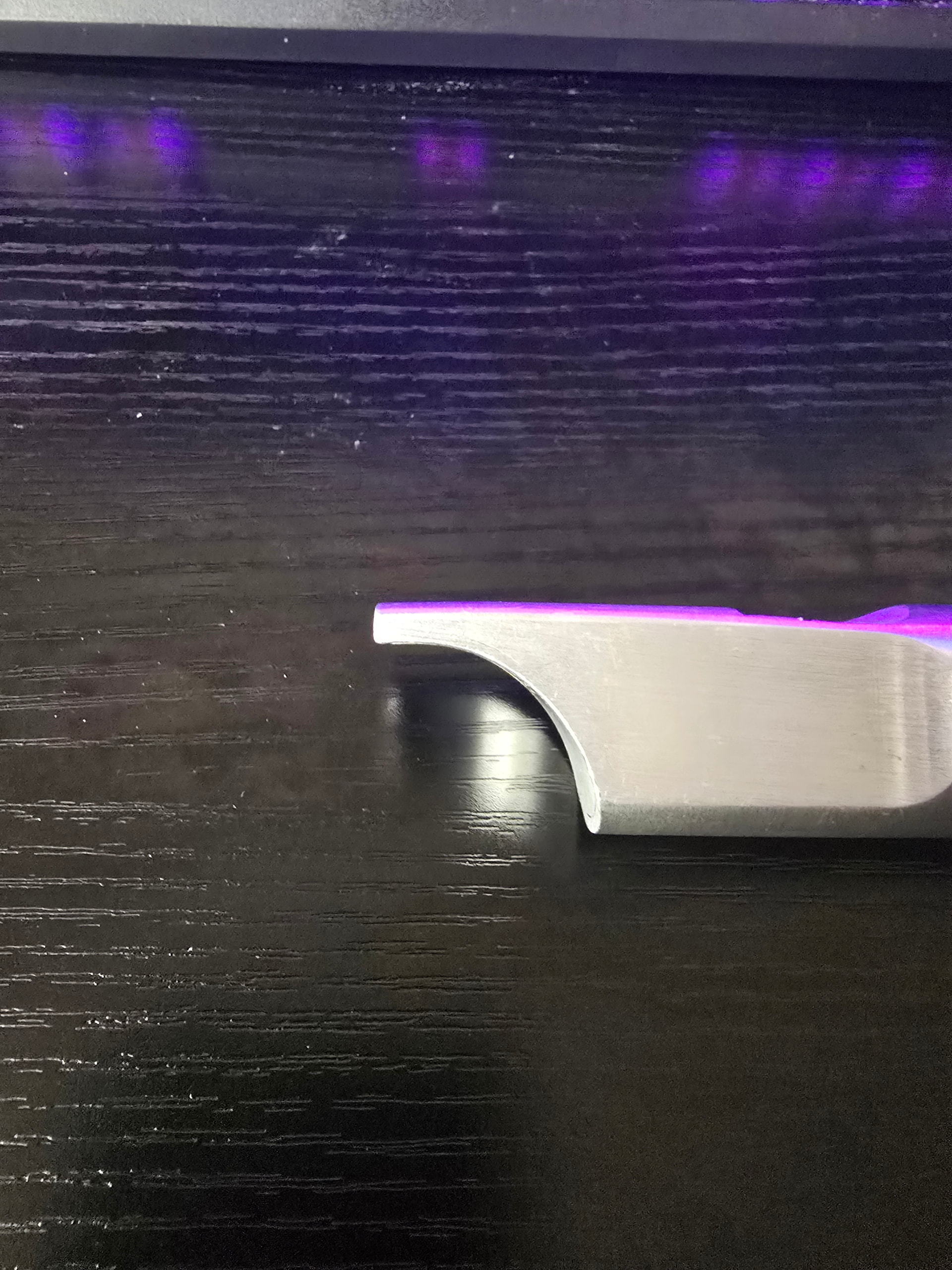
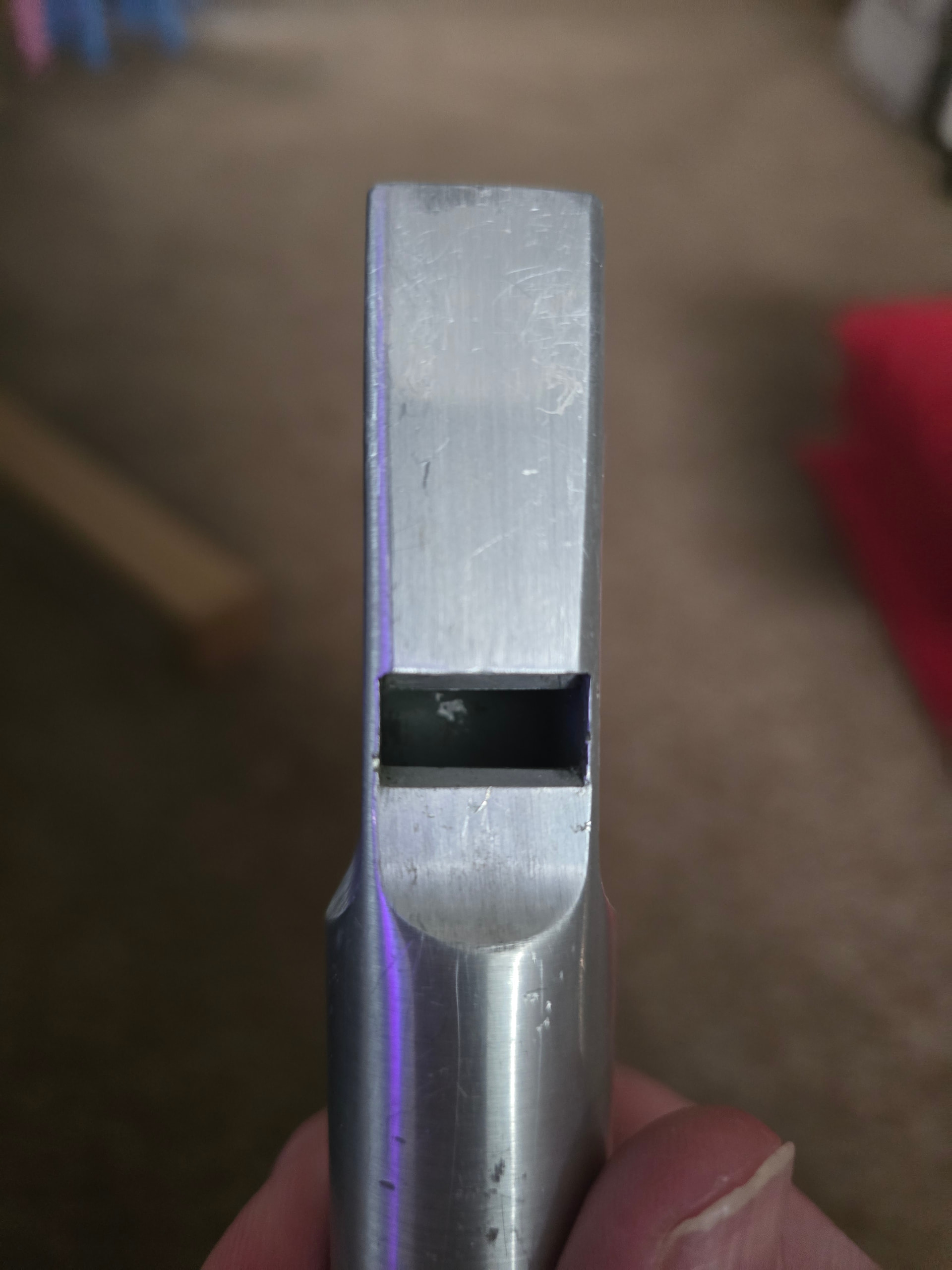
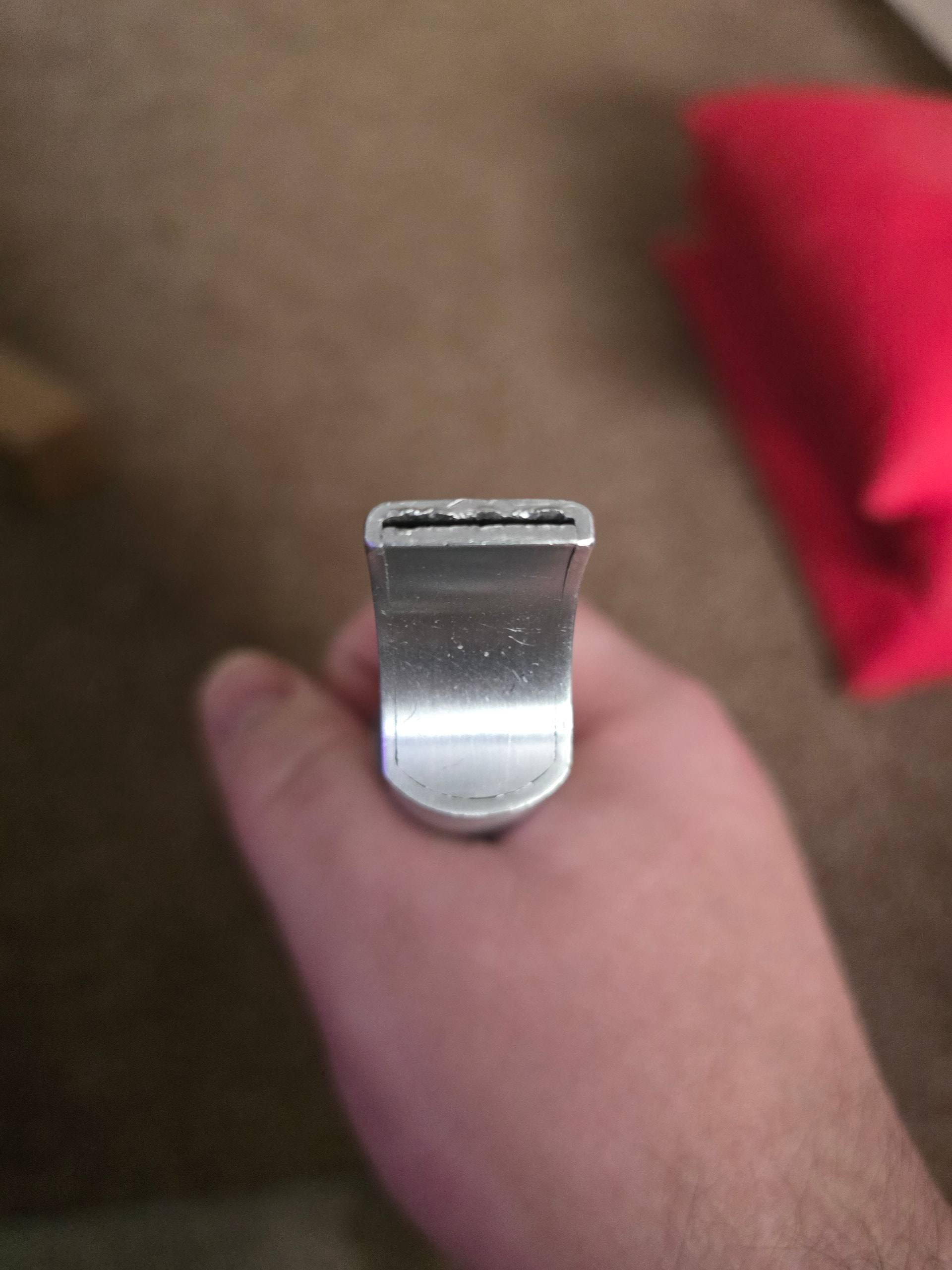
That is some ugly opening of the windway 
You could of coarse write directly to mr. Goldie and ask him directly.
As to my limited experience in making whistles, the opening isn’t that important as the end of the windway, so I wouldn’t worry too much about carefully filing the opening, but others may think otherwise
Good luck with that, I’m currently searching for low F Goldie myself…
Cheers.
2 Likes
I bought a used Low D, the mouthpiece was mangled a bit.
The seller explained that his dog had chewed it.
It played great.
It had so-called “ergonomic” holes in other words holes drilled all over where it was hard for me to seal them.
I sent it to the maker to have a new tube with in-line holes made.
Unfortunately the maker saw the damaged mouthpiece and decided to fix it…unfortunate because the whistle didn’t play as well as it did with the chewed-up mouthpiece.
4 Likes
But if I had your whistle I would probably use an extremely small file and get rid of those burrs.
Though it might play better the way it is!
2 Likes
That’s reassuring. I think I’ll do that, and leave it there. As far as I can tell, it plays just fine, and I can see why these are so popular. I think if anything, the slight bend in the beak could collapse the airway very slightly, making it a medium blower instead of medium soft (or whatever .93 is). That’s no big loss, and the labium is undamaged.
1 Like
Wow, those look like pry marks around the mouthpiece opening, as if someone stuck a flat head screwdriver or similar into the windway at multiple places, and pried up and down in an effort to straighten out the beak or more likely open up the windway after it had been bent in.
As suggested, you could leave as is if you are happy enough with how it plays. Then again, you’ll never know how it should play.
As someone who has seen the result of many “home repairs”, I’d suggest not taking a file to the mouthpiece unless you already have significant experience with relatively delicate hand filing, and of course the proper files for the job. If you must attempt modification, at least consult with Colin first and get his advice before proceeding, he and Brigitte are wonderful people who are generally happy to help whenever they are able.
Despite having repair skills myself, in a case this, I’d return the whistle to Colin for repair, knowing I’d get it back in pretty much new condition. I’d chalk any cost up to the learning experience that one really needs to get detailed photos prior to purchase when buying for an unknown/untrusted source. I’ve noticed EBay sellers have gotten particularly bad about disclosing damage, in recent years.
2 Likes
Interesting being .93 sort of halfway between his .97 and .90
The Goldies I got on loan were
.97 “standard soft blower”
.90
.87 “medium blower”
.85 “medium hard”
.80 “hard blower”
My understanding is that Colin can do in-betweeners to order.
1 Like
Mine is a .93 too.
I think I’d use a narrow file and clean that up.
2 Likes
I agree with Filip that the exit end is far more important! I would not hesitate to file with smooth fitting file that which is an obstruction at blowing end. I use finger nail files for that type of repair!
1 Like
Definitely ask Colin before you try anything. However, depending on where you live, shipping to and from Colin might be prohibitively expensive.
Getting a diamond file thin enough to fit into that windway entrance might be difficult. However, aluminum is soft and you could probably cut that burr away with a new, sharp craft knife blade. Hold it parallel to the roof of the windway, and sweep the blade across. I’ve done this many times while making my own whistles when shaping the windway created just such a burr. With brass, it was very easy, stainless steel not so much.
1 Like
@gruevy I wonder if Colin would be willing to do a Zoom or FaceTime video call with you, to talk you through filing or whatever kind of repair work he recommends. That way he’d have a visual view of the headjoint/windway and perhaps could guide you through it more effectively than trying to explain it over the phone. Might be worth asking.
1 Like
1 Like
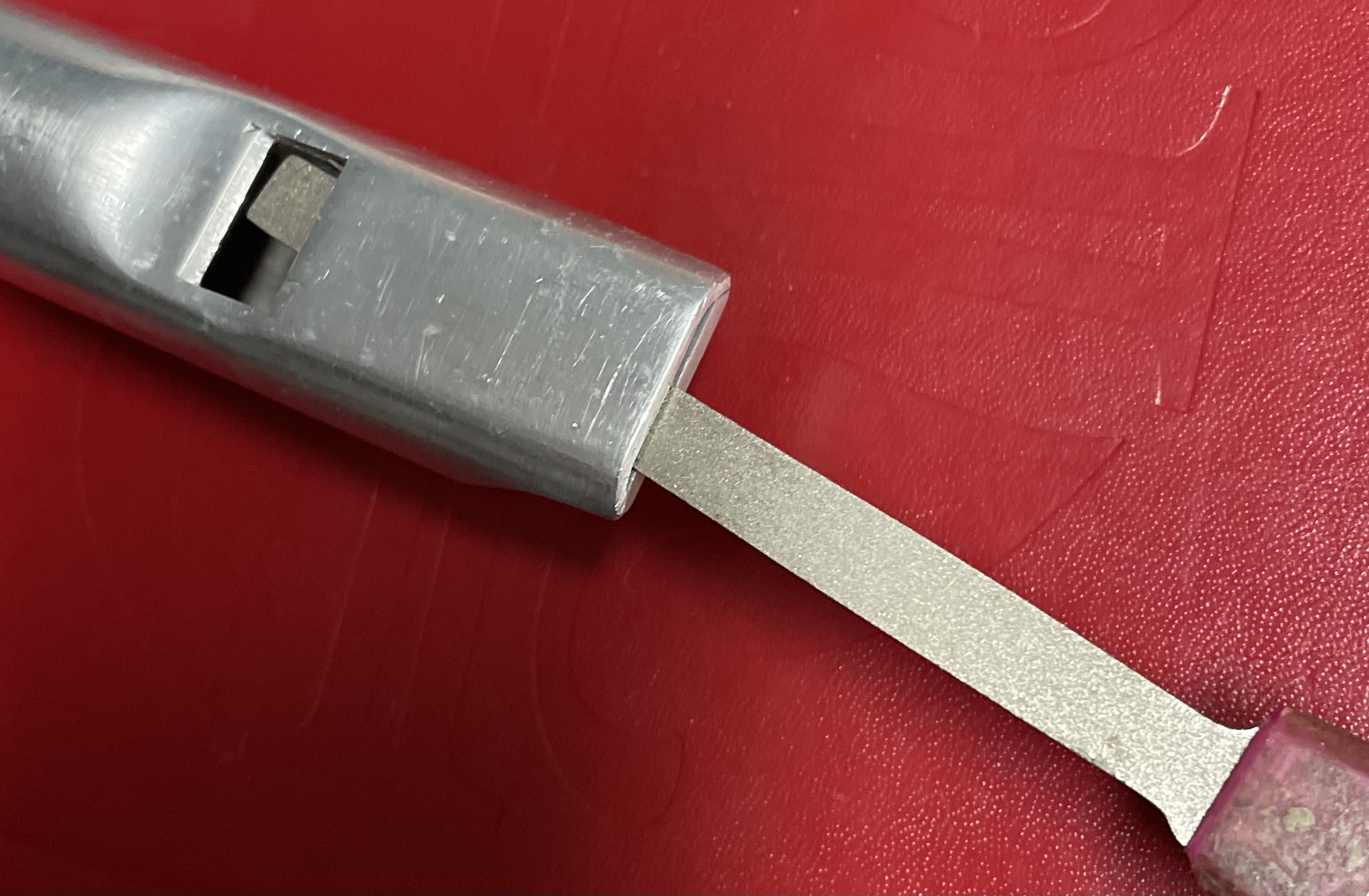
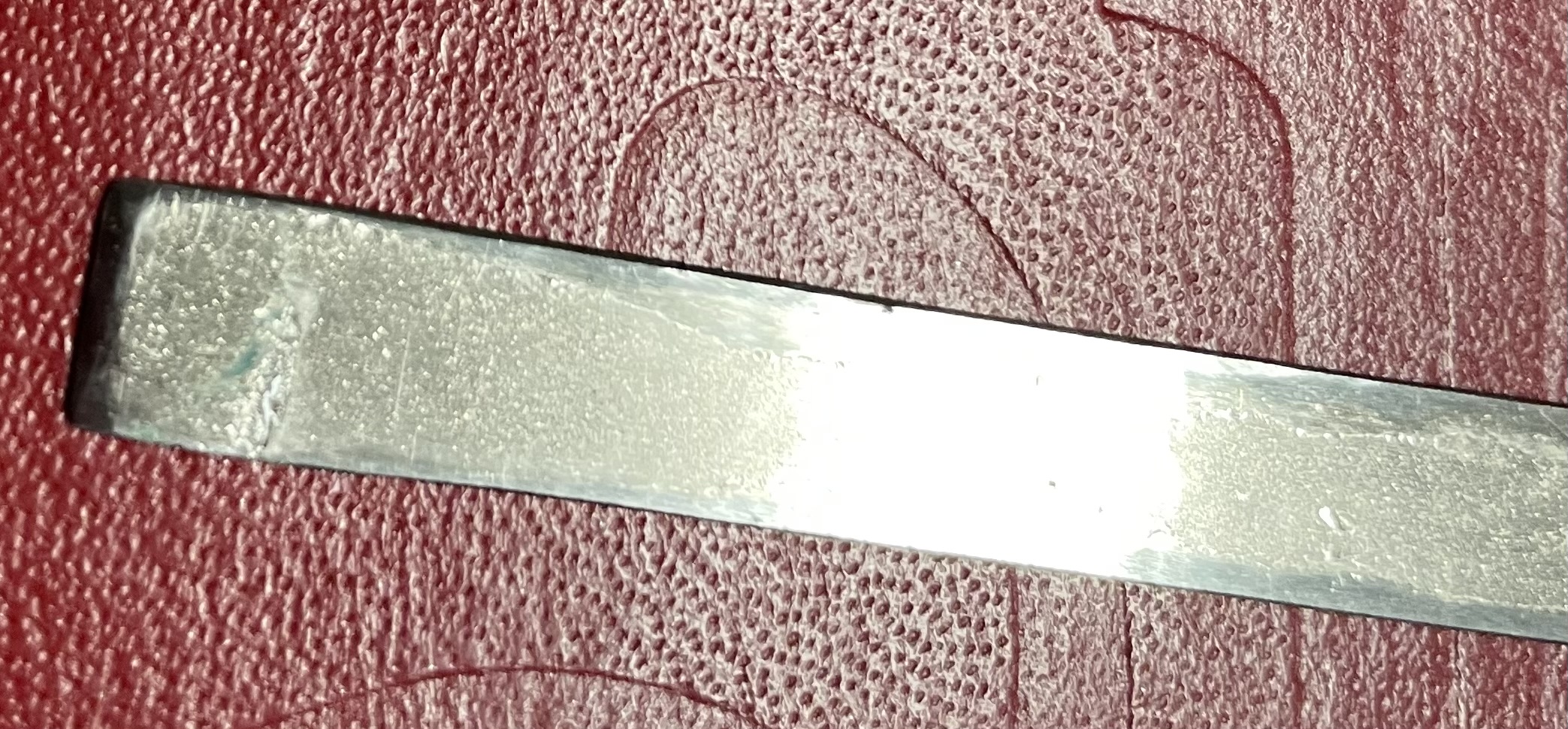
Wow, look at that labium edge, absolutely destroyed from someone running a file end into it. A good illustration of just one reason why filing through a whistle windway is a bad idea if you don’t know what you’re doing. For those who feel they must, at least use something in the space between the windway exit and the labium to keep the file from running into the labium. A soft piece of wood could work for this style of whistle. Protecting a the labium of a wooden whistle is more difficult.
That said, if any part of the beak has been bent, filing through a curved windway is likely to cause other types of damage within the windway. In the OP’s photo you can see the blowing side of the block is misaligned with the whistle beak where bending occurred. This would cause a constriction and misalignment of the windway, another situation where filing through the windway is inadvisable, at the very least for the inexperienced.
2 Likes