Sad 
Very sad 
Sad
Very sad
There is actually some discussion about what is meant, and even Mr MacLean admits that there is more than ONE day “The music died”.
May God rest their souls. That was an awesome clip!
I brought back a lot of memories to me.
Thanks for sharing this!
That’s interesting. I wonder why he chose not to write it like that if that’s what he meant. He could have written: “The DAYS the music died.” or “One of MORE THAN ONE day the music died.” But he didn’t, instead choosing to write “The DAY the music died.” He probably knew that even if it wasn’t factual, it at least SOUNDED better. Sometimes songwriters have the ability to know these things. Ya know? 
You’re welcome! 
There is a system of thought, that I and some of my music-nerd aquantinces and professors share, that states the worst thing to have happened to the music industry was the invention of recording. One could argue that to be the day the music died.
I’m not sure if I agree with that or not, but it’s an intriguing theory. Would you mind expanding on that for me?
Well the main argument is that once recorded music was produced it decreased the demand for live music, both on the radio and at social functions, therefore making it more difficult for musicians to make a living. Before recording any joe with a guitar could conceivably make a living as a musician, but now one needs a CD (not to mention websites and the like) if they hope to make any significant amount of money, and any notoriety, from their music.
OH this is good!
Where do I begin?
First, the tragedy of any artistic life lost before it s time. Mournful. Sad. Agreed.
(I will not mention Mozart, Purcell, or Schubert anymore in this thread. )
Second:
IMO the worst thing to happen to the music industry was not the advent of recorded sound; but rather, that unschooled, untrained musicians with no artistic merit became top sellers.
I would argue the fact that ‘any Joe with a guitar’ who got it into his /her head that they could make a living as a musician without formal training has been far more detrimental to the carreers of real, trained, talented musicians than any recording for sale.
Teenage angst packaged by slick producers sold the 60’s, not talent. (Blue Cheer? Please.) Unfortunately the formula still works today.
The process for a successful musical career involved, historically, certain steps: first, apprenticeship with a master, then maybe work through the Church, or then by Royal patronage, or then by introduction into certain circles by an impresario. Certainly traveling musicians and later, civic guilds offered a possible gate into the craft, but mainly these were family affairs. It’s not until the 20th c where we completely bypass these mechanisms for vetting, fostering and promoting talent. “American Idol”’s big sell is that ‘yes, there IS a way to do this, and MAYBE you can do this too’. I don’t hear many placed, well-pitched chest voices standing in front of Simon, Paula, & the other guy.
I watched ‘Help’ last week (or tried to) and couldnt help thinking “WTF did I waste so much time on this rubbish? I cant stand listening to the Beatles anymore. Worse yet, the music was treated subsequently as ’classic’, ‘timeless’ ‘meaningful high-art’ (thanks to Wilfrid Mellers)
AS IF a sudden modulation to the flat submediant in back-to-back double periods has never been heard of before. (Hello?) I tell you , they were NOTHING without George Martin, as anyone who’s heard the countless hours of stoned out-takes from Abbey Road can testify.
It’s the PT Barnum factor at work.
Except for a certain segment of the population, what possible weight does the meaning of ‘American Pie’ hold for today’s global music consumer? A news clipping set to song, at best. The typical music consumer today is equally as removed from the Holly tragedy as they are from the Glen Miller tragedy.(AKA ‘The day the music died’, for a previous generation.)
Third:
Recording has a whole list of benefits for the entire industry, which in truth barely outweigh the un-beneficial aspects. I can reach 5000 audience members on You-Tube, but only have played for oh, about half that at one time in person. Musical carreers flourished during the advent of recording, Operatic divas and Conductors benefitting the most in the beginning. Most trained musicians were able to avoid having to do classroom teaching to make ends meet up until around the mid-70’s, when the ‘Lawrence Welk’ & Guy Lombardo crowd became too old to go to stageshows, attend concerts, dance halls, regular weekend balls, you name it. By then the big draws were stadiums with 4 or 5 musicians, 3x as many production assistants, and 10,000 in the audience, every show.
This is when it got harder to make a living as a musician: how can a quartett playing for the country club social compete with that? Not because of the availability and ease of purchasing a recording, but because all the mechanisms of production (live and studio) became geared towards big sellers and mega-performances. Touring acts involving a lot of musicians got more and more expensive; touring acts with a rock quartett were moneymakers.
Recordings have spoiled us. In the many many many, many, many, cases where the talent was on the control room side of the glass, production tricks have not only made superstars out of led lights; but worse yet, have fundamentally changed the perception of dynamic range for the untrained ear. Some expect the live show to sound like the CD, and are dissapointed when it isnt; still others expect the CD to sound like the live show and are let down when it dosent. The constraints of early recorded media required a steady, complex waveform with equal frequency response and little or no dynamic change. Rock was much better suited for this than Mahler.
Thank you! Thank you!
And (god help me!) all these years I’ve been actually liking the Beatles?
I’m ashamed of my appalling lack of erudition.
I will hide under a rock.
I will take Norwegian Wood with me, on an iPod.
I am a troll.
( sorry Chas…don’t let my tasteless humor, which is only matched by my musical primitiveness, inhibit the free expression of ideas here.)
its cureable. there’s medicine now.
 not at all!
Trolls live happy fullfiling, carefree lives, I hear, at least in Norway.
dang. it seems my dad must have been right. he always said the beatles made noise rather than music.
he also said that kids didn’t understand how to dance, and that small cars like the beatle (there’s that word again) would never last.
he also proclaimed the gizmo engineers and inventors were tinkering with was no match for good old human intelligence. i often wonder what his thoughts would have been about using that gizmo to create a world wide internet.
What a crock! What recording proved was that even a poor black guy with a beat up old guitar that could never hope to get into a fancy whitebread music conservatory could outshine a bunch of “trained musicians” in their silk corsets by a factor of a million. It cleared the way of stuck-up , no-talent music snobs and the crap they tried to foist off on audiences for REAL music that people were thrilled to finally get a chance to hear.
The snobs have been whining and back biting ever since, as they continue to sink further and further into the obscurity they belong in.
Keep on rockin’ me, baby.
djm
No offense, but your dad must have really cleaned up on the stock market! 
Seriously, I was just joking. I’m sure he was a fine gentleman. I couldn’t resist because no one really knows if something is going to be a flop or if it will take off like gangbusters, or for how long the run will last.
Have a great day!
Bubbie
So you agree, then ,
BUT: jazz and delta blues artists had their own audience,(AND their own snobs, BTW) many of whom couldnt afford records, let alone victrolas. They HAD to go live to the show.
Rock’s dead, djm. The Who said so.
now, having digested my chinese dinner:
C’mon. Rock music just isnt..substantive..
and believe me, I lie not: Ive heard and listened to the LENGTH and BREADTH of it…
*Donovan jamming with the Beatles in Rishikesh…
*Gentle Giant 's live album
*The rest of 'Iron Butterfly’s albums
*Cream’s commercial for Fallstaff beer…
*Lothar and the Hand people…
from “The A’s” to “ZZTop”…
tho it occupies a precious soft spot for many of you:
face it: It’s disposable.
“Ode to Joy”, for example, (and I agree - it;s a cheap shot)
this idiotic simple tune hits a universal human nerve…
Most 60’s rock stars couldnt hit a universal human nerve if it was rolled up in a smoldering ez wider and handed to them on an alligator clip.
and as a parting shot, ladies and gentlemen,
I give you the wizard of whining…
the Poobah of pi$$ & moan…
the Big Mahoof of btcing…
the consummate complainer…
the king of kvetching…
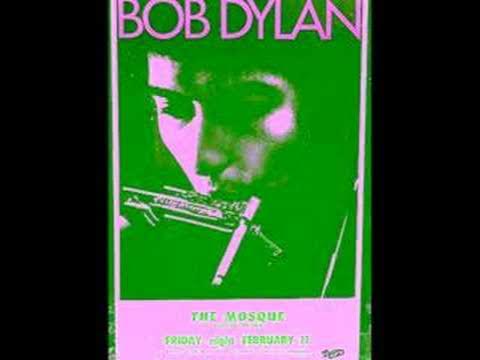
BOB DYLAN!
“Bob who?” (my 13 year old niece says). “Was he big, or something? He cant sing. Ew.” 
The Who may be dead, but I very much enjoy some of the new stuff coming out on my radio every morning by new, young groups.
There’s another phenom started by the availability of recorded music: collecting recordings of the stuff you like. I have access to historical recordings, like the wax cylinders from a hundred years ago. More people are recording more styles of music every day. I am always open to listening to new things, though I may discover that I don’t like some of it. It is the media of recorded music that makes so many styles of music and so many rare instruments available to me, like ITM and UPs, that I may never have had an opportunity to listen to otherwise. There’s little enough of it around here, and really good pure drop stuff, none at all.
Pshaw on “trained musicians” say I. Let the people dictate what they will have, and let recorded music bring it to them.
djm
OH, I agree with you 100% if youre saying that recordings are, in and of themselves, generally, a good thing;
My position is threefold:
1.) The ‘recording artist’ is a creation of production machinery which is dictated by saleablilty, and not talent; therefore this is a detriment to not only professional musicians, but speaks to the LCD factor of audiences (an insult to audiences, really) and impedes the general development of regional styles.
2.) Although many factors preceded the era in question (piano rolls, rack-job knock-off’s, etc)
the most heinous examples of ‘no-talents’ becoming driving forces in the music industry occured in the 1960’s. When the attention of production machinery focused on selling these acts in large numbers, this presented a greater obstacle to the working musician than losing gigs due to audience buying the disc instead.
3.) Bob Dylan, at his best, sounds like a constipated central red-state chicken truck driver with a deviated septum. Sorry, there’ s just no two ways about that.
Bull pucky. The RA was created by musicians. The RA does not lead anything. The RA is crafted, albeit for business purposes, to meet audience demand. No demand - no RA. And for every crafted RA you ever see or hear of, there are a hundred that never make it. Because of the RA? No, because the musicians and business people who created that RA missed. <oopsy!> The RA may have been crafted for business reasons, but it takes “trained professional musicians” to create a RA.
More bull pucky. You are clearly unaware of the crap that came out in the 30s, 40s and 50s. The prefabricated RA was not a new creation in the 60s. Hucksters had invented the model long before. You should have heard the bad-mouthing that was going around when the prefabricated production creation named Frank Sinatra first came out. But like any other RA, some hit and stick - maybe far too long, but they do stick.
So what’s your point? 
Can’t stand him either. Don’t care for most of his songs.
djm
I;m not really clear what you re saying here… ‘created by musicians for business reasons’…THIS IS ‘production machinery’. I’m not really convinced all RA’s are fostered by ‘trained musicians’, either. More likely the creator is a producer with a certain ‘sound’ in their head which he/she knows will sell. Odds are pretty slim that producer studied 5th-species counterpoint, OR even ever sucessfuly tuned up a guitar by ear.
Look at ‘Rhianna’. Moves like a stiff Barbie, lip-syncs worse than Milli Vanilli. If she;'s studied vocal production seriously, it dosent show. What’s she got, a 5 piece backing band? Betcha the synthe track’s all sequenced. She’s on network TV, selling plenty of seats and discs. Is there a NOLA groove to it? No. Does it have a kind of Chicago-slick-feel? No. Is it even Hip-hop? Not in my book. It’s simply an LCD formula, the casting couch at its finest.
oh no i’m not..I just didnt want to drag this down even further aesthetically by delving into the repertoire of the ‘Harmonicats’ 
My point still stands, that, even though junk has always been around, (as you ve pointed out, also) There were enough filters in place to keep it in the vaudeville circuit, B houses, the discount bin, etc.
Its not until we get the production situation in mention above, that we get a deluge of ‘crafted product’ based on a saleable demographic.
These two factors combine to present a greater obstacle to quality , original acts than the prevalance of recorded media.
IN FACT, downloadable media presents a greater opprotunity to reach audience for today’s performers (in any genre) than the old-fasioned record-sales thru a production company recipie.
The next real hurdle for professional musicians (literate or not) is to put the ‘Rhiannas’ on the same equal footing, through the internet, as real talent. Already here its looking like the same old “big money vs. any & all comers” issue…
Well, we’re in agreement on one thing at least!! 

I can’t imagine why you are dragging Rhianna into this. She is just a kid selling youth and sex and a steady dance beat. I don’t know of anyone who’d confuse her with musical ability. She sells what there is a market for.
Let’s face it, if there is no market for the output of your “trained professional musician” then one must seriously question the value of such an entity. If people want to listen to whatever these knowledgeable experts of yours have to put out then nothing will hold them back. Have your wunderkins put up a vid or two on YerTube and let the CD sales fly … or not.
djm
But this is another issue entirely.
Can we question the value of pursuing art?
Does art have any value for our society if it dosent sell?
Are you saying that all music conservatory students should pack it in , if they dont get catapulted to international stardom at the end of their MM?
Are you saying that all artistic skills that can be taught, and learned, are worthless, if not presented in marketable form?
Should the skills even be preserved, at any cost?
These are much deeper waters, amico.