Not strictly irish flute I suppose, but I’m curious about the typical arrangements of headjoint corks and crowns in wooden and irish flutes. I’ve been playing boehm-style silver flutes for a while and farted around on bamboo flutes, but haven’t really much played or owned a wooden flute, especially anything nicer.
Do Irish/baroque flutes generally have a headjoint cork or do they use some other kind of arrangement to control the space upstream from the embouchure hole?
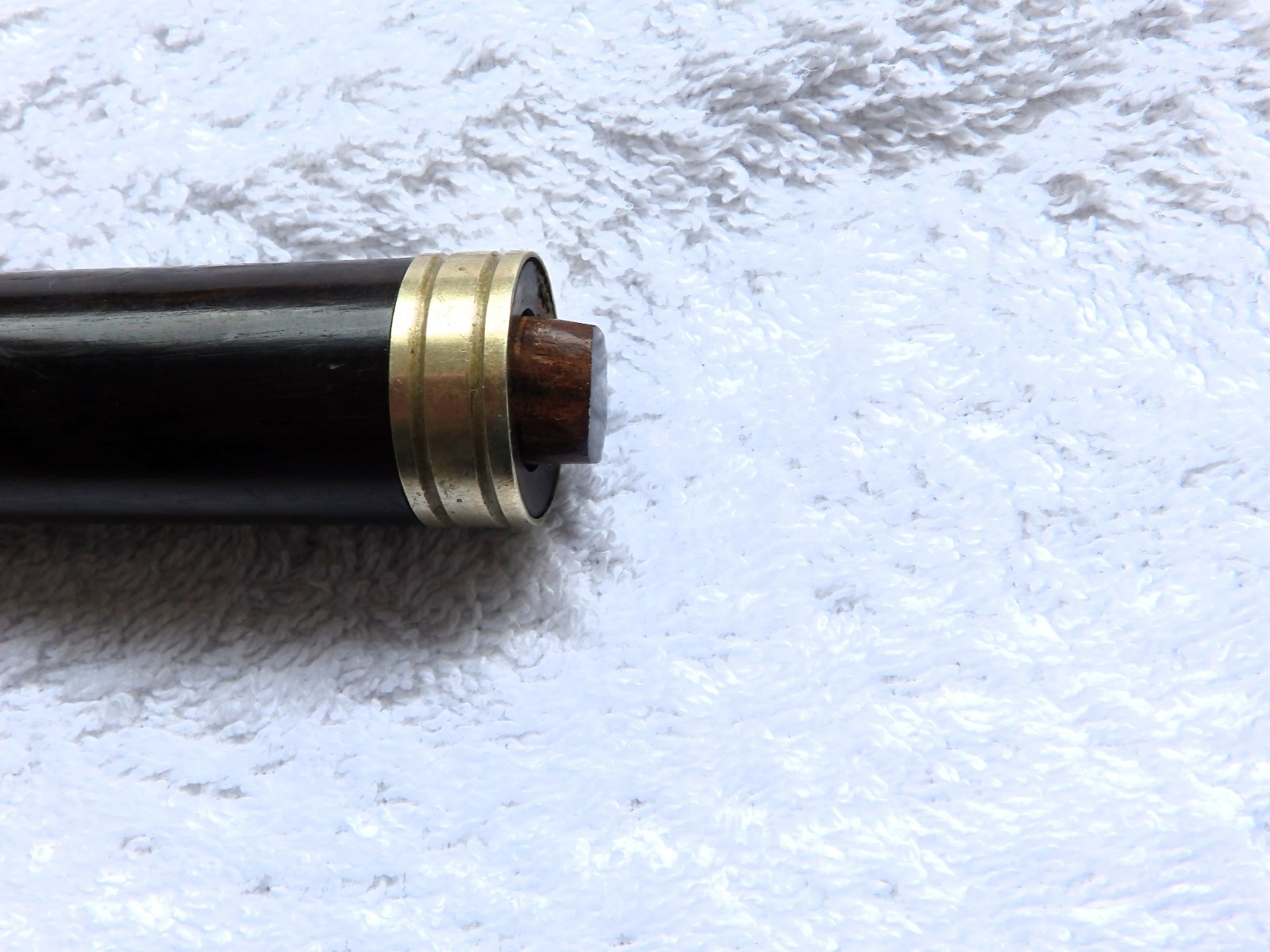
This came up for me because I have the option to pick up an older wood flute (and have been wanting to explore baroque and irish flutes generally, but no specific musical goals really) from an irish maker which appears to have a damaged crown - I’m not so concerned about the aesthetics, but I want to be reasonably certain I can get it into playing condition.
This first pic is of the crown end of the headjoint of the flute-to-buy - there’s something stuck in there - is it likely to be whatever was originally intended to plug the headjoint?
This auction page shows what I believe to be a more complete version of the same model flute which has an obviously nicely rounded headjoint crown: c1860 George James Butler London Rosewood Wood 6 Key Flute : Zen Cart!, The Art of E-commerce
Does it seems likely that the issue with my potential flute is aesthetic? I’m totally comfortable carving a new cap to cover the stump whenever I get around to it.
Also - how does one set the headjoint cork/plug location on an older flute? Start with embouchure - diameter then experiement?