Embouchure requirements on a whistle?
Why, yes.
Embochure just means how one uses the mouth, lips, and facial muscles to control the sound.
The Irish whistle is more demanding than the recorder in this regard because the recorder has a preformed airway that is more forgiving of a sloppy embouchure. The airway on the whistle is more open.
You may be thinking that only flute players have to deal with embouchure but all players of wind instruments have to deal with embouchure.
Yes, higher octave notes are still reached by overblowing on the recorder, like on the whistle.
I am not sure you are overthinking or completely misguided about playing the (high) whistle. And I say that as someone with a fair bit of mileage on the whistle.
You’ve not said anything about what kind of music you’re wanting to play. I would agree with others that you’re looking for the whistle to be fairly, well, un-whistle-like, so maybe an alto recorder might suit you better.
But be warned that recorders are looked down on by The Guardians Of The Tradition in a way that whistles aren’t, so if at some stage you do end up wanting to play traditional music with others, the unfortunate truth of the matter is that you’ll need to be (a) fairly thick-skinned and (b) a good deal better player than you would need to be on whistle, to get accepted.
Have a listen to Finn Collinson to hear what can be done though.
Good luck
I found it an easier way to get started. But it was time spent not working towards the warm, rounded sounded of a flute - on a flute. I can now play it much more quietly than a high whistle but I’m told that when played normally the sound carries round the house more than a high whistle.
I mentioned that I wanted to play Baroque music in a previous post.
I’m not looking to play in sessions in a pub, so I’m not worried about being judged.
If I get to a point where I want to play in an ensemble, I’ll find a Baroque ensemble.
I do think that the recorder is looked down upon because it is the instrument given to school children.
There is a lot of great Baroque and early recorder music out there.
I’m not surprised, flutes can produce a lot of sound, like violins.
I believe the violin was the first instrument recorded because it could be easily picked up by the crude microphones of the day.
At one point, I thought I had produced a quiet room for practice in an apartment by hanging lead lined sound curtains, etc only for a neighbor to ask me on the elevator if I played the violin. When I apologized, she said she liked listening to me.
I am excited about the Alto recorder. I think it’s a better fit for me.
Not entirely true, Michael Coleman and several others of his generation are known to have been annoyed they had to play Stroh fiddles for their early recordings, pointing the horn of the instrument to the horn of the recording device.
You could do worse than listen to Dordán to see how a skilled whistle player tackles baroque music. And decide if you like that.
Here’s one:
Actually, the first recording was of Edison reciting Mary had a little lamb.
The first recording of music was of piano and cornet
Are we going to play silly buggers?
I was obviously pointing out the fiddle was not loud enough for early recordings so the Stroh fiddle was used instead. You’re now only contradicting your own statement.
I’ll be honest, I don’t like it much.
I prefer this simple rendition of, say, the Minuet in G,
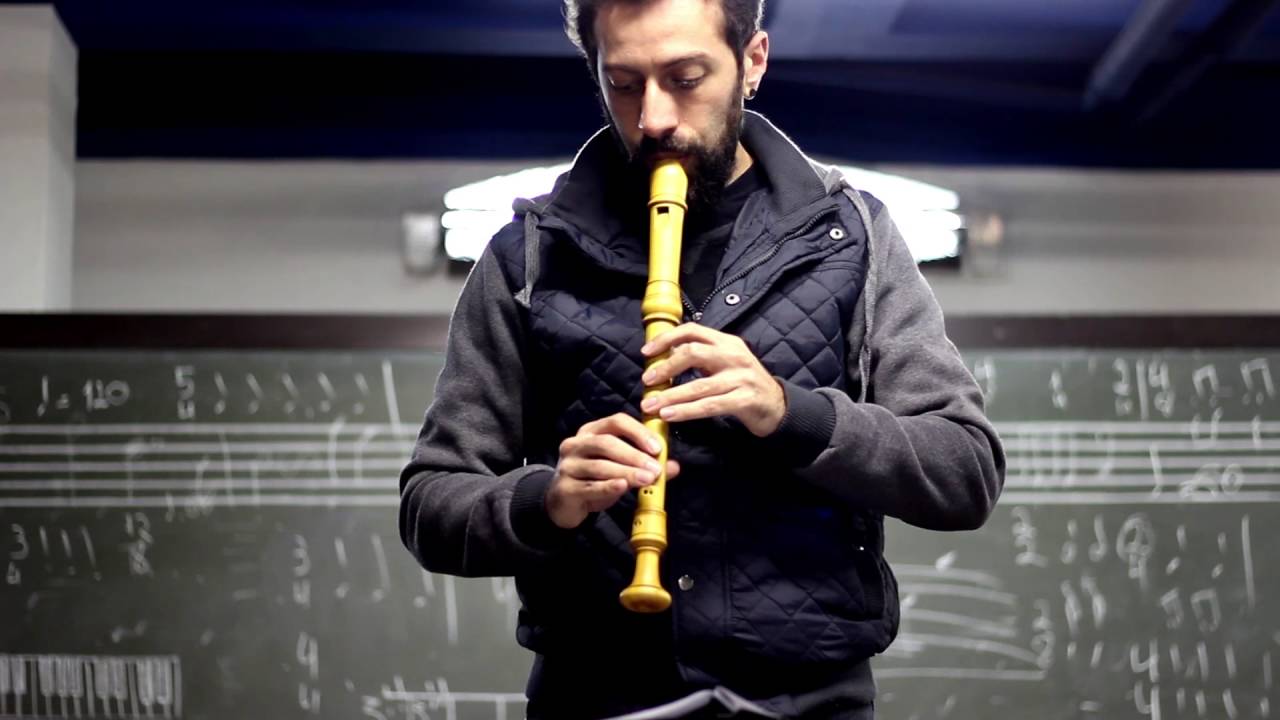
The alto recorder was a Baroque instrument and so it sounds better to my ear for that music.
Vivaldi and Händel wrote concertos for the recorder.
If I want to play Baroque music, I think the Alto recorder is a good instrument for that.
A fiddle with a mechanical amplification device is still a fiddle, so I’m not wrong in saying that fiddles were played on early recordings.
I don’t think there is a chronological record of which instruments were used to record when.
The piano’s soundboard was a big enough amplifier to be recorded.
Probably not! Morneauxs are awesome instruments!
But studies on woodwind instruments indicate that this difference is too minimal for most people to notice.
That said, what Mr. Gumby said is certainly true: the fact that a whistle is wood can certainly indirectly influence its sound, insofar as it influences the whistle’s shape.
Because I want to play in sessions, and a whistle that’s too quiet doesn’t add that much to a session, so it isn’t very fun to play. I’d rather play something that contributes to the music.
You could’ve asked the same question of people who bought the first Pratten flutes. “If your environment is too noisy for your run-of-the-mill traverso, why bother playing at all?” Bit of a silly question, if you think about it.
Well, if that was ever the case, I can assure you it’s not the case anymore. Morneauxs are not loud whistles at all throughout most of their range (and neither are the modern Sweethearts I’ve tried). I suppose they’re slightly louder than something like a Sindt or a Killarney, but they’re nowhere close to the whistles we generally think of as “loud,” like Kerry, McManus, Overton, Susato, etc. Even a Copeland is significantly louder than a Morneaux, in my opinion. And according to my decibel meter, my Morneaux is slightly quieter than one of my Feadogs.
I also wouldn’t describe the tone as remotely edgy - quite the opposite, in fact. Much less raspy than my Feadog, for example.
I have a high D Morneaux and I love it. The intonation on it is quite good. It’s got an extremely pure sound with very few overtones, making it on the quieter side. The second octave is very easy to play and not piercing at all. Overall, I’d say it’s pretty good for beginners (but not as easy to play as, say, a Clarke Sweetone).
The one thing that’s slightly annoying about it is that high B is a bit piercing - which is strange, because none of the other second-octave notes are. I solve this by playing high B with recorder fingering (XXO XXO) and it sounds absolutely beautiful on a Morneaux. But if you don’t want to bother with this (which you probably don’t, as a beginner), you are going to have to put up with a slightly piercing high B. That’s just how Morneauxs are.
Morneauxs definitely don’t sound anything like miniature wooden flutes. Flutes (and piccolos), if anything, have a more reedy and overtone-rich sound. A purer sound with fewer overtones actually sounds further from a flute.
You can check this with a spectrometer. Flutes and piccolos have a very dominant second partial, which is what makes them sound reedy. Whistles with a “pure” sound (such as Morneauxs or Sindts) have much less dominant second partials.
The sound of a Morneaux is actually slightly closer to a recorder, which has basically no second partial at all. (But the Morneaux still sounds far more like a whistle than a recorder.)
For what it’s worth, Morneaux whistles aren’t un-whistle-like at all. They sound like whistles, have a beautiful sound, and they work decently well even in small Irish sessions. One of the best flute players I’ve encountered plays them at sessions around Boston, and they work beautifully. (Well, ok, he actually plays modern Sweethearts, but I’ve played them myself, and they’re completely indistinguishable from Morneaxs in my opinion).
TBH, I’ve changed my opinion of this quite a bit over time. I frequently play with people playing Killarney whistles. Even last night, I was playing with a piper who switched onto his Killarney from time to time. I also like playing my Killarney in sessions, and I frequently have trouble hearing myself in the lower range. So, for a while I really focused on “session” whistles.
What I find interesting, though, is that that particular problem seems to be an issue of the player than anyone around them. For example, last night, between two flutes, two fiddles, bodhran, banjo, and guitar, in a packed bar (everyone and their brother is over for Paddy’s Day), I could hear the Killarney well! It wasn’t loud by any stretch of the imagination, but I could hear every note he played.
That’s been my experience, that the whistle is heard better by people not the player. It’s still annoying as a player not to be able to hear yourself, but one solution I’ve found is hearing protection like the musicians’ earplugs posted above. And, by the way, at the volume levels of a “noisy pub session,” hearing protection is recommendable anyway. I’ve known too many musicians with significant hearing loss.
Now, loud whistles are definitely heard better overall. Another piper I know who usually plays a Killarney recently brought in a Susato and yeah, I could hear him more clearly. But it’s a question of degrees, rather than not being able to hear him at all. And while I play a Susato while busking out on the street, I wouldn’t subject the person next to me at a session to the sound of its upper octave.
At a certain point, yes, sessions do get busy enough with either players or punters that a whistle can get completely covered up. But I’d argue that any instrument gets drowned out/blended in in those cases. If you have 15 or 20 players including 5 fiddles, are you really able to distinguish those 5 fiddles individually? Maybe one sitting near you, but to my ear, they mostly just become part of the general mass of music, which is what happens with the whistle. In fact, in many recordings I have of big sessions there’s a sort of floating line an octave above the rest, with the massed whistle players blending together, inevitably creating a sort of chorus effect by being ever so slightly out of tune with each other (bring up any number of jokes here).
I also find that I hear the upper octave of any whistle, soft or loud, just fine in those kinds of loud sessions, and likewise the lower octave of any, from Killarney to Chieftain, is more difficult to hear. Again, just a matter of degrees rather than one being inaudible and one being audible.
All that said, I’m a hypocrite to a certain extent and do have a Burke that I bring out to sessions. But I find myself taking it out less and less, because I really do like the Killarney more in just about every way. And I’ve also just found that I can hear other whistle players better than I think, so I’ve challenged my own assumptions about what exactly I “need” for a session.
I agree with pretty much everything you said here. At SOME sessions, quieter whistles do fine. At others, I prefer something louder - otherwise, no one is going to hear me play in tunes that sit mostly in the first octave.
I also agree that Susatos can be obnoxious in the second octave.
I find that my Goldie soft-blower strikes the perfect balance, which is why I like it so much. It’s a BIT loud in the second octave, but not too bad (quieter than a Susato). And the first octave is the loudest of any whistle I own, other than my Busker.
Burkes, I’m told, are similar (though I haven’t played one long enough to form my own opinion).
At any rate, Morneauxs don’t really belong in the “loud” category. They’re medium volume at most. They work well in small sessions, but I wouldn’t play mine at a larger one. I’d put them in the same category as Feadogs, Mellow Dogs, and non-session Carbonys.
I agree about whistles often being audible to everyone but the player.
In one pub I can partly solve it by arriving early enough to bag a seat on the bench, which has a solid wall behind it. If I’m sitting on a chair with the open pub behind me, there are times when I can’t hear anything below high F#.
I keep imagining an invention called The Session Chair, which has a gently curved sound reflector around the backrest. It’s either that or the ridiculous hat a mate made me wear to her wedding. 
1 Like
Oh, I know that feeling. In that ill-fated orchestra rehearsal I mentioned, I couldn’t hear myself at all on the violin.
Between the timpani blowing out my ears, and the orchestra being really loud because of having been crammed into too small a room, it was misery.
I think I’ve heard quieter factory floors and wood shops.
I find it’s not usually volume in sessions – it’s the density of the sound, if that makes sense.
Up to a point, multiple frequencies can be helpful in the perception of what’s too shrill for comfort. A whistle that’s distinctly shrieky when the sound’s bouncing off the hard surfaces of a glass and tile conservatory can be fine when it’s balanced by three or four other players. Their instruments reduce the impact of high notes, and their bodies provide additional muffling.
But there comes a point when there are too few gaps in the frequencies to resolve sounds. Our local sessions don’t have more than 10 players, and 7’s about the average; it’s never been painfully loud, but when the pub’s full, the dense background buzz can make it very hard to hear.
Just saw this interesting video on Facebook about the evolution of Sweetheart whistles. They’ve apparently gone through several iterations, and this video shows a very early model and a 2004 model.
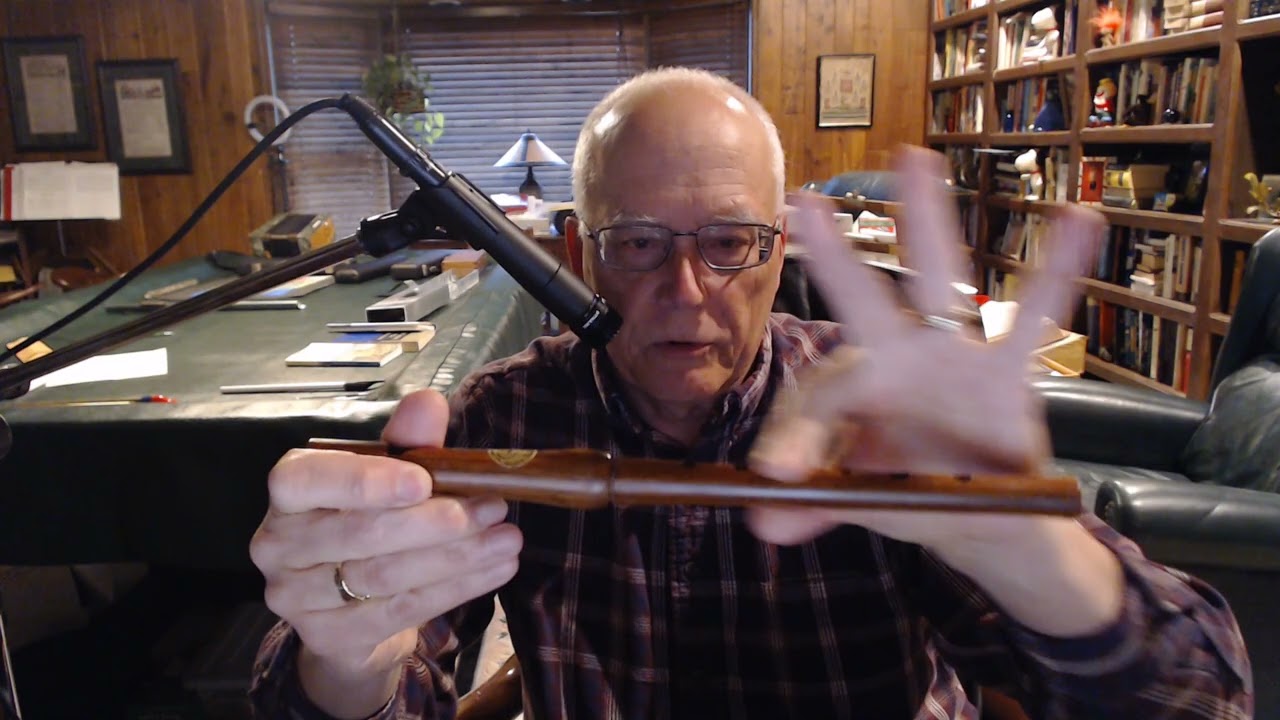
Honestly, if the one you heard was anything like the first one he plays in this video, I have to agree with you that it isn’t a whistle I’d ever go for.
The second one sounds quite a bit different, though. In my opinion, it sounds a lot more like a modern Morneaux - but still a bit harsher.
Anyway, I just thought this was an interesting demonstration of how whistles made out of similar materials (and even by the same maker) can sound very different from each other.
Um. Wow. Full disclosure, I work for Jos Morneault and before him for Ralph Sweet. I won’t answer for them, but as a player of literally dozens and dozens of different whistles. Here’s the truth of it: we like what we like and we want what we want; good story, even second or third hand is always to be preferred over trying it yourself; there are fashions that come and go. Vive la difference!
Tygh
1 Like