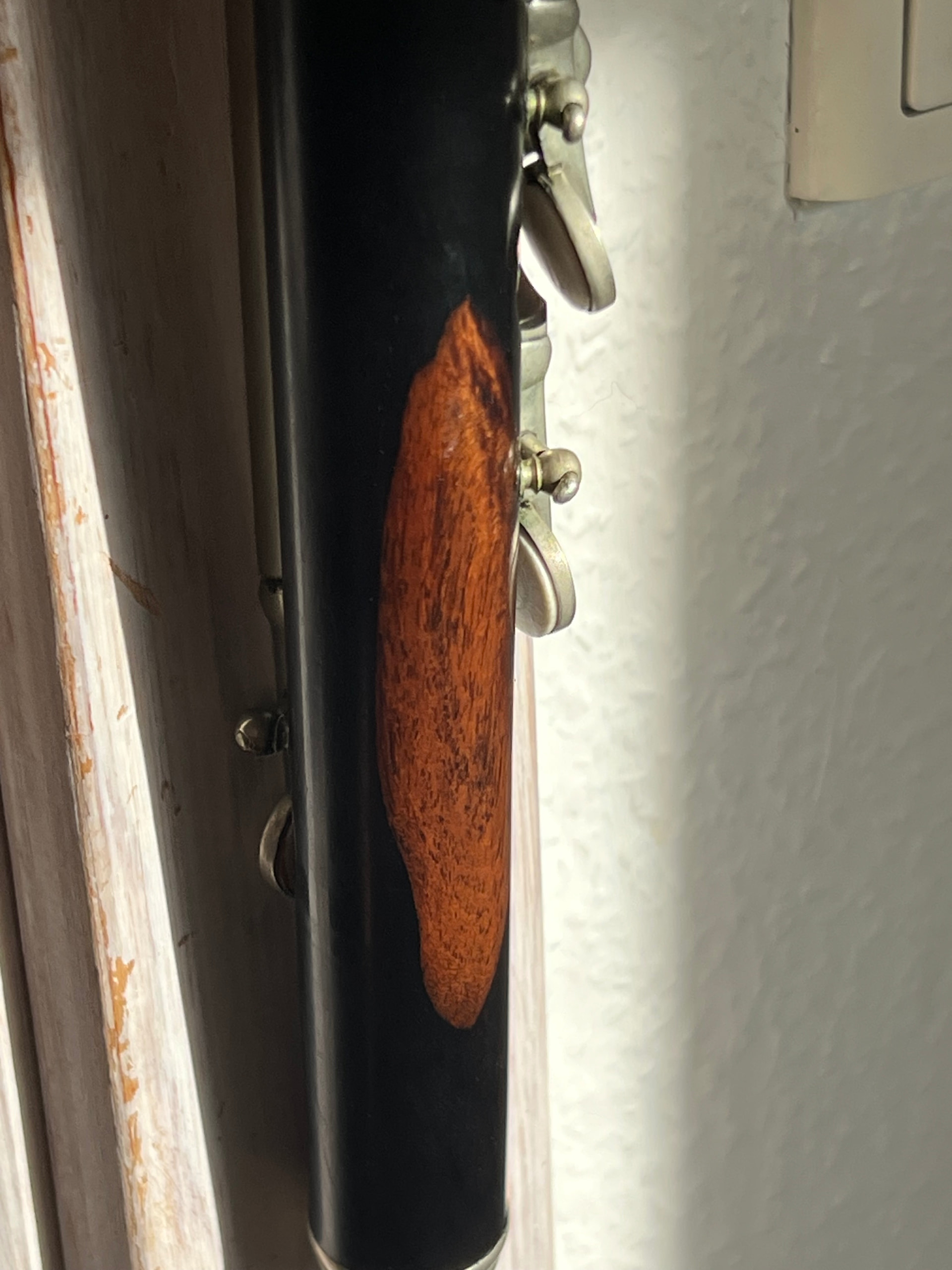
I bought this anonymous antique very cheap. Most of it is very uniformly deep black - except for the foot, which has this area of brown wood. The previous owner described it as wear to the black finish, which doesn’t make sense to me at all.
I think it’s an African Blackwood flute cut from second pick stock, and this is simply a sliver of the non-black sapwood.
Can anyone tell if this is likely what it is?
I wonder if this “flaw” was the reason the flute was never stamped with a mark to identify the maker.
Tough to say definitively, but yes that appears consistent with the sapwood of African Blackwood. When blanks are sawn from larger logs pieces will have sapwood. These are generally graded lower. When I buy Blackwood I usually seek “instrument grade” or whatever the higher grade is to avoid things like significant checks, excessive knotting, and sapwood.
Good news is that assuming the layer doesn’t go all the way through (I would guess it’s only another mm or 2 deep there) there’s no structural or acoustical issue. Just cosmetic.
It’s most certainly not worn-off finish. If the “Blackwood” flute is just painted black you’ve got bigger problems haha but no this appears to be genuine Blackwood with a bit of sapwood
What TKing said - if the wood underneath is fine then you’re good.
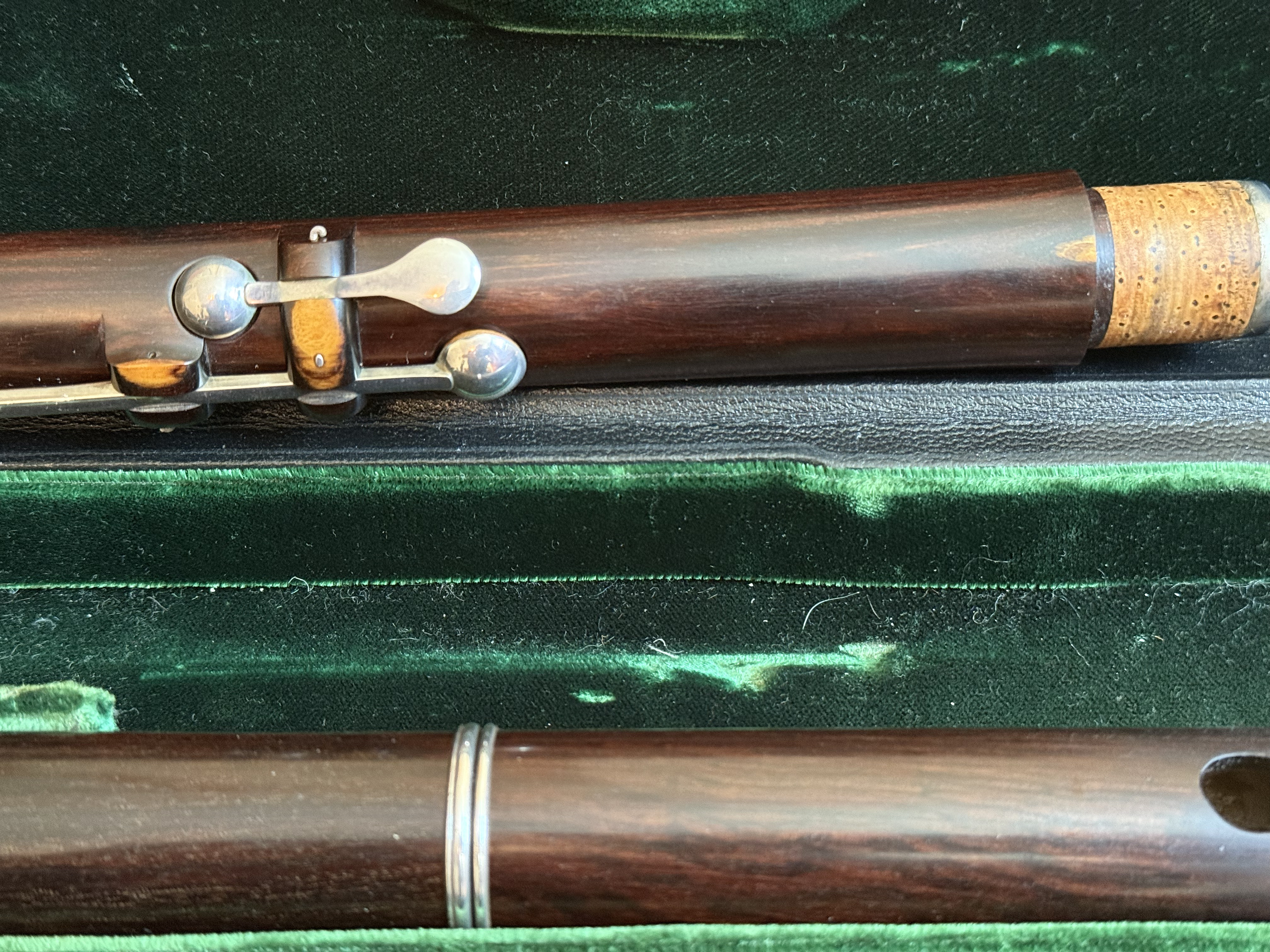
At least one modern maker will keep sapwood inclusions to get slightly more usable cocus from a scarce resource. Inclusions can add character and a touch of unique color to a flute too. Here is a picture of an Olwell cocus flute from approx 20 years ago with several inclusions.
You’ve undoubtedly seen clarinets that are black. None of those clarinets are made of wood that is that dark. The material is usually called “oil soaked Grenadilla wood”. That sounds really specific, but in fact it isn’t. In the industry there are a number of exotic hardwoods that fall under the names “ebony” or “Grenadilla” wood. With the Celtic whistles and flutes they seem to use the term “African Blackwood”. It’s probably from the same groups of woods that clarinets are made of. No one really comes to grips with exactly what wood any of these instruments is really made of. Nor does it matter. But the supplier of the instrument is probably exactly correct in saying that the black finish has worn off of whatever tropical hardwood that flute is made from. What matters to you is the condition of the wood. Is it checked or worse still cracked? These instruments need to be preserved with bore oil or almond oil and protected from extremes of temperature and humidity. The color doesn’t matter in the least unless it bothers you.
Not worried about the integrity or tone - or even looks or prestige, really. Just curious. With zero provenance other than being supposedly late 1800s, any information I can glean from inspecting it is interesting.
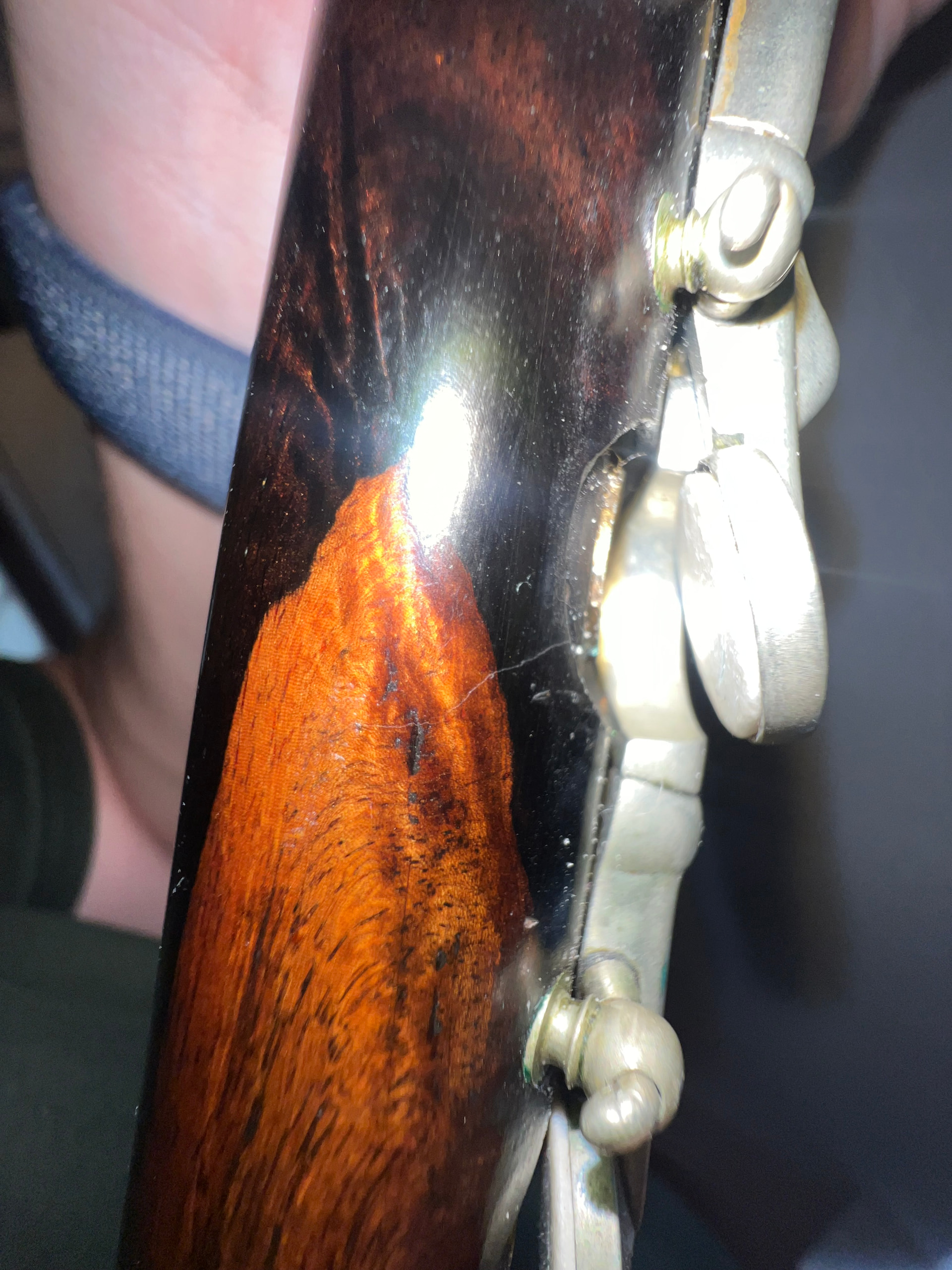
I got some additional photos with a flash. It looks like the lighter patch follows the wood structure and even goes under the mechanical parts, which I suppose would count towards a sapwood inclusion rather than wear.
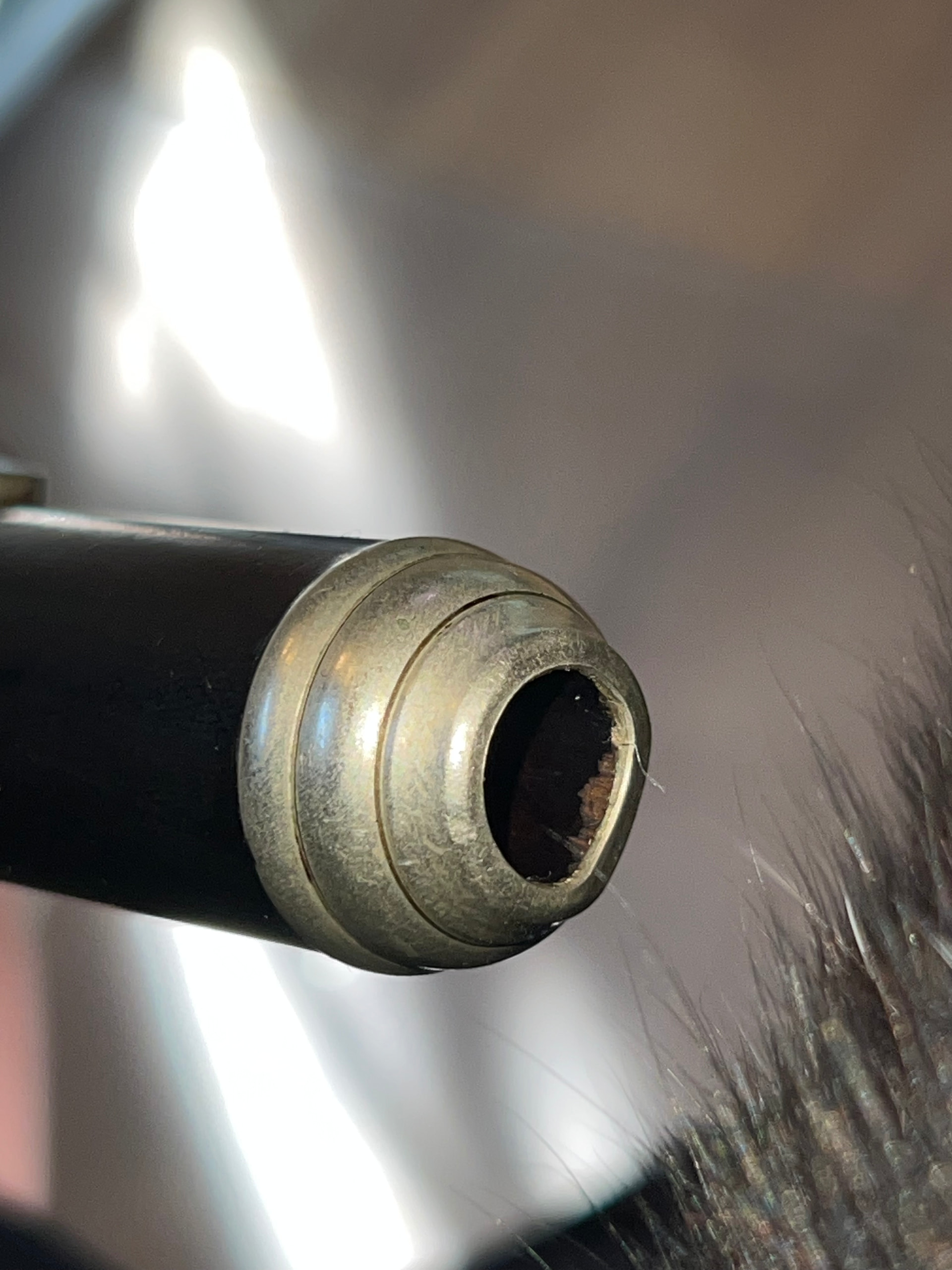
I also found a chipped area inside the bore at the end of the flute, which shows the color of the untreated wood. It is much darker to the naked eye than the flash makes it look, but there’s definitely a significant difference with and without treatment. I guess that would be what oiling and polishing does.
I bought a wood identification book, but it wants me to saw the flute in half and look at the end grain structures, sooo… I i think I’m fine with not knowing for sure what it is
It is definitely a sap wood inclusion, which is not a problem structurally, acoustically or aesthetically if you like something that looks distinctive.
Whether the wood of the flute as a whole is african blackwood or some similar dark tone wood is difficult to say definitively without taking a microscope to the end grain.
This kind of sap wood inclusion is not particularly rare, although this is a fairly large one. I’ve seen it with blackwood and cocuswood and even have supplies of both in my workshop that have sapwood inclusions in unfinished billets. I quite like the fact that makers include these in their finished flutes, as doing so makes much better use of a limited resource, and reminds us that the material the flute is made from comes from a natural, living resource, rather than being a homogeneous, synthetic product.